Engineer Liu

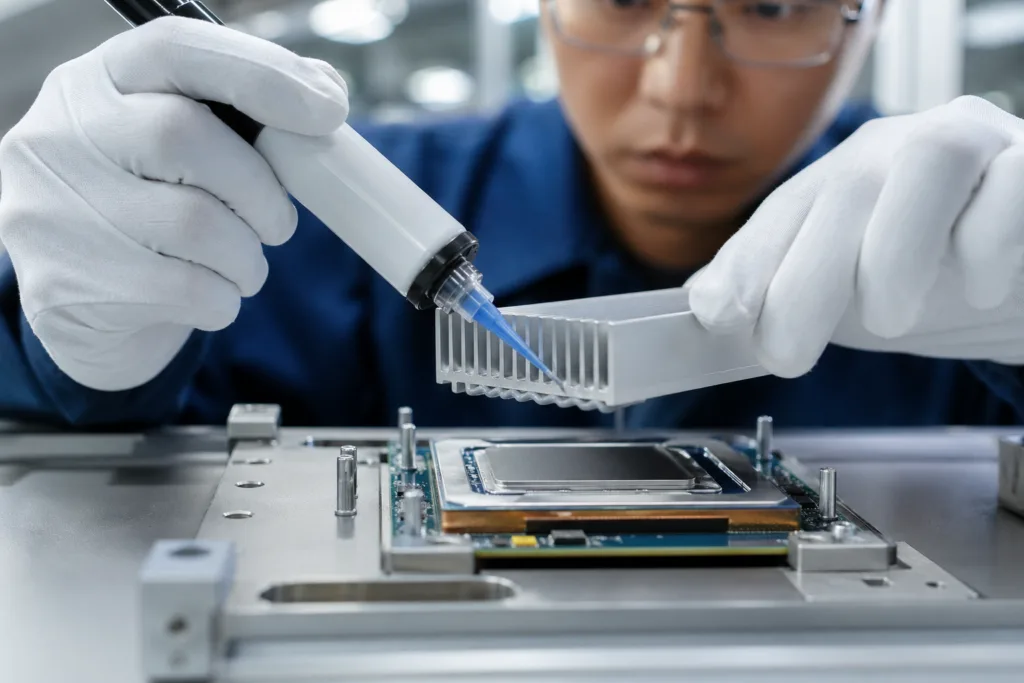
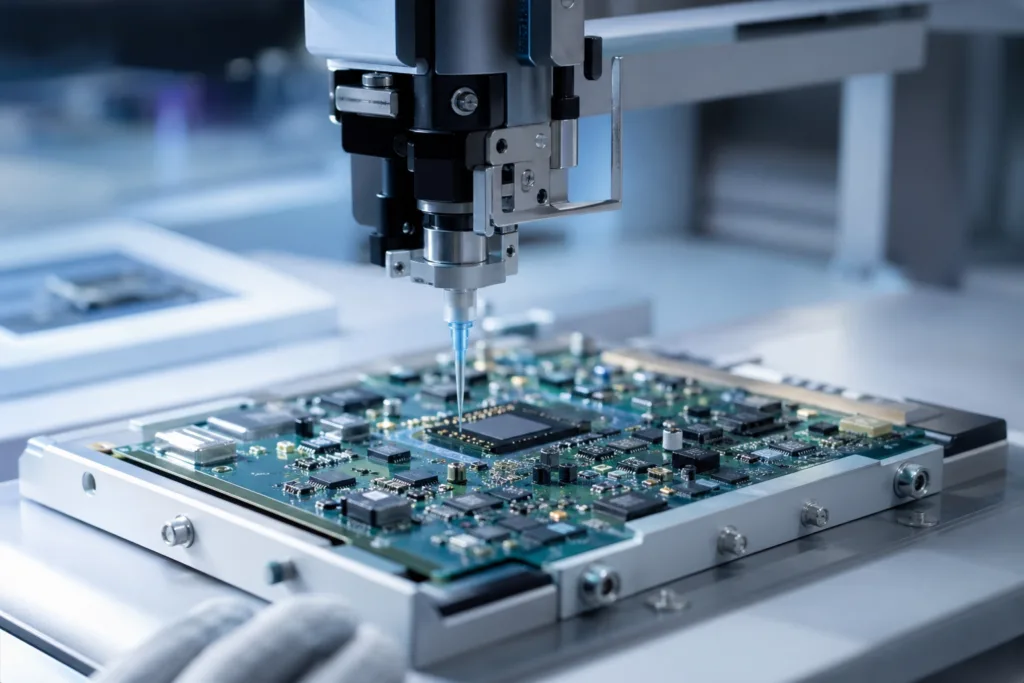
A realistic industrial image showing thermally conductive adhesive being applied in an electronics assembly where heat transfer and bonding are both critical.

Thermally Conductive Adhesives: How They Balance Heat Dissipation and Bonding Performance

Thermal management is no longer a side issue in product design. In electronics, LED modules, battery systems, power devices, and compact industrial assemblies, the bonding layer often sits directly in the heat path. That means a thermal conductive adhesive glue is not only expected to hold parts together, but also to move heat away from
Thermally Conductive Adhesives: How They Balance Heat Dissipation and Bonding Performance Read More ยป

A realistic production scene showing adhesive application on electronic components for reliable assembly.

Electronic Adhesives for Reliable Assembly: Key Requirements, Common Types, and Process-Based Selection

An electronic adhesive does more than hold parts together. In electronic assembly, it can also manage heat, insulate circuits, protect sensitive components from moisture and vibration, support precise placement, and influence long-term reliability in the field. That is why adhesive selection should be tied not only to bond strength, but also to substrate behavior, curing

Electronic Adhesives for Reliable Assembly: Key Requirements, Common Types, and Process-Based Selection Read More ยป

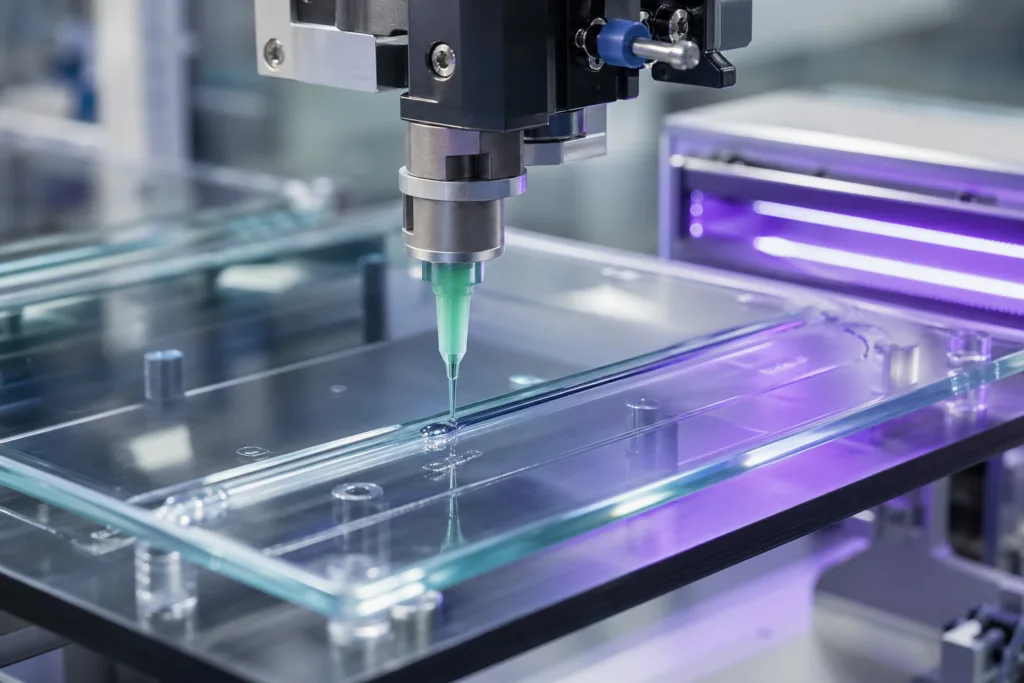
A precision manufacturing scene showing UV adhesive application on transparent parts before light curing.

UV Curable Adhesives: How They Work, Where They Excel, and How to Choose the Right Formula

UV adhesive is a liquid bonding material that cures when exposed to ultraviolet light, allowing very fast fixture times and precise placement in applications where process control matters. For engineers, buyers, and product teams, the real value is not just speed. It is the combination of fast handling strength, neat bond lines, optical clarity in

UV Curable Adhesives: How They Work, Where They Excel, and How to Choose the Right Formula Read More ยป

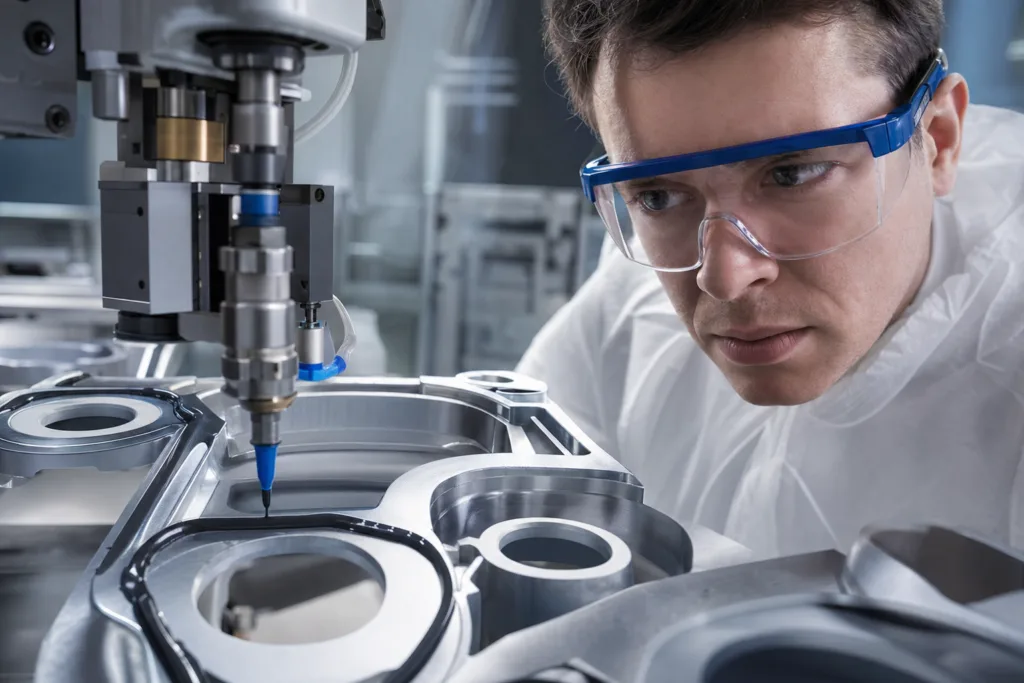
A realistic industrial scene showing automated epoxy dispensing used in controlled production environments.

One-Part vs Two-Part Epoxy Adhesives: How to Choose the Right Epoxy for Your Process

Choosing between a one part epoxy adhesive and a two-part epoxy is not just a chemistry decision. In real production, it affects storage, dispensing, line design, cure time, labor, consistency, and how much process control you need to get repeatable bond performance. For engineers, procurement teams, and product developers, the right choice usually comes down

One-Part vs Two-Part Epoxy Adhesives: How to Choose the Right Epoxy for Your Process Read More ยป

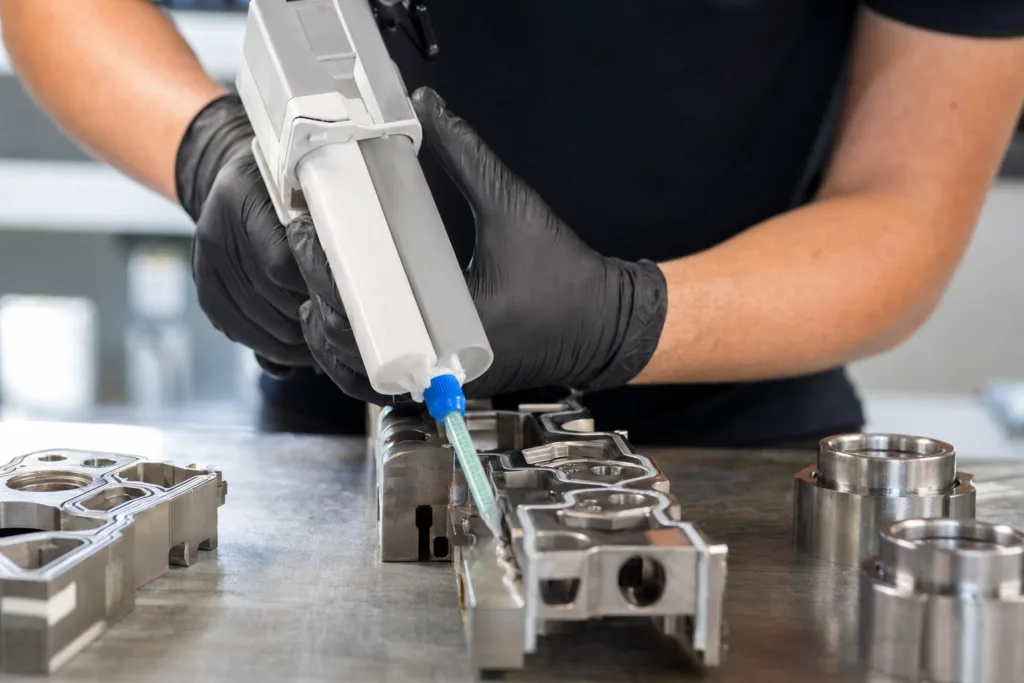
A realistic industrial scene showing two-part structural epoxy being dispensed during precision bonding of metal components.

Two-Part Structural Epoxy: How It Works, Key Benefits and Limitations, and Typical Industrial Uses

2 part structural epoxy is widely used when assemblies need high bond strength, gap-filling ability, and durable performance across metal, composites, plastics, and other engineering substrates. For industrial buyers and engineers, it sits in the space between simple general-purpose bonding and more demanding structural joining, where load, environment, cure behavior, and process control all matter.

Two-Part Structural Epoxy: How It Works, Key Benefits and Limitations, and Typical Industrial Uses Read More ยป

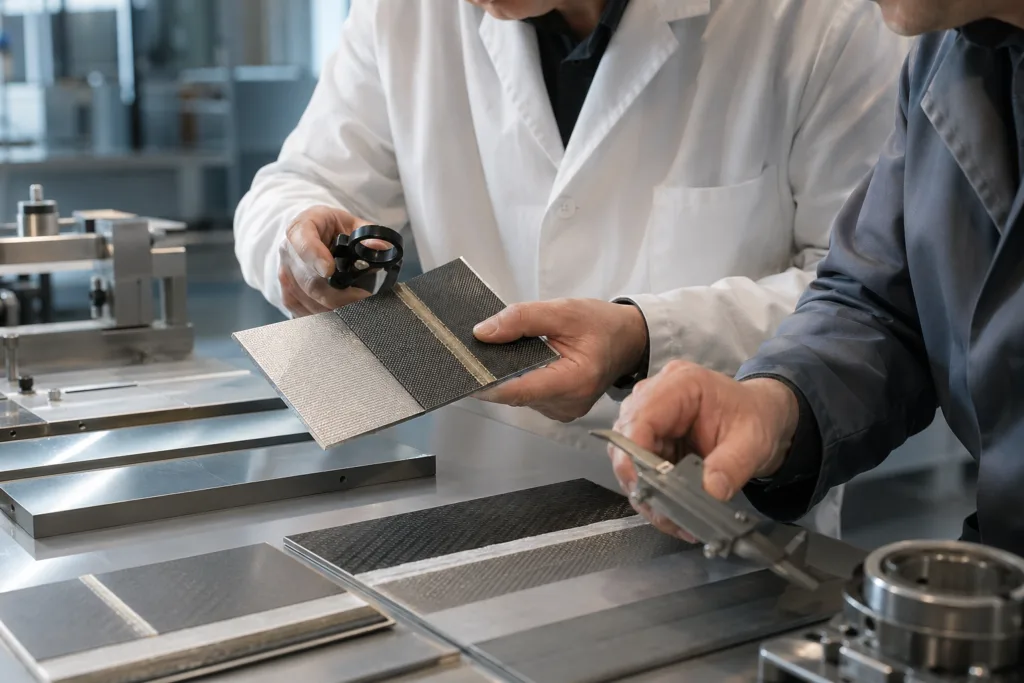
A realistic industrial laboratory scene showing evaluation of bonded structural samples for strength and durability.

Structural Adhesives: When to Use Them and When Not To

Structural adhesives are formulated for joints that must carry meaningful loads over time, often while exposed to heat, vibration, moisture, chemicals, or repeated stress. Unlike general-purpose bonding products, they are selected not just to make parts stick, but to help the joint function as part of the structure. For engineers, buyers, and product designers, the

Structural Adhesives: When to Use Them and When Not To Read More ยป

A professional sourcing and engineering team organizing the core information needed for an adhesive RFQ.

How to Write an Effective RFQ for Adhesives to Get Faster, More Accurate Supplier Responses

A strong RFQ adhesive document does more than ask for a price. It helps the supplier understand the bonding problem, filter out unsuitable chemistries early, and respond with a quote, sample plan, or technical recommendation that fits your real process. When the application is vague, suppliers often have to guess, ask basic follow-up questions, or

How to Write an Effective RFQ for Adhesives to Get Faster, More Accurate Supplier Responses Read More ยป

A realistic industrial image showing early-stage MOQ and production planning in an adhesive factory.

MOQ, Lead Time, and Sampling: What to Expect from a Custom Adhesive Manufacturer

When buyers start a custom adhesive project, the first questions are usually practical rather than chemical: What is the minimum order quantity? How long will samples take? What causes delays between approval and production? These questions matter because adhesive development is tied not only to formula performance, but also to raw material sourcing, batch economics,

MOQ, Lead Time, and Sampling: What to Expect from a Custom Adhesive Manufacturer Read More ยป

Industrial buyers and engineers reviewing adhesive supplier options beyond unit price in a factory office setting.

12 Smart Ways to Compare Adhesive Suppliers Beyond Unit Price

When B2B buyers compare adhesive suppliers, unit price is usually the easiest number to put in a spreadsheet. It is also one of the easiest numbers to misread. In industrial purchasing, the lowest quoted cost can lead to higher testing expense, slower production, quality problems, missed delivery dates, and more supplier management work. A better

12 Smart Ways to Compare Adhesive Suppliers Beyond Unit Price Read More ยป

ZDS LTD ยท Adhesive Manufacturer

Get the Right Adhesive Recommendation

Not sure which adhesive fits your material, process, or performance needs?
Share a few project details, and our team will suggest a suitable ZDS product or custom formulation.