
Structural adhesives are formulated for joints that must carry meaningful loads over time, often while exposed to heat, vibration, moisture, chemicals, or repeated stress. Unlike general-purpose bonding products, they are selected not just to make parts stick, but to help the joint function as part of the structure. For engineers, buyers, and product designers, the key question is not whether a structural adhesive is strong in a lab test, but whether it fits the real joint design, substrates, production process, and service environment.
Structural adhesives for high-strength industrial bonding are usually evaluated alongside substrate type, cure profile, gap tolerance, and long-term durability, because a strong material alone does not guarantee a reliable assembly.
What Are Structural Adhesives?
Structural adhesives are bonding materials designed to transfer load between bonded parts with a relatively high level of mechanical integrity. In practical terms, that means they are used when the bond is expected to contribute to strength, stiffness, or durability of the assembled product rather than serving only as a light-duty attachment or temporary fix.
They are commonly used to bond metals, composites, plastics, glass, and some treated surfaces where welding, riveting, or mechanical fastening may add weight, create stress concentration, damage thin substrates, or complicate assembly. In many designs, the adhesive layer spreads stress over a larger area than a point fastener, which can improve fatigue performance when the joint is properly engineered.
Common structural adhesive chemistries include epoxy, acrylic, polyurethane, and certain specialty hybrid systems. Each family has different trade-offs in strength, flexibility, cure speed, impact resistance, temperature resistance, and surface tolerance.
How Structural Adhesives Differ from Standard Adhesives
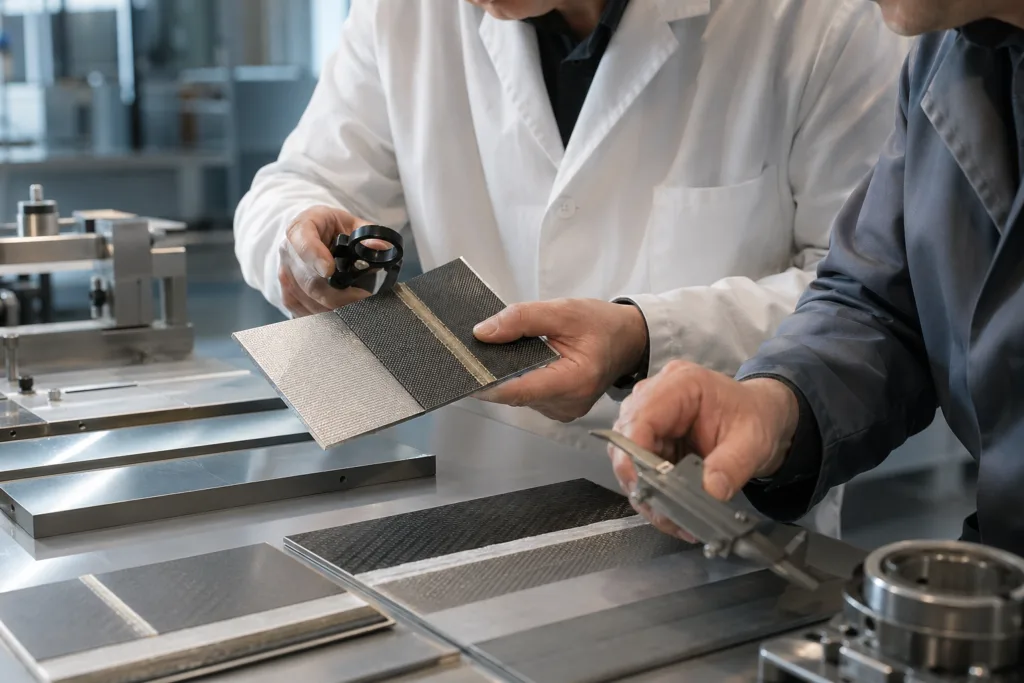
The main difference is performance expectation. A standard adhesive may be acceptable for labels, trim, low-load housings, or basic sealing tasks. A structural adhesive is chosen when the bond line must support sustained or repeated loads and maintain performance over time.
They also differ in how they are specified. With structural adhesives, selection usually involves joint geometry, expected load direction, allowable movement, environmental exposure, cure schedule, and surface preparation. A product that performs well in simple lap shear testing may still be the wrong choice if the joint sees peel stress, impact loading, or large thermal expansion mismatch between substrates.
Another difference is failure consequence. If a decorative bond fails, the result may be cosmetic. If a structural bond fails, the result can be loss of function, safety margin, or product life. That is why validation, process control, and substrate preparation matter much more in structural bonding than in general assembly.
Key Performance Characteristics
Strength
Structural adhesives are often discussed in terms of shear, tensile, cleavage, and peel performance. No single number defines suitability. Many bonded joints perform well in shear but poorly in peel, so the actual load path matters more than headline strength alone. For rigid bonded metal assemblies, an epoxy such as ZDS-282AB high-strength epoxy adhesive for bonding may be considered where high cohesive strength and durable load transfer are needed.
Durability
Long-term performance depends on more than initial bond strength. Durable structural bonds must resist creep under sustained load, fatigue under cyclic stress, and degradation caused by moisture or chemicals. Joint design plays a large role here. Broad bonded overlap areas usually perform more reliably than narrow joints with stress concentrated at the edge.
Temperature Resistance
Temperature resistance should be judged across the full service range, not only at room temperature. Some adhesives become brittle in cold conditions, soften at elevated temperature, or lose strength after thermal cycling. The coefficient of thermal expansion of each substrate also matters. If two bonded materials expand differently, the adhesive must tolerate that movement without cracking or debonding.
Environmental Resistance
Moisture, oils, solvents, salt exposure, UV, and cleaning agents can all change bond performance over time. A structural adhesive suitable for indoor equipment may not be suitable for outdoor enclosures or under-hood assemblies. In practice, the service environment is often what separates an acceptable lab bond from a reliable field bond.
Common Types of Structural Adhesives
Epoxy structural adhesives
Epoxies are widely used when high strength, good chemical resistance, rigid bonding, and strong adhesion to metals and composites are important. They are common in industrial equipment, transport components, and demanding assemblies where stiffness and durability matter. Their limitations can include longer cure times, lower flexibility than some alternatives, and more sensitivity to peel or impact if the formulation is very rigid.
Acrylic structural adhesives
Acrylic systems are often selected for faster fixturing, good toughness, and the ability to bond some metals and plastics with less demanding surface preparation than certain epoxies. In mixed-material assemblies, an option such as ZDS-8100AB acrylic structural adhesive for versatile bonding may fit cases where process speed and impact tolerance matter as much as static strength.
Polyurethane structural adhesives
Polyurethanes are generally valued for flexibility, energy absorption, and compatibility with joints that must handle movement, vibration, or thermal expansion. They are often used in vehicle assembly, panel bonding, and applications where a more elastic bond line helps reduce stress concentration.
Specialty structural systems
Some applications require added functions such as thermal conductivity, electrical insulation, flame resistance, or lower exotherm. In electronics housings or heat-generating assemblies, a specialty formulation can be more suitable than a standard structural grade even if the published strength values look similar.
Typical Applications Across Industries
Automotive
Structural adhesives are used in body assembly, composite parts, battery-related structures, interior support components, and mixed-material joints. They can help distribute stress, reduce added weight from fasteners, and improve noise and vibration behavior. In practice, they are often used alongside mechanical fastening or welding rather than as a full replacement in every joint.
Aerospace
Aircraft and aerospace assemblies use structural bonding where weight reduction, smooth load transfer, and composite bonding are important. Qualification requirements are typically strict, and process control is critical. Surface preparation, environmental testing, and bondline consistency are especially important because failure margins can be narrow.
Construction and building products
Panel bonding, facade components, composite elements, and prefabricated assemblies can benefit from structural adhesives when the joint must carry load without visible fasteners. However, outdoor exposure, temperature cycling, and long service life must be considered carefully during specification.
Electronics and electrical assembly
Structural adhesives are also used in housings, modules, brackets, and assemblies that combine mechanical support with thermal or environmental performance. For bonded components that must manage both strength and heat flow, ZDS-PU926 thermal conductive structural adhesive reflects the kind of formulation category engineers may review when standard structural bonding is not enough on its own.
Industrial equipment and general assembly
Machine covers, panels, brackets, enclosures, and composite-to-metal assemblies often use structural adhesives to avoid distortion from welding, reduce drilling, or simplify assembly of dissimilar materials. At ZDS, this is often where custom formulation questions appear, because the required balance between strength, flexibility, cure speed, and process method varies widely.
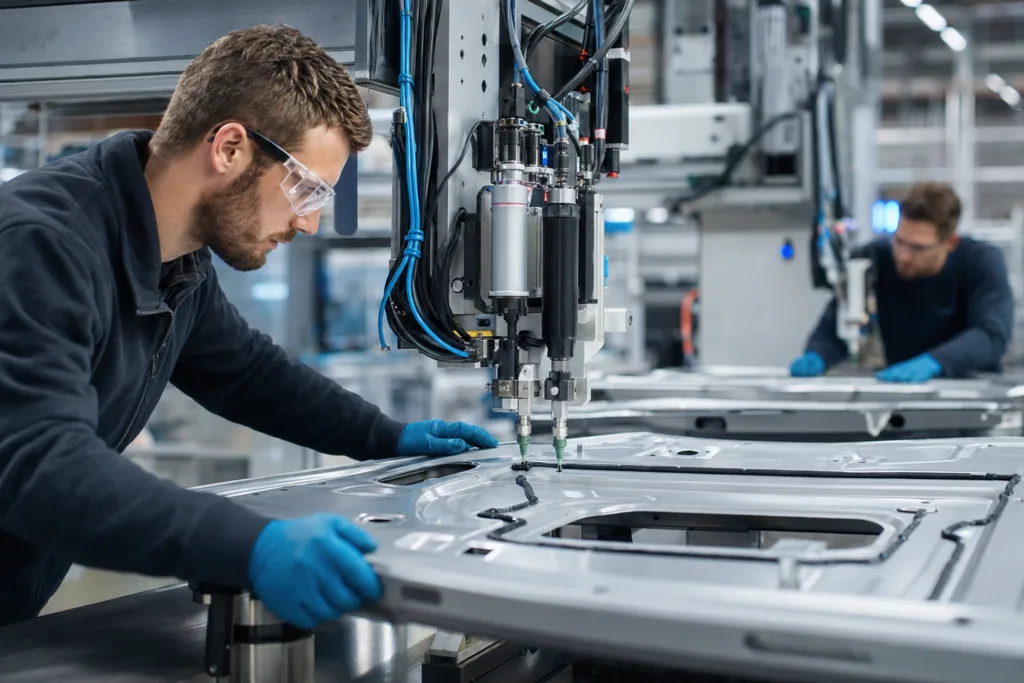
When Structural Adhesives Are the Right Choice
Structural adhesives are a strong option when the joint can be designed to keep loads mainly in shear or compression, when a larger bond area is available, and when stress distribution matters more than point fastening. They are also useful when substrates are thin, lightweight, dissimilar, or sensitive to heat or drilling.
They are often preferred when a cleaner exterior is needed, when corrosion risk around fastener holes should be reduced, or when part count and assembly steps need to be simplified. Structural bonding can also improve fatigue performance in the right design because the load is shared across the bonded area rather than concentrated at a few fastener locations.
Another good use case is vibration-prone assemblies. A more flexible structural chemistry can absorb movement and reduce stress transfer into brittle substrates. In these conditions, a product family such as ZDS-PU929 high-strength structural PU adhesive represents the type of option engineers may consider when impact resistance and movement accommodation are more important than maximum rigidity.
When Not to Use Structural Adhesives
Structural adhesives are not always the right answer. They may be a poor fit when immediate full strength is required, when the assembly cannot tolerate cure time, or when production conditions make surface preparation inconsistent. If the joint is likely to experience mainly peel, cleavage, or shock loading without a design that supports the adhesive, a mechanical fastening approach may be safer.
They may also be the wrong choice when service temperature exceeds the practical capability of the chemistry, when the substrates are heavily contaminated in a way that cannot be controlled, or when future disassembly is required. Some products and maintenance scenarios benefit more from removable fastening than permanent bonding.
Very small bond areas can also be problematic. If load is high but available overlap is limited, the adhesive may not have enough area to transfer stress reliably. In such cases, redesigning the joint or using a hybrid joining method is often more realistic than trying to solve the problem with a stronger adhesive alone.
Main Limitations and Failure Risks
Surface preparation
Many structural bond failures begin before adhesive application. Oils, release agents, oxide layers, dust, weak paint, and poorly prepared plastics can reduce adhesion sharply. Even a strong adhesive cannot compensate for an unstable surface. Preparation may involve cleaning, abrasion, priming, or process-specific treatment depending on the substrate.
Cure time and cure conditions
An adhesive may require room-temperature curing, heat acceleration, moisture exposure, or a defined mix ratio to reach full properties. If production handling loads the joint too early, failure may occur even though the adhesive chemistry itself is suitable. Cure logic must match the assembly line, fixture time, and throughput target.
Service environment
Heat, humidity, fluid exposure, UV, and thermal cycling can all shift adhesive behavior. A bond that looks strong in dry indoor testing may degrade much faster in outdoor equipment or chemically exposed machinery. Practical qualification should reflect actual field conditions as closely as possible.
Impact loads and fatigue
Sudden impacts and repeated cyclic stress can be more damaging than static loads. Toughened acrylics and flexible polyurethanes may outperform rigid systems in these cases, even if their static strength data appears lower. The failure mode matters more than the headline number.
Joint design
Poor joint geometry is one of the most common reasons structural bonding underperforms. Thin bond lines can be effective, but they must be controlled. Sharp corners, eccentric loads, and designs that force peel at the bond edge increase failure risk. A better adhesive cannot fully rescue a poor load path.
How to Select the Right Structural Adhesive
Start with the load case. Determine whether the joint sees shear, tensile, peel, impact, vibration, or a combination. Then look at the substrates: metal, composite, thermoplastic, thermoset, coated surface, or mixed-material pairing. After that, define the service environment, including minimum and maximum temperature, moisture exposure, chemical contact, and outdoor aging.
Next, evaluate process requirements. Important questions include pot life, open time, fixture speed, dispensing method, gap filling need, vertical flow resistance, cure schedule, and whether the line can manage two-component mixing accurately. Procurement teams should also consider storage stability, packaging format, consistency between batches, and whether the formulation needs tuning for a specific OEM process.
Where applications are not standard, custom formulation can be more effective than forcing a generic product into an unsuitable process window. ZDS typically sees this in assemblies where substrate variation, cure speed, and environmental resistance all matter at the same time.
Practical Selection Checklist for Engineers and Buyers
| Selection Factor | What to Check | Why It Matters |
|---|---|---|
| Load type | Shear, peel, tensile, impact, fatigue | Different chemistries handle stress modes differently |
| Substrates | Metal, plastic, composite, coated surface | Adhesion and prep needs vary by material |
| Joint geometry | Bond area, overlap, gap, stiffness mismatch | Geometry strongly affects stress distribution |
| Temperature range | Low, high, cycling conditions | Property retention may change across the range |
| Environmental exposure | Moisture, chemicals, UV, salt, oils | Long-term durability depends on real exposure |
| Process window | Pot life, fixture time, cure speed | Production fit is as important as performance |
| Rework and maintenance | Permanent vs serviceable assembly | Some structural bonds are difficult to remove |
| Validation | Prototype testing under realistic conditions | Reduces field failure risk |
Common Mistakes to Avoid When Specifying Structural Adhesives
- Choosing by peak strength value alone without reviewing failure mode.
- Assuming all metals or plastics prepare the same way.
- Ignoring cure conditions and handling the assembly before full property development.
- Using structural adhesive where the joint geometry creates peel-dominant loading.
- Skipping environmental validation for moisture, heat, or chemical exposure.
- Overlooking thermal expansion mismatch in mixed-material assemblies.
- Expecting a single product to solve both design flaws and process variability.
Matching the Adhesive to the Application
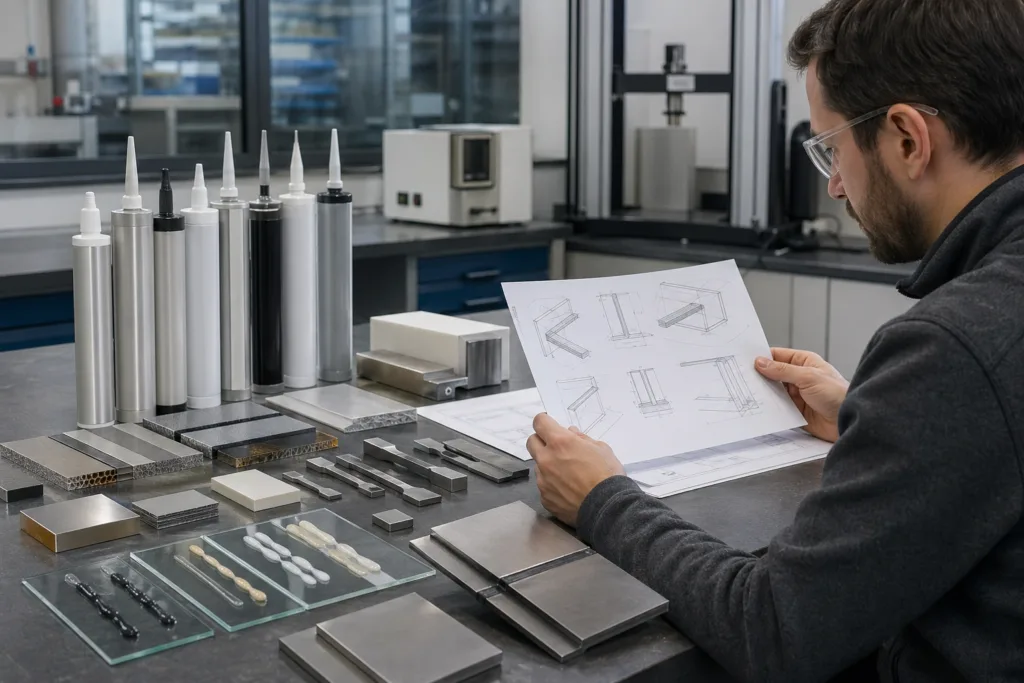
Structural adhesives can be highly effective when the joint is designed correctly, the substrates are understood, and the process supports reliable curing and surface preparation. They are especially useful for load-bearing mixed-material assemblies, thin substrates, and designs that benefit from distributed stress rather than point fastening.
They are not universal solutions, though. If the joint is peel-dominant, the environment is too severe for the chemistry, or the production line cannot control preparation and cure, another joining method may be more dependable. The practical goal is not to choose the strongest product on paper, but to choose the most suitable adhesive system for the real application.
FAQ
Are structural adhesives stronger than regular adhesives?
They are generally designed for higher load-bearing performance and long-term durability, but actual joint strength depends on substrate, surface preparation, joint design, and service conditions.
Can structural adhesives replace welding or fasteners?
Sometimes yes, but not in every application; they work best where distributed load transfer, lightweight design, or bonding of dissimilar materials matters, and many assemblies still use hybrid joining.
What is the most common failure cause in structural bonding?
In many real applications, poor surface preparation is a major cause because contamination, weak surface layers, or inconsistent treatment can prevent the adhesive from bonding to the actual substrate.
Are epoxies always the best structural adhesives?
No, epoxies are strong and durable but may not be ideal if the joint needs high flexibility, fast fixture speed, or better impact tolerance, where acrylic or polyurethane systems may fit better.
How do I know if a joint is suitable for structural adhesive?
Check whether the design gives enough bond area, keeps stress mainly in shear or compression, matches the adhesive to the substrates, and allows proper surface preparation and curing.
Do structural adhesives work on plastics?
Many do, but plastic type matters greatly because low-surface-energy materials, molded release residues, and thermal expansion can all affect adhesion and long-term performance.