
Adhesive Testing Methods Buyers Should Understand
In industrial purchasing, understanding adhesive testing is vital—not simply for confirming performance specs, but for making informed sourcing, engineering, and application decisions. While laboratory protocols may look technical, buyers, engineers, distributors, and contractors must grasp what various tests actually prove, which result factors matter most, and why relying on one test value is a risky shortcut that may lead to costly errors or mismatches in real-world projects.
For a more focused look at application requirements, see our detailed resource covering key adhesive testing methods that every manufacturer and buyer should understand. This page is designed to help sourcing teams, project managers, and engineers evaluate the full adhesive solution landscape from a manufacturer’s perspective, gain clarity on technical benchmarks, and progress to practical inspection or customized selection based on real application needs.
Why Adhesive Testing Is Essential for Buyers
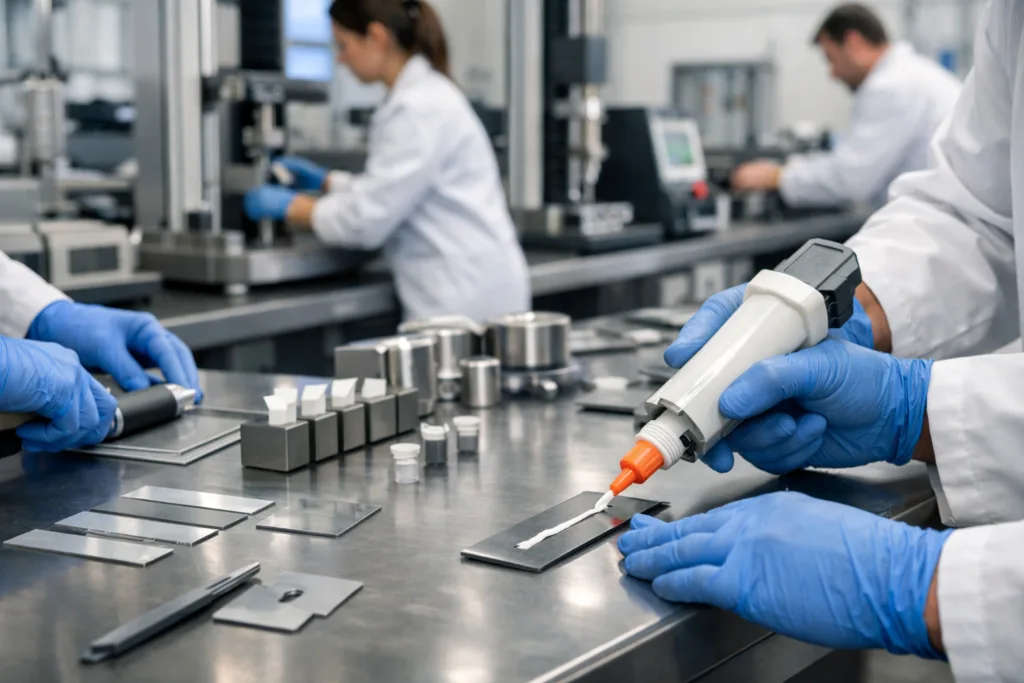
The Role of Testing in Industrial Adhesive Sourcing
Testing provides critical data that helps buyers verify product quality, predict application performance, and avoid sourcing mistakes. Industrial buyers depend on this information not only to vet suppliers but also to ensure that adhesives will function reliably throughout the lifecycle of their products or projects. Without systematic testing, it’s nearly impossible to judge long-term durability, material compatibility, or process suitability.
Decision-Making Impacts: Performance vs. Specification
Buyers often focus on headline spec values, such as maximum bond strength, but real-world performance typically depends on multiple tests—each revealing different aspects of the adhesive’s behavior under practical conditions. Understanding what each test shows is the key to making decisions that balance risk, cost, process demands, and durability expectations.
Overview of Common Adhesive Testing Methods
Peel Testing
Peel testing evaluates an adhesive’s resistance to being pulled apart at a controlled angle or force. Buyers should pay attention to peel values especially when sourcing materials for flexible joints, laminates, and components subject to dynamic stress or repeated handling. A strong peel result can indicate robust performance on flexible substrates, but may not predict resistance against shear or tensile forces.
Shear Testing
Shear tests measure how well an adhesive resists sliding forces between two bonded surfaces. This method matters for buyers sourcing adhesives for structural applications, panels, or assemblies where lateral forces dominate. A high shear value usually signals suitability for load-bearing situations—but only when paired with appropriate surface preparation and cure conditions.
Tensile Testing
Tensile tests pull apart bonded substrates to assess resistance to direct stretching. Buyers should consider tensile strength when evaluating adhesives for rigid, high-load applications, metallic bonding, or scenarios where joints may experience direct pulling force. Strong tensile values indicate bonding integrity, but do not solve for peel or shear-specific challenges.
Temperature Resistance Testing
This test exposes adhesives to various temperatures to measure performance changes. Buyers operating in environments with large temperature swings, thermal cycling, or heat-intensive processes need reliable data on how adhesive bonds maintain their strength, flexibility, and integrity across those scenarios.
Humidity & Moisture Resistance Testing
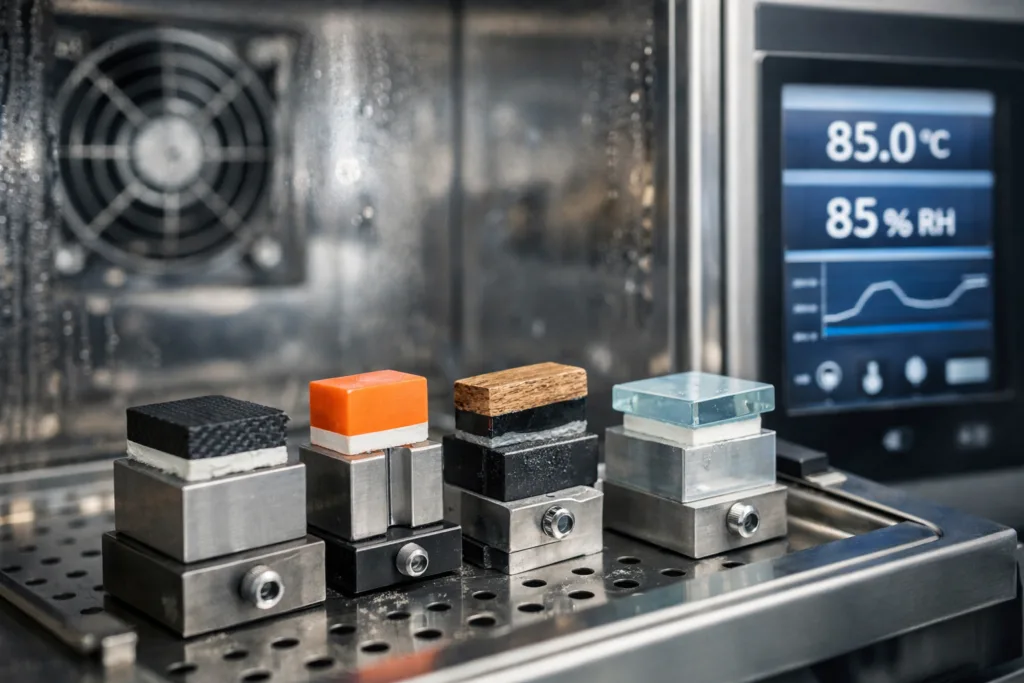
Adhesive bonds can degrade when exposed to moisture or humid environments. Testing for water and humidity resistance reveals how an adhesive reacts over time, helping buyers assess suitability for outdoor, marine, or food-processing applications where moisture ingress can be a decisive failure mode.
What Each Adhesive Test Really Indicates
The Meaning of Peel Values
Peel tests are essential for buyers of adhesives intended for flexible substrates or assemblies with frequent handling. They help predict not only initial bond strength but also long-term reliability under cyclical mechanical stress. However, a high peel value does not guarantee strong performance against shear or tensile stress.
The Role of Shear Strength Numbers
Shear strength tells buyers how an adhesive reacts to lateral loads. These values are crucial when evaluating adhesives for thick panels, structural assemblies, or high-force joint applications, but buyers should ensure that other factors like cure speed, surface prep, and long-term aging are included in their assessment.
Tensile Test Insights for Rigid Bonding
Tensile values help buyers assess the suitability of adhesives for rigid or metallic substrates. High tensile strength is often prized for critical infrastructure and machine assembly—but may fall short if the adhesive will experience directional shear, peel, or environmental exposure.
Interpreting Temperature Resistance Data
Temperature resistance depends on adhesive chemistry, substrate choice, and cure conditions. Buyers must evaluate whether reported data (such as maximum operating temperature) represents real-world conditions or accelerated testing protocols, always considering the impact on long-term stability.
Humidity and Moisture Testing—Why It Matters
Moisture resistance is especially important for buyers involved in construction, transport, electronics, or packaging. If an adhesive’s bond degrades or swells under moisture, structural failure, delamination, or corrosion risk can dramatically increase—making it crucial to understand true real-world exposure limits.
Why You Can’t Rely on Single Test Values
Limits of Headline Specifications
Many buyers get caught up chasing one impressive figure—such as maximum bond strength or fastest cure time—but these numbers often represent ideal lab conditions, not practical service environments. The adhesive that excels in one test may underperform in others due to chemistry, substrate interaction, or environmental variables.
The Importance of Multi-Dimensional Testing
To avoid costly sourcing mistakes, buyers must evaluate adhesives across peel, shear, tensile, temperature, and humidity resistance tests. A balanced view reveals not just initial bonding quality but also how the adhesive will behave under real-world stresses and throughout its intended lifecycle.
Adhesive Selection Mistakes: Case Examples
Contractors may select a high-shear adhesive for a project that actually encounters frequent peel forces, resulting in unexpected failures. Procurement teams sometimes default to tensile values, missing the significance of moisture exposure in exterior applications. Real-world performance depends on matching test values to the project’s actual stress profile.
How Adhesive Testing Supports Buying Decisions
Communicating Testing Expectations to Manufacturers
Buyers should specify which tests matter most for their applications. Manufacturers, such as ZDS, can then provide tailored test data, custom samples, or application advice based on the intended use-case, substrate, and environmental stresses. Clear communication prevents mismatched specs and strengthens sourcing confidence.
Integrating Performance Data into the Selection Process
Performance data from diverse tests helps buyers benchmark adhesives, filter unsuitable options, and justify selections to engineering, quality, or commercial stakeholders. This process is central to achieving cost-performance balance, minimizing rework, and avoiding warranty or service claims.
When Custom Testing Is Needed
For specialized industrial applications—such as electronics, aerospace, or high-temperature manufacturing—standard tests may fall short. Buyers should request custom testing or collaborative validation when the application demands unique chemistry, surface treatment, or mechanical properties. Experienced manufacturers can design relevant protocols to match these needs.
The Process of Adhesive Testing: What Buyers Should Expect
How Testing Is Conducted
Adhesive testing typically involves preparing test specimens, applying adhesive under controlled conditions, and subjecting them to mechanical, environmental, or accelerated stress protocols. Results are recorded according to standardized methods (such as ASTM, ISO, or tailor-made procedures).
Sample Preparation and Substrate Representation
The accuracy of test results depends on substrate matching, surface preparation, and environmental simulation. Buyers should confirm that tests reflect their actual materials and project conditions—not generic lab standards.

Interpreting Results: Beyond the Numbers
Results indicate trends, but buyers must interpret them in context—comparing values to real-world conditions, expected loads, and long-term requirements. No single result guarantees application success.
Application Conditions and Their Impact on Testing Outcomes
Environmental Variables
Variables such as temperature, humidity, UV exposure, and chemical contaminants can affect adhesive performance dramatically. Buyers should prioritize tests that mirror anticipated working and service environments.
Process Tolerances
Manufacturing, cure time, and surface prep often influence test outcomes and application fit. Buyers must ensure that the adhesive’s tested process matches their operational workflow and quality control standards.
Long-Term Durability
Accelerated aging tests reveal how an adhesive may perform after months or years in service. Investing in durability testing up front can prevent future failures and mitigate warranty risks.
Comparing Adhesive Testing Data: Practical Advice for Buyers
Benchmarking Against Standards
Buyers should compare adhesive test results against recognized industry benchmarks, but also scrutinize how those standards relate to practical project demands. This approach reduces the likelihood of mismatched expectations or overlooked weaknesses.
Reading Test Reports Accurately
Test reports should be reviewed for sample conditions, substrate types, test method details, and environmental variables—not just headline numbers. Buyers who dig deeper gain better insight into product suitability.
Critical Questions to Ask Manufacturers
When reviewing adhesive data, buyers should ask: what substrates were used? Were environmental stresses simulated? Was surface prep realistic? Answers clarify whether data reflects practical realities or laboratory ideals.
Testing Methods and Their Limitations
Lab Tests vs. Real-World Performance
Lab tests are vital for benchmarking adhesives, but always carry limitations. Differences between test and field conditions—from cure dynamics to surface contaminants—can cause performance variations. Buyers should treat test data as guidance, not as absolute predictions.
When Field Validation Is Required
In complex scenarios, buyers may need to conduct field trials alongside lab tests to validate adhesive fit. This is especially true for non-standard substrates, extreme environments, or high-load assemblies.
Adhesive Testing: Buyer Mistakes to Avoid
Overvaluing Single Specification Numbers
Buyers who rely solely on maximum shear, tensile, or peel values often overlook application-specific requirements. This misstep increases the risk of system failure, warranty exposure, or costly rework.
Ignoring Environmental Factors
Performance under ideal conditions rarely matches reality. Ignoring temperature, moisture, UV, or chemical exposure tests may lead to adhesive selection errors—especially in construction, automotive, or electronics applications.
Assuming All Test Methods Are Equal
Different test standards (ASTM, ISO, custom protocols) yield varying results. Buyers must confirm that testing methods match their industry or application context.
Pitfalls of Relying Only on Supplier Claims
Supplier vs. Manufacturer Data Integrity
Buyers should recognize the differences between adhesive suppliers and manufacturers. Supplier claims often summarize generic data, while manufacturers like ZDS can provide detailed, application-driven testing reports aligned with actual project scenarios. Understanding differences between adhesive suppliers and manufacturers helps buyers gain confidence in sourcing and specification.
Understanding Custom Reporting
Custom reporting reflects project-specific requirements, from substrates to environmental demands. Buyers requesting tailored data can avoid reliance on generic values and improve decision certainty. For advice on aligning testing and manufacturing criteria, see our guide on criteria for choosing an adhesive manufacturer.
Adhesive Testing Methods Buyers Should Understand
Summary of Critical Testing Insights
Buyers must evaluate adhesives across multiple test methods, integrate environmental and process conditions, and never make sourcing choices on single specification values. Carefully reviewing peel, shear, tensile, temperature, and humidity resistance reveals both strengths and limitations, enabling more confident, fit-for-purpose decisions.
Practical Buying Checklist
- Request test data aligned with your project environment
- Evaluate multiple performance dimensions
- Verify substrate compatibility and surface preparation effects
- Scrutinize reporting methods and sample conditions
- Ask manufacturers for custom testing when needed
Conclusion: Looking Forward with Smarter Adhesive Testing Decisions
Industrial adhesives are a critical foundation for assemblies, repairs, and manufactured products—but successful selection depends on nuanced, multi-dimensional testing. Buyers who understand adhesive test methods, interpret values in context, and consult manufacturers with targeted questions make stronger decisions, minimize risk, and facilitate reliable application outcomes. The future of effective sourcing lies in blending technical insight with practical project knowledge, fostering a culture of performance-driven testing and quality assurance.
Frequently Asked Questions
Why can’t I rely on just the maximum bond strength when choosing an adhesive?
Maximum bond strength reflects performance in a single test, but real-world applications may require durability across peel, shear, tensile, temperature, and humidity—making multi-dimensional data essential for confident selection.
What does peel testing reveal about an adhesive?
Peel testing shows how well an adhesive can handle flexible stress or repeated handling, providing insight into long-term reliability for materials subject to dynamic forces.
Do test conditions, like temperature and humidity, affect adhesive performance results?
Yes. Variations in environmental conditions can significantly impact adhesive bonding, so buyers should review tests under relevant temperature and humidity scenarios.
How can buyers ensure testing matches their application needs?
Buyers should request application-specific test data, verify substrate representation, and ask manufacturers for custom validation when standard methods are inadequate for their project environments.
Are laboratory adhesive testing results always predictive of real-world performance?
Lab tests provide useful benchmarks but may differ from field results due to substrate variation, surface prep, and uncontrolled environmental factors; field validation is often advised.
What steps should buyers take if data from two manufacturers uses different testing standards?
Buyers should clarify test method details, ask for comparative data using recognized standards, and align selection criteria with both technical benchmarks and practical project conditions.