
What Makes a Reliable Adhesive Factory? 7 Critical Standards for Industrial Success
In the fast-changing world of adhesives, the trustworthiness of your chosen adhesive factory can define your project’s success or failure. From raw material sourcing to packaging and delivery, true manufacturing capabilities directly affect quality, consistency, and responsibility—far beyond the claims of trading companies or distributors.
A useful next step is to explore the key qualities you should expect from a reliable adhesive factory. Readers comparing solution options may also want to review how ZDS, as a dedicated manufacturer, structures its resources, product categories, and application guidance as a foundation for industrial adhesive success and superior material compatibility.
Core Standards: The Foundation of a Reliable Adhesive Factory
Why Factory Standards Matter in Adhesives
The adhesive companies you choose shape not just the quality of your end product, but also your process control, risk exposure, and ability to fulfill demanding industrial requirements. Factory-level diligence is essential for buyers who can’t afford material failures or inconsistent batches.
Key Capabilities: What Sets Apart a Real Adhesive Factory
- Strict raw material management
- Formulation development and process control
- Sample making and application customization
- Reliable scale-up and mass production
- Systematic quality control
- Full batch traceability
- Industrial packaging and logistics expertise
Raw Material Management: The Foundation for Reliability
Why Material Selection Is Vital for Adhesive Manufacturing
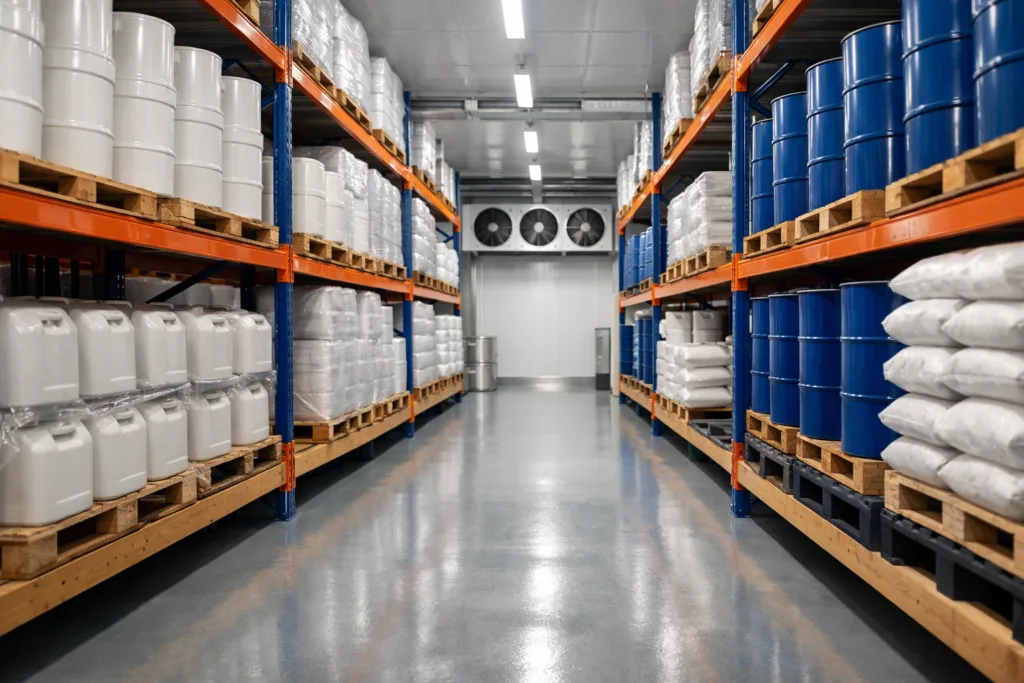
Quality adhesives depend on a steady supply of well-vetted raw materials—resins, hardeners, fillers, additives, and solvents—with verified origins and performance grades. High-performing adhesive companies maintain supplier networks, incoming QC routines, and controlled storage environments.
Material Vetting and Supplier Control
True factories implement multi-step material checks, including supplier audits, lot number records, and compatibility assays. This minimizes impurities or supply variation that could disrupt formulations or introduce defects.
Warehouse and Storage Considerations
Temperature- and humidity-controlled warehousing prevents raw material degradation, especially for moisture-sensitive components such as isocyanates or specialty resins. Manufacturer-level storage protocols support consistent end-product quality.
Formulation Control: Ensuring Consistency and Performance
Full-Lifecycle Formulation Record Keeping
Industrial adhesive companies must anchor recipes, process steps, and adaptation logic in controlled documentation systems. Recipes are locked down for each application, with real-time updates logged during scale-up or process optimization.
In-House R&D vs. Toll Blending
Reliable factories invest in their own formulation R&D. By contrast, pseudo-factories may outsource blending or recycle known formulas, lacking the in-depth understanding to support new application challenges or solve field performance problems.
Batch Control and Version Management
Every formulation batch receives a unique identifier, enabling traceability back to all changes, raw material sources, and process parameters—critical for automotive, electronics, and construction industry buyers.
Sample Making and Customization Capabilities
Turning Buyer Needs into Real-World Samples
A genuine adhesive manufacturing process includes fast, practical sample making. Factories should produce application-ready kits or quantities, adjusted for viscosity, cure speed, color, and mechanical demands. Simple “lab-only” samples rarely predict full-scale performance.
Iterative Application Testing
Vetted factories accompany samples with test data—lap shear, peel, heat resistance, and chemical compatibility—allowing technical teams to dial in parameters and optimize solutions.
Supporting Niche Application Development
When industrial adhesive companies can flexibly adapt to unique requests—such as bonding new plastics or supporting automated dispensing tooling—they demonstrate true R&D and application depth.
Reliable Mass Production: Beyond Small Batch Capabilities
Scale-Up: Proving Volume Consistency
Transitioning from sample to tonne-scale adhesive manufacturing requires process optimization, equipment adaptation, and robust batch controls. Absence of scale-up expertise is a key red flag when selecting an adhesive supplier.
Equipment Diversity and Production Line Control
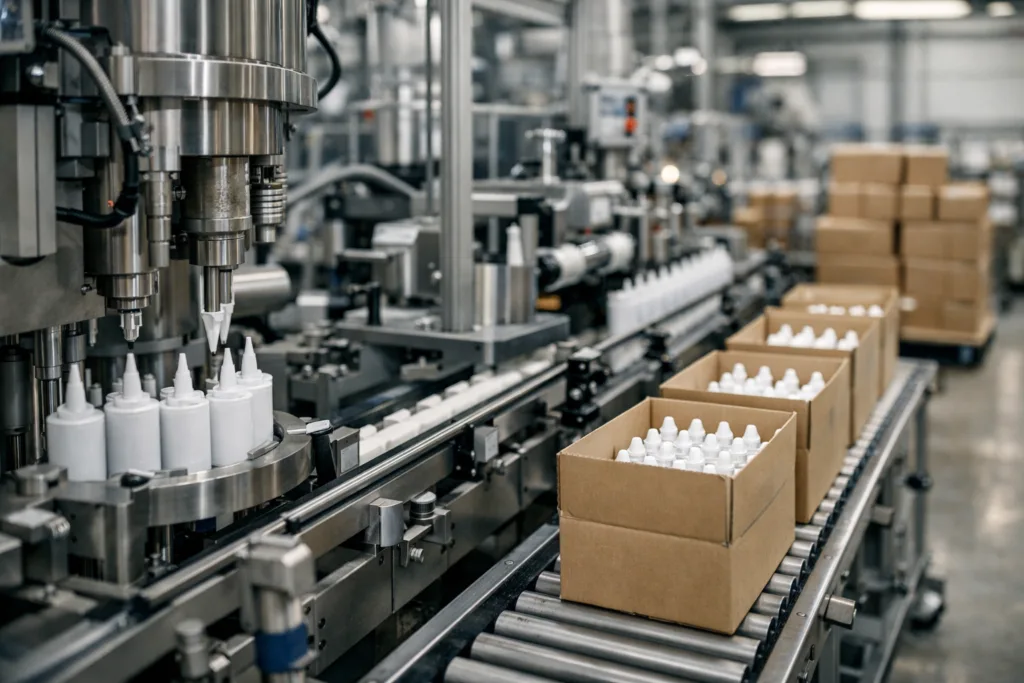
Equipment should match application—from planetary mixers for high-viscosity epoxies to precision reactors for polyaspartics. In-line QC and cross-contamination controls are essential to maintain repeatability across runs.
Planning for Peaks, Custom Specs, and Just-in-Time Delivery
Capacity flexibility separates factories from mere packagers—look for evidence of overtime production, multi-line redundancy, and reliable tank cleaning protocols for rapid material changes.
Quality Control (QC) Systems: Inspection Throughout the Process
Incoming QC to Finished Product Testing
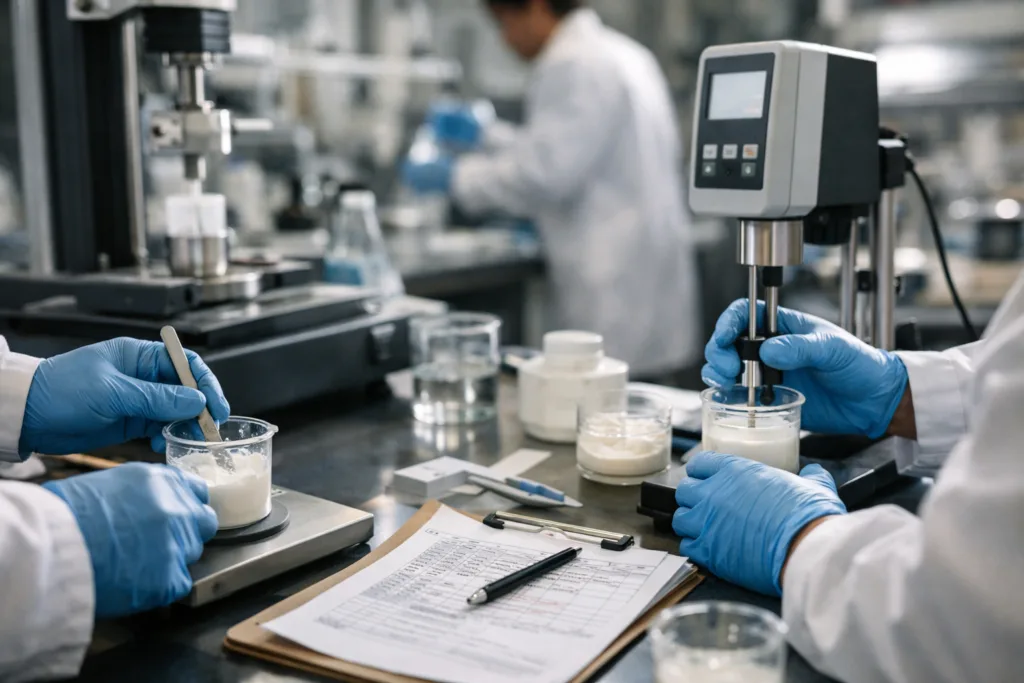
A true adhesive factory never leaves test methods as an afterthought. Incoming raw material checks, in-process viscosity or color monitoring, and final adhesion, cure, and shelf life testing form a complete control loop.
Critical Performance Indexes
For every batch, key metrics—tensile strength, open time, flexibility, chemical resistance—are logged and retained. Custom requirements such as low-VOC formulas or food-grade compliance must be backed by regular, documented analysis.
Customer Complaint Resolution and Continuous Improvement
When application failures or field complaints arise, robust QC records help identify root causes, prevent recurrence, and support continuous product improvement—a foundation for long-term buyer trust.
Batch Traceability: Locking Down Responsibility
Why Traceability Matters for Industrial Buyers
Traceable batches are not a bonus—they’re a requirement for critical uses like electronics, automotive, medical, or infrastructure. Traceability allows any concern to be tracked to root causes, protecting production and liability on both sides.
Serial Numbers, Certificates, and Chain-of-Custody
Each drum, pail, or cartridge should carry a lot or serial number matched to production logs, with material certificates available for inspection. This approach signals true manufacturing discipline.
Packing and Industrial Delivery: More Than Just a Box
Function-Focused Packing
Industrial clients require packaging that preserves adhesive integrity, fits their process, and supports logistics speed: tins, pails, bulk tote tanks, or easy-mix cartridges, depending on the use case.
Labeling, Branding, and Documentation Support
Competent adhesive factories provide neutral or custom labeling, clear usage instructions, safety data, and regulatory paperwork—far beyond basic box packing seen with resellers.
On-Time Shipping and Delivery Problem Solving
Factories should offer scheduled shipments, buffer warehousing, and technical support for cross-border logistics challenges, especially for hazardous classifications or export compliance constraints.
Identifying Real vs. Pseudo-Factories
Red Flags for Pretend Adhesive Factories
- Claiming “factory” status but unable to provide production licenses or real facility photos
- No clear QC system, sample log, or batch records
- Inability to explain material tracking or offer traceability documents
- Minimal technical staff or undefined formulation capabilities
- Customer service oriented toward reselling or repacking, not true manufacturing
How to Verify Factory Authenticity
- Ask for facility visit options—on-site, live video, or independent audits
- Request sample batch records, formulation change logs, QC certificates
- Look for detailed equipment lists and application-specific case examples
- Check manufacturer registration with relevant industry groups or trade bodies
Risks of Working with Trading-Only Companies
Without factory accountability, buyers face the risk of undocumented materials, unreliable scale-up, untraceable quality problems, and weaker technical support, often realizing too late during production or claim events.
The ZDS Perspective: Real Manufacturer Insights
At ZDS, we have seen the cost of ambiguous supplier identity when buyers get trapped by resellers posing as factories. We’ve helped clients regain control by emphasizing transparent QC, customization options, and open facilities access—key factors in building resilient adhesive supply chains for critical applications.
Navigating Supplier Selection as an Industrial Buyer
Application Fit and Technical Support
Assess if the factory truly understands your substrate, cure speed needs, and process methods, not just the material numbers.
Long-Term Partnerships vs. One-Off Sales
Reliable adhesive factories invest in ongoing improvement, formulation evolution, and consistent batch control for partnership stability—an advantage over transactional trading companies.
Evaluation Checklist for Industrial Users and Distributors
- Raw material control systems
- Custom R&D and rapid sampling capability
- Proven mass production and batch-traceability
- QC reports and compliance documentation
- Reliable packing and shipping experience
- Factory registration and transparent facility info
Conclusion: Decoding What Makes a Trustworthy Adhesive Factory
A reliable adhesive factory is defined not only by price or product variety but by enforceable, verifiable manufacturing discipline. Industrial buyers should watch for clear standards in material management, formulation control, robust sampling, mass production, QC, traceability, smart packaging, and supply chain transparency. Taking time to verify true manufacturer capabilities reduces risk, improves consistency, and supports long-term project success.
Frequently Asked Questions
What are the main signs of a genuine adhesive factory?
Look for production licenses, real facility photos, traceable batch records, and detailed QC certifications, not just product lists.
How can buyers test a supplier’s sample capabilities?
Ask for custom samples that meet specific requirements, then request laboratory data and pilot batch details to confirm factory control.
Why is QC system transparency crucial for industrial adhesives?
Transparent QC prevents hidden defects, supports regulatory compliance, and allows rapid troubleshooting if problems occur in critical applications.
How does batch traceability protect buyers?
Traceability links each batch to materials and process records, making it possible to resolve quality claims or recalls quickly and confidently.
What common mistakes do buyers make when choosing between adhesive suppliers and factories?
Many buyers focus only on price or promises, ignoring actual manufacturing depth, raw material source control, and proof of mass production abilities.
Can adhesive factories support custom formulations for niche applications?
True factories with in-house R&D can adjust cure speed, viscosity, chemical resistance, and more to serve unique industry requirements.