
Adhesive Strength Explained: Peel, Shear, and Tensile in Simple Terms
Understanding adhesive strength is essential for any project involving bonding solutions—yet terms like peel, shear, and tensile strength can be confusing. This clear, practical guide explains these key concepts, helping engineers, buyers, and contractors avoid common mistakes and choose adhesives with confidence for specific needs.
As a manufacturer, ZDS provides a clear explanation of adhesive strength, including peel, shear, and tensile, to help users make informed decisions. Readers planning the next project step may want to explore this comprehensive manufacturer reference for up-to-date product specifications, in-depth technical support, and tailored adhesive solutions relevant to your bonding requirements.
What Is Adhesive Strength?
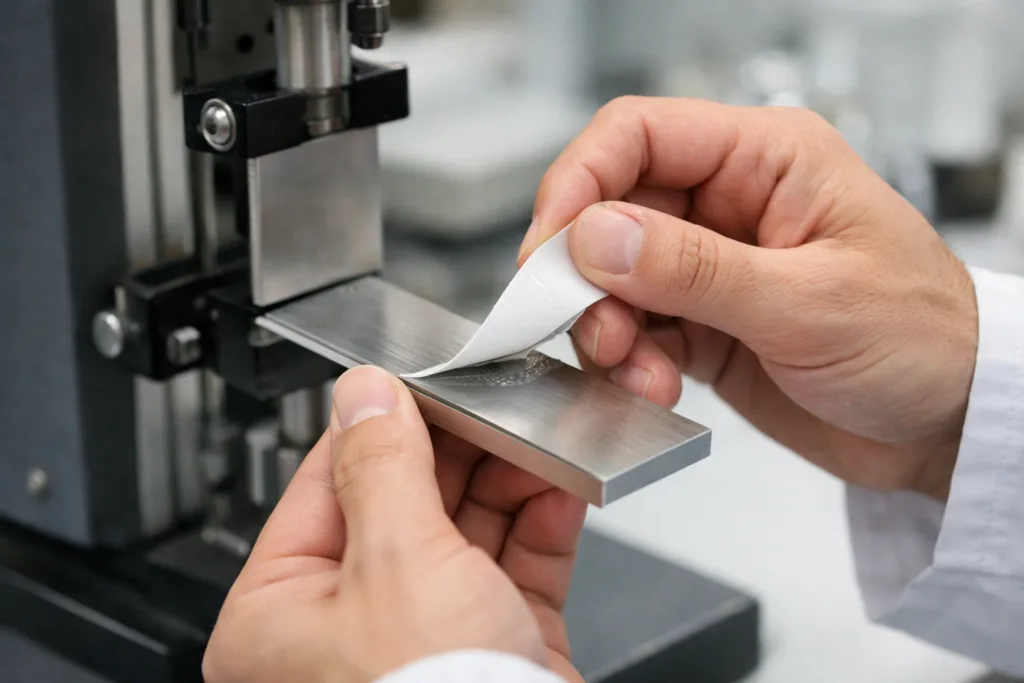
Adhesive strength describes the force required to separate two materials joined by an adhesive. It’s a universal term, but its meaning depends on how that force is applied—and which performance measure matters most for your project. In industrial, construction, and repair settings, knowing the right type of strength to specify is critical to reliable long-term adhesion.
Types of Adhesive Strength Measurements
Three main measurements dominate industry discussions: peel strength, shear strength, and tensile strength. Each tells a different story about how an adhesive will perform under specific stress conditions.
Why Measuring Adhesive Strength Matters
Choosing by generic terms like “high strength” is not enough. The right measure of adhesive strength depends on your application’s mechanics:
- Safety & durability: Selecting based on wrong criteria risks early bond failure.
- Material compatibility: Some substrates may only perform well under certain types of loading.
- Cost-performance: Over-specifying can be wasteful, while under-specifying can be disastrous.
Defining Peel Strength
Peel strength refers to the force needed to pull apart two bonded materials by peeling one away from the other, usually at a steady rate and angle. It is measured in N/mm (Newtons per millimeter) or lb/inch.
Typical Peel Strength Applications
- Bonding flexible to rigid materials (e.g., plastic films, rubber gaskets)
- Labels, tapes, protective laminates
- Flooring and wall panel edging
What High Peel Strength Means
An adhesive with high peel strength resists edge lifting and separation even if one side is flexible. This property is especially important in dynamic or environmental stress conditions, such as temperature changes or vibration.
Defining Shear Strength
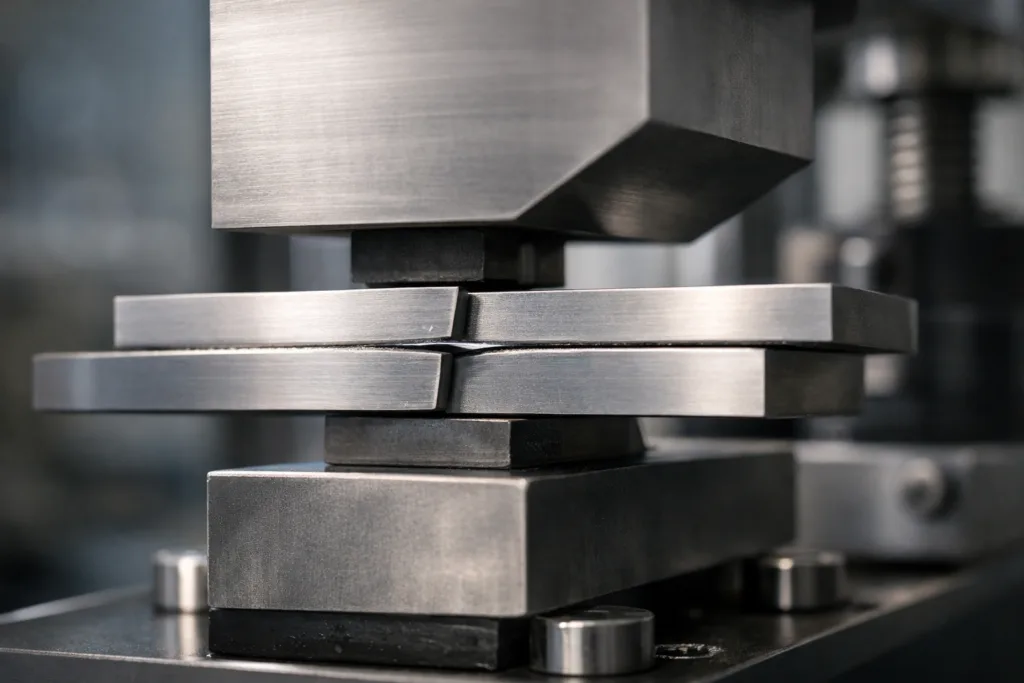
Shear strength is the adhesive’s resistance to forces that try to slide the bonded surfaces across each other, parallel to the plane of the joint.
Key Shear Strength Applications
- Structural panels and brackets
- Metal, wood, or composite assembly
- Load-bearing repairs or industrial fixtures
Why Shear Strength Is Critical
A high shear strength adhesive is necessary where loads pull or push parts past each other, such as in frames, bonds under pressure, or settings with significant vibration. In these scenarios, choosing an adhesive only based on peel or tensile performance can lead to failures under long-term loading.
Defining Tensile Adhesive Strength
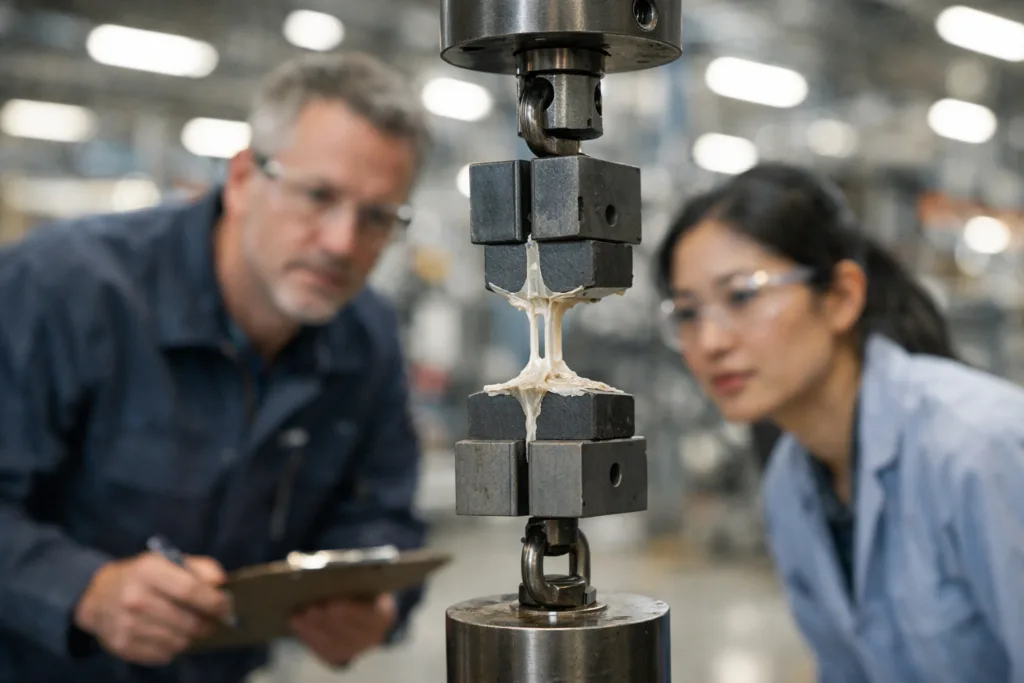
Tensile adhesive strength measures the force required to pull two bonded surfaces directly away from each other, perpendicular to the bond line.
Tensile Strength in Real Applications
- Bonds experiencing direct pulling forces (e.g., mounting fixtures to ceilings or walls)
- Vertical installations or suspensions
- Industrial repair patches
Tensile vs. Shear: What’s Different?
While both measure resistance to separation, shear strength examines forces along the surface, tensile strength looks at forces pulling apart orthogonally. Engineers must distinguish between these when specifying adhesives for safety-critical joints.
Peel, Shear, and Tensile Strength: What’s the Difference?
Let’s examine how these properties compare, and why no single “strength” describes adhesive performance universally:
| Strength Type | Description | Test Setup | Best For |
|---|---|---|---|
| Peel | Force to pull one layer from another by peeling | Bend and pull at angle | Flexible-rigid substrates, tapes |
| Shear | Force to slide layers past each other | Parallel load | Load-bearing joints, panels |
| Tensile | Force to pull apart layers in direct tension | Perpendicular pull | Direct pull bonds, hanging loads |
Why You Can’t Choose Adhesives by a Single Strength Value
Many adhesives advertise a “maximum strength” number, but this can mislead buyers and engineers. A product with exceptional tensile strength may perform poorly in peel if bonding a flexible substrate. Specifications that highlight only the highest number do not account for the direction of loading or application conditions.
Common Scenarios: Which Adhesive Strength Metric Matters Most?
Consider these examples to match the right performance measurement to your real-world application:
- Sealing HVAC ductwork: Peel and shear properties both matter, as ducts vibrate during operation.
- Mounting a metal sign: Shear and tensile are key for load-bearing; peel is less critical.
- Carpet installation: Peel strength dominates; the bond must resist edge lifting and foot traffic.
- Automotive repairs: All three may matter—depending on whether panels, trims, or gaskets are being bonded.
How Adhesive Testing Reflects Each Strength Type
Industry-standard tests use different set-ups and metrics for each strength property. Understanding these lets teams compare adhesives properly across suppliers:
- Peel: 180° or 90° peel test (flexible sample peeled from rigid plane at angle)
- Shear: Single lap joint shear test (plates pulled parallel apart)
- Tensile: Butt joint tension test (plates pulled directly away from each other)
For a deeper look at evaluation methods, see the practical adhesive testing methods guide on our site.
What Influences Adhesive Strength in Real Use?
It’s not just the adhesive itself. Other factors often affect performance:
- Substrate type & surface preparation
- Bond thickness
- Curing conditions (time, temperature, humidity)
- Environmental exposure (UV, chemicals, vibration)
This means lab-tested strength values can deviate significantly from field results if any of these variables are mismanaged.
How to Read Adhesive Data Sheets: What to Ignore, What to Trust
Adhesive data sheets often present “max” values achieved in ideal lab conditions. Don’t anchor decisions on a single impressive strength number—read which property the value describes (peel, shear, or tensile), and under what conditions the data were generated.
Avoiding the Trap of “Highest Strength” Claims
When manufacturers or distributors promote an adhesive’s “highest strength,” always look for specifics. Does this refer to shear, tensile, or peel? Does the value reflect the actual loading scenario in your application, or just one in which the product performs best?
Which Strength Metric Should You Prioritize?
Choose the metric that matches your dominant bond-stress profile. For static, structural bonds, shear may be most relevant; for dynamic or flexible joints, peel often dictates real-world durability; for direct pulls, tensile is your critical value. If in doubt, consult with a supplier or manufacturer who understands your industry and materials.
Adhesive Strength for Different Industries
- Construction: Shear and tensile for panels, frames, and envelope systems.
- Automotive: Peel for interior trims, shear for exterior/structural bonds.
- Electronics: Peel for films, tensile for housing and component supports.
- General manufacturing: Balance depends on materials joined and operational forces expected.
Material Compatibility and Its Effect on Strength
Not all adhesives deliver high strength values on every material. For example, certain plastics may limit both peel and tensile adhesion. The right adhesive type and surface treatment can make a major performance difference—review our broad range of adhesive products to compare capabilities for your substrates.
When to Consider Custom Adhesive Solutions
Some applications defy standard adhesives. When product data sheets don’t align with your requirements, it might be time to explore signals for needing a custom adhesive, especially where unique combinations of peel, shear, and tensile strength are demanded by challenging environments.
High-Strength Adhesive Applications: A Practical Example
For assemblies that experience dynamic loading or must resist tampering, specifying a high-strength adhesive for demanding applications may balance competing peel, shear, and tensile requirements. However, always match the product to your main failure risk.
Typical Mistakes When Assessing Adhesive Strength
- Basing selection only on the “strongest” number advertised
- Ignoring real application stress patterns
- Not considering environmental and substrate effects
- Overlooking the test conditions behind data sheet values
Experience-Based Advice from Adhesive Manufacturers
In our experience, effective adhesive selection comes from dialogue—not just data sheets. ZDS routinely helps industrial buyers and engineers interrogate their project conditions and identify which strength metric actually governs long-term durability, reducing the risk of early failure or overdesign.
Summing Up: Make Strength Work For You, Not Against You
No single “adhesive strength” number fits all applications. Peel, shear, and tensile describe different aspects of performance for a reason. Clarify your dominant loading scenario, match the adhesive metric, and avoid the common trap of buying on marketing claims alone. For technical support or tailored recommendations, connecting with an experienced manufacturer brings clarity and value to your adhesive decisions.
Frequently Asked Questions
What is the most important type of adhesive strength for wall panels?
Shear strength is usually most important for wall panels because it measures the adhesive’s ability to resist sliding or shifting under load, which is common in these applications.
Can a high peel strength adhesive replace a high tensile strength adhesive?
Not typically; high peel and high tensile strengths indicate different resistances. The right choice depends on the direction of load the bond will face in practice.
Why do some adhesives have high shear but low peel strength?
Chemical formulation and the degree of flexibility or rigidity in the adhesive affect these values. Many rigid adhesives bond well under shear but can be brittle when peeled at an angle.
How can I prevent adhesive failure in my application?
Match the adhesive’s main strength property (peel, shear, or tensile) to your dominant stress direction, and ensure surfaces are clean and properly prepared before bonding.
Do data sheet strength numbers reflect real-world performance?
They provide an important starting point, but real-world conditions like surface cleanliness, temperature, and load variability can cause actual values to differ from the lab results.
Should I always choose the adhesive with the highest published strength?
No, always focus on the strength type that matches your specific loading scenario; the highest shown value may not be relevant for your application.