
When buyers start a custom adhesive project, the first questions are usually practical rather than chemical: What is the minimum order quantity? How long will samples take? What causes delays between approval and production? These questions matter because adhesive development is tied not only to formula performance, but also to raw material sourcing, batch economics, packaging decisions, testing cycles, and factory scheduling. A clear understanding of these factors helps procurement teams, engineers, and product managers set realistic expectations before they compare suppliers.
custom adhesive manufacturer guide is a useful next step if you want a focused explanation of how supplier type, production scale, and project requirements influence ordering decisions from the start.
What determines MOQ for a custom adhesive project
MOQ is rarely an arbitrary number. For a custom adhesive manufacturer, it is usually the result of production practicality. A factory has to consider whether the batch size is large enough to mix consistently, fill efficiently, test properly, and ship without creating waste or quality risk. If the required volume is too small, the manufacturer may need to absorb excessive setup time, leftover raw materials, or packaging inefficiency.
MOQ often depends on the combination of formula type, package size, and intended use. A one-component adhesive in standard pails may support a lower MOQ than a two-component system requiring matched filling, special cartridges, or moisture-controlled handling. Projects with narrow performance windows may also require extra in-process testing, which can push viable production volume higher.
Common drivers behind MOQ
- Minimum efficient batch size for mixing and quality consistency
- Raw material purchasing units and supplier pack sizes
- Special packaging formats such as cartridges, dual syringes, or small bottles
- Labeling, coding, and carton requirements
- Shelf life sensitivity and inventory risk
- Whether the formula is fully custom or only slightly modified from an existing base
How formula complexity and raw materials affect minimum order quantity

Formula complexity has a direct effect on MOQ because complexity usually increases cost and handling constraints. If a formulation uses specialty resins, curing agents, adhesion promoters, or imported additives, the manufacturer may need to buy raw materials in supplier-defined minimums that exceed your immediate demand. In those cases, a low-volume project may still be possible, but the commercial structure may change through higher unit pricing, development charges, or a larger first order.
Some materials also have storage or compatibility limits. Moisture-sensitive ingredients, short shelf-life components, or regulated materials require tighter planning. If a raw material cannot be stored for long or reused easily across other jobs, the manufacturer may need a larger confirmed volume before production makes sense.
For buyers comparing suppliers, this is where it helps to understand what to include in a custom quote. When application conditions, substrate types, package format, and annual demand are clear early, MOQ discussions become much more accurate.
Typical sample lead time and what affects it
Sample lead time depends on whether the supplier is modifying an existing formula or starting from a new performance target. A simple adjustment to viscosity, cure speed, or color may move faster than a project that requires bond testing across multiple substrates or environmental conditions. Sample lead time also depends on whether all raw materials are already in stock.
In general, the timeline is influenced by technical clarity. The more complete the project brief, the fewer cycles are lost to assumptions. A buyer who shares substrate information, process method, operating temperature, cure expectations, and failure concerns will usually get more relevant samples faster than a buyer who only asks for a “strong adhesive.”
Factors that change sample speed
- Availability of similar existing formulations
- Raw material stock status
- Need for internal screening or compatibility testing
- Number of target properties being optimized at once
- Whether packaging for the sample is standard or custom
- How quickly the customer provides feedback after testing
Sample types explained
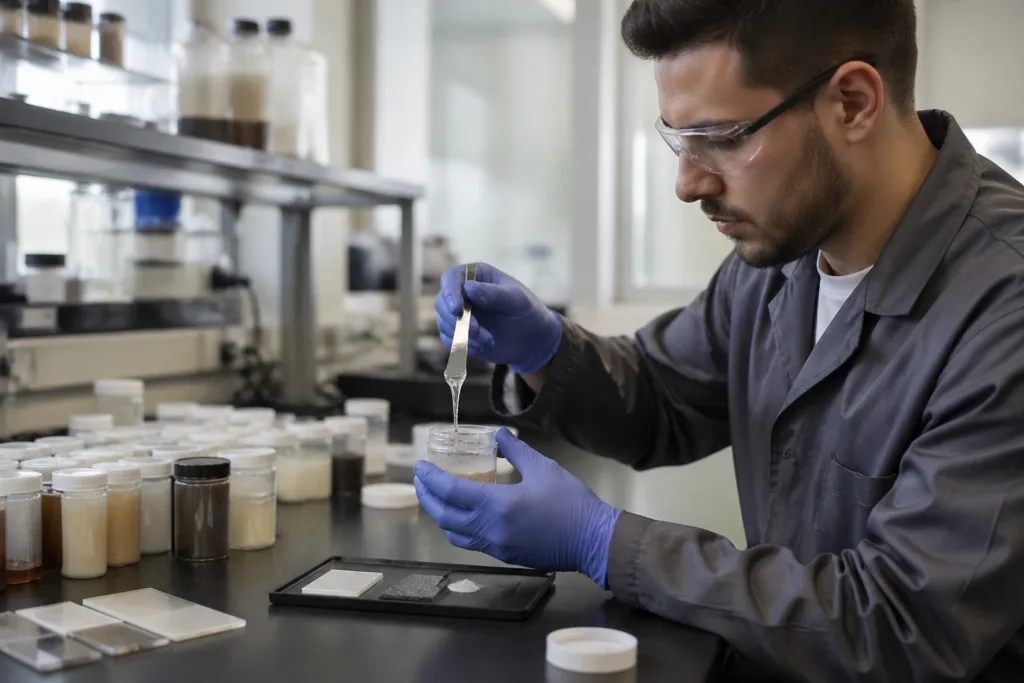
Not all samples serve the same purpose, and confusion here often creates avoidable delays. A lab sample is usually a small quantity prepared to verify core performance. It helps answer whether the adhesive can likely meet the application need. A pilot sample is closer to production intent and is more useful for process verification, filling checks, and broader validation. A customer evaluation sample may be either type, but it should be clearly identified so both sides understand how representative it is of future manufacturing.
When ZDS supports evaluation projects, one of the most important discussions is whether the customer is still screening chemistry options or already validating a nearly finalized formula. That distinction affects both timing and expectations.
| Sample Type | Main Purpose | Typical Use | Buyer Expectation |
|---|---|---|---|
| Lab sample | Initial feasibility | Bonding and cure checks | Useful for early evaluation, not always final-process representative |
| Pilot sample | Process validation | Line trials, broader testing | Closer to scalable production behavior |
| Customer evaluation sample | Application confirmation | Internal approval or field testing | Should be labeled clearly by stage and intended use |
Trial production vs. mass production
Buyers often assume that once a sample works, mass production should follow immediately. In reality, trial production and full-scale manufacturing are different operational stages. A sample may be mixed in a smaller lab environment with flexible timing, while mass production requires line scheduling, raw material allocation, quality documentation, packaging preparation, and shipping coordination.
This is why the custom adhesive development timeline usually includes more than formulation work alone. Scale-up can reveal practical issues such as mixing behavior, fill accuracy, deaeration requirements, or cure consistency that were not obvious in early samples.
Why production timelines are usually longer than sample timelines
- Raw materials may need to be purchased in production quantities
- Packaging materials may require separate lead times
- Production slots must fit within plant scheduling
- Quality control plans may be more extensive for launch batches
- Approved labels, barcodes, and shipping marks may still be pending
Key factors that create delays between sampling and full-scale manufacturing
The most common delays appear in the handoff between technical approval and commercial readiness. A sample may pass testing, but the project can still stall if there is no final agreement on annual volume, delivery schedule, package format, storage conditions, or change control expectations. Delays also occur when customers expand requirements after the sample stage, such as adding a new substrate, asking for a different cure profile, or switching packaging size.
Another frequent issue is incomplete internal alignment on the buyer side. Engineering may approve performance while procurement is still comparing cost structures, or operations may later identify dispensing issues that were not considered earlier. A reliable supplier will ask questions that uncover these gaps before launch, not after.
How packaging, labeling, and compliance requirements extend lead time
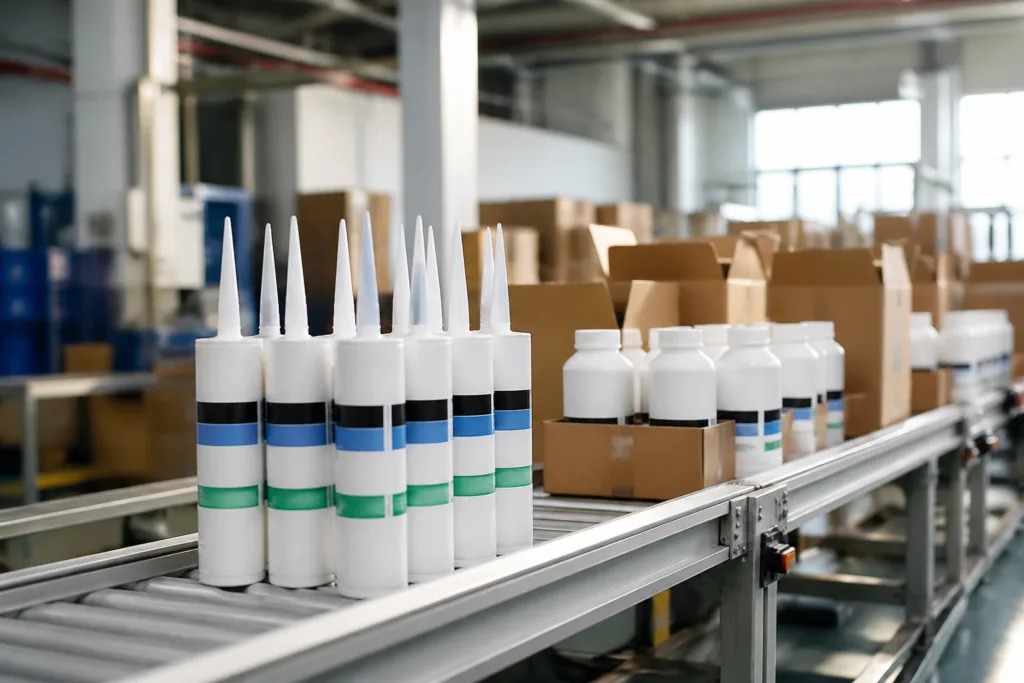
Packaging decisions can significantly affect both quote accuracy and production planning. Standard drums or pails are usually simpler than custom bottles, dual cartridges, or retail-style packs. The more specialized the packaging, the more dependencies the project has on component sourcing, tooling fit, filling speed, and labeling accuracy.
Labeling is often underestimated. If artwork, language versions, hazard statements, batch coding, private label branding, carton marks, or pallet labels are still under review, production may be technically ready but commercially blocked. For projects involving export markets, document review and regional packaging conventions can add another layer of timing risk.
This is also where a manufacturer’s custom formulation services can matter beyond the chemistry itself. Buyers often benefit when formulation, packaging coordination, and manufacturing planning are discussed together instead of treated as separate workstreams.
What a reliable adhesive manufacturer should clarify upfront
Before development begins, a strong supplier should clarify what is custom, what is modifiable, and what is already known. The goal is not to overwhelm the buyer with technical detail, but to reduce ambiguity. Clear upfront communication lowers the chance of a fast sample turning into a slow production launch.
Important points to clarify early
- Target substrates and whether surface preparation is required
- Application method such as manual dispensing, automated dispensing, spray, or roll coating
- Required cure mechanism and working time
- Temperature, moisture, chemical, or UV exposure conditions
- Required hardness, flexibility, or reworkability
- Sample stage definitions and approval criteria
- Expected MOQ, production MOQ, and annual forecast range
- Packaging format, label responsibility, and shipping expectations
How to prepare technical requirements to speed communication
The fastest projects usually begin with a practical application brief rather than a vague product request. A supplier does not need every laboratory detail on day one, but it does need enough information to reduce trial-and-error. Useful inputs include bonded materials, joint design, application temperature, cure time targets, operating environment, current adhesive pain points, and desired package size. Photos, process videos, or failed sample notes can also help.
If the project is replacing an existing adhesive, explain why. The real issue may be insufficient peel strength, poor wetting, slow cure, stringing during dispensing, excessive odor, or shelf-life instability. These clues often shorten formulation screening because they define what success actually means.
For teams that are ready to move from discussion into active evaluation, a concise technical brief paired with a forecast and packaging plan makes it easier to request project support in a way that gets useful feedback quickly.
A practical buyer checklist for faster samples and shorter lead times
Procurement and engineering teams can reduce project friction by aligning internally before sending the first inquiry. Most avoidable delays come from missing commercial details, changing requirements midstream, or unclear ownership of testing and approval steps.
- Define the exact substrates and any surface treatment conditions
- State whether the project is a new design or a replacement for an existing adhesive
- List must-have properties versus preferred properties
- Share estimated annual volume and launch timing
- Confirm sample quantity needed for realistic testing
- Decide package size early, even if branding is not final
- Identify who signs off on technical performance and who signs off on purchasing
- Provide fast, structured test feedback after sample receipt
Common mistakes that delay custom adhesive projects
One common mistake is treating sample approval as the only milestone that matters. In practice, commercial readiness, packaging readiness, and production readiness must all align. Another mistake is asking for a highly customized product without sharing realistic volume expectations. If the manufacturer cannot match the project scale to raw material and production economics, early quoting and timing will remain uncertain.
A third mistake is changing multiple variables at once after testing begins. If substrate, packaging, cure speed, and color all change together, it becomes harder to identify the cause of success or failure. ZDS typically sees smoother projects when buyers lock the core application first, then refine secondary preferences in a controlled sequence.
Conclusion
Working with a custom adhesive manufacturer is usually most efficient when buyers understand that MOQ, lead time, and sampling are linked. MOQ reflects production logic, sample timing reflects technical clarity and material readiness, and final lead time reflects how smoothly the project moves from formula approval into packaging, planning, and manufacturing. Buyers who prepare a clear application brief, realistic volume estimate, and timely feedback process tend to get better samples faster and move into production with fewer surprises.
FAQ
What is a typical MOQ from a custom adhesive manufacturer?
MOQ varies by formula, raw materials, batch size, and packaging format, so it is usually set by production efficiency rather than a fixed rule.
Why can sample lead time be much shorter than production lead time?
Samples may be prepared in small quantities with flexible lab scheduling, while production requires raw material planning, packaging preparation, quality checks, and line scheduling.
What information should buyers provide before requesting samples?
Buyers should provide substrate details, application method, cure requirements, operating environment, package size, target volume, and any known problems with current materials.
Do custom labels and packaging affect adhesive lead time?
Yes, custom packaging and labels can extend lead time because they add sourcing, approval, filling, coding, and scheduling requirements beyond the adhesive formula itself.
What is the difference between a lab sample and a pilot sample?
A lab sample is mainly for initial feasibility testing, while a pilot sample is closer to production intent and is better suited for line trials and broader validation.
How can buyers reduce delays in a custom adhesive project?
They can reduce delays by defining technical requirements early, keeping changes controlled, aligning internal decision-makers, and giving structured test feedback quickly.