
High lap shear values often look reassuring on an epoxy data sheet, but they do not automatically mean a bonded joint will survive real service conditions. In practical assemblies, loads rarely stay as clean, centered shear. They become a mix of peel, cleavage, vibration, shock, thermal cycling, and repeated flexing. That is why epoxy adhesive peel resistance deserves far more attention during material selection, especially for engineers and buyers evaluating structural bonding in equipment, vehicles, composites, and industrial products.
If your project requires epoxy adhesive options for structural bonding, it helps to compare more than a headline strength number. We support manufacturers with formulation matching, viscosity and cure adjustment, substrate-focused recommendations, sample evaluation, and packaging options that fit pilot runs or production scale. For teams dealing with metal, composite, plastic, or mixed-material joints, the right epoxy choice often depends on peel tolerance, fatigue behavior, gap control, and process stability as much as on nominal shear strength.
Why engineers should not select an epoxy based on lap shear alone
Lap shear testing has value. It gives a controlled way to compare adhesives under a defined loading method, and it can be useful for screening candidate systems. However, it is only one piece of the mechanical picture. A single-lap specimen concentrates stress near the ends of the overlap, and it does not fully represent the wide variation of load paths found in production joints. Even the ASTM D3165 lap-shear test limitations make clear that single-lap results should not be treated as universal design allowables for all bonded structures.
From our adhesive manufacturing perspective, the common problem is not that buyers use lap shear data, but that they use it alone. An epoxy can show impressive shear strength on metal coupons and still perform poorly when the real assembly introduces edge lifting, dynamic loads, dissimilar substrates, thick bondlines, thermal mismatch, or intermittent impact. This is especially true when the epoxy is very rigid and the joint geometry generates localized peel stress.
For this reason, selection should begin with the actual service load, substrate pair, temperature range, assembly method, and failure consequence. The right question is not simply, “Which epoxy has the highest MPa?” It is, “Which epoxy gives the most reliable joint under the way this assembly will really be stressed?”
Understanding lap shear, peel, cleavage, fatigue, and impact loading
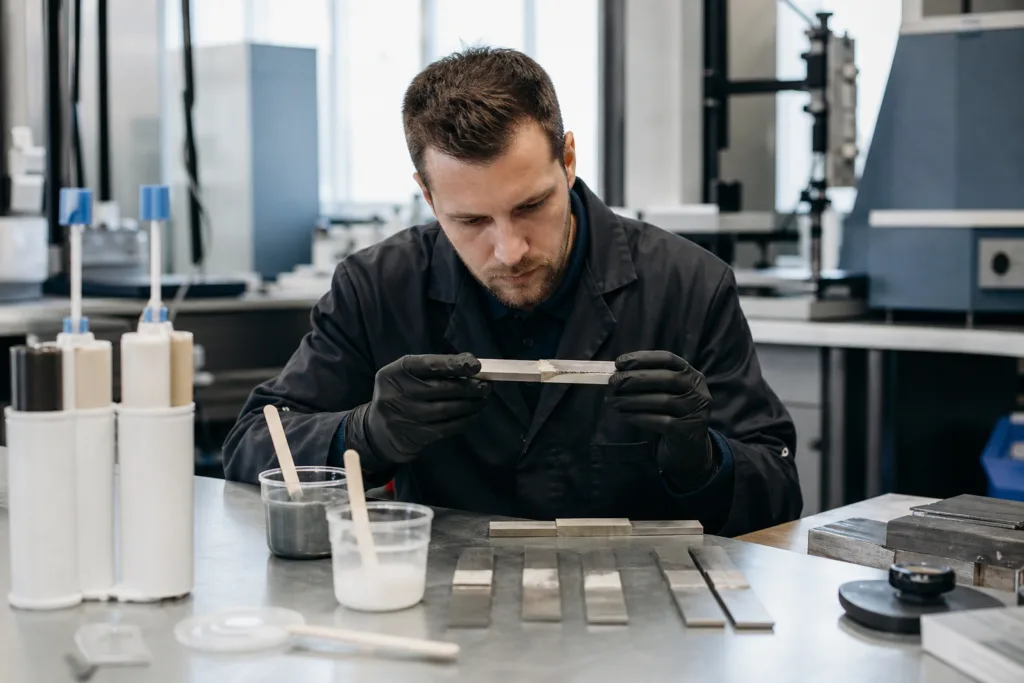
Many adhesive failures happen because the test method and the service condition do not match. A clear understanding of loading modes helps prevent that mistake. If your team needs a basic framework, our guide on peel, shear, and tensile performance explained is a useful starting point before comparing structural epoxy grades.
Lap shear
Lap shear loads the bondline mainly in parallel sliding. It is still a relevant screening metric for many metal-to-metal or rigid panel joints, but it tends to favor stiff systems and does not capture everything that happens in service.
Peel
Peel occurs when one adherend lifts away from the other, focusing stress at a narrow advancing front. This is one of the hardest conditions for rigid adhesives. A joint can hold strong in shear and fail early in peel because the stress is highly concentrated and less distributed across the overlap.
Cleavage
Cleavage is similar to peel but often acts across a rigid opening geometry, such as levering one bonded part away from another. It produces severe edge stresses and can quickly expose brittle behavior.
Fatigue
Fatigue is damage caused by repeated loading over time. The joint may survive one load cycle easily but fail after thousands or millions of smaller cycles. Vibration, thermal expansion and contraction, rotating machinery, transportation movement, and repeated actuation all create fatigue risk.
Impact
Impact is sudden loading from drop, strike, slam, crash, tool contact, or abrupt mechanical shock. A rigid epoxy with good static strength may crack under impact if it cannot absorb energy fast enough.
In actual assemblies, these modes overlap. A battery housing, machine cover, composite panel, or metal bracket may see baseline shear during service, edge peel during assembly distortion, fatigue during vibration, and impact during transport or maintenance. That is why a balanced property profile matters more than any isolated headline number.
How joint design changes stress distribution and shifts failure risk
Joint design can make an average adhesive perform well or cause a strong adhesive to fail. Overlap length, adherend thickness, stiffness mismatch, load eccentricity, bondline thickness, flange geometry, and edge condition all influence where stress concentrates. Industry guidance on how joint geometry affects peel and cleavage stresses reinforces a point we often discuss with engineering teams: bond performance is a system issue, not just a chemistry issue.
Single-lap joints inherently create bending because the load path is offset. That means a nominally shear-loaded coupon can still experience peel stress at the overlap ends. In a real product, the effect may be even stronger if one substrate is thinner, more flexible, or less dimensionally stable.
| Design factor | What it changes | Common risk |
|---|---|---|
| Short overlap | Higher local stress concentration | Early edge failure |
| Thin flexible adherend | More bending and lift | Peel-driven debonding |
| Large stiffness mismatch | Uneven load transfer | Localized cracking |
| Excess bondline thickness variation | Stress spikes and voids | Fatigue reduction |
| Eccentric loading | Combined shear and opening force | Cleavage failure |
| Sharp joint edges | Stress initiation points | Crack growth under impact |
Where possible, designers should reduce peel-prone geometry, improve alignment, use sufficient overlap, avoid unnecessary levering, and control bondline thickness. Sometimes the most cost-effective reliability improvement comes from a small geometry change rather than from moving to a much more expensive adhesive.
Why toughened epoxy formulations matter for dynamic service
Standard rigid epoxies are often selected for their hardness, chemical resistance, and high static strength. Those are useful properties, but in dynamic service they can become a limitation. Toughened epoxy systems are designed to absorb and redistribute stress more effectively. In our formulation work, that usually means balancing modulus, elongation, fracture behavior, and interfacial adhesion rather than maximizing only hardness or initial strength.
Toughened systems may include elastomeric, thermoplastic, or particle-based modification strategies to improve crack resistance and energy absorption. The exact approach depends on the substrate and process constraints. The goal is not softness for its own sake. The goal is controlled toughness: enough rigidity for structural load transfer, but enough resilience to resist crack initiation and propagation during peel, vibration, thermal cycling, or impact.
This is why a two-part structural epoxy for industrial assemblies is often preferred when a project needs more than static coupon strength. Two-part systems can offer useful room-temperature cure options, adjustable working time, and a broader window for tuning toughness versus handling speed.
What makes a fatigue resistant epoxy adhesive perform better
Fatigue resistance is not determined by one property alone. It comes from the adhesive’s ability to tolerate repeated strain without progressive crack growth. Several factors matter:
- Toughness: Better energy absorption slows crack initiation.
- Adhesion to the substrate: A stable interface reduces progressive edge debonding.
- Controlled modulus: Excessive stiffness can amplify stress from thermal mismatch or vibration.
- Low void content: Bubbles become crack initiation sites under cyclic loading.
- Stable cure quality: Incomplete or inconsistent cure weakens long-term performance.
- Environmental durability: Heat, humidity, and chemicals can accelerate fatigue damage.
In production, fatigue problems often start with hidden process variation rather than the chemistry itself. Uneven mix ratio, poor wetting, contamination, and uncontrolled bondline thickness can all shorten fatigue life significantly. For buyers evaluating suppliers, this means mechanical data should be considered together with dispensing method, packaging format, cure control, and batch-to-batch consistency.
How impact resistant epoxy structural glue differs from standard rigid epoxies
Impact resistance requires rapid energy management. When a bonded part is struck, the adhesive must resist brittle crack propagation and maintain adhesion under a short, intense stress pulse. Standard rigid epoxies can fail because they transmit the shock rather than dissipate it.
Impact-resistant structural epoxies usually differ in three practical ways. First, they are tougher and less notch-sensitive. Second, they are more tolerant of localized stress concentration at bondline edges. Third, they maintain better integrity when the bonded substrates have different stiffness or thickness. This becomes important in mixed-material assemblies such as metal-to-composite housings, bracket bonding, covers, enclosures, and structural reinforcement parts.
The trade-off is that a highly impact-resistant grade may not always deliver the highest static modulus or the shortest fixture time. Selection therefore depends on whether the application values speed, rigidity, abuse tolerance, or a balance of all three.
Epoxy adhesive peel resistance: why peel is often the real weakness
When teams compare epoxies for structural use, epoxy adhesive peel resistance is often where the hidden weakness appears. In service, peel stress can develop from panel flex, thermal bowing, assembly misalignment, edge loading, vibration, cable pull, or simple handling abuse. A bond that looks secure in a coupon test may begin failing at one lifted edge and then propagate quickly.
Peel performance matters because the adhesive must withstand concentrated opening forces at the interface. That usually requires a combination of strong wetting, reliable adhesion, sufficient elongation, and fracture toughness. Very rigid, brittle systems may hold excellent lap shear numbers but show limited tolerance once the bondline is forced to open.
From our manufacturing perspective, peel-sensitive applications often benefit from formulation adjustment rather than from generic grade substitution. That may involve changing flexibility, viscosity, cure speed, filler level, or surface affinity. For OEM teams developing a product around a specific substrate set and assembly method, this is where custom adhesive formulation support can become more practical than relying on off-the-shelf coupon data.
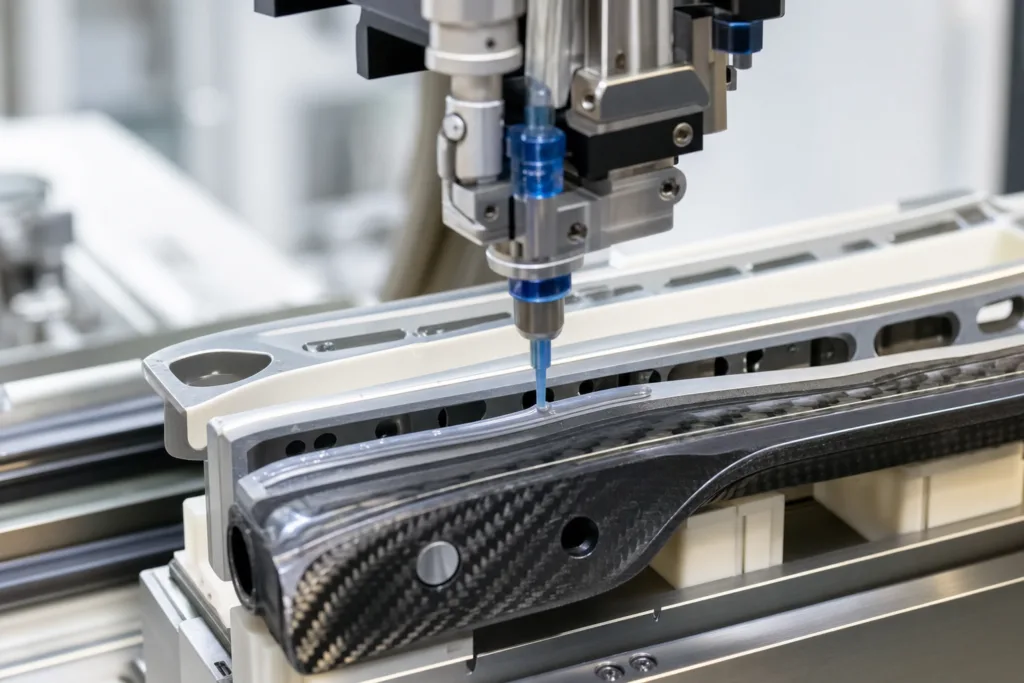
Applications where non-shear loads dominate
Many industrial assemblies are governed less by pure shear and more by combined loading.
Automotive assemblies
Panels, brackets, trims, battery modules, sensor housings, and lightweight mixed-material structures see vibration, impact, thermal cycling, and dimensional movement. The adhesive needs more than static strength; it needs durability against edge stresses and repeated motion.
Composite structures
Composites can flex differently from metals and may concentrate interfacial stress at overlap edges. Peel and cleavage can become more severe, especially if one side is thin or unsupported.
Industrial equipment and machinery
Covers, guards, magnets, nameplates, reinforcements, bonded mounts, and encapsulated subassemblies often experience shock, vibration, and maintenance-related abuse. A brittle adhesive may pass bench testing and then fail in transport or operation.
Electronics and enclosures
Small bonded parts may experience cable pull, drop impact, local heating, and differential expansion. Even when the component is light, a short lever arm can create a strong peel moment at the adhesive edge.
Material and substrate factors that affect shear versus peel behavior
Substrate selection strongly affects how the same epoxy behaves. Surface energy, roughness, contamination, thermal expansion, and stiffness all change practical bond performance.
| Substrate factor | Influence on bond behavior | Selection implication |
|---|---|---|
| High stiffness metal | Can support high shear but concentrate edge stress | Check peel and impact data carefully |
| Thin aluminum sheet | Bends easily under load | Higher peel risk than thick coupons suggest |
| Composite laminate | Directional stiffness and variable surface | Validate surface prep and fatigue behavior |
| Engineering plastic | Lower surface energy and creep potential | Confirm adhesion and aging, not just initial strength |
| Dissimilar material pair | Different thermal expansion creates cyclic stress | Favor tougher, more compliant structural epoxy |
One frequent mistake is assuming a bond proven on blasted steel will behave the same on painted metal, anodized aluminum, molded composite, or coated plastic. Surface condition and interface chemistry matter as much as the resin family.
Common data-sheet misreadings engineers and buyers should avoid
We regularly see several avoidable interpretation errors during sourcing and qualification:
- Using peak lap shear as a universal ranking tool: The highest number is not always the most reliable option.
- Ignoring substrate and test method details: Results depend heavily on adherend type, thickness, overlap geometry, cure schedule, and environment.
- Comparing values from different test setups as if they are equivalent: Cross-brand comparisons can be misleading if methods differ.
- Overlooking temperature and humidity effects: A room-temperature result may not reflect hot/wet service.
- Assuming rigid means structural: Structural performance includes toughness and durability, not only hardness.
- Skipping failure mode analysis: Cohesive, adhesive, and substrate failures mean different things and should guide the next trial.
Before approving a supplier, we recommend reviewing the test method, substrate pair, cure profile, bondline thickness, and environmental exposure behind each published result. This is also why the broader set of adhesive testing methods buyers should understand matters during technical evaluation.
Which test data actually matters for your joint type
No single test covers every service condition. The better approach is to choose data that reflects the expected failure mode of the application.
| Joint or service condition | Priority test data | Why it matters |
|---|---|---|
| Rigid overlap under static load | Lap shear | Useful for baseline screening |
| Flexible panel or edge-lift risk | T-peel or peel-oriented evaluation | Shows resistance to opening stress |
| Levered or prying geometry | Cleavage-style evaluation | Reveals edge crack sensitivity |
| Vibration or repeated thermal movement | Fatigue and environmental aging | Indicates long-term durability |
| Drop, slam, or transport abuse | Impact testing | Shows shock tolerance |
| Outdoor or humid operating environment | Aged mechanical retention | Confirms property stability over time |
The test plan should match the joint, not just the adhesive category. If the assembly can peel, test peel. If it will vibrate, test fatigue. If it may be struck, test impact. If it operates hot and wet, include aging before mechanical evaluation.
What to validate before moving from lab sample to production
Lab approval should never rely on one ideal coupon result. Before scale-up, buyers and engineers should validate the full bonding system:
- Actual production substrates, including coating, finish, and cleaning method
- Realistic bondline thickness and tolerance window
- Dispensing and mixing method used on the shop floor
- Fixture time, handling strength, and full cure under plant conditions
- Environmental exposure relevant to service
- Failure mode after destructive testing
- Packaging format and workable pot life for the production rhythm
At ZDS, we encourage customers to define acceptance criteria around the real assembly. That often means sample trials on production-representative parts, not only standard coupons. It also means checking whether the same epoxy still performs when there is operator variation, temperature drift, or lot-to-lot substrate change.
Surface preparation, cure conditions, and bondline control as hidden variables
Even a well-selected epoxy can disappoint if the process is unstable. Surface contamination, under-cure, and poor thickness control often create false conclusions about the adhesive itself.
Surface preparation
Oil, mold release, oxidation, dust, and handling residue reduce wetting and interfacial strength. The more peel-sensitive the joint, the more dangerous weak edge adhesion becomes. Cleaning and, where appropriate, abrasion or pretreatment should be standardized.
Cure conditions
Epoxy performance depends on cure completeness. Room-temperature systems may need longer stabilization than teams expect, and heat-assisted curing can significantly change modulus and toughness. Mixed ratio accuracy also matters for two-part products.
Bondline thickness
Too thin a bondline may starve the interface. Too thick a bondline may trap voids, increase shrinkage effects, or change stress distribution. Spacers, controlled dispensing, and fixture design can help maintain consistency.
Bubble control
Entrapped air becomes a weakness under fatigue and impact. Viscosity selection, mixing method, vacuum treatment where practical, and dispensing path all influence final bond integrity.
How we help customers evaluate epoxy mechanical performance more realistically
From our adhesive manufacturing perspective, the best structural epoxy selection process is application-specific and evidence-based. We work with customers to narrow the requirement beyond a generic “high-strength epoxy” request. Typical questions include:
- Is the bond mainly in shear, or will the joint flex and peel?
- What substrates and surface finishes are involved?
- What is the target operating temperature and humidity range?
- Will the part see vibration, repeated cycling, or shock?
- What working time, fixture time, and viscosity are needed for the process?
- Is the requirement standard supply, OEM adjustment, or private label development?
That discussion helps align chemistry with the actual load case. In some projects, a more rigid epoxy is appropriate. In others, a toughened formulation with better crack resistance gives better field reliability even if its headline lap shear number is lower. Good supplier communication on these trade-offs is often more valuable than receiving a longer but less relevant data sheet.
Conclusion
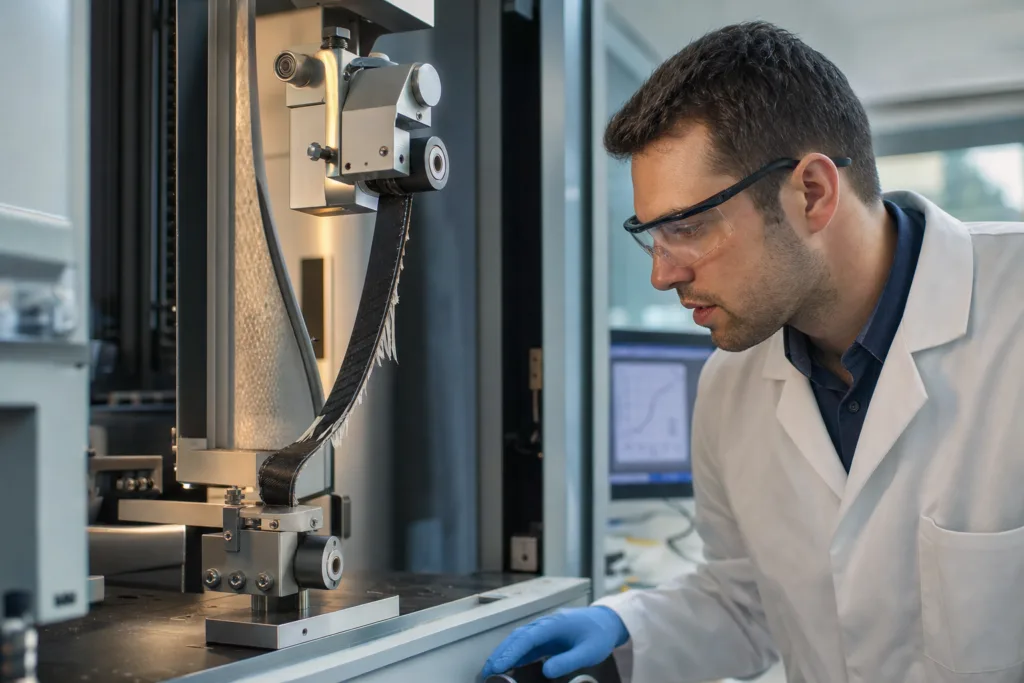
Lap shear strength remains useful, but it is not enough to predict real joint reliability on its own. If a bonded assembly can peel, flex, vibrate, age, or take impact, then those conditions should shape the adhesive decision. Epoxy adhesive peel resistance is often the missing evaluation point that explains why a strong-looking bond fails early in service. For engineers, buyers, and production teams, the better path is to match test data, joint design, process control, and formulation type to the actual application rather than to a single published strength value.
FAQs
Why can an epoxy with high lap shear still fail in service?
High lap shear only shows performance under one controlled loading condition. Real joints often experience peel, cleavage, vibration, thermal movement, and impact, which can create edge stresses that a rigid epoxy does not tolerate well even if its shear number is impressive.
Is peel resistance more important than lap shear for some assemblies?
Yes. If the bonded part can flex, lift at the edge, be pried open, or see uneven loading, peel resistance may be more important than peak lap shear. Thin panels, mixed-material joints, covers, brackets, and composite assemblies often fail from peel-driven stress rather than pure shear.
What should buyers ask an epoxy supplier besides strength values?
Buyers should ask about substrate compatibility, surface preparation, bondline thickness, viscosity, working time, fixture time, cure schedule, environmental aging, impact or fatigue behavior, packaging format, shelf life, and whether the supplier can support application-specific testing or formulation adjustment.
Are toughened epoxies always better for structural bonding?
Not always. Toughened epoxies are often better for dynamic loads, impact, and peel-prone joints, but some applications still need higher rigidity, heat resistance, or a specific cure profile. The right choice depends on the real load case, substrate pair, and production process rather than on a general rule.
How should we validate an epoxy before full production?
Validation should include trials on real substrates, realistic bondline thickness, production-representative dispensing and curing conditions, and destructive testing after environmental exposure where relevant. It is also important to review failure mode, process consistency, and handling practicality before final approval.
Can epoxy adhesive peel resistance be improved through customization?
Yes. In many cases, peel resistance can be improved through formulation changes that adjust toughness, flexibility, viscosity, cure speed, or surface affinity. Customization is especially useful when a standard epoxy meets shear targets but falls short under flexing, shock, or mixed-material service conditions.