
A conductive adhesive is an adhesive system formulated to create both a mechanical bond and an electrically conductive path. In electronics, it is often considered when heat-sensitive parts, dissimilar materials, fine-pitch assemblies, flexible substrates, or repair scenarios make traditional soldering less suitable. For buyers and engineers, the key question is not simply whether a material conducts, but how well it balances conductivity, adhesion, curing behavior, durability, and process fit.
For readers comparing product families and formulation approaches, it can help to explore the full adhesive portfolio before narrowing down a conductive system for a specific assembly requirement.
What electrically conductive adhesives are and why they matter
Electrically conductive adhesives are usually polymer-based materials filled with conductive particles such as silver, carbon, nickel, or other conductive fillers. Once cured, the polymer holds the joint together while the filler network allows current to pass through the bond line. This makes them useful where electrical continuity is required without the high temperatures of reflow or hand soldering.
They matter because modern electronics increasingly use materials and designs that do not always behave well under soldering temperatures. Flexible circuits, plastic housings, thin films, delicate sensors, miniaturized components, and mixed-material assemblies may all benefit from lower-stress bonding methods. In these situations, a conductive adhesive can become a process-enabling material rather than just an alternative joining method.
How conductive adhesives work
Conductivity through filler networks
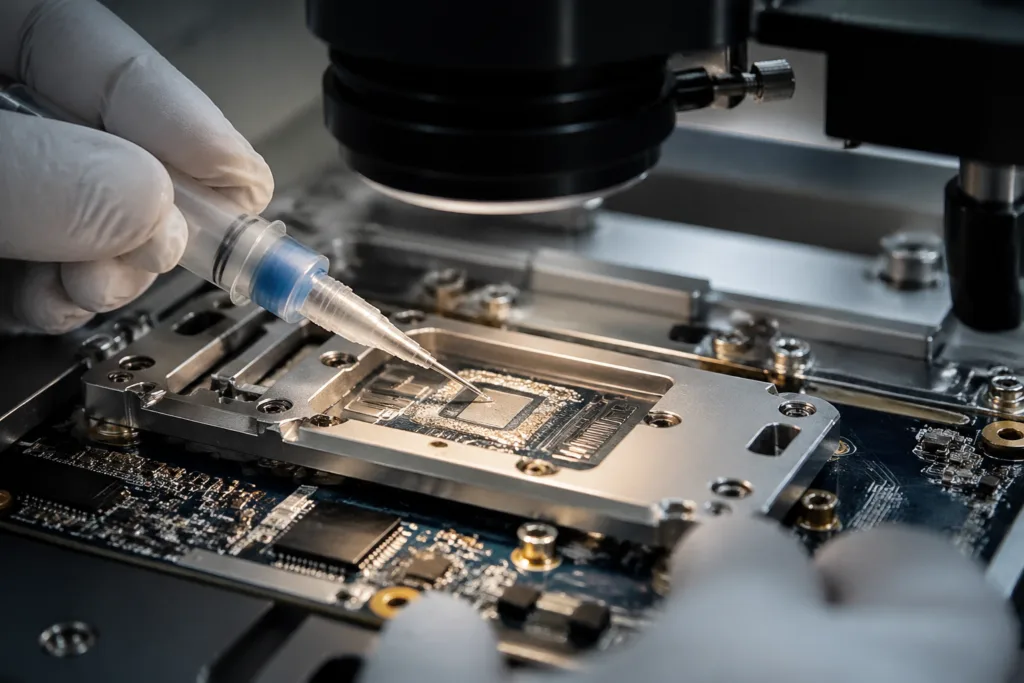
The base resin itself is usually not conductive. Electrical performance comes from conductive particles dispersed through the adhesive. When the material is applied and cured, these particles come close enough or make enough contact points to form a conductive pathway. The quality of that network depends on filler type, filler loading, particle shape, bond line thickness, and cure conditions.
Bonding through the polymer matrix
At the same time, the resin system must wet the substrate and form adequate adhesion. Good conductivity alone is not enough if the bond cracks, shrinks excessively, or loses adhesion during thermal cycling. This is why conductive adhesive selection always involves both electrical and mechanical requirements.
Curing as a process variable
Curing can happen by heat, room-temperature chemical reaction, UV exposure, or dual-cure mechanisms depending on the chemistry. The cure method affects production speed, substrate compatibility, and final properties. Some electronics teams evaluating conductive epoxy options for electronic assembly start with conductivity targets, but the better starting point is often the full process window: dispensing behavior, open time, cure schedule, bond line control, and inspection method.
Common types of conductive adhesives
Conductive epoxy
Conductive epoxy is one of the most common categories in electronic assembly. It is often chosen for strong adhesion, good chemical resistance, and relatively stable cured performance. Many formulations are two-part systems, though one-part heat-cure versions also exist. These materials are often used for die attach, component attachment, and structural electronic bonding where reliable adhesion matters as much as conductivity.
Silver-filled adhesives
Silver-filled materials are widely used when lower electrical resistance is important. Silver offers excellent conductivity, but the formulation cost is usually higher than less conductive filler systems. These adhesives are common in precision electronic assembly, shield bonding, and conductive tracks or joints where performance consistency is critical.
Acrylic systems
Conductive acrylic adhesives can be useful where fast processing, pressure-sensitive formats, or film-based converting are required. In some electronics applications, they are used in tapes, EMI shielding assemblies, or layered construction where instant tack and easier handling matter. Their performance profile is different from structural conductive epoxies, so they are usually selected for a narrower set of assembly conditions.
Silicone-based options
Conductive silicone systems are often selected when flexibility, thermal movement tolerance, or environmental sealing are more important than maximum bond strength. They can help in assemblies that see repeated expansion and contraction, vibration, or exposure to moisture. For devices that also need heat transfer management, engineers sometimes compare electrical and thermal pathways separately, because a material can be thermally conductive without being electrically conductive, as seen in products such as ZDS-5118 thermal conductive adhesive for electronics.
Key material properties to understand
Electrical resistance
This is one of the first screening factors. Lower resistance is usually preferred for signal integrity and power transfer, but the acceptable value depends heavily on the application. A sensor contact, shielding bond, and battery interconnect may all require very different conductivity levels.
Mechanical strength
Some conductive adhesives are expected to carry structural load, while others only need to hold light parts in place. If the joint will see peel, shock, or sustained stress, the mechanical profile becomes just as important as conductivity.
Curing method
Heat-cure systems may provide stronger or more stable networks, but they can be unsuitable for heat-sensitive components. UV and dual-cure systems can improve line speed, though shadowed areas and joint geometry must be considered carefully.
Temperature resistance
Electronics often face localized heat, power cycling, or elevated ambient temperatures. Conductive performance can drift if the resin softens, oxidizes, or loses adhesion over time. Where heat is a major design constraint, teams may evaluate companion materials like ZDS-369AB thermal conductive adhesive for heat-sensitive builds alongside conductive joining materials to manage both attachment and thermal control.
Flexibility
Rigid materials may work well on stable substrates, but can fail early on flexible circuits or in joints with different coefficients of thermal expansion. A slightly more flexible adhesive often survives thermal cycling better, even if its raw strength number is lower.
Conductive adhesive vs. soldering
Main differences
Soldering creates an electrical and mechanical joint by melting a metal alloy. Conductive adhesive forms the joint through polymer curing and conductive filler contact. Solder generally offers much lower electrical resistance and strong metallic continuity, but it requires heat and compatible surfaces. Conductive adhesives operate at lower process temperatures and can bond a broader range of materials.
Advantages of conductive adhesive
- Lower thermal stress on sensitive components
- Compatibility with some plastics, films, and mixed-material assemblies
- Useful for flexible circuits and temperature-limited substrates
- Can simplify certain repair or rework situations
- May allow more controlled deposition in selected geometries
Limitations of conductive adhesive
- Higher electrical resistance than solder in most cases
- Potential sensitivity to cure conditions and bond line thickness
- Long-term reliability depends heavily on environment and formulation
- Some systems are more difficult to inspect than solder joints
- Material cost can be significant, especially with silver-filled systems
When each is preferred
Soldering is typically preferred when maximum conductivity, established assembly standards, and classic PCB interconnection performance are required. Conductive adhesive is often preferred when the assembly cannot tolerate soldering temperatures, when substrates are hard to solder, or when flexibility and low-stress bonding are more important than achieving the lowest possible joint resistance.
From a manufacturer perspective, ZDS often sees the most successful conductive adhesive projects start with a clear definition of what the joint must do electrically, mechanically, and thermally over its full service life, rather than choosing adhesive solely because soldering is inconvenient.
Where conductive adhesives are used in electronics assembly
Component attachment
Conductive adhesives can be used to attach components where heat input must be minimized or where unusual substrates make soldering difficult. This is common in specialty sensors, prototypes, and hybrid assemblies.
Flexible circuits
Flexible electronics benefit from adhesives that tolerate movement and low-temperature processing. Conductive joints can reduce stress compared with rigid metallic joining in some designs, provided the adhesive has enough fatigue resistance.
EMI shielding
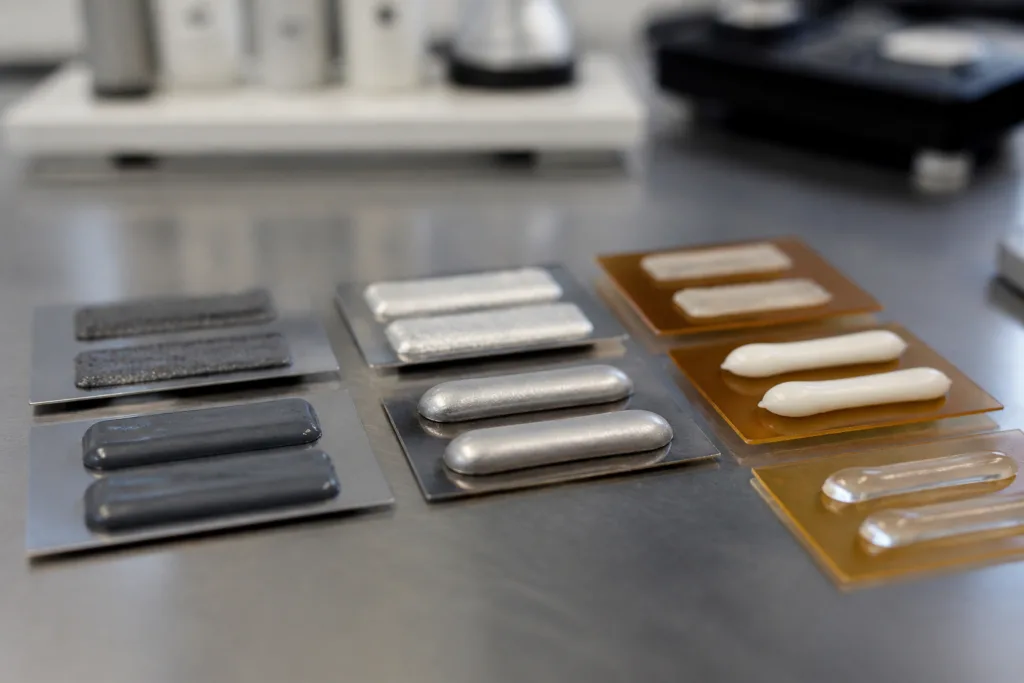
In shielding applications, the adhesive may be used to maintain conductive continuity between shielding elements, housings, or gasketing components. Here, conductivity must be stable across the joint surface, not just at one point contact.
Sensors and displays
Sensors, touch modules, and display-related assemblies may use conductive adhesives because of substrate sensitivity, fine features, or low-temperature assembly needs. Bond line control and cleanliness are especially important in these applications.
Repair work
Conductive adhesives can be helpful in trace repair, pad restoration, or selective low-heat fixes where soldering could damage nearby materials. In neighboring non-conductive bonding steps on boards and metal parts, materials such as ZDS-2009121 PCB and metal surface bonding adhesive may be evaluated separately for positioning, sealing, or reinforcement, since not every electronics bond needs electrical conduction.
How to choose the right glue for electrical connections
Start with the electrical requirement
Define whether the joint carries signal, current, grounding, or shielding continuity. The acceptable resistance level should be tied to the real circuit function rather than a generic preference for maximum conductivity.
Check substrate compatibility
Metals, ceramics, polymers, and coated surfaces all behave differently. Surface energy, oxide layers, contamination, and roughness affect both adhesion and electrical performance. A material that works on bare copper may not behave the same way on plated, painted, or flexible polymer surfaces.
Match the process
Dispensing method, pot life, viscosity, cure schedule, throughput, and inspection all affect production success. A technically good formulation can still fail in practice if it strings during dispensing, cures too slowly for the line, or requires bond line control the process cannot hold.
Consider the service environment
Temperature swings, humidity, chemical exposure, vibration, and mechanical deflection all shape long-term performance. The right product is usually the one that delivers adequate conductivity after aging, not just immediately after cure.
Reliability considerations
Aging and oxidation
Over time, conductive pathways can shift due to resin aging, interfacial changes, or environmental exposure. This may show up as increased resistance, unstable signal behavior, or intermittent failures.
Thermal cycling
Repeated expansion and contraction can crack the conductive network or weaken adhesion at the substrate interface. This is especially important when the two bonded materials have different thermal expansion rates.
Moisture resistance
Moisture can affect both adhesion and electrical stability. Some systems absorb water more readily than others, which can soften the bond line or change electrical behavior over time.
Vibration and movement
Portable devices, automotive electronics, and industrial equipment may expose the joint to vibration or repeated motion. In these cases, brittle formulations can become a weak point even if their initial conductivity looks excellent.
Testing and quality control for conductive adhesives
Electrical testing
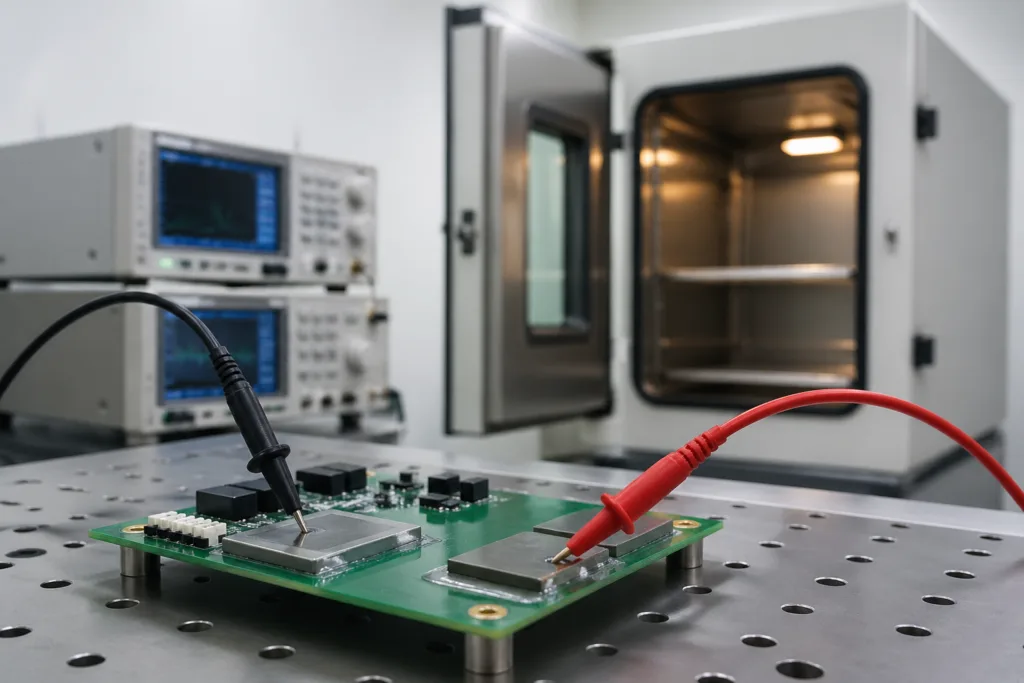
Measure resistance under realistic geometry and bond line conditions. Testing only bulk material data is rarely enough. Joint design, cured thickness, and contact area can change the actual result significantly.
Adhesion testing
Shear, peel, or pull testing should reflect how the assembly will actually be loaded. A test method that does not match end-use stress can lead to overly optimistic selection decisions.
Environmental testing
Thermal aging, thermal cycling, humidity exposure, and vibration testing help show whether conductivity and adhesion remain stable over time. These tests are often more informative than a single initial strength result.
Process verification
Quality control should also confirm mix ratio where relevant, dispense consistency, cure completion, and surface preparation. Many joint problems are process-related rather than purely material-related.
Practical selection tips and common mistakes to avoid
- Do not judge by conductivity alone. A lower-resistance adhesive may still be the wrong choice if it is too brittle or too hard to process.
- Do not assume thermal conductive means electrically conductive. These are separate functions and should be evaluated independently.
- Do not overlook surface preparation. Oils, oxides, release agents, and poor cleaning can undermine both bonding and conductivity.
- Do not skip aging tests. Initial performance may look good while long-term stability is weak.
- Do not ignore bond line thickness. Excessive thickness can raise resistance and change cure behavior.
- Do not choose a cure method the assembly cannot support. Heat, UV access, and line speed must all align with the formulation.
In practical electronics assembly, conductive adhesive is most valuable when it solves a process or material limitation that soldering cannot address easily. The right choice comes from balancing conductivity, adhesion, cure logic, environmental durability, and manufacturing control. When those factors are aligned, conductive bonding can be a reliable and efficient option for specialized electronic applications.
FAQ
Is conductive adhesive as conductive as solder?
No. In most electronics applications, solder provides lower electrical resistance than conductive adhesive, which is why solder is still preferred for many standard interconnections.
Can conductive adhesive replace solder completely?
Not usually. It can replace solder in selected applications, especially where low-temperature processing or flexible bonding is needed, but many assemblies still require solder for maximum electrical and mechanical performance.
What filler is most common in conductive adhesive?
Silver is one of the most common conductive fillers because it provides strong electrical performance, although carbon, nickel, and other fillers are also used depending on cost and application needs.
Do conductive adhesives need heat to cure?
Some do and some do not. Conductive adhesives may be heat-cure, room-temperature cure, UV-cure, or dual-cure depending on the resin chemistry and processing requirements.
What is the main reliability risk with conductive adhesive joints?
A common risk is change in electrical resistance over time due to thermal cycling, moisture exposure, aging, or movement that disrupts the conductive particle network or weakens adhesion.
Can conductive adhesive bond flexible circuits?
Yes. Conductive adhesive is often considered for flexible circuits because it can allow lower-temperature processing and better movement tolerance than rigid joining methods in some designs.