
Metal to metal glue is no longer limited to light-duty repairs. In industrial assembly, the right adhesive can join steel, aluminum, stainless steel, and mixed-metal parts while reducing heat distortion, spreading stress more evenly, sealing against moisture, and simplifying production steps compared with welding or mechanical fastening. The key is not just choosing a strong product, but matching adhesive chemistry, joint design, surface condition, and service environment to the actual assembly requirement.
For teams comparing chemistries, cure methods, and assembly processes, it helps to explore industrial adhesive solutions in the context of substrate type, production speed, and durability targets rather than treating metal bonding as a one-size-fits-all decision.
Why metal glue can replace welding or mechanical fasteners
Adhesives solve different problems than welds, rivets, or screws. Welding adds heat, which can warp thin sections, discolor visible parts, or affect coatings and nearby components. Mechanical fasteners require holes, localize stress, and can introduce galvanic corrosion risks when dissimilar metals are joined. A well-selected metal adhesive avoids many of these trade-offs.
In practice, bonded joints are often chosen when manufacturers want cleaner appearance, thinner materials, better vibration damping, electrical isolation, corrosion sealing, or simplified assembly of mixed substrates. Adhesives can also reduce part count by eliminating brackets, washers, or secondary reinforcements.
That said, adhesives are not a universal replacement. If the joint will see extreme continuous heat, severe peel loading, or immediate full-load handling before cure, a welded or hybrid joint may still be the better option. The right comparison is not glue versus welding in general, but which joining method fits the actual geometry, process, and service conditions.
What metal to metal glue is and how it works
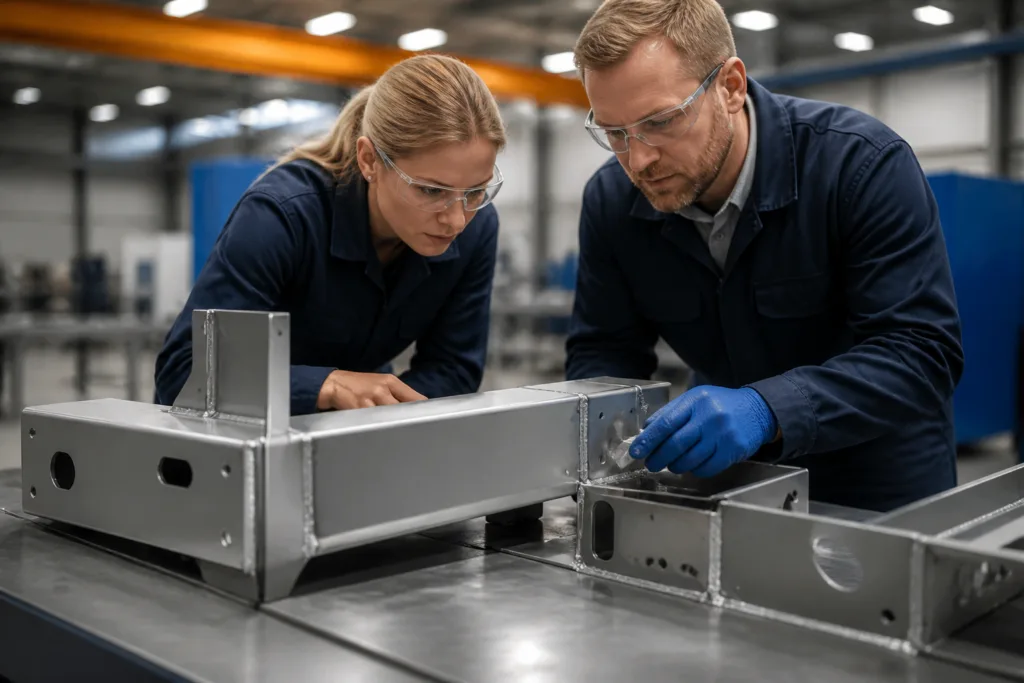
Metal to metal glue is a broad term covering structural and semi-structural adhesives formulated to wet the metal surface, cure into a solid polymer network, and transfer load across the bond line. Depending on chemistry, the adhesive may rely on mechanical interlocking with the surface profile, chemical attraction at the interface, or both.
Bond performance depends on several variables working together:
- Surface energy and cleanliness of the metal
- Oxide condition and contamination level
- Adhesive viscosity and gap-filling ability
- Cure mechanism and time available in production
- Joint design, especially overlap versus peel-prone geometry
- Service exposure to heat, moisture, chemicals, and vibration
Even a high-strength adhesive can underperform if oil remains on the part, if bond gaps are too large for the chemistry, or if the assembly is loaded before proper cure. In metal assembly, process discipline matters almost as much as product selection.
Common types of metal to metal adhesives
Epoxy adhesives
Epoxies are widely used for structural metal bonding because they typically offer high shear strength, good gap filling, solid chemical resistance, and strong adhesion to many prepared metal surfaces. They are often selected for steel assemblies, brackets, housings, industrial equipment, and rigid load-bearing joints. Buyers reviewing industrial epoxy adhesive options usually focus on cure speed, toughness, viscosity, and temperature exposure rather than strength alone.
Acrylic structural adhesives
Acrylics are commonly chosen where faster fixture times, better tolerance to less-than-perfect surface preparation, and good impact resistance are important. They can be useful in metal fabrication, transportation components, and assemblies exposed to dynamic loading. Some structural acrylics bond oily metals better than many traditional systems, although surface prep still improves consistency.
Anaerobic adhesives
Anaerobic systems cure in the absence of air between closely fitting metal surfaces. They are often used for threadlocking, retaining cylindrical parts, gasketing, and certain close-contact metal bonding situations. They are less suitable for large open bond lines but can be effective in tightly fitted metal assemblies.
Polyurethane and modified systems
Where flexibility, shock absorption, or differential movement matters, more flexible chemistries may be considered. These are often more relevant when metal is joined to another substrate, but in some metal-to-metal assemblies they help manage vibration or thermal expansion.
Metal epoxy adhesive: strengths, limitations, and best uses
Epoxy is often the starting point for engineers evaluating metal to metal glue because it balances strength, chemical resistance, and process flexibility. In rigid assemblies, it can form durable bonds that hold up well under static load and moderate environmental exposure.
Its main strengths include:
- High structural strength on well-prepared metals
- Good gap-filling ability for uneven surfaces
- Strong adhesion to steel, stainless steel, and many aluminum parts
- Useful resistance to oils, water, and chemicals after full cure
- Availability in room-temperature and heat-cure formats
Its limitations should also be clear. Many epoxies are relatively rigid, so joints subjected to repeated peel, impact, or high vibration may need a tougher grade or a different chemistry. Cure time can also be longer than some production lines prefer. For assemblies where bond strength and rigidity matter more than rapid fixture, a product such as ZDS-282AB high-strength epoxy for metal bonding reflects the kind of epoxy system buyers often compare when evaluating structural metal joints.
Best uses for epoxy typically include steel brackets, equipment housings, motor components, metal panels, and reinforcement bonds where overlap area is available and the joint is designed mainly for shear rather than peel.
Bonding steel to steel: key considerations for high-strength joints
Steel to steel bonding is often straightforward compared with lower-surface-energy materials, but not all steel assemblies behave the same way. Cold-rolled steel, galvanized steel, coated steel, and oily fabricated parts can each present different adhesion challenges.
For high-strength steel joints, focus on four areas:
- Joint geometry: Lap joints usually perform better than butt joints because they place more of the load in shear.
- Bond line control: Too thin a bond line can starve the interface, while too thick a bond line can reduce performance depending on the adhesive.
- Surface condition: Mill scale, rust, oils, and shop contamination reduce consistency.
- Load type: Continuous static load is different from impact, peel, or cyclic vibration.
If the steel parts will flex in service, a brittle adhesive can fail even when its headline strength looks impressive on paper. In those cases, toughness and fatigue resistance may matter more than maximum lap shear.
Surface preparation for steel, aluminum, and stainless steel
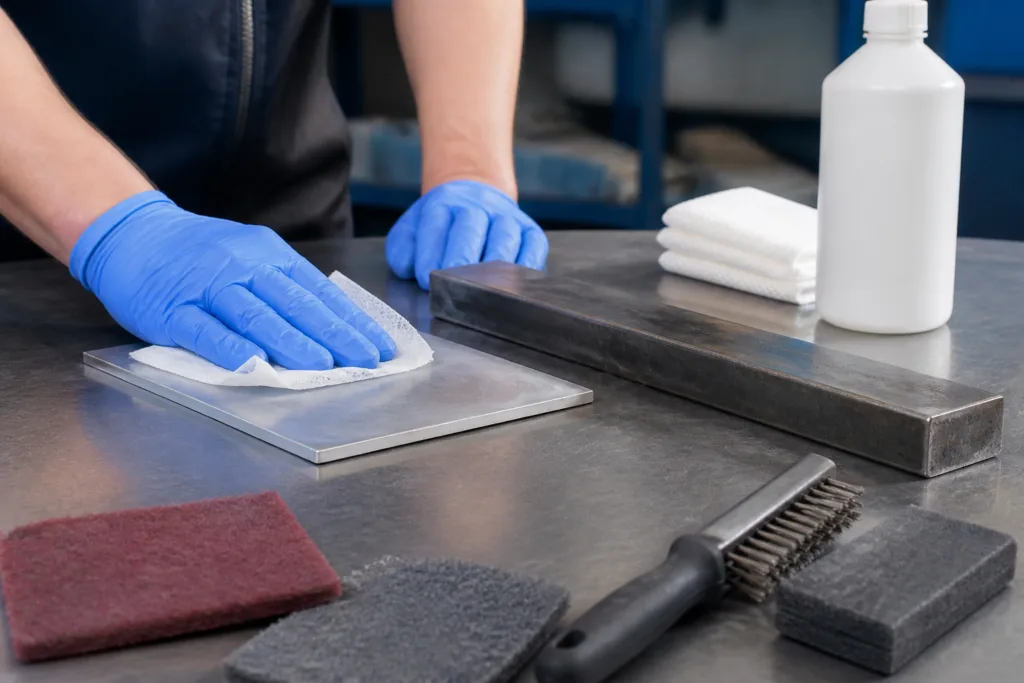
Surface preparation is one of the most common dividing lines between reliable bonds and premature failures. Metal surfaces may look clean but still carry oils, oxides, passivation layers, dust, or processing residues that interfere with wetting and adhesion.
Steel
For plain steel, remove oil and grease first, then abrade if needed to expose a fresh surface and improve mechanical keying. Corrosion products should be removed before bonding. If steel is coated or plated, test the adhesive on the actual production finish rather than assuming performance on bare metal will translate.
Aluminum
Aluminum forms oxide quickly. Freshly prepared surfaces tend to bond better than aged, contaminated ones. Degreasing followed by abrasion and controlled cleaning often improves bond consistency. Aluminum can also move more with temperature than steel, so adhesive flexibility may matter in service.
Stainless steel
Stainless steel can be harder to bond than plain carbon steel because of its passive surface. Careful cleaning and abrasion usually help. Smooth decorative stainless may require more attention to surface profile and adhesive wetting than rougher fabricated stainless components.
Where difficult substrates, short handling time, or shop-floor variation are concerns, many engineers compare acrylic systems because they can offer a useful balance between toughness and process tolerance. A product category such as ZDS-8100AB structural acrylic for demanding assemblies is relevant when metal bonding conditions are less than ideal or when faster fixture is needed.
How to improve adhesion on difficult metal surfaces
Difficult metal surfaces usually fall into one of three groups: contaminated surfaces, highly passive surfaces, or coated and plated surfaces where the coating itself becomes the weak layer. Improving adhesion starts with identifying which problem is actually present.
Useful methods include:
- Degreasing thoroughly before abrasion
- Using controlled abrasion to expose fresh substrate
- Bonding soon after preparation to limit recontamination
- Testing on real production parts, not ideal lab coupons
- Adjusting adhesive chemistry for toughness or surface tolerance
- Redesigning the joint to increase bonded area and reduce peel
In manufacturer-side evaluations at ZDS, failures on metal parts are often linked less to nominal adhesive strength and more to untreated oils, passive surfaces, or joint geometry that puts the bond into peel rather than shear.
Heat resistance, vibration resistance, and corrosion resistance requirements
Metal assemblies rarely fail in a neutral environment. They fail because the joint sees heat, thermal cycling, water ingress, vibration, fluid splash, or dissimilar-metal exposure that was not fully considered during selection.
Heat resistance
Short-term heat spikes and long-term continuous heat are not the same. Many adhesives tolerate brief process or environmental peaks better than they tolerate permanent high-temperature service. Always evaluate actual operating temperature, dwell time, and whether the joint is loaded while hot.
Vibration resistance
Rigid joints can perform well under static loads but may crack or fatigue if vibration is severe. Toughened epoxy or structural acrylic systems are often preferred when impact and vibration are major factors.
Corrosion resistance
Adhesives can help by sealing the joint line and isolating dissimilar metals from moisture pathways. But if moisture enters through voids, poor edge coverage, or incomplete wetting, corrosion can still develop beneath or around the bond.
For close-fitting metal components where rapid cure and metal-specific assembly behavior matter, buyers sometimes review systems such as ZDS-518 rapid-cure metal adhesive for aluminum alloy when evaluating compact metal assemblies with limited bond-line exposure to air.
How to choose the right adhesive for industrial assembly
The best metal to metal glue is the one that fits the full assembly process, not just the bond strength target. Start by defining the service conditions and manufacturing constraints before comparing product types.
| Selection factor | What to evaluate | Why it matters |
|---|---|---|
| Metal type | Steel, stainless, aluminum, plated metal | Surface chemistry changes adhesion behavior |
| Joint design | Overlap, gap, peel exposure, bond area | Geometry strongly affects durability |
| Cure process | Room temperature, heat cure, fixture time | Must fit line speed and handling needs |
| Environment | Heat, humidity, chemicals, vibration | Determines long-term bond retention |
| Application method | Manual, meter-mix, dispensing, film thickness | Affects consistency and waste |
| Repairability | Permanent bond or serviceable joint | Important for maintenance planning |
A practical selection path is simple: choose the likely chemistry, test on the real substrate condition, validate fixture and full cure timing, then confirm performance after environmental exposure. Laboratory coupon strength alone is not enough.
Application tips for strong, durable metal bonds
Good application habits improve bond reliability even when the adhesive selection is already correct.
- Clean first, then abrade if needed, then clean again if residue remains.
- Apply adhesive evenly to avoid dry spots and trapped air.
- Control bond-line thickness according to the adhesive type.
- Clamp only enough to maintain contact and alignment without starving the joint.
- Allow full cure before applying service load.
- Protect prepared parts from fingerprints, dust, and oil before bonding.
- Validate edge coverage if moisture sealing matters.
Where possible, test bonded samples after realistic aging conditions such as humidity exposure, thermal cycling, or fluid contact. A bond that looks strong at 24 hours may behave differently after weeks of environmental stress.
Common mistakes to avoid when bonding metal to metal
Many metal bonding problems are avoidable. Common mistakes include:
- Choosing adhesive by headline strength only
- Ignoring oxide layers, cutting fluids, or shop contamination
- Using a rigid adhesive on a joint exposed to impact or vibration
- Expecting large gaps to perform like close-fitting structural joints
- Loading the bond before adequate cure
- Designing the joint with high peel stress
- Skipping tests on real coated or plated production parts
Another frequent mistake is trying to replace a weld or fastener without redesigning the joint. Adhesive bonding works best when the joint is created for bonding, with enough area and a load path that favors shear.
Conclusion
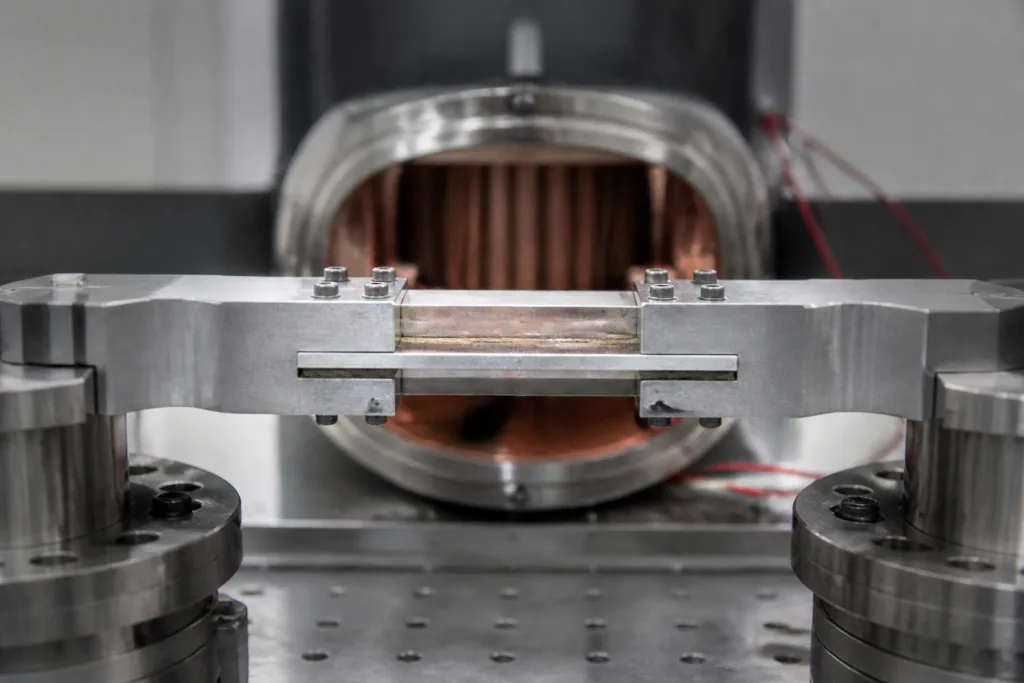
Choosing a metal to metal glue for industrial assembly is really a process of matching chemistry, surface preparation, joint design, and service environment. Epoxy, acrylic, and anaerobic systems each have clear advantages, but none will compensate for poor surface condition or a peel-prone design. For steel, aluminum, and stainless assemblies, the most durable result usually comes from disciplined preparation, realistic testing, and selection based on the actual operating environment rather than a generic strength claim.
FAQ
Can metal to metal glue replace welding?
Yes, in many assemblies it can replace welding when the joint is designed for bonding, service temperatures are suitable, and the adhesive is matched to load, vibration, and environmental exposure.
What is the strongest adhesive for bonding metal to metal?
The strongest option depends on the metals, joint design, and service conditions, but structural epoxies are commonly chosen for high-strength rigid bonds while acrylics are often preferred for tougher, faster-fixturing assemblies.
Does metal glue work on aluminum and stainless steel?
Yes, but both can require better surface preparation than plain steel because aluminum forms oxide quickly and stainless steel has a passive surface that can reduce adhesion if not properly cleaned and prepared.
How important is surface preparation when bonding metal?
It is critical because oil, oxides, rust, and processing residue can prevent proper wetting and bonding, even when the adhesive itself is suitable for the metal.
Are adhesive-bonded metal joints resistant to heat and vibration?
They can be, but performance depends on the adhesive chemistry, the joint design, and whether the expected temperature range and vibration level were considered during product selection.
How long does metal to metal glue take to cure?
Cure time varies by chemistry and conditions, ranging from rapid fixture in minutes for some systems to full structural cure over many hours, so production handling and final load timing should always follow the product-specific cure profile.