
Can acrylic adhesive plastic stress cracking happen? Yes, but the answer depends less on the adhesive label and more on the plastic, the stress already inside the part, the geometry, and the service environment. In industrial plastic bonding, a joint that looks strong on a simple coupon can still create whitening, crazing, or delayed cracking after heat, solvent exposure, or clamp load.
If your project involves stressed thermoplastics, thin-walled housings, or parts that cannot tolerate solvent attack, it is worth taking a formulation-first approach. You can review acrylic adhesive development support for demanding plastic bonding and we can help match viscosity, cure profile, packaging format, sample size, and production handling to the real part instead of to a generic test coupon.
Why Plastic Bonding Needs More Than Simple Adhesion Testing
Plastic bonding fails for reasons that are broader than bond strength alone. A joint can survive pull or shear testing and still damage the substrate because the adhesive introduces chemistry, heat, shrink stress, and fixture pressure into a part that may already be carrying hidden stress from molding, machining, or assembly. That is why a pass on a quick coupon test is useful, but never enough on its own for release.
When we evaluate a plastic part, we look at the resin family, the wall thickness, the surface finish, the cleaning method, any paint or print layer, and the expected temperature and chemical exposure in service. We also ask how the part is held during cure, because a high clamp load can create a stress concentration before the adhesive has fully set. The more visible the product is, the more important it becomes to test for appearance changes such as whitening, haze, or fine surface crazing.
| Risk factor | Why it matters | What we check |
|---|---|---|
| Molded-in stress | Cracks can start around gates, ribs, corners, and bosses | Use stressed parts and inspect the molding history |
| Solvent or cleaner exposure | Residual chemistry can trigger delayed crazing | Screen the exact cleaning and handling sequence |
| Heat load | Temperature can soften the plastic and speed up crack growth | Age bonded parts at representative service temperature |
| Part geometry | Sharp transitions and thick bond lines concentrate stress | Review joint design and bond line thickness |
| Fixture pressure | Over-clamping can preload the plastic before cure | Check clamp force and fixture repeatability |
Acrylic Adhesive Plastic Stress Cracking: What It Means in Production
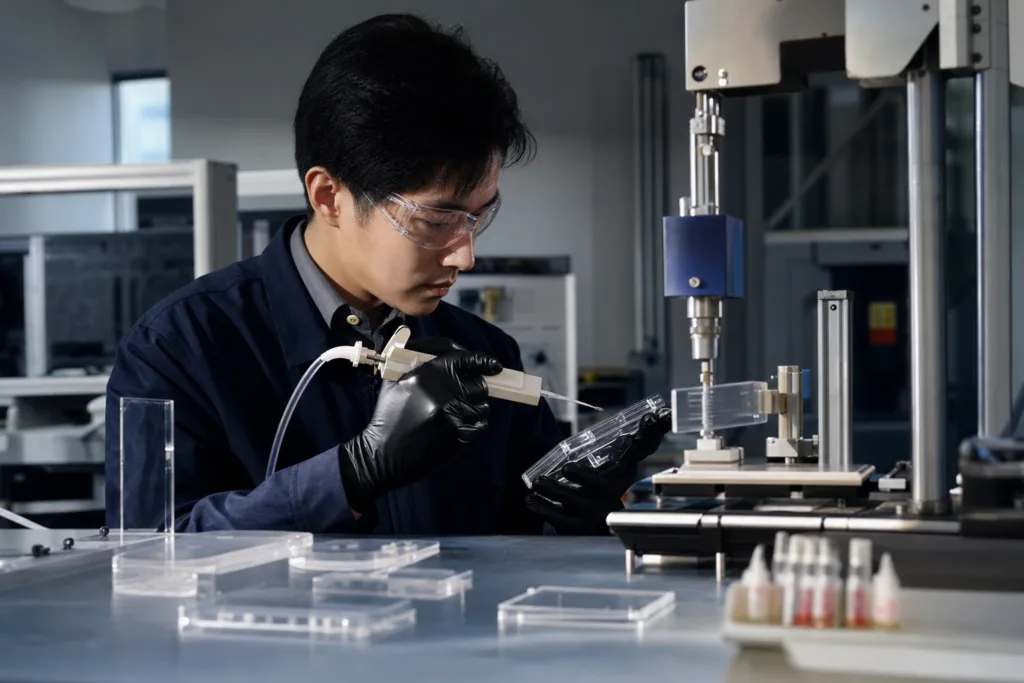
Stress cracking is not the same as simple breakage. In many plastics, the first sign is a network of fine surface lines, whitening, or a cloudy zone that can be easy to miss on a busy production floor. The part may look acceptable right after assembly and then fail later, after storage, shipping, cleaning, or a short period in service. That delayed behavior is one reason acrylic adhesive plastic stress cracking creates so many hidden quality issues.
The key point is that the adhesive may be the trigger rather than the only cause. If the plastic already contains residual stress, an aggressive wet chemistry, high local heat, or excessive restraint can push the part past its limit. This is especially relevant for many amorphous thermoplastics, where surface sensitivity and stress accumulation can work together. A buyer who only checks initial bond strength can miss the real failure mode.
That is also why chemistry comparison matters. Different adhesive families place different loads on the substrate, and the same acrylic that works well on one resin can be too aggressive for another. In our formulation work, we prefer to compare the plastic, the joint design, and the process window before assuming the first strong bond is the right bond.
Residual stress is often the hidden variable
Many plastic parts arrive at bonding with stress already built into them. Injection molding, welding, snap-fit assembly, drilling, trimming, and even handling can leave a part in a fragile state. If the adhesive interacts with that state, cracking may appear away from the actual glue line, which makes troubleshooting difficult. The part can look like a material issue, a process issue, or an adhesive issue depending on when the failure is inspected.
Heat and chemistry can turn a borderline joint into a failure
Heat, cleaners, oils, fuel vapors, plasticizers, and other migrating substances can all change how a bonded plastic behaves. A part that is acceptable at room temperature may turn brittle, craze, or lose clarity after warm exposure or after repeated contact with an aggressive chemical. When a customer says a bond has ‘mysteriously’ cracked after installation, the root cause is often a combination of stress, chemistry, and temperature rather than a single defect.
How Exotherm, Solvent Sensitivity, and Part Geometry Increase Risk
Acrylic systems are valued in production because they can offer quick handling and good throughput, but that speed can also introduce risk. If the adhesive cures quickly or creates localized heat in a thick bond line, the plastic may be exposed to conditions it cannot comfortably absorb. A narrow visual inspection window can make this worse, because the joint looks fine before the delayed damage becomes visible.
Part geometry matters as much as chemistry. Thin walls, sharp corners, bosses, snap features, transparent covers, and cramped internal cavities are all more vulnerable than flat, rigid pieces. These shapes concentrate stress and may trap heat or residue during cure. Clamp force is another common problem. If the fixture is too aggressive, the adhesive may be blamed for a crack that was actually created by the process setup.
For that reason, we do not treat acrylics as universally risky or universally safe. We treat them as one tool in a controlled process. The right question is not ‘Can acrylics bond plastic?’ but ‘Can this acrylic bond this plastic under this process without damaging the part?’
Which Plastic Applications Need Extra Validation
Some applications deserve extra caution because the cost of a hidden crack is high. Transparent or cosmetic housings, optical covers, instrument windows, battery components, LED lenses, medical or lab consumables, and thin-wall consumer electronics are common examples. In these parts, appearance and dimensional stability matter as much as strength, so a small crack or haze can be a full failure even if the joint still holds.
From our perspective at ZDS, the highest-risk projects are often the ones where the part must stay clear, lightweight, and tightly dimensioned at the same time. Printed surfaces, coatings, and post-molded cleaning steps can change the surface enough to alter adhesion and crack behavior. If the part will also see sunlight, warmth, disinfectants, oils, or aggressive assembly cleaners, the validation plan needs to reflect those real exposures instead of a generic lab condition.
Procurement teams should also pay attention to hidden variability. The same drawing can come from different mold cavities, suppliers, or resin lots, and each one may respond differently. When the part is safety-relevant, field-repair-relevant, or difficult to replace, the approval standard should be much stricter than a single room-temperature bond test.
What to Test Before Approving an Acrylic Adhesive for Plastic Parts
The best approval plan starts with the real substrate, not just a vendor coupon. We ask for the exact resin grade when possible, the molding method, the cleaning sequence, and any secondary operations such as printing, plasma treatment, heat staking, or coating. Then we compare dry storage parts, freshly molded parts, and aged parts because each one can respond differently. If the project needs tailored screening, adhesive selection support for plastic substrates and process risk can help turn a general request into a more useful test matrix.
For formal screening, the ASTM D3929 bent-beam stress cracking test for plastics bonded with adhesives is valuable because it keeps the plastic under controlled strain while the adhesive or exposure condition is applied. It is not a substitute for your exact assembly, but it can reveal whether a formulation is likely to initiate cracking on stressed specimens.
Environmental stress cracking also depends on the plastic and the chemical environment, not only the adhesive. The ISO 22088-3 environmental stress cracking test for thermoplastics is useful for ranking material sensitivity, especially when solvents, cleaners, or processing aids are part of the equation. We treat these methods as screening tools that must be followed by application-specific trials.
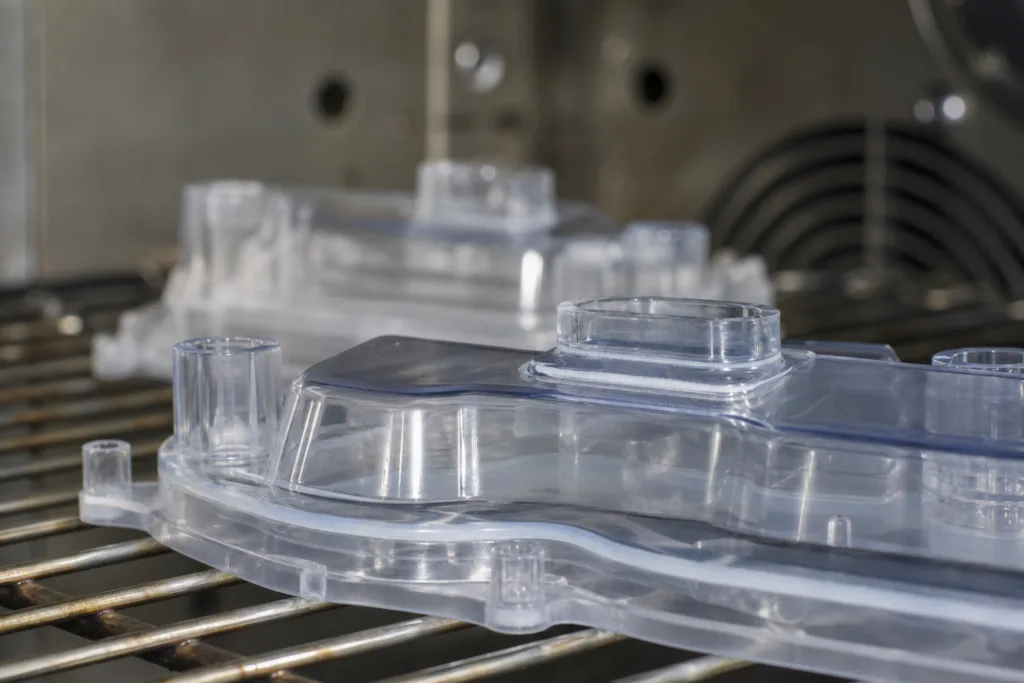
| Test | What it tells you | What to watch |
|---|---|---|
| Bond on real part | Wetting, fit, and process behavior | Edge cracking, haze, or poor wet-out |
| Stressed specimen | How the resin reacts under load | Whitening, crazing, or delayed failure |
| Heat aging | Thermal margin after cure | Softening, creep, or new cracks |
| Chemical exposure | Resistance to cleaners or service fluids | Loss of clarity, tack, or strength |
| Fixture study | Effect of clamp pressure and alignment | Cracks from over-clamping or uneven support |
How to Evaluate Heat Resistance, Chemical Resistance, and Delayed Cracking
Heat and chemical resistance are often where a safe-looking prototype turns into a production complaint. A bond that looks stable at room temperature can soften, creep, or reveal hidden cracks after thermal cycling or exposure to cleaners, oils, fuels, or plasticizers. The critical question is not only whether the adhesive itself survives, but whether the plastic around the joint survives the combination of adhesive chemistry and service conditions.
Delayed cracking matters because the part can pass an initial inspection and still fail later. That is common when the plastic has been stressed during molding, when the adhesive has introduced local heat, or when the assembly is later exposed to a chemical that slowly diffuses into the substrate. For buyers, this is one of the most expensive failure modes because it often appears after the product has already entered storage, shipping, or customer use.
Surface preparation is part of the answer, but it must be done carefully. Cleaners, mold release, fingerprints, and poor abrasion can all change how the adhesive wets the surface and how much local stress builds at the interface. Following surface preparation steps that reduce cracking and bond failure helps lower risk, but surface prep must be matched to the resin and to the downstream inspection standard. Too aggressive a prep can also damage a sensitive plastic, so the goal is controlled, repeatable treatment rather than maximum abrasion.
In practical terms, we want to know three things after aging: does the bond still hold, does the plastic still look acceptable, and does the assembly still fit or function as intended. If any one of those answers changes, the qualification is not complete.
When a Lower-Exotherm or Alternative Adhesive System May Be Better
Not every plastic part is a good candidate for a standard acrylic system. When the resin is very sensitive, the wall section is thin, or the assembly has little tolerance for heat and solvent exposure, we often compare chemistries before we lock the process. In those cases, how acrylic compares with epoxy, polyurethane, silicone, and UV chemistries becomes a useful starting point because the right answer may be less about absolute bond strength and more about stress management, cure energy, and long-term compatibility.
A lower-exotherm acrylic may be enough in one case, while a different chemistry may be safer in another. For example, if the design needs more flexibility, a softer system may reduce stress transfer. If the process needs rapid light cure, UV may fit the production line better, provided the substrate and geometry allow light access. If the part is extremely stress-sensitive, the best choice may be the chemistry that causes the least attack on the plastic, even if the initial handling is less convenient.
The decision is rarely about one property. We balance bond strength, cure speed, open time, fixture time, gap fill, clarity, thermal exposure, and the risk of delayed cracking. That is the real trade-off behind adhesive selection for plastics.
How ZDS Helps Buyers Avoid Hidden Plastic-Bonding Risks
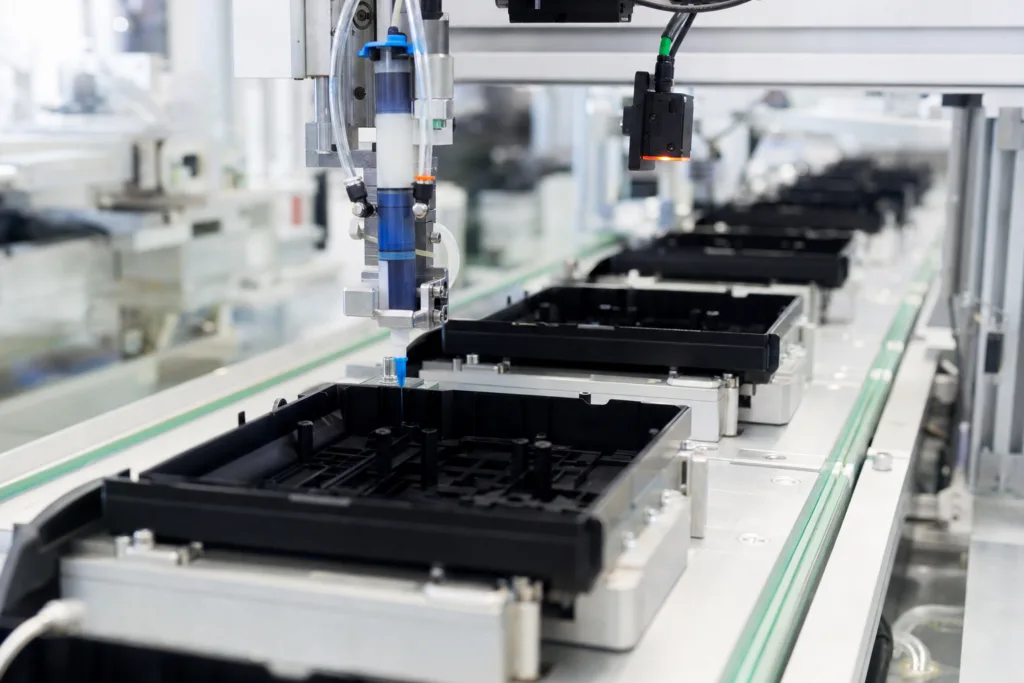
The most efficient projects usually begin with a shared risk list. We ask what the part is made from, where it is stressed, how it is cleaned, what temperature it sees, and whether the part must stay clear, flexible, or electrically isolated. From there we can adjust viscosity, open time, pot life, fixture speed, hardness, and packaging so the adhesive fits the process instead of forcing the process to fit the adhesive. For buyers, that matters because a formulation that is technically strong but hard to dispense, too fast to position, or too aggressive for the resin can create cost elsewhere in the line.
For production trials, we may narrow the field to a candidate such as ZDS-220307 acrylic plastic bonding adhesive for practical production trials when the goal is to validate handling, cure, and cracking tendency on actual parts. That kind of trial is most useful when it includes the real fixture, the real cleaning step, and the real inspection standard. It also gives procurement teams a better basis for MOQ, packaging, and supply planning than a generic lab result.
When the project needs custom development, we can also tune the formula for flow, cure speed, stress control, or process window. That is often the difference between a lab success and a production-ready answer.
Conclusion
Can acrylic adhesive plastic stress cracking be managed? Usually yes, but only if the adhesive is evaluated alongside the plastic, geometry, stress state, and chemical environment. The safest path is to test the real part, inspect for delayed cracking, and be willing to change chemistry or process if the resin is too sensitive for a fast-curing acrylic.
At ZDS, we prefer that kind of decision early, because it avoids hidden failures later in the line or in the field. When the risk is mapped correctly, acrylics remain a useful option; when it is not, the same adhesive can become a source of avoidable damage.
FAQs
Can acrylic adhesives crack plastic parts?
Yes, they can if the plastic is stressed or chemically sensitive. The risk depends on the resin, geometry, clamping, heat, and cleaners, so a successful coupon test does not guarantee safety on the finished part.
Which plastics need the most caution?
Amorphous thermoplastics and transparent parts often need the most caution because residual stress and chemical exposure can trigger delayed cracking more easily. That said, any resin can be sensitive if the part is thin, highly stressed, or exposed to aggressive processing or cleaning chemicals.
Does heat make the problem worse?
Heat can raise risk by softening the plastic, increasing chemical mobility, and speeding up crack growth. A part that looks stable at room temperature may fail after thermal cycling or warm storage, so we always include the expected service temperature in qualification.
What should we test before approval?
Test the real resin, the real geometry, the real cleaning method, and both fresh and aged parts. Include visual inspection, bond performance, and exposure checks for heat and the chemicals the part will see in service. Representative stressed samples are much more useful than flat coupons alone.
Is a lower-exotherm adhesive always safer?
Not always. Lower exotherm can help on sensitive plastics, but the best choice still depends on wetting, cure speed, gap fill, chemical resistance, and line speed. In some projects a different chemistry is a better fit than trying to force a standard acrylic to do every job.
How can ZDS help with sensitive plastic bonding?
We help match adhesive chemistry, viscosity, cure profile, and packaging to the part and process, then support sample evaluation and production trials. That makes it easier to identify cracking risk before a full launch and to narrow the final choice to something that is realistic for manufacturing.