
Choosing between epoxy, acrylic, polyurethane, and silicone is rarely a simple brand preference decision. In real production environments, adhesive chemistry changes how a material wets the substrate, how fast it cures, how it handles shock and vibration, how it survives heat or moisture, and how reliable the joint remains after months or years in service. This industrial adhesive chemistry comparison is designed for engineers, sourcing teams, and product managers who need to match chemistry to performance targets, process limits, and assembly risk rather than rely on habit.
If your project involves high loads, mixed substrates, gap filling, thermal exposure, or a need for dependable structural performance, our epoxy adhesive solutions for structural bonding are often part of the discussion. At ZDS, we help customers evaluate not only strength, but also viscosity, pot life, cure profile, heat resistance, packaging format, and bulk production consistency so the selected adhesive fits both the part design and the manufacturing process.
What adhesive chemistry really changes in industrial performance
When buyers compare adhesive products only by data sheet headline numbers, they often miss the deeper influence of chemistry. Two adhesives may show similar lap shear values under one test condition but behave very differently in production. One may bond quickly but have limited high-temperature stability. Another may provide excellent strength but transfer stress into brittle substrates. Chemistry influences the whole bonding system, not just one property.
From our formulation and production work, we see adhesive chemistry affect five practical areas most strongly:
- Interfacial bonding behavior: how well the adhesive wets metal, plastic, glass, ceramic, or coated surfaces.
- Cure mechanism: whether it cures by mixing, heat, moisture, or exposure to UV or air.
- Mechanical profile: whether the cured bond is rigid, tough, flexible, elastic, or impact resistant.
- Environmental durability: how it handles heat, humidity, solvents, outdoor exposure, and thermal cycling.
- Process compatibility: whether it matches your open time, dispensing method, fixture speed, rework expectations, and production takt time.
That is why the right comparison is not simply epoxy versus acrylic versus polyurethane versus silicone in the abstract. The better question is: which chemistry best fits the service environment, substrate pair, assembly method, and failure mode you need to control?
Why chemistry determines strength, flexibility, cure behavior, and reliability
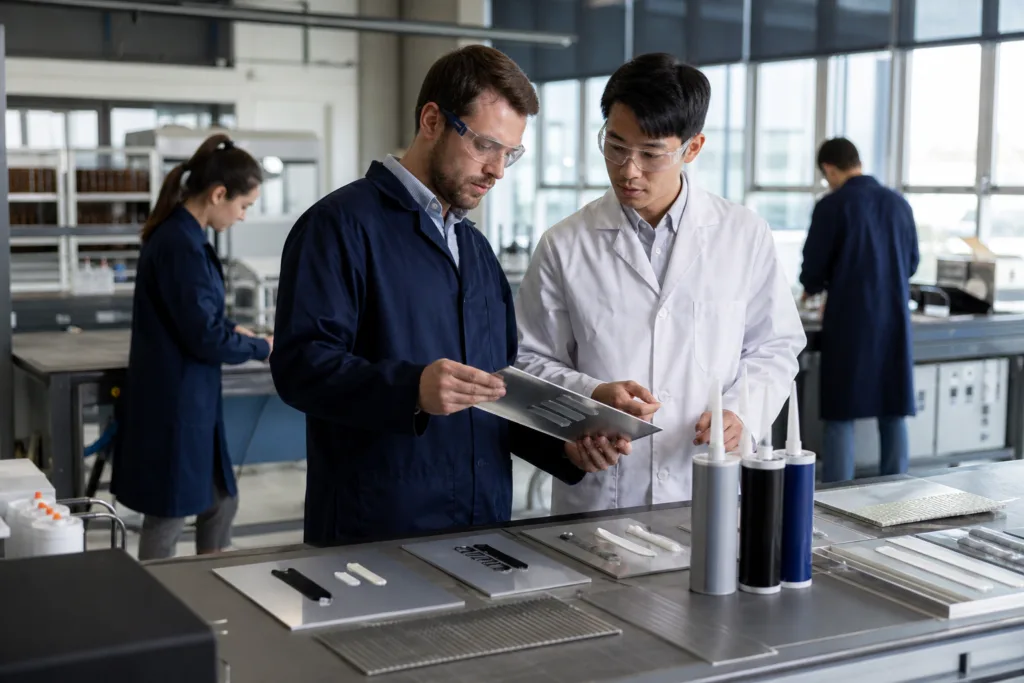
Every adhesive family has a characteristic balance of crosslink density, elasticity, surface tolerance, and environmental resistance. Rigid chemistries usually deliver stronger load transfer and dimensional stability, but they may be less forgiving when bonded parts expand at different rates. Flexible chemistries absorb movement well, but they may not deliver the same structural stiffness. Fast-curing systems increase throughput, but they can reduce working time or demand tighter process control.
A structured qualification process is useful when teams need to narrow options by service conditions, substrates, and assembly constraints. A standards-based adhesive and sealant selection process, such as the one reflected in ASTM D6465 guidance, supports the idea that chemistry selection should begin with end-use requirements and be validated through testing rather than assumptions.
In practice, the most reliable bonding programs start with three filters:
- Performance target: strength, flexibility, sealing, insulation, thermal conductivity, or impact resistance.
- Production requirement: open time, fixture time, automation fit, and cure conditions.
- Durability risk: temperature extremes, water, chemicals, UV, vibration, and long-term aging.
Once those are defined, the chemistry choice usually becomes much clearer.
Epoxy adhesives: where high strength, rigidity, and durability matter most
Epoxy is often the first chemistry considered for structural bonding because it can provide strong adhesion, good cohesive strength, useful gap filling, and strong performance on metals, composites, ceramics, and many engineered substrates. It is especially attractive when the assembly needs load-bearing performance, dimensional stability, or chemical resistance.
Typical benefits of epoxy adhesives include:
- High bond strength and strong rigid load transfer
- Good adhesion to metal, glass, ceramic, and many composite surfaces
- Excellent gap-filling capability in many filled or thixotropic grades
- Useful chemical and moisture resistance in properly selected systems
- Wide formulation range for room-temperature cure or heat-assisted cure
Epoxy also allows precise formulation adjustment. At ZDS, we often discuss filler loading, viscosity window, cure speed, hardness, and thermal performance because these details determine whether an epoxy works well in dispensing, potting, laminating, or structural assembly.
Typical epoxy use cases, substrate fit, and limitations
Epoxy is a strong candidate for metal-to-metal joints, magnet bonding, rigid housings, structural electronic assemblies, tooling, potting systems requiring dimensional stability, and bonded parts exposed to oils or moderate chemicals. It is also commonly considered when a manufacturer needs a strong bond line with low creep under static load.
Its limitations matter just as much. Standard epoxy grades can be relatively rigid, which may create stress at the interface when bonding materials with different coefficients of thermal expansion. Some grades are less suitable for soft plastics, dynamic peel loads, or assemblies exposed to frequent impact unless toughness is specially built into the formula. Cure time can also be longer than some production teams want, especially if room-temperature cure is required and fixturing must happen quickly.
Epoxy is usually a good fit when the question is, “How do we maximize structural integrity?” It is less automatically the right answer when the question is, “How do we absorb movement, speed assembly, or maintain elasticity over thermal cycling?”
Acrylic adhesives: fast assembly, impact resistance, and tough bonding performance
Acrylic adhesives are often chosen when manufacturers need strong bonding with faster fixture times than many epoxies and better toughness than more rigid systems. Acrylic chemistry is especially useful in production lines where speed matters and where the bonded parts may experience impact, peel, or mixed loading rather than pure static shear.
Common advantages of acrylic adhesives include:
- Fast fixture and production-friendly cure behavior
- Good toughness and impact resistance
- Strong performance on many metals and some plastics
- Better tolerance of certain less-than-ideal surface conditions compared with more surface-sensitive systems
- Useful balance between structural strength and stress tolerance
For manufacturers comparing process speed and bond toughness, our acrylic adhesive options for faster assembly and tough bonds are often relevant when line efficiency matters as much as bond performance.
Where acrylic outperforms other chemistries in production speed and mixed-substrate bonding
Acrylic can outperform epoxy when fixture speed is critical, when light oil tolerance or less intensive surface preparation is valuable, or when impact resistance matters more than maximum rigidity. It is frequently evaluated for metal fabrication, transportation components, appliance assembly, signage, and mixed-material bonding where some flexibility and toughness help manage differential movement.
Acrylic also deserves attention when a buyer wants structural-style bonding but finds traditional epoxies too slow or too brittle for the target application. In those cases, a grade such as the ZDS-8100AB acrylic structural adhesive for versatile bonding represents the type of solution teams may review during sample trials.
Typical limitations include odor, shorter working time in some systems, and lower heat resistance than specialized silicone or high-performance epoxy grades. Acrylic may also be less preferred when very high elasticity or deep-section potting is required.
Polyurethane adhesives: flexibility, vibration resistance, and dynamic joint movement
Polyurethane occupies an important middle ground in industrial bonding. It is commonly selected when the joint needs toughness and flexibility rather than maximum stiffness. Where bonded assemblies see repeated vibration, movement, expansion and contraction, or impact loading, polyurethane can offer a much more forgiving stress profile than rigid chemistries.
Typical strengths of polyurethane include:
- Flexibility and elongation
- Good vibration and impact resistance
- Useful adhesion to many substrates including plastics, wood, and coated materials depending on formulation
- Gap tolerance and sealing capability in many grades
- More movement accommodation than standard epoxy or acrylic systems
For teams evaluating mobility, cushioning, or differential movement between parts, our polyurethane adhesive solutions for flexible joints and dynamic movement can be more suitable than rigid chemistries.
Best-fit applications for polyurethane in sealing and bonding under stress
Polyurethane is often a good fit for vehicle interiors, panel bonding, construction assemblies, composite structures, equipment housings, and applications where shock and vibration are routine. It also works well when the bond line needs to tolerate movement without transferring excessive stress to a brittle substrate or thin component.
Its trade-offs are equally important. Polyurethane generally does not match epoxy for rigid structural load transfer, and standard grades usually do not match silicone for very high-temperature exposure or long-term elasticity under extreme heat. Moisture sensitivity during processing can also matter in some systems, especially in packaging, storage, and open handling conditions.
Silicone adhesives: heat resistance, elasticity, and durable sealing performance
Silicone is fundamentally different from the other three chemistries in the way it manages temperature and movement. It is often the right answer when the assembly needs long-term elasticity, excellent weather resistance, reliable sealing, or resistance to thermal cycling that would fatigue more rigid adhesives.
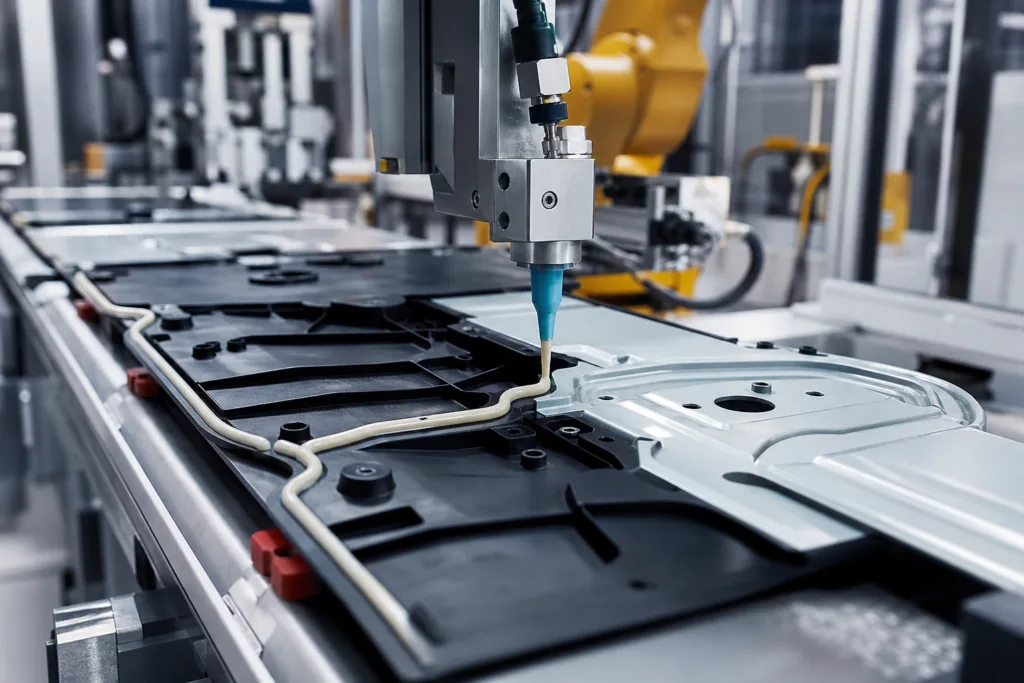
Main silicone strengths include:
- High elasticity and stress relief
- Strong performance across wide temperature ranges
- Excellent weathering and moisture resistance
- Good electrical insulation in many formulations
- Suitability for sealing, gasketing, potting, and bonding sensitive assemblies
When the design challenge centers on heat exposure, expansion mismatch, or durable sealing, our silicone adhesive options for heat resistance and elastic sealing are often the most relevant chemistry family to review.
When silicone is the right choice for thermal cycling, weather exposure, and sensitive assemblies
Silicone is widely considered for electronics, LED assemblies, outdoor enclosures, glass sealing, appliance gasketing, and components exposed to UV, humidity, or repeated temperature swings. It is especially useful where rigid structural stress would crack solder joints, glass edges, ceramic parts, or delicate electronic structures.
Silicone is not always the best choice for high structural load-bearing joints because its elasticity, while valuable, usually comes with lower rigid bond strength compared with structural epoxy or acrylic systems. Paintability, handling time, and cure mechanism also need review because these can vary significantly by formulation.
Industrial adhesive chemistry comparison table
| Chemistry | Core Strength | Flexibility | Cure Speed | Temperature Profile | Best Typical Use | Main Limitation |
|---|---|---|---|---|---|---|
| Epoxy | High structural strength | Low to moderate | Moderate to slow, unless heat assisted | Good to high, depending on grade | Rigid structural bonding, potting, metal assemblies | Can be brittle or stress concentrating |
| Acrylic | High with good toughness | Moderate | Fast | Moderate | Fast assembly, mixed substrates, impact resistance | Odor and shorter working time in some systems |
| Polyurethane | Moderate to high | High | Moderate | Moderate | Flexible bonding, vibration, dynamic movement | Lower rigidity and high-heat limits |
| Silicone | Low to moderate structural strength | Very high | Moderate to variable | High and stable under cycling | Sealing, thermal cycling, electronics, outdoor use | Not ideal for high rigid structural loads |
How to match chemistry to metal, plastic, glass, ceramic, electronics, and mixed-material assemblies
Substrate pairing is one of the fastest ways to narrow chemistry choices.
Metal to metal
Epoxy and acrylic are commonly the first candidates. Choose epoxy when rigidity, chemical resistance, and long-term static load matter most. Choose acrylic when speed, toughness, and better peel or impact behavior are more important.
Metal to plastic
Acrylic and polyurethane are often strong starting points, depending on the plastic type and required stiffness. Epoxy can also work on some engineering plastics with correct surface preparation, but stress from mismatch in expansion needs review.
Glass and ceramic
Epoxy and silicone are both important. Epoxy is usually considered for rigid bonding and dimensional stability. Silicone is preferred when thermal cycling, sealing, or movement tolerance matters.
Electronics and sensitive assemblies
Silicone and selected epoxies are frequently used. The decision depends on whether you need rigid encapsulation, thermal conductivity, dielectric insulation, or stress relief around components. For potting depth, exotherm, shrinkage, and bubble control, formulation details matter as much as chemistry family.
Mixed-material assemblies
Acrylic and polyurethane often perform well where differential expansion and complex stress states are present. Silicone also becomes a strong candidate if heat cycling or environmental sealing is central to the design.
Process factors that affect selection
Even a chemically suitable adhesive can fail in production if the process window is wrong. We encourage buyers to review these items before requesting samples:
- Surface preparation: Will parts be degreased, abraded, primed, or bonded as received?
- Viscosity and flow: Does the adhesive need to self-level, stay in place, wick into a gap, or fill a cavity?
- Open time and pot life: Can operators or automation dispense and position parts within the available working window?
- Fixture time: How quickly must the part move to the next station?
- Cure conditions: Room temperature, heat assist, moisture cure, or two-part reaction?
- Bond line thickness: Is a thin bond line preferred, or is gap filling essential?
- Dispensing method: Cartridge, pail, static mix, meter-mix-dispense, or robotic bead application?
- Storage and shelf life: Can the plant maintain required temperature and inventory rotation?
These factors often determine whether a standard product is sufficient or whether a custom viscosity, cure speed, hardness, or packaging format is needed.
Common mistakes when choosing between epoxy, acrylic, polyurethane, and silicone
Several purchasing and specification mistakes appear repeatedly across industrial projects:
- Choosing by habit: A plant may default to epoxy because it has used epoxy before, even though the real need is flexibility or faster fixture.
- Overvaluing one data point: Lap shear strength alone does not predict impact, peel, thermal cycling, or field reliability.
- Ignoring substrate condition: Coatings, release agents, oxidation, and mold residues strongly affect bond quality.
- Underestimating movement: A rigid adhesive may pass initial strength tests but fail after thermal expansion mismatch or vibration exposure.
- Skipping production simulation: Bench samples may look good until line speed, dispensing accuracy, or cure variability is introduced.
- Neglecting packaging fit: A correct formula in the wrong package can create mixing, waste, or shelf-life problems.
The lowest-risk projects are usually the ones that test chemistry, substrate condition, and process together rather than separately.
When to request custom adhesive formulation instead of a standard grade
Standard grades work well for many applications, but they are not always enough. We usually recommend discussing customization when one or more of these conditions apply:
- The bond must balance two conflicting requirements, such as high strength and some flexibility.
- The substrate is difficult, coated, low-energy, or contamination-prone.
- The assembly process needs a very specific pot life or fixture speed.
- The adhesive must meet dispensing limits such as low sag, high thixotropy, or controlled flow.
- The part experiences unusual temperature, moisture, chemical, or electrical conditions.
- Packaging must fit a private label, OEM line format, or regional distribution requirement.
From our adhesive manufacturing perspective, customization often focuses on viscosity tuning, cure rate adjustment, filler selection, hardness balance, color, package size, or application-specific performance priorities. This is especially valuable when buyers want to reduce risk before scaling to regular procurement.
Checklist for evaluating samples, validating performance, and reducing sourcing risk
A disciplined sample program usually saves more time than it costs. We recommend evaluating candidate adhesives against both technical and supply criteria.
| Evaluation Area | Questions to Ask |
|---|---|
| Substrate compatibility | Does it bond real production substrates, including coatings and surface residues? |
| Application behavior | Is viscosity suitable for your dispensing equipment and target bond line? |
| Working window | Do pot life and open time match operator or automation timing? |
| Cure profile | How long to handling strength, fixture strength, and full cure? |
| Mechanical performance | What happens under peel, impact, vibration, and thermal cycling? |
| Environmental durability | How does the bond respond to humidity, heat, chemicals, or outdoor exposure? |
| Production consistency | Can the supplier maintain batch-to-batch control and stable raw material management? |
| Packaging and logistics | Does the package fit line use, storage conditions, MOQ, and inventory planning? |
In procurement review, supplier communication matters as much as formulation. A strong manufacturing partner should be able to discuss failure modes, test setup, process assumptions, and scale-up risks clearly rather than only sending a generic technical data sheet.
How we help customers choose by application, not chemistry habit
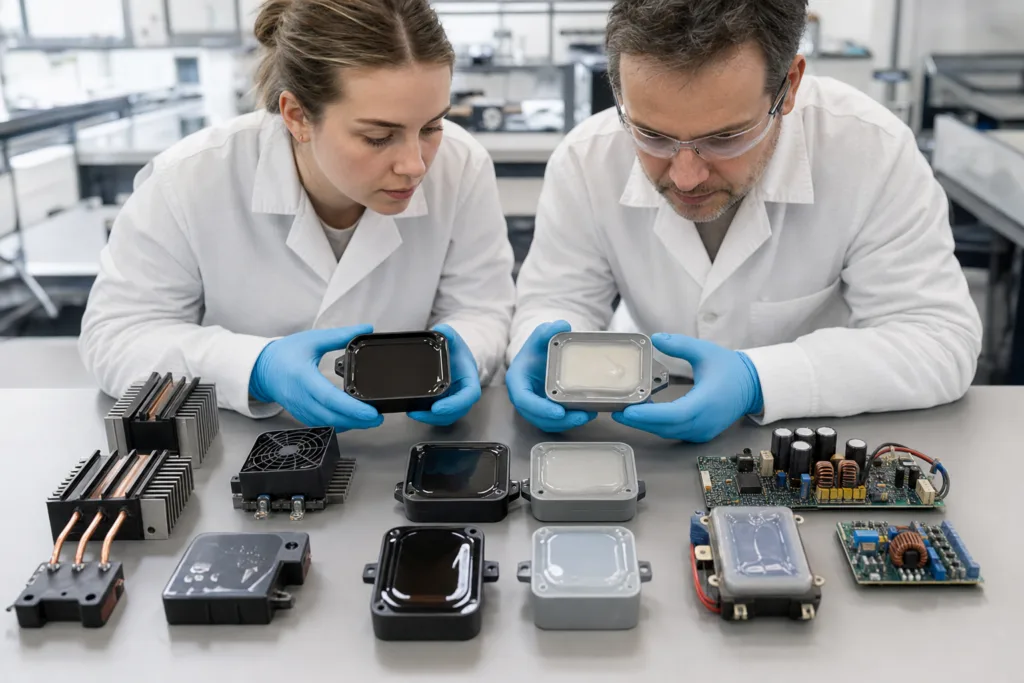
At ZDS, we generally start with the joint design, service environment, substrate pair, and process constraints before we recommend a chemistry family. Sometimes that leads directly to epoxy for rigid structural load, acrylic for assembly speed, polyurethane for dynamic movement, or silicone for heat and elasticity. In other cases, the right answer is a modified or custom formula that combines better processing behavior with the target end-use performance.
For OEM buyers, private label programs, and industrial distributors, this approach also improves sourcing quality. It helps define realistic specifications, sample trial criteria, packaging options, and QC checkpoints before volume supply begins. That reduces the chance of selecting a product that looks correct on paper but behaves poorly in the line.
Conclusion
The most useful industrial adhesive chemistry comparison is not a contest over which family is universally stronger or more advanced. It is a decision framework. Epoxy is usually preferred for rigid strength and durability. Acrylic is often chosen for faster assembly and tough structural-style bonding. Polyurethane works well when flexibility and vibration resistance are essential. Silicone becomes the better option when thermal cycling, sealing, weatherability, or stress relief drive the design.
If your team chooses chemistry by application conditions, cure behavior, substrate reality, and validation testing, adhesive selection becomes much more predictable. That is the approach we recommend because it leads to better bond reliability, smoother production, and lower sourcing risk.
FAQs
Which adhesive chemistry is usually best for structural metal bonding?
For many structural metal bonding applications, epoxy and acrylic are the main candidates. Epoxy is often preferred when high rigidity, strong static load transfer, and chemical resistance matter most, while acrylic may be a better fit when faster fixture, greater toughness, or better impact resistance is needed. The final choice should still depend on surface condition, operating temperature, joint design, and production speed.
When should I choose polyurethane instead of epoxy?
Polyurethane is usually the better choice when the bonded joint will experience movement, vibration, shock, or expansion mismatch between substrates. If the assembly needs to absorb stress rather than remain very rigid, polyurethane can provide a more durable long-term result. Epoxy is often stronger in rigid structural loading, but polyurethane is frequently more forgiving in dynamic service conditions.
Why is silicone often selected for electronics and sealing applications?
Silicone is commonly selected because it stays elastic, handles thermal cycling well, and offers strong moisture and weather resistance. In electronics and sensitive assemblies, that elasticity helps reduce stress on delicate parts, while many silicone formulations also provide useful electrical insulation. It is especially valuable where heat exposure or outdoor durability matters more than rigid structural strength.
Is a faster curing adhesive always better for production?
No. Faster cure can improve throughput, but it can also reduce working time, increase placement pressure on operators or equipment, and create waste if the process is not synchronized. The right cure speed is the one that matches dispensing, alignment, fixturing, and downstream handling. A slightly slower adhesive can be the better manufacturing choice if it gives a more stable process window and fewer defects.
When does it make sense to request a custom adhesive formula?
Custom formulation is worth discussing when standard grades do not balance your required properties, such as strength versus flexibility, cure speed versus pot life, or flow versus sag resistance. It is also useful when substrates are difficult to bond, when packaging must fit a specific production line, or when the application has unusual thermal, chemical, or electrical demands. Customization can reduce compromise and improve production consistency.
What should buyers confirm before approving an adhesive supplier for volume orders?
Buyers should confirm technical fit, sample performance on real substrates, batch consistency, packaging suitability, storage requirements, shelf life, and the supplier’s ability to discuss QC and scale-up clearly. It is also important to verify communication quality during trials, because a supplier that responds well to process issues and test feedback is usually easier to work with during production expansion and routine procurement.