
Thermal management is no longer a side issue in product design. In electronics, LED modules, battery systems, power devices, and compact industrial assemblies, the bonding layer often sits directly in the heat path. That means a thermal conductive adhesive glue is not only expected to hold parts together, but also to move heat away from sensitive components. If either function is overlooked, the result can be reduced output, premature aging, or inconsistent field performance.
Teams comparing materials often start by explore adhesive solutions for heat management so they can evaluate bonding and thermal transfer as one design decision rather than two separate ones.
Why bonding and thermal management should be considered together
Many assemblies generate heat at the same location where components must be fixed, sealed, or reinforced. Examples include heat sinks bonded to housings, LED boards attached to metal frames, sensors fixed into enclosures, and battery components secured near thermal paths. In these cases, the adhesive layer becomes part of the thermal interface.
A conventional structural adhesive may offer strong bonding but poor heat transfer. A conventional thermal interface material may transfer heat well but provide little structural support. Thermally conductive adhesive systems are designed to bridge that gap, but every formulation involves tradeoffs among conductivity, adhesion, flexibility, cure profile, and processing behavior.
What thermally conductive adhesives do
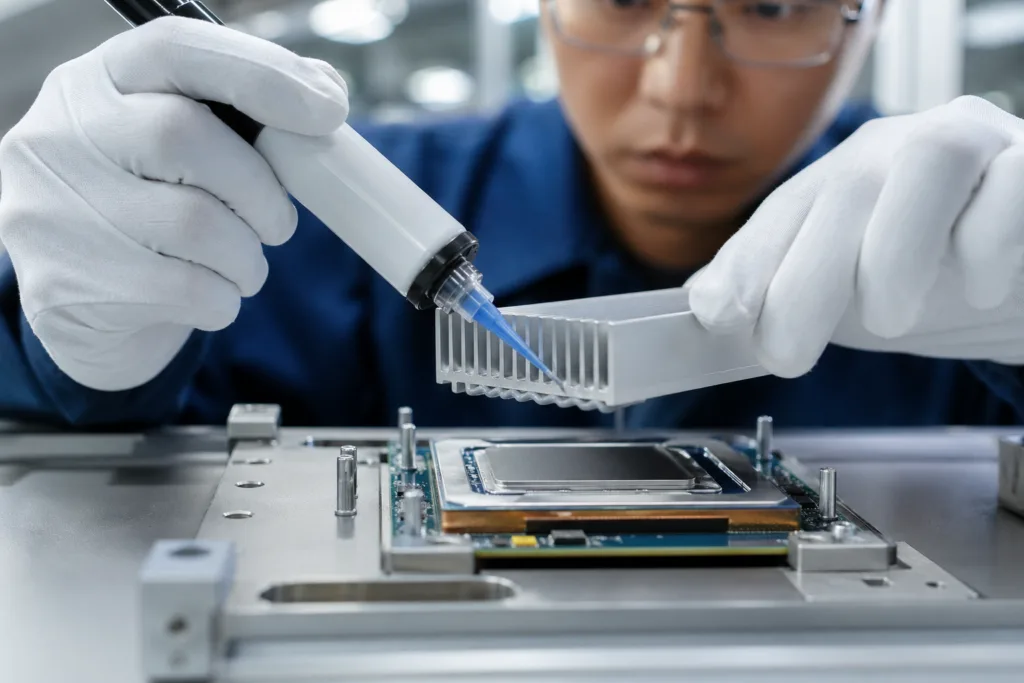
Thermally conductive adhesives are formulated with heat-conductive fillers dispersed in a polymer matrix. The matrix provides bonding, gap filling, and environmental resistance, while the filler network helps transfer heat through the bond line. In practice, this allows one material to attach components and support thermal flow at the same time.
This is different from thermal grease or paste, which mainly improves surface contact but usually provides little mechanical strength. It is also different from thermal pads, which are convenient for rework and tolerance absorption but may not create a permanent bond. Compared with standard structural adhesives, thermally conductive grades are optimized so heat transfer becomes a functional requirement, not just a secondary benefit.
Why heat management matters in real assemblies
Heat affects electrical efficiency, color stability in lighting, battery consistency, material expansion, and long-term reliability. In compact products, the designer may have very limited room for screws, clips, or separate interface materials. That makes adhesive bonding attractive, but only if the adhesive supports the thermal design.
For example, an LED assembly may need good thermal flow to maintain brightness and service life. A power module may need a bond line that tolerates thermal cycling without cracking. A battery pack may need enough compliance to handle expansion while still transferring heat into a cooling structure. A material such as ZDS-929 thermal conductive adhesive for electronics is typically considered when designers need thermal performance in electronic bonding rather than a simple mechanical fix.
The core balance: conductivity versus adhesion and processability
The central challenge is that improving thermal conductivity often requires higher filler loading, and higher filler loading changes how the adhesive behaves. It can increase viscosity, reduce wetting, affect flexibility, and sometimes lower practical bond performance on difficult substrates. So a higher conductivity number alone does not automatically mean a better assembly result.
Engineers typically need to balance several questions at once:
- How much heat actually needs to move through the bond line?
- Is the joint structural, semi-structural, or mainly positional?
- Will the assembly see vibration, shock, or thermal cycling?
- How tightly can bond line thickness be controlled in production?
- Is fast processing more important than maximum thermal transfer?
In many products, the right answer is not the most thermally conductive material available. It is the material that gives sufficient heat dissipation while preserving manufacturability and long-term joint reliability.
Common material types and where they fit
Thermally conductive epoxy
Epoxy systems are often chosen when higher mechanical strength, dimensional stability, and chemical resistance are priorities. They can be a good fit for rigid assemblies where a durable bond is needed between metals, ceramics, and some engineered substrates. A product category represented by ZDS-5118 high-strength thermal conductive adhesive is typically relevant when the joint must contribute meaningful mechanical support in addition to moving heat.
The tradeoff is that epoxies can be less forgiving under repeated expansion mismatch than more flexible chemistries. In assemblies with large thermal movement, rigidity can raise stress at the interface unless the joint is properly designed.
Thermally conductive silicone adhesive
Silicone-based systems are commonly selected for flexibility, heat resistance, and stress relief. They are often useful in assemblies that cycle through temperature changes or involve sensitive components that should not be exposed to excessive bonding stress. They may also be preferred when some movement accommodation matters more than maximum structural strength.
The tradeoff is that silicone materials may not provide the same rigid load-bearing behavior expected from strong epoxy systems. For some procurement teams, this means separating applications into flexible thermal bonding versus true structural thermal bonding.
Other adhesive formats
Depending on the design, teams may also evaluate polyurethane-based systems, two-part materials for thicker gaps, or specialty formulations for higher-temperature operation. At ZDS, these distinctions matter because the required balance can change significantly between a compact control board, a metal heat sink assembly, and a battery module carrier.
Typical application scenarios
Different assemblies place different demands on the adhesive:
- LED lighting: usually needs steady heat flow, thin bond lines, and resistance to long operating hours.
- Power electronics: often needs good thermal transfer plus resistance to thermal cycling and vibration.
- Battery systems: may require thermal conductivity together with flexibility and gap accommodation.
- Industrial sensors and controllers: may prioritize environmental sealing, adhesion, and moderate thermal management.
- Metal-to-metal heat spreaders: may need stronger bonding if the adhesive also replaces fasteners.
Where more structural contribution is needed, a formulation such as ZDS-PU926 thermal conductive structural adhesive may be evaluated differently from a softer electronic assembly material, because the mechanical duty of the joint changes the selection logic.
How to evaluate the key parameters
Thermal conductivity
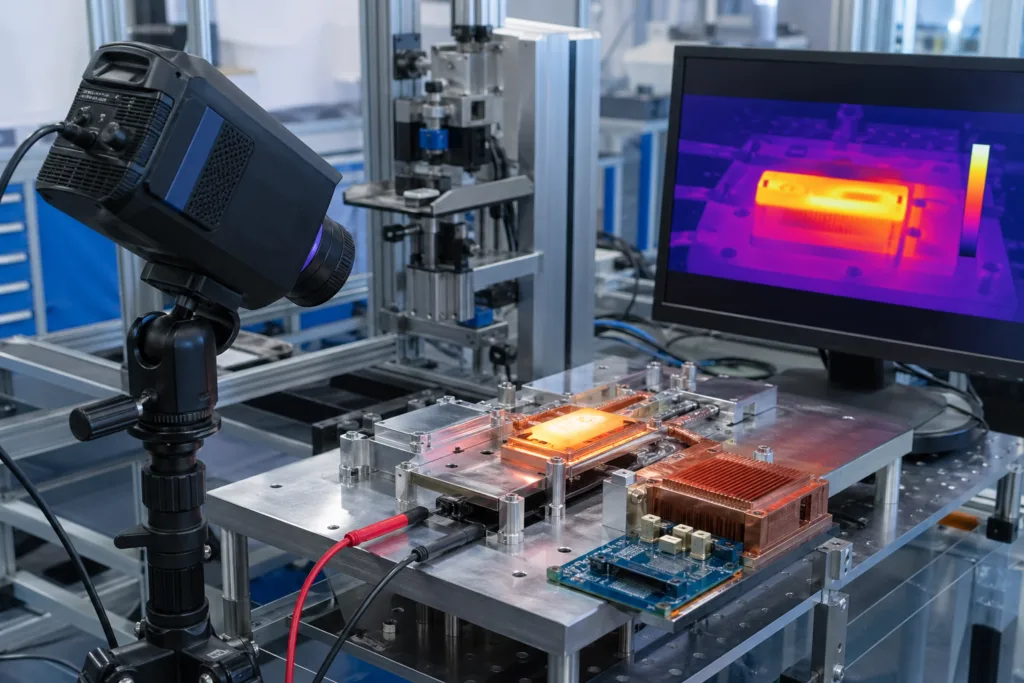
This is the first property many teams ask about, but it should be interpreted carefully. Reported thermal conductivity is useful for screening, yet actual assembly performance also depends on interface contact, cure quality, filler distribution, and bond line thickness. A moderate-conductivity adhesive in a thin, well-controlled bond line can outperform a higher-rated material applied too thickly or with poor wetting.
Bond line thickness
Thicker adhesive layers usually increase thermal resistance, even when the material itself is thermally conductive. Designers should aim for the thinnest bond line that still accommodates flatness variation, tolerance stack-up, and reliable wetting. If the gap is larger than necessary, heat has a longer path to travel.
Viscosity
Viscosity affects dispensing, wetting, gap filling, and the ability to avoid voids. Higher-viscosity materials can stay in place on vertical or irregular surfaces, but they may trap air or resist spreading into a thin layer. Lower-viscosity materials may wet well but can flow beyond the intended area if process control is weak.
Curing method
One-part heat cure, room-temperature cure, and two-part reactive systems all create different production constraints. Fast curing may improve throughput, but the thermal budget of the components and the available assembly time must be considered. Pot life, fixture time, and final cure conditions can all affect manufacturing stability.
Service temperature
The adhesive should maintain both thermal and mechanical performance within the real operating range, not just during short-term lab exposure. If the assembly sees repeated high temperatures, a material such as ZDS-369AB high-temp thermal conductive adhesive may be the kind of option engineers compare when standard grades no longer provide enough margin.
Interface design matters as much as the material
Even a well-selected adhesive will disappoint if the interface is poorly designed. Surface cleanliness, roughness, flatness, and pressure during assembly all influence the real thermal path. Oils, oxidation, mold release residue, or dust can reduce both adhesion and heat transfer.
Gap control is equally important. If the adhesive is expected to fill a large or inconsistent gap, the design may unintentionally create high thermal resistance. Sometimes the better solution is not a different adhesive, but improved part flatness, tighter tolerance control, or a defined spacer system that keeps the bond line predictable.
Contact quality should also be considered. Voids, trapped bubbles, and incomplete wet-out interrupt the conductive path. In thermal joints, these defects matter more than they might in a purely mechanical bond.
How thickness and application method affect performance
Real-world thermal performance is strongly influenced by how the material is applied. A syringe bead, automated dispense pattern, screen print, or controlled spread can all produce different results. If the pattern leaves air pockets or uneven coverage, measured temperatures can vary from unit to unit.
In general, better heat transfer comes from consistent coverage, low void content, and controlled thinness. But the joint still needs enough adhesive to bond reliably across the full interface. This is why process trials are so important. A material that looks ideal on a datasheet may behave differently on a rough casting, stamped metal part, or coated substrate.
How to choose the right thermal conductive adhesive glue
A practical selection process starts with the real duty of the joint. Ask whether the adhesive is mainly transferring heat, mainly bonding, or doing both at a meaningful level. Then define the substrate pair, expected gap, operating temperature range, environmental exposure, and production method.
| Requirement | What to prioritize |
|---|---|
| High structural support | Bond strength, modulus, substrate adhesion, fatigue resistance |
| Repeated thermal cycling | Flexibility, stress absorption, adhesion retention |
| Maximum heat flow in a thin interface | Low bond line thickness, good wetting, consistent application |
| Larger gaps or tolerance variation | Gap-filling ability, viscosity control, cure-through reliability |
| High operating temperature | Thermal stability, adhesion retention at temperature, aging performance |
| Fast production | Dispensing behavior, workable pot life, fixture and cure profile |
For procurement teams, it is also useful to compare not just price per kilogram, but total assembly value. A material that improves process consistency, reduces fasteners, or lowers operating temperature may create better overall cost-performance than a cheaper adhesive that causes variation or rework.
Verification and testing recommendations
Selection should be confirmed with application-specific testing. Useful checks often include thermal cycling, high-temperature aging, humidity exposure, lap shear or pull testing, and simple temperature mapping on the finished assembly. If the adhesive is part of a critical thermal path, test the bonded assembly rather than relying only on raw material values.
It is also wise to compare initial performance with aged performance. Some joints look acceptable after cure but degrade after repeated heating and cooling, especially when substrates expand at different rates. Verification should reflect the real mechanical load, thermal load, and service environment of the end product.
Common mistakes to avoid
- Choosing only by thermal conductivity rating without considering bond strength or processing behavior.
- Allowing an unnecessarily thick bond line that raises thermal resistance.
- Ignoring substrate cleanliness and assuming the filler-loaded adhesive will compensate for poor preparation.
- Using a rigid material in a joint with large thermal expansion mismatch.
- Assuming room-temperature test results will predict high-temperature durability.
- Skipping production trials and discovering voiding or dispense issues too late.
Conclusion
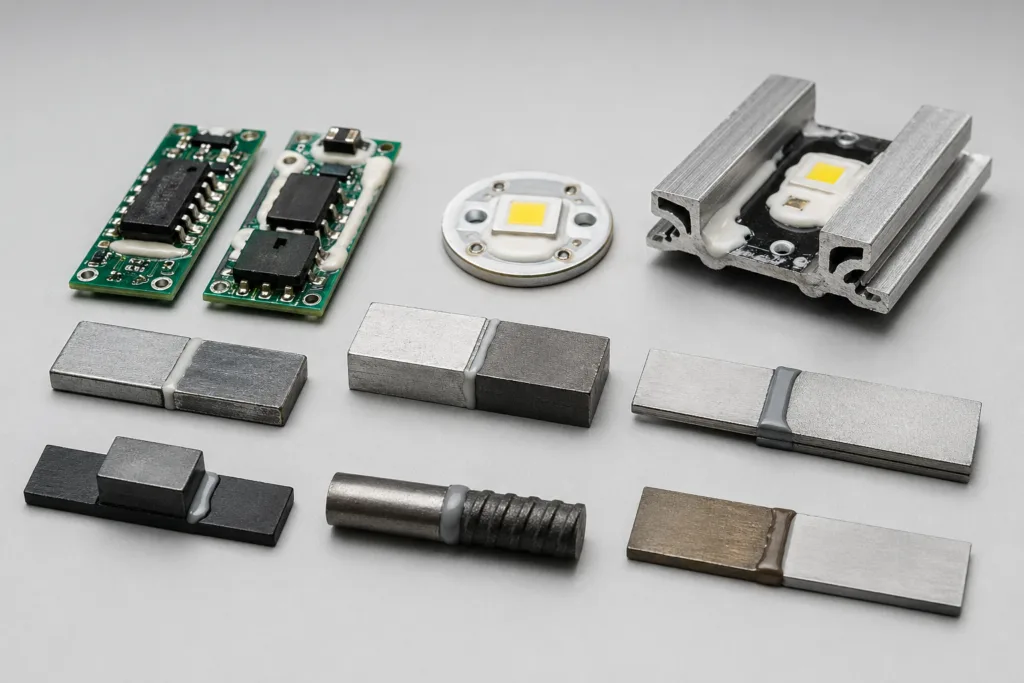
The right thermal conductive adhesive glue is rarely the one with the highest published conductivity alone. The better choice is the one that fits the thermal path, the joint mechanics, the substrate combination, and the production process at the same time. When teams evaluate bond line thickness, interface quality, cure conditions, and long-term durability together, they are more likely to achieve stable heat dissipation and reliable bonding in the final product.
FAQs
Can thermal conductive adhesive replace thermal paste?
It can in some designs, especially when a permanent bond is needed, but paste and adhesive do different jobs. Thermal paste mainly improves contact, while a thermally conductive adhesive also provides mechanical attachment.
Is higher thermal conductivity always better?
Not necessarily. Real performance also depends on bond line thickness, wetting, void control, and whether the adhesive still provides the required mechanical and processing performance.
Which is better for thermal bonding, epoxy or silicone?
Neither is universally better. Epoxy is often chosen for stronger, more rigid bonds, while silicone is often preferred when flexibility, stress relief, or temperature cycling resistance is more important.
Why does bond line thickness matter so much?
A thicker adhesive layer usually creates more thermal resistance, so heat has a longer path to travel. Keeping the bond line controlled and only as thick as needed usually improves heat transfer.
How should surfaces be prepared before applying a thermal adhesive?
Surfaces should be clean, dry, and free from oil, oxidation, dust, or release agents. Good surface preparation improves both adhesion and thermal contact at the interface.
What testing should be done before approving a material?
Teams usually benefit from testing the actual bonded assembly for thermal performance, adhesion, thermal cycling resistance, and aging behavior under realistic operating conditions.