
Moisture-resistant bonding is rarely decided by adhesive type alone. In industrial production, long-term bond reliability depends on a chain of factors: substrate condition, formulation fit, viscosity control, cure behavior, application method, storage stability, and the discipline of quality control. For buyers evaluating adhesive supply for wood, stone, composites, or mixed-material assemblies, a practical quality framework helps reduce rework, delamination risk, and inconsistent field performance. In our manufacturing work, we see that successful projects usually start with a clear understanding of how moisture exposure will interact with the adhesive, the bonded materials, and the production process.
If your application involves panels, furniture components, architectural assemblies, or laminated parts exposed to humidity swings, washdown, or intermittent wet service, reviewing woodworking adhesive manufacturing options for moisture-resistant bonding can help connect material performance targets with real production needs. At ZDS, we support this kind of requirement through formulation adjustment, viscosity matching for different dispensing methods, sample evaluation on actual substrates, and packaging plans that fit pilot runs through bulk manufacturing.
Why moisture-resistant bonding needs tighter quality control
Moisture enters bonded systems in several ways: ambient humidity during assembly, water contact in service, vapor diffusion over time, or residual moisture held inside porous substrates. Each pathway can stress a bond differently. Some adhesives soften, some lose interfacial adhesion, and some remain structurally sound but fail because the substrate swells and creates internal stress. That is why industrial adhesive quality control for moisture-resistant bonding should focus not only on final bond strength but also on process stability.
From our formulation perspective, moisture-sensitive applications often fail for one of four reasons: the wrong chemistry was selected, the substrate moisture level was not controlled, the cure schedule was incomplete, or the bondline geometry was unsuitable for expansion and contraction. Buyers sometimes ask for a stronger adhesive when the real issue is cure uniformity or surface contamination. A disciplined QC plan makes these distinctions visible before a product reaches full production.
One useful early step is understanding how moisture changes adhesive bond strength over time, because initial fixture performance can look acceptable while the bond slowly weakens in cyclic humidity or standing water conditions. This is especially important for porous materials, wood composites, flooring layers, and hybrid assemblies where one substrate absorbs more moisture than the other.
What buyers should evaluate before choosing an adhesive
Substrate type and surface condition
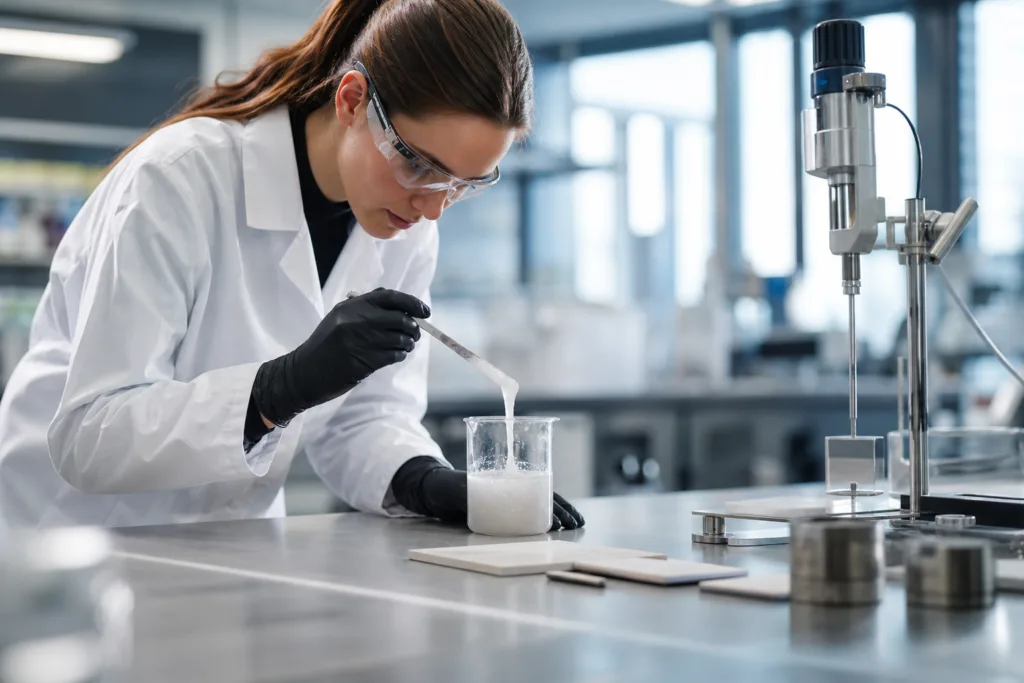
Moisture-resistant bonding starts with the real substrate, not the catalog description. Solid wood, MDF, plywood, cement board, stone, coated metals, and plastics each respond differently to water exposure and adhesive wetting. Porous substrates may pull carrier or reactive components from the adhesive. Dense substrates may require better surface energy matching or a primer strategy. In production, we encourage customers to define not just the material name, but also density, finish, coating, roughness, cleanliness, and whether the surface arrives dry, dusty, oily, or freshly machined.
Wood is a good example. Two pieces labeled as the same species may behave differently if one has higher internal moisture, more resin content, or a smoother machined face. Likewise, stone bonding may vary based on porosity, dust retention, and installation temperature. These factors influence whether the adhesive forms an even bondline and whether cure can proceed consistently through the full interface.
Real moisture exposure, not just the word waterproof
Buyers often ask whether an adhesive is waterproof, but the better question is: what exact moisture environment will the bond face? Humid indoor use, splash exposure, condensation, occasional mopping, outdoor rain, or immersion all create different stress patterns. Cyclic wet-dry conditions can be more damaging than a stable environment because the bonded parts repeatedly expand and contract. A product that performs well in indoor humidity may not tolerate repeated washdown or wet substrate installation.
That is why we usually request an application profile including service temperature, humidity range, direct water contact frequency, and whether bonded parts will carry structural load during moisture exposure. These details influence chemistry selection, hardness target, elongation needs, and test design.
Processing window and line speed
In many plants, the process window determines whether a technically suitable adhesive is truly manufacturable. Pot life, open time, fixture time, and full cure profile must match assembly speed and rework reality. A fast adhesive may reduce clamp time but create waste if the line pauses. A slower system may wet porous substrates well but delay packaging or downstream machining. For moisture-resistant applications, incomplete cure is especially risky because uncured or partially cured regions are more vulnerable to moisture uptake and interfacial weakness.
When comparing options, buyers should ask how viscosity behaves across seasonal temperatures, how long the adhesive remains usable after mixing or opening, and what minimum cure conditions are required before moisture exposure. These are more useful questions than broad claims about high strength.
How adhesive chemistry affects moisture-resistant performance
No single chemistry is correct for every wet or humid environment. The right choice depends on substrate, flexibility needs, cure conditions, and service exposure.
| Adhesive chemistry | Typical strengths | Potential limitations | Common moisture-related use cases |
|---|---|---|---|
| Epoxy | High strength, chemical resistance, rigid structural bonding, gap filling | Can be too rigid for moving substrates, longer cure in some systems | Rigid assemblies, filled joints, durable industrial bonds |
| Polyurethane | Flexibility, good adhesion to varied substrates, useful water resistance | Moisture reactivity may require storage and process control | Wood, flooring, panels, mixed substrates, vibration-prone assemblies |
| Silicone | Excellent flexibility, weatherability, movement accommodation | Lower structural strength in many load-bearing joints | Sealing, gasketing, flexible bonding, outdoor exposure |
| Acrylic | Fast cure, good adhesion on some difficult surfaces, productive assembly | Odor, shrinkage, or surface sensitivity depending on system | Fast assembly where balanced toughness is needed |
For teams comparing families rather than products, it helps to review how to compare epoxy, acrylic, polyurethane, and silicone adhesive chemistry. The most important takeaway is that moisture resistance is tied not only to the polymer backbone, but also to formulation details, cure completeness, bondline thickness, and the movement of the bonded parts in service.
In our development work, polyurethane systems are often chosen when buyers need a balance of adhesion, flexibility, and water resistance. Where movement, thermal cycling, or substrate expansion is expected, a flexible chemistry can outperform a harder one even if the rigid system shows higher initial lab strength.
For example, some projects involving floor layers, porous mineral surfaces, or damp service areas may fit ZDS-8001AB PU adhesive for durable bonding in damp environments because the application needs durable adhesion without making the joint excessively brittle. The key is not the product name alone, but whether the cure profile, flexibility, and application method fit the actual installation process.
Key quality control checkpoints from incoming materials to finished bond
Incoming material checks
Quality starts before the adhesive reaches the dispensing station. For moisture-resistant bonding, we recommend control of adhesive batch identification, appearance, viscosity range, packaging integrity, and storage condition on receipt. If the product is moisture reactive, exposure during handling matters. Substrates should also be checked for moisture content, cleanliness, coating consistency, and dimensional stability.
For porous materials such as wood-based panels, incoming moisture variation can create large performance swings. Two production lots may bond differently even with the same adhesive and operator settings. That is why buyers should ask suppliers how they recommend measuring acceptable substrate condition and what variability limits should trigger a hold or re-test.
In-process controls
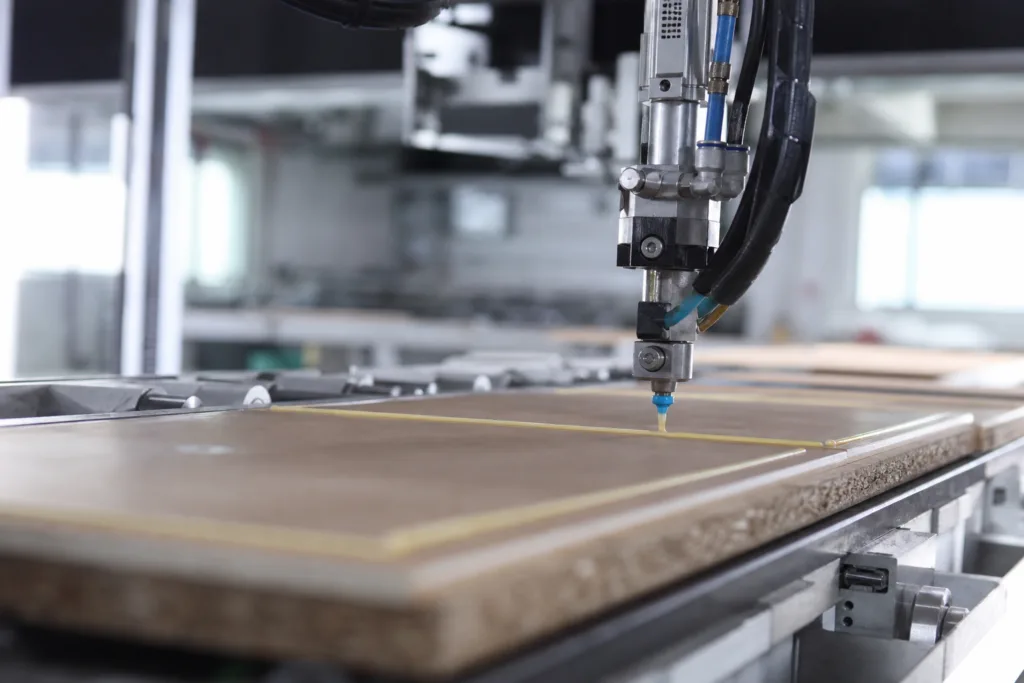
Once production begins, the most useful QC controls are usually simple and repeatable: adhesive temperature at use, mix ratio if a two-component system is used, bead size or spread rate, open assembly time, press or clamp time, and cure environment. If production relies on meter-mix dispensing, equipment calibration and periodic verification become essential. In regulated or quality-driven workflows, confidence in test and process measurements depends on measurement traceability, meaning that scales, timers, temperature devices, and dispensing checks should connect back to a documented calibration chain rather than informal shop-floor assumptions.
At ZDS, we usually tell buyers that stable mix ratio and controlled bondline application solve more real-world failures than switching to a more expensive chemistry. If the adhesive is correct but the line delivers too little material, traps voids, or allows excessive open time before mating, moisture resistance in service can drop sharply.
Finished-part evaluation
Final QC should reflect real service risk. Useful checks may include peel or shear comparison against a control sample, bondline appearance, cure hardness, void inspection, edge integrity, and environmental aging trials. For moisture-exposed applications, a finished sample that looks clean immediately after cure is not enough. We prefer some level of accelerated humidity or water-contact evaluation before approving a formula for scale-up, especially where the bond is load-bearing or difficult to repair in the field.
Testing methods that matter for moisture-resistant bonds
Not every buyer needs a complex validation program, but every serious project benefits from test methods that reflect actual use. The challenge is to avoid over-testing in irrelevant directions while still capturing the most likely failure mode.
| Test focus | Why it matters | What it can reveal |
|---|---|---|
| Initial bond strength | Confirms baseline adhesion and process capability | Poor wetting, contamination, mix errors |
| Humidity aging | Simulates moisture diffusion and long-term stress | Softening, adhesion loss, substrate movement effects |
| Water contact or soak | Checks tolerance to direct wet exposure | Edge failure, swelling-related stress, bondline degradation |
| Thermal cycling | Assesses movement and stress over temperature shifts | Cracking, brittle failure, interfacial fatigue |
| Process repeatability trials | Measures consistency across operators or batches | Sensitivity to line conditions and application variation |
In many cases, the smartest path is a staged validation plan: lab screening, application trial on real parts, then a pilot run with defined acceptance criteria. This helps procurement and engineering align on risk before committing to volume. It also gives the supplier a chance to adjust viscosity, cure speed, or packaging based on evidence rather than assumption.
Formulation and process adjustments that improve reliability
Moisture-resistant bonding often improves when buyers treat formulation and process as a combined system. A few practical adjustments can make a large difference:
- Viscosity tuning: Lower viscosity may improve wetting on dense surfaces, while higher viscosity can help on vertical applications or rough porous substrates.
- Open time matching: Longer open time can help on larger assemblies, but excessive delay before mating should be avoided if skinning or moisture pickup becomes a risk.
- Flexibility targeting: Substrates that move with humidity often need tougher or more elastic bonds than rigid assemblies.
- Packaging selection: Cartridges, pails, drums, or dual-component packs should fit line speed, consumption rate, and contamination risk.
- Primer or surface prep strategy: Some difficult surfaces benefit more from improved preparation than from changing the adhesive itself.
Where flexibility and water resistance are both important, some buyers choose to discuss polyurethane adhesive manufacturing for flexible, water-resistant bonding because the formulation window can often be adjusted around processing needs. In our experience, custom work is especially valuable when a standard product almost fits, but misses the target on spreadability, cure speed, hardness, or packaging format.
Common mistakes that weaken bonds in humid or wet service
Applying adhesive to wet or unstable substrates
Some moisture-curing systems can tolerate ambient humidity, but that does not mean every substrate can be wet at assembly. Surface water, trapped dampness, or unstable internal moisture can dilute the interface, interfere with cure, or generate later movement that breaks the bond.
Using strength data without environmental context
Data taken at room temperature on dry samples can be misleading if the actual assembly sees condensation, heat, cleaners, or periodic water contact. Buyers should ask whether performance claims reflect dry-lab conditions only or include environmental aging.
Ignoring bondline design
A bond that is too thin may starve a porous surface. A bondline that is too thick may cure slowly or trap stress if the chemistry shrinks. Joint design matters as much as chemistry selection in many moisture-related failures.
Scaling up without line trials
Successful bench samples do not guarantee stable production. Dispensing behavior, worker timing, substrate variation, and cure environment can all change at volume. We recommend at least a controlled pilot before final approval for recurring production.
How to evaluate an adhesive supplier for moisture-sensitive applications
For procurement teams, supplier capability should be judged by more than price and a data sheet. In moisture-sensitive bonding, practical supplier support often determines how quickly a project reaches stable production.
Look for a manufacturer that can discuss substrate variability, recommend validation steps, explain storage limits clearly, and respond to process details such as line speed, application equipment, and desired package size. It is also useful when the supplier can support OEM or private label planning if your business model requires branded packaging or proprietary formulation control.
We suggest asking these questions during evaluation:
- Can the supplier recommend a test plan based on the actual moisture exposure?
- Can viscosity, cure speed, or hardness be adjusted if trials reveal a gap?
- How are batches controlled for consistency?
- What shelf life and storage conditions are realistic for the chosen packaging?
- What sample quantity is available for realistic production trials rather than only lab demos?
- Can the supplier support future scale-up without changing critical application behavior?
These questions are often more valuable than asking for the strongest adhesive in general terms. In our experience, durable results come from fit, repeatability, and communication.
Procurement guidance for samples, packaging, and scale-up
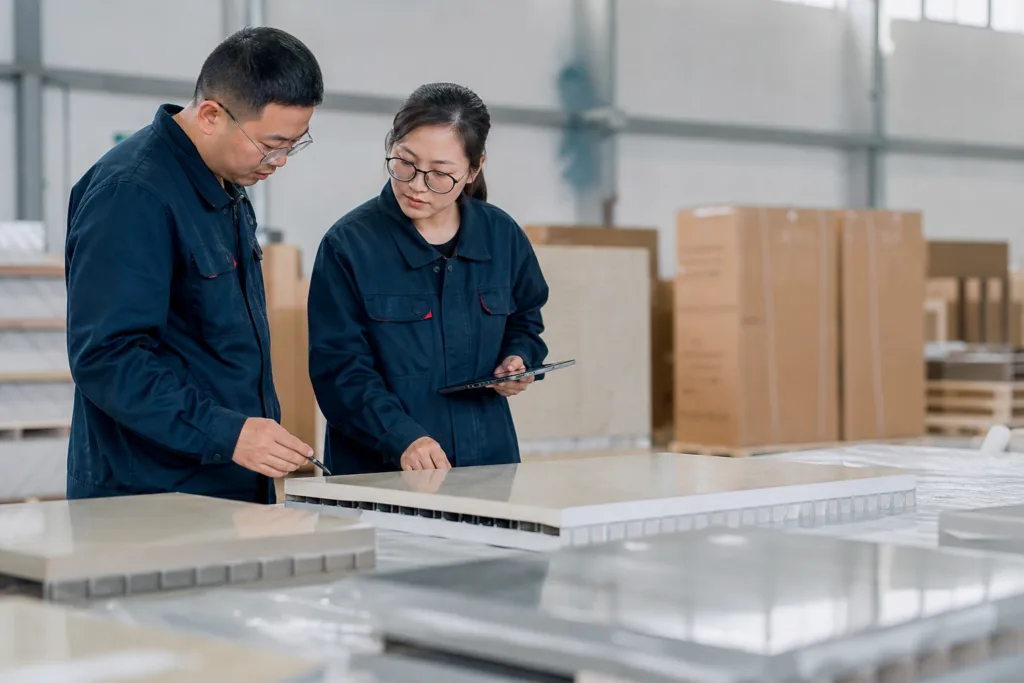
Sampling should be planned around decision points. Early screening samples can be small, but production-relevant trials need enough material to test operator handling, open time, equipment compatibility, and short-term storage after opening. If the adhesive is two-component, sample quantity should allow repeat dispensing and ratio verification, not just one successful panel.
Packaging affects waste, contamination risk, and workflow. Small packs reduce exposure and simplify trials. Larger packs improve cost efficiency in stable production but demand better handling discipline. For moisture-sensitive systems, partially used packaging can become a hidden source of inconsistency if resealing and storage are not controlled.
Before scale-up, buyers should align with the manufacturer on lot reservation, lead time expectations, documentation needs, and whether any formula refinements are likely after pilot feedback. This reduces surprises when moving from technical approval to purchasing approval.
Conclusion
Industrial adhesive quality control for moisture-resistant bonding is not a single test or a single product choice. It is a practical system that connects substrate reality, adhesive chemistry, process discipline, and service environment. When buyers define moisture exposure clearly, validate on real materials, and choose a manufacturer that can support formulation and production details, they significantly improve the odds of long-term bond durability. From our perspective as an adhesive manufacturer, the strongest projects are the ones that treat moisture resistance as a process-controlled outcome rather than a marketing label.
FAQs
How do I know if an adhesive is suitable for moisture-resistant bonding?
Start by defining the real exposure: humidity, splash, washdown, condensation, or continuous wet service. Then compare that environment with the substrate type, joint design, cure conditions, and flexibility needs. A suitable adhesive should be evaluated on actual materials under realistic aging conditions, not just selected from dry-condition strength data.
What is the most common cause of moisture-related bond failure?
The most common cause is usually a mismatch between the process and the application rather than a simple lack of adhesive strength. Wet or variable substrates, incomplete cure, poor surface preparation, and uncontrolled open time are frequent reasons that a bond performs well at first but degrades after humidity or water exposure.
Should I choose epoxy, polyurethane, or silicone for humid environments?
The right choice depends on whether the assembly needs rigidity, flexibility, gap filling, weatherability, or mixed-substrate adhesion. Epoxy can suit rigid structural bonds, polyurethane often fits flexible water-resistant bonding, and silicone is valuable where movement and weather exposure are more important than high structural strength. The best decision comes from matching chemistry to substrate behavior and service conditions.
What quality checks matter most during production?
The most important checks are usually substrate condition, adhesive storage condition, viscosity consistency, mix ratio for two-component systems, bead size or spread rate, open time control, and cure confirmation. These are the checkpoints that most directly influence whether moisture resistance seen in samples can be repeated in full production.
Can an adhesive be customized for my process or packaging needs?
Yes, many industrial projects benefit from customization when a standard product is close but not fully aligned. Common adjustments include viscosity, open time, cure speed, hardness, filler level, and package format. Customization is especially useful when the adhesive must run through specific dispensing equipment or meet a narrow assembly window.
What should I ask a manufacturer before approving samples?
Ask what substrates the sample was designed for, what cure conditions are required, how moisture exposure should be simulated in testing, what storage limits apply after opening, and whether the same application behavior can be maintained at production scale. It is also smart to ask how batch consistency is controlled and whether formula refinement is possible after pilot feedback.