
In wet-service applications, adhesive failure is rarely a simple yes-or-no event. It is usually progressive. A bond that looks acceptable after assembly can lose margin over weeks or months as water diffuses into the adhesive layer, humidity softens the polymer network, or steam accelerates hydrolytic attack at the interface. That is why understanding how moisture affects adhesive bond strength matters for engineers, R&D teams, and sourcing managers evaluating products for bathrooms, appliances, outdoor enclosures, electronics, lighting, transportation, and industrial equipment.
For teams building products that face splashing, washdown, condensation, outdoor weathering, or long-term damp exposure, waterproofing adhesive solutions for wet-service assemblies become more than a material choice; they are part of reliability planning. At ZDS, we support these projects by matching adhesive chemistry to the real exposure type, adjusting viscosity and cure profile to the production process, reviewing substrate compatibility, and helping customers compare sample performance before bulk adoption or private label rollout.
From our adhesive manufacturing perspective, buyers often focus too heavily on initial dry strength and not enough on retained strength after conditioning. A bond can pass a simple room-temperature pull test and still underperform in real service if moisture gradually weakens the interface, plasticizes the adhesive, or creates swelling stress between dissimilar materials. Wet-service selection should therefore start with service environment mapping, not with a single headline strength value.
Why Moisture Damage Is Often Progressive Rather Than Immediate
Water usually enters a bonded assembly by diffusion, capillary pathways, edge ingress, or repeated condensation cycles. This means the bond line often degrades from the edges inward or from small defects outward. In many production environments, the first problem is not total separation but slow performance drift: reduced stiffness, lower peel resistance, increased creep, whitening, blistering, or a sudden drop in strength after thermal cycling.
Humidity-driven degradation is especially deceptive because the assembly may never be submerged. A component stored in a warm, humid factory, installed outdoors, or operated near steam can still absorb enough moisture over time to change the adhesive’s mechanical behavior. Rigid systems may become more brittle after repeated environmental stress, while other chemistries soften and lose load-bearing capability.
This is why we advise customers to define acceptable property retention after environmental aging rather than asking only, “Does it stick?” The more useful question is: “How much strength, flexibility, seal integrity, or electrical insulation remains after realistic exposure?” Standards-based conditioning can help frame that discussion. For example, ASTM moisture and temperature conditioning for adhesive bond durability reflects the practical idea that wet-service performance should be judged by retained properties after exposure, not just dry-lab results.
How Moisture Affects Adhesive Bond Strength at Different Failure Points
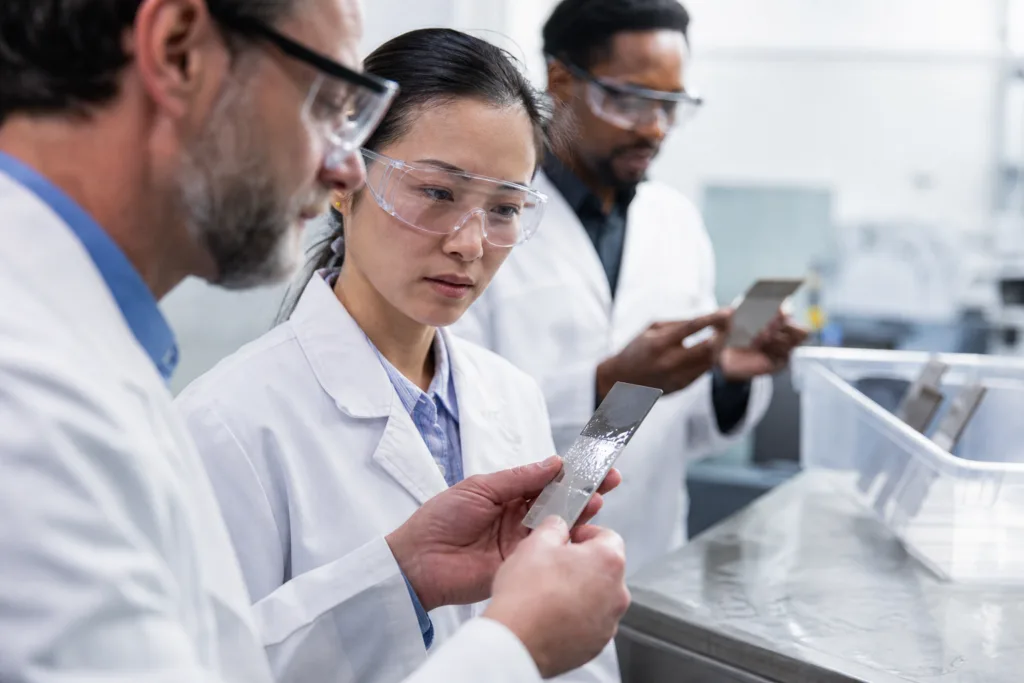
When discussing how moisture affects adhesive bond strength, it helps to separate three different issues: adhesion to the substrate, cohesion within the adhesive, and stability of the bonded interface over time.
Loss of adhesion at the substrate surface
Water can reduce interfacial attraction, especially when the substrate surface was poorly prepared, contaminated, under-cured, or chemically difficult to bond. Metals with surface oxidation, low-surface-energy plastics, and porous materials with trapped moisture are common risk areas. Once water reaches the interface, it can displace weak boundary layers and promote delamination.
Loss of cohesion inside the adhesive layer
Some adhesive systems absorb moisture and become softer or weaker internally. This can lower tensile shear strength, reduce modulus, and increase creep under load. In other systems, repeated wet-dry or hot-cold cycles can create microcracks that later propagate during vibration or impact.
Instability caused by swelling mismatch
Even when the adhesive itself remains chemically intact, moisture uptake can create internal stress. If the adhesive swells differently from the bonded substrates, the interface sees additional peel or shear stress. This becomes more severe in assemblies combining metal with plastic, glass with coated frames, or electronics housings with elastomeric seals.
In technical review work, we often recommend adhesive selection technical support for moisture-exposed projects when the assembly includes mixed substrates, thin bond lines, tight cosmetic requirements, or long service expectations. The correct chemistry is only part of the answer; interface quality and stress distribution are equally important.
Humidity vs Steam vs Direct Water Contact
Not all moisture exposure is equal. Buyers should distinguish between ambient humidity, intermittent liquid water contact, continuous immersion, and steam or hot-wet exposure.
| Exposure type | Typical risk to adhesive bond | What buyers should verify |
|---|---|---|
| High humidity | Gradual moisture uptake, softening, reduced insulation, dimensional drift | Strength retention, creep resistance, electrical stability, edge sealing |
| Condensation cycles | Repeated wetting and drying, interfacial pumping, corrosion support on metals | Thermal cycling plus humidity testing, surface prep robustness |
| Direct water splash or washdown | Edge ingress, seal breakdown, hydrolytic attack in vulnerable chemistries | Seal continuity, water resistance after curing, bond edge design |
| Immersion | Continuous water absorption, swelling, long-term strength loss | Absorption rate, retained strength, substrate compatibility |
| Steam or hot-wet service | Accelerated diffusion, hydrolysis, stress under heat and moisture | Heat-moisture aging, pressure exposure, durability under load |
Steam is often the most severe condition because it combines heat and moisture, increasing diffusion rates and accelerating chemical attack. An adhesive that survives room-temperature water may still fail near sterilization steps, appliance vents, heated plumbing zones, or hot-process covers. In structural or semi-structural assemblies, combined stress conditions matter even more. Structural adhesive durability under humidity, heat, and load is a useful reference point when specifying validation for joints that remain stressed during service.
What Changes in Flexible vs Rigid Adhesive Systems
Flexible and rigid systems do not respond to moisture the same way, and this difference has major application implications.
Flexible systems
Silicone and certain moisture-resistant elastomeric systems usually tolerate movement, thermal expansion mismatch, and cyclic stress better than rigid chemistries. They are often preferred for sealing, gasketing, weatherproofing, and assemblies where movement is expected. Their lower modulus can help prevent crack initiation when humidity cycling or water ingress causes dimensional changes.
That said, flexibility alone is not enough. Buyers still need to review adhesion to the target substrates, cure depth, contamination tolerance, and long-term exposure conditions. For many sealing-oriented projects, we discuss silicone adhesive options for flexible sealing and humidity resistance when the priority is elastic recovery, weathering tolerance, and gap accommodation rather than high rigid load transfer.
Rigid systems
Epoxy, acrylic, and polyurethane systems can offer high strength, hardness, and dimensional stability, but their moisture response depends heavily on formulation. Some are excellent in wet environments when properly designed and cured. Others may lose toughness, develop microcracks, or show more obvious interfacial weakening under moisture stress. Rigid systems are not automatically a poor choice; they simply require more careful matching to substrate movement, joint design, and exposure severity.
Potting and encapsulation systems
In electronics, moisture resistance is not just about bond strength. It is also about preventing water pathways, protecting components, preserving electrical insulation, and minimizing stress on delicate parts. Potting compounds must balance flow, cure profile, exotherm, depth, adhesion, and environmental resistance. In moisture-sensitive electronics, a product such as ZDS-168ab-T electronic potting adhesive for insulation and waterproofing reflects the type of evaluation many buyers need: not just waterproofing claims, but insulation performance, process fit, and long-term stability after curing.
Early Warning Signs of Moisture-Driven Bond Degradation
Wet-service failures often leave clues before complete separation. Recognizing them early helps teams correct the process before a field issue grows.
- Edge whitening or haze: often associated with moisture ingress, stress, or microvoid formation.
- Softening or tack development: may indicate under-cure, plasticization, or excessive moisture absorption.
- Blistering or bubbling: can point to trapped moisture, incompatible cure conditions, or post-cure exposure before full cure completion.
- Loss of peel strength: commonly appears before total shear failure in flexible assemblies.
- Corrosion near bonded metal interfaces: suggests water pathways or incomplete sealing.
- Intermittent electrical problems: in potted or sealed electronics, moisture ingress may show up first as leakage, insulation drift, or condensation-related malfunction.
These warning signs should trigger both material review and process review. Moisture failure is often a combined result of chemistry, contamination, cure quality, joint geometry, and environmental mismatch.
Common Causes of Water Exposure Adhesive Failure in Production
In our formulation and customer support work, the most common causes of water exposure adhesive failure are rarely dramatic formulation mistakes alone. More often, they come from small mismatches that become serious over time.
Inadequate surface preparation
Oil, mold release, fingerprints, oxidation, dust, residual cutting fluid, and absorbed moisture in porous substrates all reduce wet-service reliability. A bond can appear acceptable initially while hiding weak boundary layers that water later exploits.
Wrong cure assumptions
An assembly may be moved, packed, or exposed to humidity before the adhesive has reached sufficient cure. This is especially important for two-part systems, moisture-curing materials in thick sections, and room-temperature cures that need more time than line operators expect.
Unsuitable joint design
Open edges, thin seal interruptions, sharp stress points, and poor gap control invite water ingress. If the design allows standing water or repeated steam exposure at the bond edge, chemistry alone may not solve the issue.
Mismatch between flexibility and substrate movement
When plastic housings expand, metal frames contract, or outdoor temperatures swing, a rigid bond line may accumulate stress. Add moisture, and the risk increases further.
Overreliance on dry TDS values
A technical data sheet is helpful, but it does not replace application-specific testing. Dry tensile or shear values can hide meaningful differences in property retention after conditioning.
What to Validate Before Mass Production
Before approving an adhesive for wet service, we recommend validating the full assembly rather than a simple coupon bond alone. The goal is to confirm realistic retained performance after exposure.
| Validation area | Questions to answer | Why it matters |
|---|---|---|
| Substrate compatibility | Does the adhesive bond to the actual substrate finish, coating, and surface energy? | Different lots or coatings can change wet adhesion dramatically. |
| Cure completion | What cure time and conditions are needed before water exposure? | Under-cured bonds are much more vulnerable to moisture attack. |
| Conditioned strength retention | How much strength remains after humidity, water, or steam exposure? | Retention is more meaningful than initial dry strength alone. |
| Seal continuity | Are there edge gaps, voids, or capillary leak paths? | Even strong adhesive can fail if water reaches the interface. |
| Thermal and mechanical stress | How does the bond behave under load during environmental aging? | Moisture plus load often reveals hidden weaknesses. |
| Electrical or functional impact | Does moisture affect insulation, sensor performance, or appearance? | Functional failure may appear before visible bond failure. |
For teams formalizing qualification plans, it is often useful to review adhesive testing methods for wet-service validation as part of supplier comparison. The most efficient programs combine screening tests, process trials, and service-relevant aging rather than relying on a single laboratory number.
How to Test Humidity Resistance, Water Resistance, and Steam Resistance More Realistically
Laboratory testing should reflect actual risk. If the product will only see occasional bathroom humidity, full immersion may be less relevant than condensation cycling. If the product sits near heated water lines or sterilization zones, hot-wet conditioning becomes far more important than room-temperature splash testing.
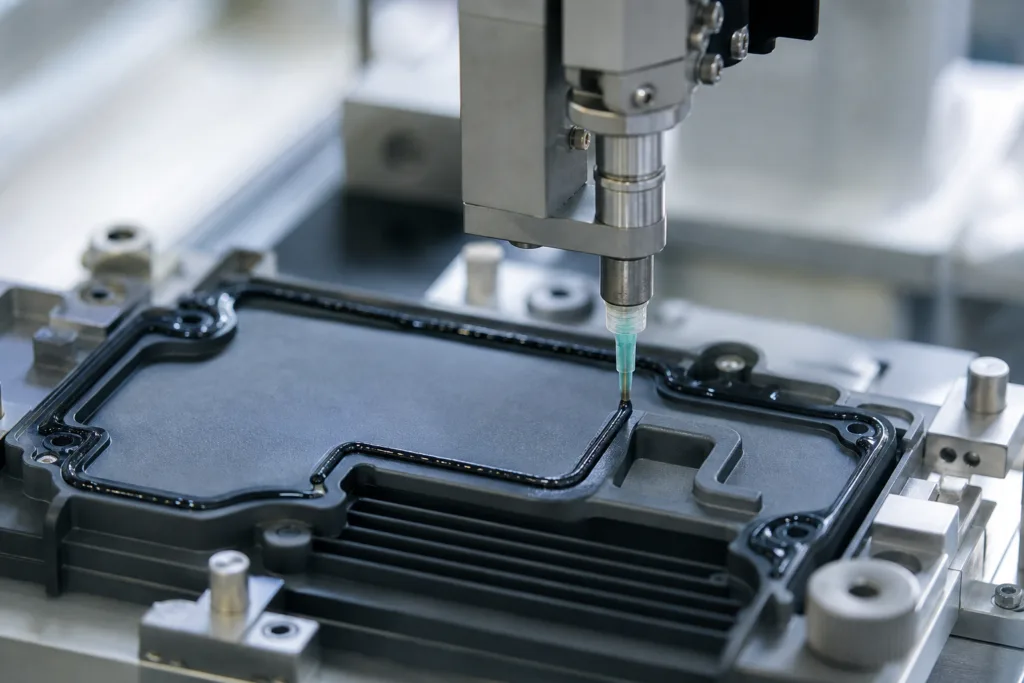
Use multiple conditioning modes
A good test plan often includes at least two or three exposures: high humidity aging, direct water exposure, and thermal cycling with moisture. For steam-adjacent products, hot-wet or pressure-related simulations may also be necessary.
Measure retention, not just absolute strength
Compare before-and-after performance. Record visual changes, bond line appearance, hardness shift, dimensional stability, seal continuity, and electrical behavior where relevant.
Test the real assembly
Flat coupon tests are useful for screening, but housings, corners, wire exits, gaskets, potted cavities, and mixed-substrate interfaces behave differently in the field.
Consider water uptake and interfacial weakening
Where moisture permeation itself is a concern, an ISO test method for water absorption and water-resistant adhesive selection is relevant because it frames water ingress into the adhesive layer and the effect on later bonded performance. This is particularly helpful when comparing candidate chemistries that all look similar in dry-room tests.
Key Technical Data Sheet Factors for Moisture-Exposed Bonds
Buyers should read moisture-related adhesive data sheets with caution and context. Useful review points include:
- Chemistry type: epoxy, silicone, polyurethane, acrylic, UV, or hybrid systems each behave differently under wet exposure.
- Viscosity and application method: poor wet-out or trapped air can reduce water resistance.
- Pot life and open time: these affect consistency and whether the adhesive is processed correctly before cure starts.
- Fixture time and full cure time: especially important if the assembly may be packed or tested too early.
- Hardness and elongation: these indicate whether the cured system can accommodate movement.
- Temperature resistance: needed for steam-adjacent or hot-humidity environments.
- Waterproofing or insulation relevance: especially for electronics, lighting, appliance, and outdoor enclosure applications.
- Packaging and shelf life: because moisture-sensitive systems can lose consistency if stored poorly.
At this stage, buyers should not ask only whether an adhesive is “waterproof.” They should ask how the supplier defines that term, what testing was used, whether the result applies to their substrates, and whether property retention after conditioning has been reviewed.
Surface Preparation and Process Controls That Improve Moisture Durability
Even a suitable adhesive can underperform if process control is weak. In wet-service applications, durability often depends on simple but disciplined manufacturing practice.
Control surface cleanliness
Define cleaning steps, drying steps, handling rules, and maximum delay between preparation and bonding. If a substrate absorbs moisture from air, storage conditions also matter.
Maintain consistent bond line geometry
Uneven thickness changes stress distribution and cure behavior. Very thin areas may not seal properly, while excessive thickness can trap bubbles or extend cure.
Prevent voids and edge pathways
Dispensing method, mix quality, degassing, and assembly pressure affect how easily water can later travel into the bond line.
Respect cure profile before exposure
Parts should not be rushed into wash tests, outdoor staging, or humid packing conditions before the adhesive has reached the intended cure state.
When projects move from lab sample to purchasing decision, many teams benefit from working directly with ZDS as a manufacturing partner that can review process fit, packaging choice, sample batching, and production consistency rather than discussing chemistry in isolation.
When Standard Adhesives Are Not Enough
Some moisture-critical applications cannot be solved well with an off-the-shelf adhesive. This is common when buyers need an unusual mix of properties such as fast fixture speed, high flexibility, strong wet adhesion to difficult plastics, low shrinkage, electrical insulation, thermal cycling resistance, or custom packaging for automated dispensing.
In those cases, custom formulation can address practical trade-offs. We may adjust viscosity for better wet-out, modify cure speed for line balance, tune hardness for movement, improve filler balance for potting depth, or adapt packaging to reduce moisture contamination during storage and use. This is also where OEM and private label buyers should look closely at sample-to-bulk consistency, raw material stability, and communication quality from the supplier.
Application Examples in Wet-Service Environments
Electronics and electrical assemblies
Here the bond often serves multiple functions: fixing components, insulating circuits, reducing vibration, and blocking moisture paths. Potting and encapsulation materials need controlled flow, low void formation, and stable electrical behavior after humidity exposure.
Appliances
Dishwashers, humidifiers, water heaters, kitchen devices, and bathroom products may face warm condensation, splashing, and detergent-adjacent conditions. Steam tolerance and resistance to repeated thermal-moisture cycling become more important than simple room-temperature bond strength.
Outdoor assemblies
Lighting, enclosures, sensors, and signage often see UV, rain, condensation, and expansion mismatch between metal and polymer parts. Flexible sealing systems may outperform rigid ones when movement and weathering dominate.
Industrial sealing and machinery
Washdown zones, pipe-adjacent covers, pump housings, cable exits, and inspection windows may expose adhesives to repeated water contact and cleaning conditions. Joint design and edge sealing are often just as important as adhesive chemistry.
Supplier Evaluation Checklist for Moisture-Critical Projects
For procurement and technical teams, adhesive supplier evaluation should go beyond product naming and price.
- Can the supplier explain likely failure mechanisms for your actual exposure mode?
- Do they ask about substrates, surface condition, operating temperature, load, and cure process?
- Can they support sample trials and interpretation of retained performance after conditioning?
- Do they understand potting depth, void control, flexibility, or insulation needs where relevant?
- Can they discuss packaging format, shelf life, lot consistency, and production scaling?
- If standard products are not enough, can they support formulation adjustment or OEM/private label development?
A credible manufacturer should be able to discuss trade-offs clearly: faster cure versus longer open time, hardness versus flexibility, strength versus movement tolerance, and lower cost versus environmental margin. That practical clarity is usually more valuable than broad marketing claims.
How to Balance Cost, Cure Speed, Flexibility, and Moisture Resistance
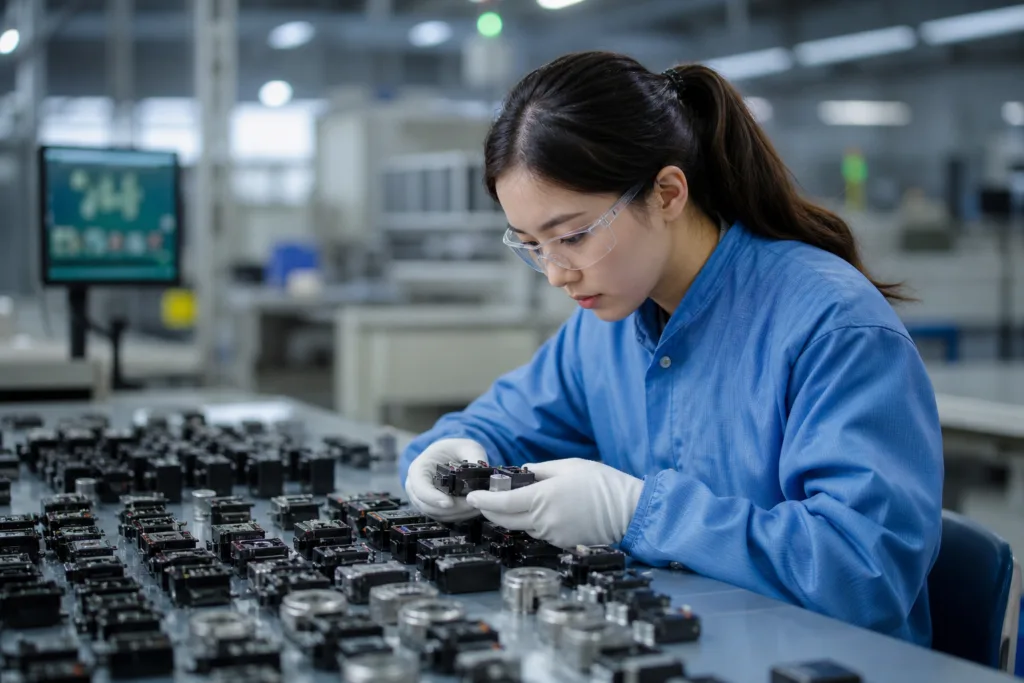
There is no universal wet-service adhesive. A highly flexible sealant may resist movement well but not offer the rigid structural support a buyer expects. A fast-curing material may help throughput but create tighter processing windows. A lower-cost adhesive may perform adequately in splash conditions but not in steam or long-term immersion. Good selection is about fit, not extremes.
Our recommendation is to define the minimum acceptable service life, real exposure type, cure constraints, and failure consequences first. Then compare two or three adhesive paths with realistic conditioning and assembly testing. This usually produces a better commercial decision than screening ten products by dry strength or unit price alone.
Conclusion
Understanding how moisture affects adhesive bond strength is essential for any assembly expected to survive humidity, water contact, condensation, or steam over time. The main lesson is that moisture damage is usually progressive, exposure-specific, and strongly influenced by substrate condition, cure quality, joint design, and polymer flexibility. The right evaluation method is therefore based on retained performance after realistic conditioning, not just dry initial strength.
From a manufacturer perspective, the most reliable wet-service projects are the ones that connect chemistry choice with process control, assembly design, and supplier communication early. When buyers validate those factors before mass production, they reduce warranty risk, avoid field failures, and select adhesive systems with a much better long-term fit.
FAQs
Can an adhesive have high initial strength but still fail in humidity later?
Yes. High initial dry strength does not guarantee long-term durability in humid service. Moisture can gradually weaken the interface, soften the adhesive, increase creep, or create swelling stress between substrates, so retained strength after conditioning is more meaningful than the first room-temperature test result.
Which is harder on an adhesive bond: humidity, water, or steam?
It depends on the chemistry and assembly design, but steam and hot-wet exposure are often the most severe because heat accelerates moisture diffusion and chemical degradation. Direct water contact can also be critical if the bond edge is exposed, while long-term humidity can still cause progressive loss even without visible wetting.
How should we test adhesives for wet-service applications before production?
Use the real substrates, the actual bond geometry, and conditioning methods that match service conditions such as high humidity, splash exposure, immersion, condensation cycling, or hot-wet aging. Review not only failure load but also appearance, seal continuity, hardness change, and electrical or functional performance after exposure.
Does a flexible adhesive always perform better than a rigid adhesive in moisture?
No. Flexible adhesives often handle movement and thermal expansion mismatch better, which can help in wet environments, but wet-service durability still depends on formulation, adhesion to the substrate, cure quality, and exposure severity. Some rigid systems perform very well if the joint design and chemistry are appropriate.
What information should buyers request from an adhesive supplier for moisture-critical projects?
Ask about substrate compatibility, required surface preparation, cure schedule, recommended conditioning tests, retained performance after humidity or water exposure, packaging options, shelf life, and lot consistency. If the project is sensitive, also ask whether the supplier can support sampling, formula adjustment, and scale-up planning.
When is custom formulation worth considering for moisture resistance?
Custom formulation is worth considering when standard products do not balance the needed properties, such as wet adhesion, flexibility, cure speed, electrical insulation, low shrinkage, or process-specific viscosity. It is also useful when packaging, dispensing, or substrate combination requirements are unique enough to justify a more application-specific solution.