
Choosing a foam to fabric adhesive is rarely just about getting two layers to stick. In upholstery, seating, footwear, automotive interiors, acoustic panels, and protective padding, the bond must hold while preserving softness, surface appearance, and long-term flexibility. A laminated part can fail commercially even when initial adhesion seems acceptable: the fabric may show print-through, the foam may feel hard, the laminate may creep in heat, or edge lift may appear after storage, transport, or repeated compression. Buyers comparing foam adhesive solutions for low-density bonding usually need a process-aware decision, not a generic product list.
This guide is written for industrial buyers, process engineers, product developers, and sourcing teams that need a practical framework for selecting and validating adhesive systems for foam-to-fabric structures. It focuses on the trade-offs that matter most: softness versus peel strength, coat weight versus appearance, open time versus assembly speed, and chemistry choice versus substrate compatibility. Because foam and textile constructions vary widely, final selection should always be confirmed through representative trials and current technical documents for the exact product under review.
Why Foam-to-Fabric Structures Are Common but Technically Sensitive
Foam-to-fabric laminates are used when a product needs cushioning, insulation, acoustic damping, comfort, or surface aesthetics. The combination looks simple, but the structure is technically sensitive because each layer behaves differently under adhesive application, pressing, and service conditions.
Foam can be soft and highly compressible. Fabric can be open, dense, brushed, knitted, woven, coated, or backed. When adhesive is applied, one side may absorb too much while the other side receives too little. During pressing, the adhesive can migrate into pores, telegraph through the fabric face, or create localized hard spots. Over time, repeated flexing or compression can challenge the bond line in ways that a simple room-temperature peel test does not fully predict.
This is why foam-to-fabric lamination often requires more process control than a rigid substrate bond. Success depends on balancing enough anchorage for peel resistance with a bond line soft enough to preserve hand feel and visual quality.
How Foam and Fabric Substrates Behave Differently
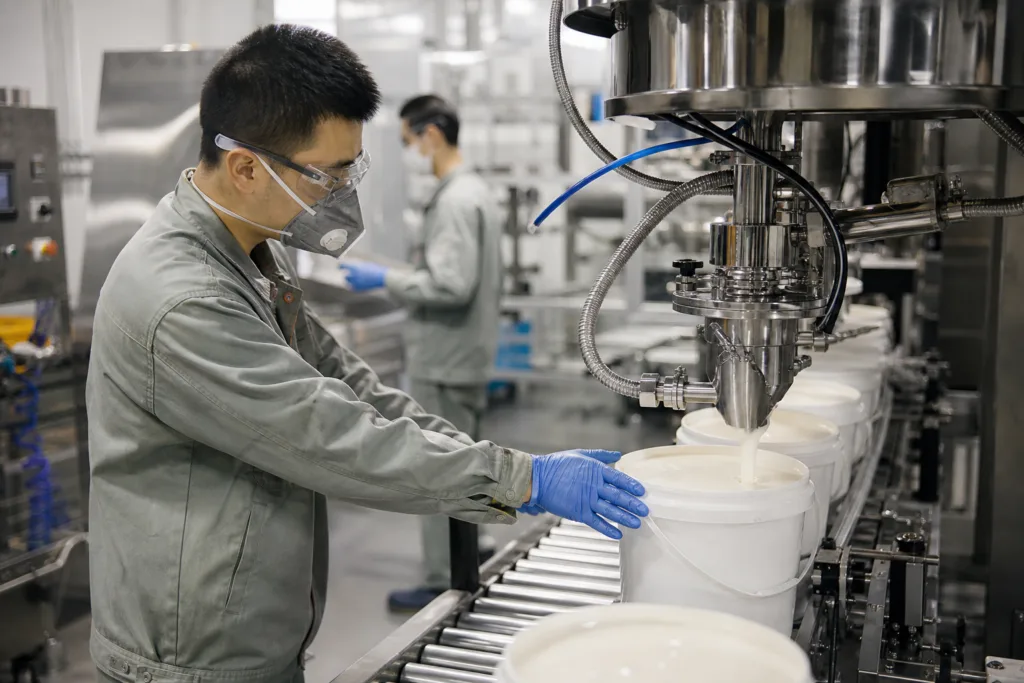
Porosity, absorption, and surface energy
Foam and fabric are both often porous, but not in the same way. Open-cell foam can absorb adhesive into depth, reducing surface availability for the actual bond line. A tightly woven or coated textile may absorb very little, creating a completely different wetting profile. Low surface energy treatments, release residues, softeners, or finishing agents on textile surfaces can further reduce adhesion consistency.
In practical terms, the same adhesive and coat weight can perform well on one laminate and poorly on another because:
- The foam density changes how deeply adhesive penetrates.
- The fabric construction changes spread and holdout.
- Surface finishes or contamination interfere with wetting.
- The assembly pressure compresses foam and redistributes adhesive unevenly.
Porous substrate behavior also affects appearance. Technical references for foam-bonding products often discuss non-dimpling or soft bondline behavior because excessive soak-in or localized adhesive concentration can distort the finished laminate. The validated reference on porous substrate wetting and soft bondline performance is a useful example of how formulation can influence appearance as well as bond development. That type of reference should be used as general selection context, not as proof of performance for any specific ZDS LTD product.
Key Performance Targets in Foam-to-Fabric Lamination
Industrial buyers often begin with bond strength, but that is only one requirement. A foam-to-fabric laminate usually has several simultaneous targets:
- Softness and hand feel: the assembly should not become boardy or harsh after bonding.
- Peel strength: enough resistance to edge lift and separation during use, handling, and converting.
- Flexibility: the bond should tolerate bending, compression, and repeated deformation.
- Dimensional stability: minimal wrinkling, shrinkage, creep, or misalignment over time.
- Appearance: low risk of strike-through, face distortion, gloss change, or print-through.
- Process fit: open time, set speed, and application method must match production flow.
- Durability: the laminate should remain stable through expected heat, humidity, storage, and service conditions.
The relative priority changes by application. A seating laminate may prioritize softness and sag resistance. Automotive interior components may emphasize heat exposure and dimensional stability. Footwear may demand flexibility under repeated mechanical movement. Acoustic products may need low stiffness so that the foam keeps its damping behavior.
Choosing the Right Adhesive Chemistry for Foam-to-Fabric Bonding
No single chemistry is universally best for every foam-to-fabric application. Selection depends on foam type, textile construction, production method, required softness, heat exposure, and whether the bond must remain pressure-sensitive, dry to a tack-free state, or build strength after curing.
| Adhesive chemistry | General strengths | Typical trade-offs | Often considered when |
|---|---|---|---|
| Polyurethane | Often selected for flexible bonding, good balance of softness and adhesion, can suit foam structures | Actual flexibility, cure profile, and durability vary by formulation; process control matters | Soft laminates, upholstery, padding, flexible assemblies |
| Acrylic | Can offer durable industrial bonding and useful environmental resistance depending on grade | Some systems may feel firmer or require tighter process control for soft-touch laminates | When durability and process stability are key evaluation points |
| Hot melt | Fast processing and clean application in some lines | Can increase stiffness, show pattern effects, or challenge very soft hand feel if not optimized | High-throughput lamination with controlled substrates |
| Pressure-sensitive systems | Useful for tack-driven assembly and some converting operations | Long-term creep, heat performance, and bond buildup must be checked carefully | Repositionable or liner-based constructions |
| Water-based contact or laminating systems | Can support soft bondlines and appearance-sensitive applications | Drying, humidity, and line conditions can strongly affect final results | Porous laminates where balanced wetting is important |
For many flexible foam laminations, buyers start by reviewing polyurethane adhesive options for flexible lamination because polyurethane systems are commonly considered where softness and flexibility are important. In other projects, especially where broader durability requirements or process differences apply, acrylic adhesive systems for durable industrial bonding may also deserve evaluation.
Chemistry choice should be treated as a starting framework. The final answer depends on the exact formulation, solids profile, viscosity, application method, and substrate behavior in trial conditions.
Adhesive for Upholstered Foam Fabric in Furniture, Seating, and Interior Lamination
In upholstered foam-fabric assemblies, the adhesive has to do more than hold layers together. It affects touch, drape, resilience, and visible surface quality. Furniture and seating producers often want the laminate to remain soft when pressed by hand, with no obvious hard glue zones and no visible marking through the fabric face.
Typical evaluation priorities include:
- Low risk of soak-through on face fabrics
- Bond retention after repeated compression
- Controlled flexibility in cushions and seating contours
- Adequate initial tack or handling strength for cutting and assembly
- Stable appearance across large-area lamination
Low-density foam can be especially sensitive because aggressive penetration may reduce softness and consume adhesive before a consistent bond line forms. In those cases, a product such as ZDS-206-2-7 flexible polyurethane foam adhesive for low-density applications may be relevant for review, but suitability still needs confirmation against the exact foam grade, fabric construction, application method, and production conditions.
Fabric Backed Foam Adhesive Needs in Footwear, Automotive Interiors, Acoustic Panels, and Protective Pads
Once the laminate moves beyond upholstery, the requirement profile changes quickly.
Footwear
Footwear laminates often see repeated flexing, localized stress, and shape-forming operations. A bond that feels acceptable on day one may crack, lift, or lose comfort after repetitive bending if the adhesive film is too rigid.
Automotive interiors
Automotive interior components typically place more emphasis on heat exposure, dimensional control, odor-sensitive processing requirements, and appearance retention. Foam-backed fabrics for headliners, trims, and interior panels can fail through delamination or telegraphing if coat weight and pressing are not controlled.
Acoustic and insulation panels
These structures may need the laminate to remain compliant so the foam keeps its acoustic function. Excessive adhesive loading can reduce softness and alter the intended damping effect.
Protective pads and wearable cushioning
These parts often require a soft feel against the body or equipment surface while resisting peel at the edges. Comfort and bond reliability must be balanced carefully.
Across these segments, buyers should define whether the bond is expected to survive flexing, heat, humidity, compression cycling, cutting, sewing, die punching, or long storage before selecting a chemistry.
Application Methods That Affect Bond Quality
The same adhesive can perform very differently depending on how it is applied. Process selection is therefore part of material selection.
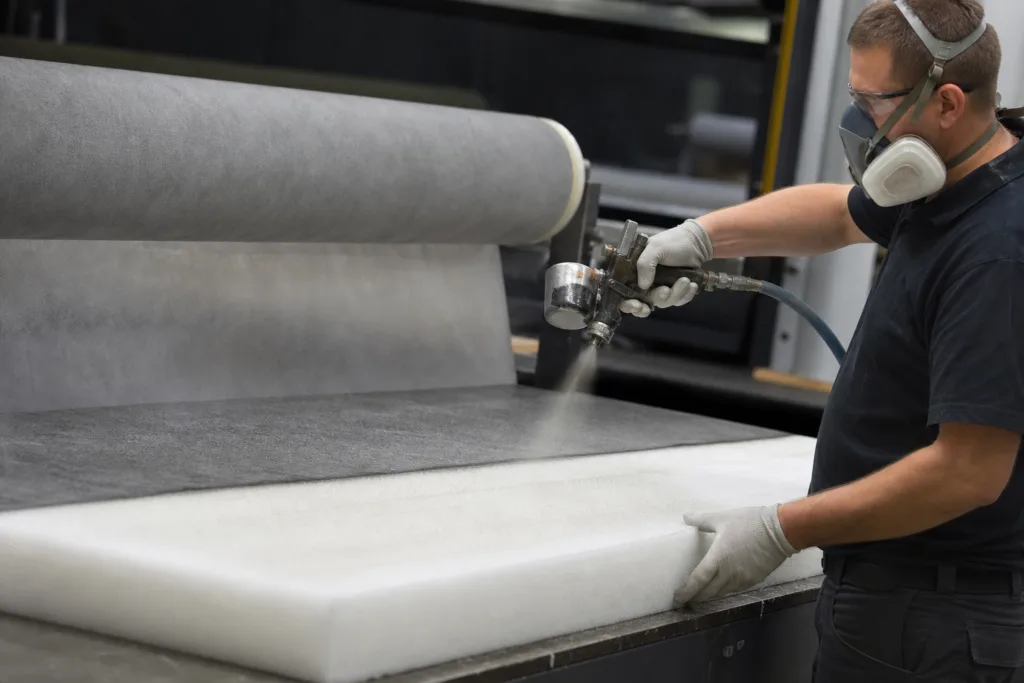
Spraying
Spray application can support light, distributed coverage on soft substrates and may help preserve softness when properly controlled. But poor atomization or inconsistent distance can create patchy bonding or overspray contamination.
Rolling or knife coating
These methods can produce more uniform coverage on suitable materials, but they may compress soft foam or overload open textile structures if settings are not optimized.
Hot-melt application
Hot-melt systems can support fast throughput, yet pattern geometry, add-on level, and temperature control strongly affect feel and visible surface quality.
Pressure-sensitive approaches
These can be useful where immediate tack and assembly convenience matter, but long-term stability under heat and load should be verified carefully.
Whatever the method, key process variables include:
- Coat weight consistency
- Substrate tension and flatness
- Open time before mating
- Applied pressure during lamination
- Drying or cure conditions
- Environmental temperature and humidity
Common Problems in Foam-to-Fabric Lamination
Many field complaints can be traced to an imbalance between material choice and process settings rather than to adhesive chemistry alone.
- Print-through or dimpling: often linked to localized penetration, uneven coat weight, or over-compression during bonding.
- Delamination: may result from poor wetting, insufficient adhesive at the interface, contamination, or inadequate cure development.
- Stiffness: commonly caused by excessive add-on, rigid adhesive films, or deep penetration into soft foam.
- Uneven coverage: creates weak zones, visual defects, and variable peel values.
- Foam damage: can occur if the process, solvent interaction, temperature, or mechanical handling is incompatible with the foam type.
When these issues appear, the corrective action is not always “use more adhesive.” In many cases, over-application makes the laminate feel worse while doing little to improve durable adhesion.
How to Balance Softness and Peel Strength Without Over-Bonding
This is the central challenge in foam-to-fabric bonding. More adhesive or a harder adhesive film may increase measured initial peel in some setups, but it can also create stiffness, print-through, and poor comfort. Conversely, chasing maximum softness with too little adhesive can cause edge failure and unstable lamination.
A better approach is to optimize the bond line rather than maximize adhesive quantity. In practice, that means reviewing:
- The minimum coat weight that still gives full interface coverage
- Whether penetration is too deep into the foam
- Whether the adhesive film remains flexible after drying or cure
- Whether mating pressure is pushing adhesive away from the interface
- Whether the textile side needs better wetting or holdout
For projects where standard products do not meet both feel and durability targets, buyers may need custom adhesive formulation support for foam and textile projects. This can be relevant when the foam density, textile finish, converting speed, or end-use environment creates a narrow process window.
What to Validate Before Approval
Laboratory values alone do not approve a production laminate. The validation plan should reflect actual converting and service conditions.
| Validation item | Why it matters | Questions to ask |
|---|---|---|
| Peel testing | Checks bond consistency and edge resistance | Was the test done after full cure and after conditioning? |
| Aging resistance | Assesses stability after heat, humidity, or storage | Does peel or appearance change after aging? |
| Compression recovery | Shows whether the foam remains soft and resilient | Did the adhesive create hard zones or permanent set? |
| Heat resistance | Important for transport, storage, and service exposure | Does the laminate creep, bubble, or delaminate when warm? |
| Appearance checks | Confirms no strike-through, wrinkling, or surface marking | Is the face fabric still visually acceptable under production lighting? |
Representative-part testing should include realistic foam grades, actual textiles, planned coat weights, and the same line sequence expected in production. Buyers should also request current technical and safety documentation for shortlisted products and confirm any compliance or environmental documentation needed for the target market.
Process Factors That Influence Long-Term Stability
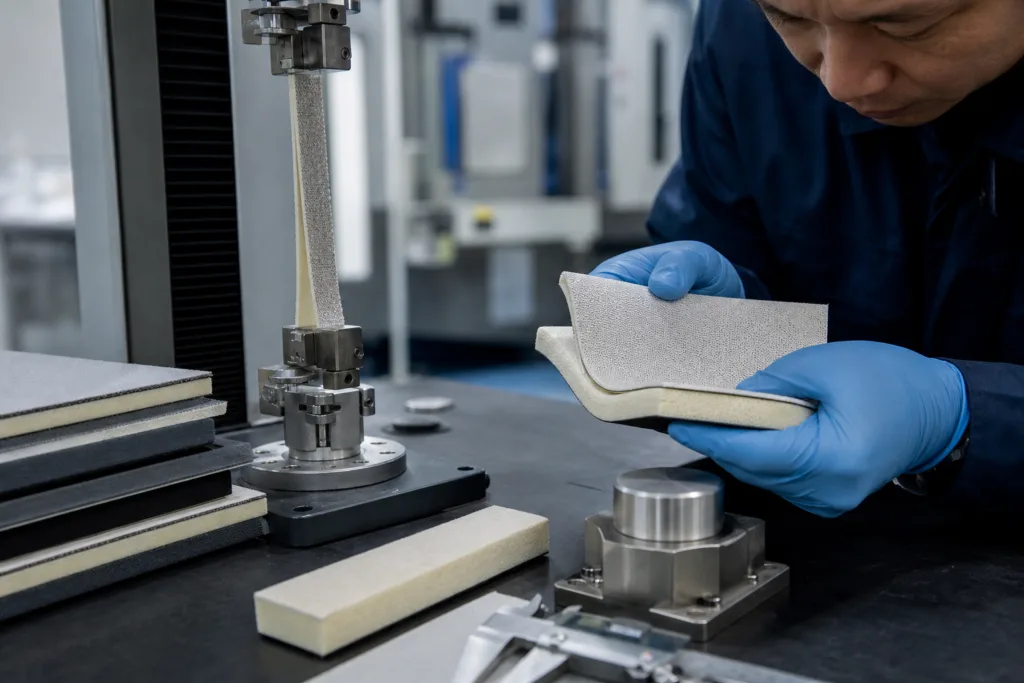
Long-term lamination stability is not decided only by the adhesive label. Several process factors strongly affect performance:
- Open time: if substrates are joined too early or too late, wetting and bond formation may be inconsistent.
- Cure profile: some systems need sufficient drying or cure development before full strength is reached.
- Coat weight: too low can produce skips; too high can reduce softness and visual quality.
- Pressure: enough to create contact, but not so much that soft foam collapses or adhesive is displaced.
- Environmental exposure: heat, humidity, compression, and storage duration all influence bond aging.
When a buyer moves from bench trial to production, it is useful to review these factors again with the supplier. ZDS LTD can assist with product-selection discussions, sample evaluation, packaging-format considerations, and technical review of the lamination process. If a project proceeds to formal sourcing, teams can also review requirements through material selection support for foam and fabric lamination so the technical and procurement sides are aligned before scale-up.
How ZDS Helps Customers Evaluate Foam-Fabric Adhesive Systems
For foam-to-fabric projects, ZDS LTD works as a manufacturer and technical supply partner rather than a one-size-fits-all catalog source. That matters because these laminates are highly dependent on substrate details and converting conditions.
Depending on the project stage, support may include:
- Review of foam type, density, thickness, and compressibility
- Review of fabric construction, coating, backing, or finish
- Selection of candidate adhesive chemistries for trial
- Discussion of spray, roll, coat, or other application methods
- Sample planning for appearance, softness, and peel evaluation
- Packaging and supply discussion for production handling
- Technical-document review for the shortlisted product
To receive a meaningful recommendation, buyers should prepare the following information:
- Foam material type and density range
- Fabric type, weight, and any surface treatment
- Whether the laminate is flat, contoured, or compression-formed
- Target feel, softness, and visual requirements
- Application method and planned line speed
- Expected service temperature, humidity, and mechanical load
- Trial size, expected annual demand, and packaging preference
The more complete the input, the more efficiently a candidate adhesive system can be narrowed for testing.
Frequently Asked Questions
What is the main challenge when selecting a foam to fabric adhesive?
The main challenge is balancing bond strength with softness and appearance. An adhesive that gives high initial peel can still be unsuitable if it makes the laminate stiff, causes print-through, or loses stability after heat, humidity, or repeated compression.
Which adhesive chemistry is usually considered first for soft foam-to-fabric laminates?
Polyurethane is often one of the first chemistries reviewed for flexible laminates because many formulations are designed for soft bonding. However, final selection depends on the foam type, fabric construction, application method, and durability requirements, so the exact product must be evaluated in trial conditions.
Why does a laminate delaminate even when the initial bond seems acceptable?
Initial handling strength does not always predict long-term performance. Delamination can result from poor wetting, excessive absorption into foam, insufficient cure development, contamination, uneven coat weight, or service exposure such as heat, humidity, and repeated flexing.
What information should buyers provide when requesting samples or a recommendation?
Buyers should provide foam type and density, fabric type and finish, thickness, application method, line speed, target softness, required peel behavior, expected service environment, and any appearance concerns. This helps the supplier narrow suitable chemistries and trial conditions.
When is custom formulation worth discussing for foam-fabric lamination?
Custom formulation is worth discussing when standard products cannot meet both process and performance targets at the same time, such as very soft low-density foam, sensitive face fabrics, unusual heat exposure, or a narrow coating window. Feasibility should be confirmed after reviewing the actual substrates and production requirements.