
In flexible packaging converting, a laminate that feels stable on day one may still be developing its true performance. That is why laminating adhesive bond strength must be evaluated as a time-based process, not a single pass-or-fail number. Packaging teams making release decisions for slitting, pouch making, or filling need to know whether they are looking at green bond, practical handling strength, or near-final cure. This distinction directly affects waste, seal appearance, delamination risk, retained stress, and line efficiency. For teams planning trials or reviewing process windows, laminating adhesive manufacturing support for production timing and cure control can help frame the discussion around structure, converting steps, and cure expectations.
The central issue is simple: bond strength evolves because the adhesive continues to react, organize, and build internal cohesion after lamination. A web may unwind cleanly and survive light handling before it is actually ready for aggressive slitting tension, pouch folding, or product contact during filling. If downstream operations start too early, the laminate can be exposed to stresses that exceed the adhesive’s current stage of cure, even though the same structure might perform well later.
Why Laminate Bond Strength Evolves Over Time
Laminating systems do not usually reach final performance immediately after two webs are combined. Depending on chemistry and process, the adhesive may need time to complete solvent release, moisture loss, crosslinking, crystallization behavior, or other cure-related development. In production language, the laminate often moves through several practical stages before it reaches a stable final bond profile.
This matters because a freshly made roll is not only carrying adhesive between substrates. It is also carrying internal stress from winding, web tension, nip conditions, and differences in film stiffness, shrinkage, and surface energy. As cure develops, the adhesive becomes better able to resist peel forces, shear stress, and deformation during converting.
For procurement and production teams, the useful takeaway is that release timing should be based on cure stage matched to the next process step, not on a general assumption such as “the roll looks fine” or “the line usually waits overnight.” The right waiting period depends on the selected adhesive system, structure, and plant conditions.
Initial Green Bond, Handling Strength, and Final Cure Explained
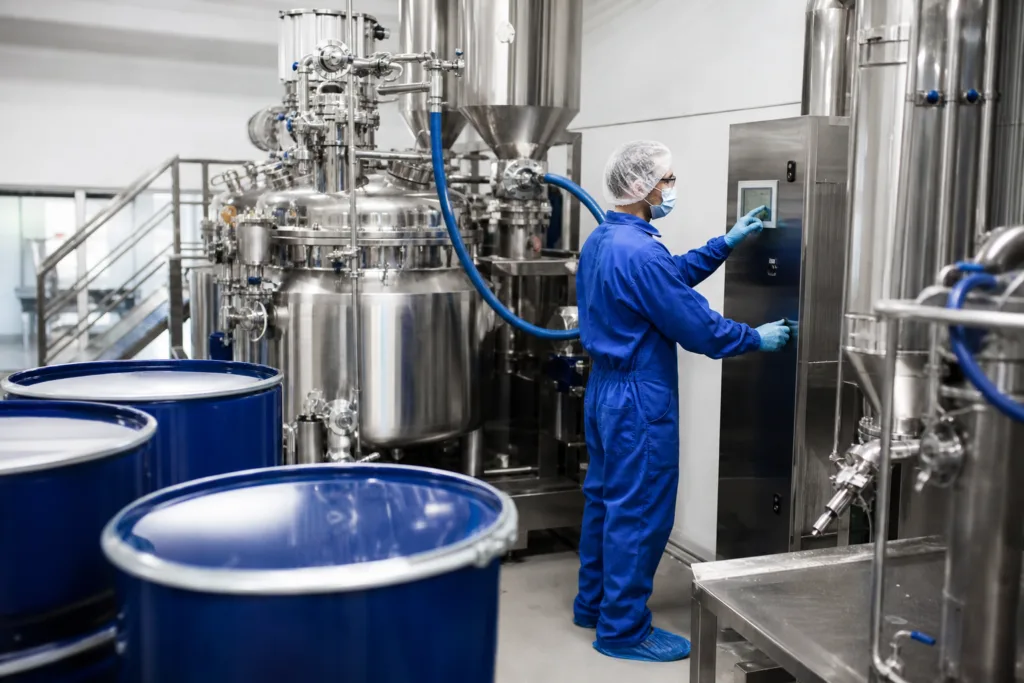
Initial green bond is the early bond observed soon after lamination. It is often enough to keep the structure together during winding and basic roll movement, but it should not be treated as proof of final converting readiness.
Handling strength is the more practical production threshold. At this stage, the laminate may tolerate specific downstream actions such as controlled slitting or limited pouch conversion, depending on structure and line settings. Handling strength is not a universal value. A structure that runs acceptably on one slitter or pouch machine may still be too immature for a different line with higher tension, sharper folding, narrower slit widths, or more aggressive acceleration.
Final cure is the stage at which the adhesive has substantially developed its intended bond profile for the selected system. Actual endpoint criteria depend on the formulation and application. Final cure is particularly important where the pack will face mechanical abuse, barrier requirements, hot filling, retort-related preparation, chemical exposure from contents, or extended storage loads.
The distinction between these stages is often missed in production meetings. Teams may speak about “bond strength” as if it were a single property, when the more useful question is: bond strength at what cure age, measured how, and for which next process?
How Laminating Adhesive Bond Strength Is Measured at Different Cure Stages
Bond development should be measured in a way that reflects both time and use condition. A single peel test result can be informative, but only if the cure age, structure, conditioning, and test method are documented clearly. Without that context, comparisons become misleading.
Typical production validation often includes:
- Peel or bond-strength checks at defined cure intervals, such as early, intermediate, and target final stages
- Visual review of fiber-free separation, cohesive behavior, tunneling, curling, or edge lifting
- Observation of processability during unwinding, slitting, folding, and sealing trials
- Where relevant, residual solvent or other process-specific checks before release
- Retention testing after additional aging or after exposure to expected filling and storage conditions
Measurement timing matters because an early value may show adequate roll integrity while concealing incomplete cure. A useful plant discipline is to label all internal bond data with cure age and storage condition. That prevents people from comparing a same-day trial result against a fully cured historical benchmark.
It also helps teams understand the difference between adhesive curing and drying in industrial production. A laminate can feel dry to the touch or no longer appear mobile while the chemistry is still developing toward its intended internal strength.
Industry technical discussions on flexible packaging adhesives also note that early converting performance and full cure are not identical endpoints. For example, TAPPI material on solventless flexible packaging adhesives discusses the balance between converting efficiency and cure progression in film structures, which is directly relevant when a laminate seems ready before final bond development is complete.
How Cure Development Affects Slitting, Pouch Making, and Filling
Each downstream process stresses the laminate in a different way.
Slitting
Slitting introduces web tension, knife interaction, roll pressure, and edge stress concentration. If cure is immature, the structure may shift, neck, stretch unevenly, or show edge delamination. Narrow widths can make this worse because stress becomes more localized.
Pouch Making
Pouch conversion adds folding, creasing, seal-zone heating, intermittent tension, and registration demands. Even when the bond survives slitting, weak intermediate cure can show up later as channeling near folds, cosmetic defects, or poor dimensional control around seals.
Filling
Filling applies another layer of risk. Product weight, drop impact, pack flexing, and contact with contents can expose a laminate that passed earlier handling but never reached sufficient final bond stability. In some structures, the failure may not appear immediately. It may emerge after transportation, stacking, or storage.
This is why release timing should be linked to the next highest stress event. If the next step is only warehousing parent rolls, the requirement may differ from a schedule that moves directly into pouch conversion and immediate filling.
What Happens When Laminated Rolls Are Slit Too Early
Early slitting is one of the most common ways immature cure becomes an avoidable production problem. Operators may see a roll that unwinds cleanly and assume it is ready, but slitting places the laminate under more focused mechanical demand than casual inspection reveals.
Possible outcomes include:
- Edge lifting or partial delamination after slit roll rewind
- Telescoping or roll instability caused by uneven internal stress
- Variable slit width due to structure movement under tension
- Blocking, transfer, or surface marking under roll pressure
- Reduced pouch-making efficiency because slit rolls do not run consistently
Some of these issues can be misdiagnosed as a knife problem, tension setup problem, or winding recipe problem. Those factors matter, but they should be reviewed together with cure age. The root cause may be that the adhesive had enough green bond to make a parent roll, but not enough developed strength for that slitting window. This is also why a laminate may appear acceptable on one shift and fail on another if ambient conditions or hold time changed.
When production targets are tight, teams sometimes ask whether a faster-curing chemistry can solve the scheduling gap. That can be a valid direction, but selection must consider the full process and structure rather than speed alone. Depending on the application, ZDS LTD can review whether adhesive selection technical support for matching cure profile to process needs is appropriate before changing materials or line timing.
Risks of Processing Before the Laminate Is Ready
The main risk is not just lower bond strength. It is process instability caused by using the laminate outside its real cure window.
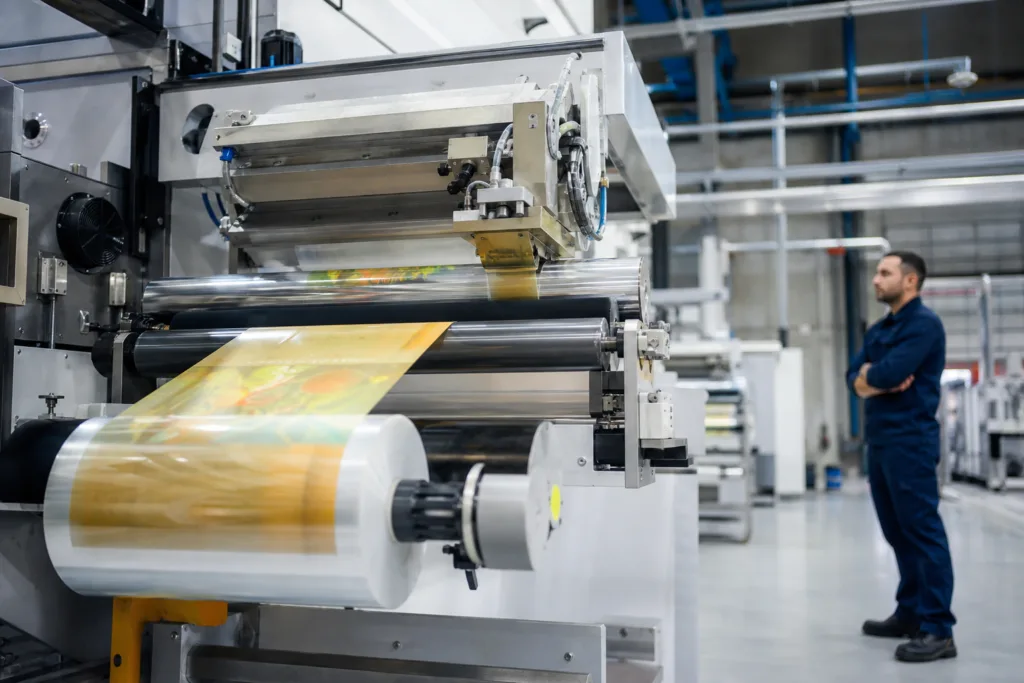
| Downstream step | If cure is too early | Operational result |
|---|---|---|
| Slitting | Bond not developed enough for tension and edge stress | Edge defects, roll instability, inconsistent slit quality |
| Pouch making | Laminate weak at folds, seals, or intermittent web movement | Wrinkling, cosmetic defects, poor machineability |
| Filling | Structure not fully stabilized for load and product contact | Delayed delamination, pack failure in handling or storage |
| Release to customer | Properties still changing after shipment | Complaint risk, inconsistent downstream results |
These risks are especially serious when the structure includes barrier layers, foil, thick sealant films, or applications where pouch performance is highly visible. A marginally cured bond often fails first at stress concentrators such as edges, corners, score lines, seal transitions, and fold lines.
Factors That Change Cure Development: Temperature, Adhesive Chemistry, Coat Weight, and Structure
Cure development is not controlled by one variable. In practice, several factors interact:
- Temperature: Storage and plant temperature can accelerate or slow development. Rolls held in different areas may not age the same way.
- Adhesive chemistry: Different laminating systems build green bond and final cure differently. Early handling performance does not always predict long-term retention.
- Coat weight: Insufficient or excessive application can affect wetting, cure behavior, and stress distribution.
- Mix accuracy and application consistency: For systems requiring precise component control, process variation can shift the cure profile significantly.
- Substrate combination: Film type, foil, primer, coating, and barrier layer all influence adhesion and stress response.
- Winding conditions: Tightness, roll diameter, and web tension can either mask or intensify cure-related weakness.
Because these factors interact, release timing that works for one laminate structure should not automatically be copied to another. The strongest plants build cure rules by structure family and converting route, not by habit alone.
How Different Laminating Adhesive Systems Cure
General chemistry differences can help buyers frame discussions, but actual cure behavior depends on the selected formulation and current technical documents.
Solvent-Based Systems
These systems may require both solvent removal and subsequent cure development. A roll can look acceptable after drying while still needing additional time before final bond strength is achieved. Residual solvent control may also be relevant depending on structure and end use.
Solventless Systems
Solventless laminating adhesives are often selected for efficient processing, but that does not mean same-day full cure should be assumed. TAPPI technical literature specifically discusses the tradeoff between workable converting performance and fast full cure in flexible packaging lamination, which is why early handling must still be validated against the next converting step. See the referenced TAPPI source here: Aliphatic Solventless Adhesives for Flexible Packaging, 2008 PLACE Conference.
Water-Based Systems
Water-based laminating systems can be suitable in some structures and production models, but drying and cure progression must be distinguished carefully. Moisture removal, substrate sensitivity, and bond development timeline all need confirmation in realistic plant conditions.
It is also important not to confuse packaging laminating adhesives with other fast-bonding chemistries used in different industrial assemblies, such as ZDS-5013AB fast-cure epoxy adhesive for demanding production schedules or ZDS-5017AB fast-curing acrylic adhesive for rapid handling strength. Those products illustrate how cure profile matters across industries, but flexible packaging lamination still requires adhesive selection specific to film structure, converting method, and food-contact or regulatory requirements where applicable, which must be confirmed separately for the selected packaging project.
Substrate and Structure Effects: Film-to-Film, Film-to-Foil, and High-Barrier Constructions
Structure design changes the cure conversation. Film-to-film laminations may show one type of early handling profile, while film-to-foil or high-barrier constructions may respond differently because stiffness, dimensional movement, and stress transfer are different.
Points to review include:
- Whether the outer and inner webs have very different modulus or shrink behavior
- Whether foil creates sharper stress concentration at folds or slit edges
- Whether metallized or coated surfaces limit wetting or change anchorage behavior
- Whether thick sealant layers affect roll pressure response during cure
- Whether the finished pack will see hot filling, sterilization preparation, or aggressive contents
A structure that appears to have adequate early peel may still underperform after creasing or impact loading. That is why laminate approval should include process simulation, not only bench testing.
What Manufacturers Should Validate Before Releasing Production
Before a laminate is released to the next process or to shipment, the plant should confirm that the adhesive has reached the required stage for that decision. The checklist below helps convert cure theory into a release discipline.
- Define the next process step clearly: slit, pouch, fill, warehouse, or ship
- Record cure age from lamination completion, not from the start of the shift
- Confirm the structure, coat weight target, and relevant application settings
- Check bond performance at the cure age relevant to the release point
- Review roll build, appearance, edge condition, and unwinding behavior
- Where relevant, review residual solvent or other chemistry-specific controls
- Verify that any accelerated trial data truly reflects real production storage and handling
This is also the right stage to revisit broader sourcing discussions through project review of laminating adhesive options and cure-window requirements. For converters balancing throughput with defect prevention, ZDS LTD can review structure details, process sequence, and documentation needs before a product recommendation or formulation discussion is finalized.
Practical QC Checks and Common Release Mistakes
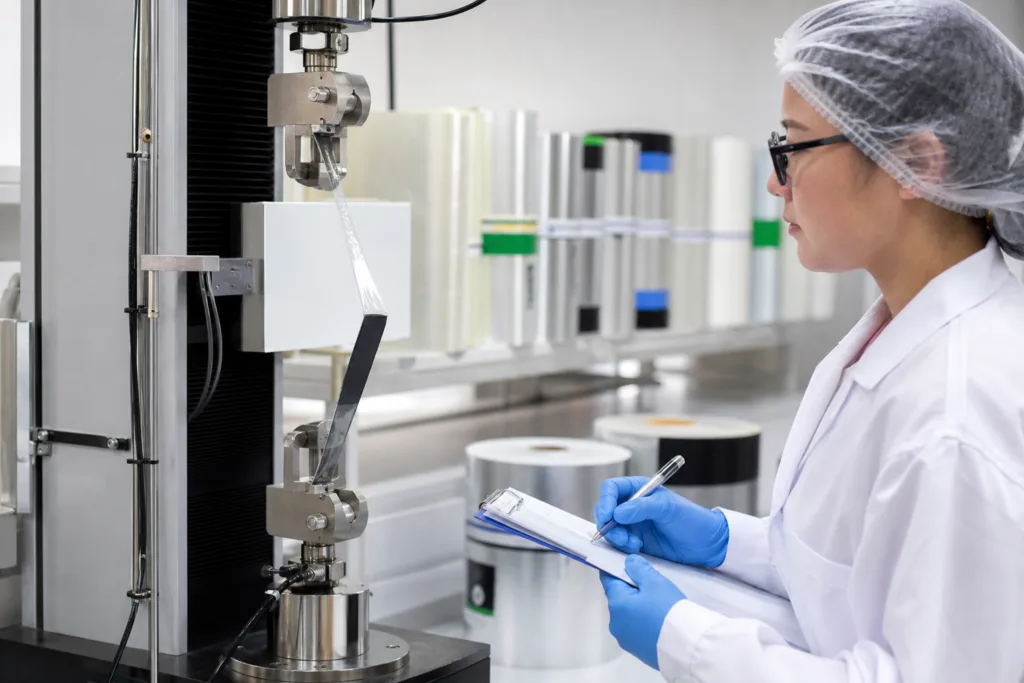
Quality control should focus on both measured bond and observed processability. Useful checks often include bond testing by cure stage, appearance review, slit trial behavior, and any process-specific controls required by the adhesive system.
Common mistakes include:
- Using one fixed hold time for every laminate structure
- Comparing bond values taken at different cure ages
- Approving release based on touch, unwind feel, or visual appearance alone
- Ignoring the difference between acceptable slitting and acceptable filling performance
- Changing tension or knife settings to compensate for a cure problem without investigating material readiness
- Skipping documentation of ambient conditions and roll storage during trials
Plants usually improve results when they define release criteria by structure family and converting route. That allows production, quality, and procurement to work from the same expectation instead of treating cure time as an informal estimate.
How to Match Cure Profile to Production Scheduling
The practical goal is not simply to wait longer. It is to match adhesive cure profile to the real production calendar. Some converters need faster slit release. Others can tolerate a longer aging window if the final pack performance is more demanding. The best choice depends on equipment, product mix, storage conditions, order urgency, and the risk cost of rework or scrap.
When discussing a laminating adhesive with a manufacturer, provide:
- Full laminate structure and substrate details
- Lamination method and line conditions
- Target slitting timing after lamination
- Pouch making or other converting timing
- Filling conditions and product type
- Required appearance, barrier, and pack performance priorities
- Any current failure mode, such as edge lift, tunneling, or delayed delamination
With that information, ZDS LTD can review application conditions, discuss formulation fit, and help plan sample evaluation or technical-document review. Final suitability still needs confirmation through representative production trials and current product documentation, but the discussion becomes much more efficient when the cure window is defined in process terms rather than in generic language.
Frequently Asked Questions
Can a laminate have enough bond for winding but still be unsafe to slit?
Yes. Early green bond may hold the structure together in the parent roll, but slitting adds edge stress and web tension that can exceed the laminate’s current cure stage. Release for slitting should be based on validated cure-age performance, not roll appearance alone.
Is overnight aging always enough before pouch making or filling?
No. The required hold time depends on adhesive chemistry, structure, coat weight, plant temperature, and the severity of the next process. A rule that works for one laminate may be inadequate for another, so cure timing should be confirmed with production trials and current technical documentation.
What data should procurement ask for when comparing laminating adhesives?
Procurement should ask for cure-stage performance information relevant to the intended process, the current technical data sheet and safety data sheet, recommended application conditions, and any project-specific documentation needed for the packaging structure and market. Final values and compliance status must be confirmed for the selected product.
Why can peel strength results look acceptable early but problems still appear later?
An early peel test may show enough temporary bond for light handling while the adhesive has not yet developed full internal strength or stability under folding, heat, impact, or product load. That is why bond testing should be linked to cure age and downstream process simulation.
How should a converter discuss cure-window requirements with ZDS LTD?
Share the substrate structure, lamination method, target timing for slitting and pouch making, filling conditions, storage environment, and any current defects or throughput limits. That allows ZDS LTD to review whether standard product matching, sample evaluation, or a more specialized formulation discussion is appropriate.
Related Reading
- custom adhesive formulation signals for application-specific performance
- how to write an RFQ for adhesives with cure and process requirements
- custom adhesive formulation services for specialized bonding needs
- adhesive testing methods buyers should review before production approval
- MOQ, lead time, and sampling considerations for custom adhesive projects