
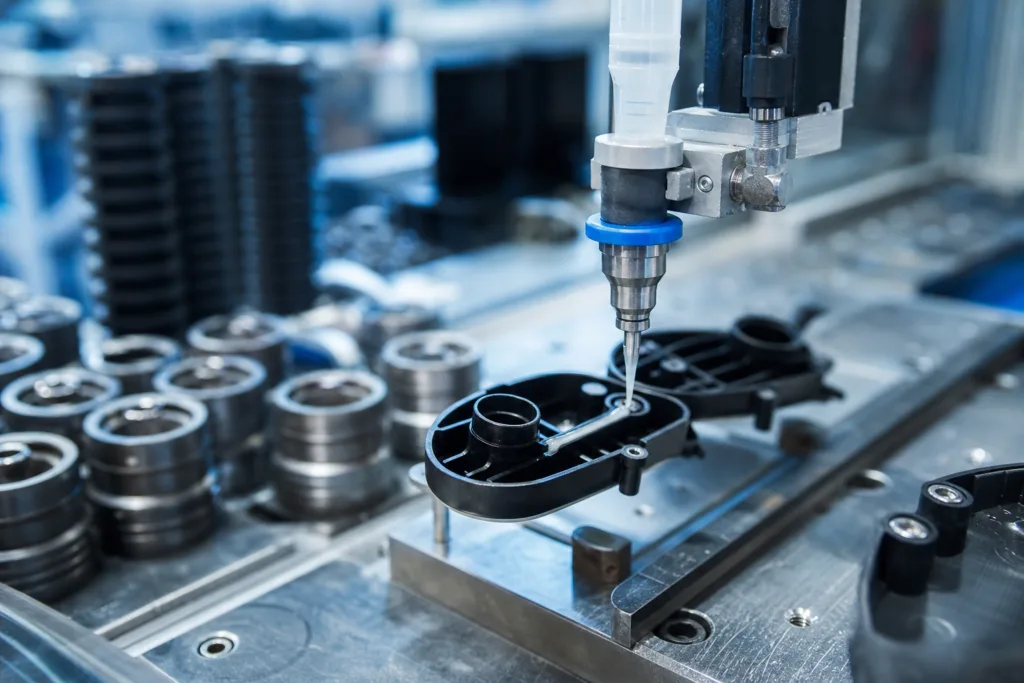
For small mixed-material assemblies, a cyanoacrylate adhesive for metal can be an efficient choice when the parts need fast fixture, compact bond lines, and clean dispensing. The real challenge is not just making the first bond, but choosing a grade that fits the substrate pair, joint geometry, and production process without creating brittle failure, bloom issues, or unreliable cure on difficult surfaces.
For projects that need fast bonding support across different substrates, our cyanoacrylate adhesive manufacturing support for industrial mixed-material bonding page is a useful starting point. At ZDS, we work with buyers who need more than a standard off-the-shelf formula: they often need viscosity adjustment, faster or slower fixture behavior, better gap control, packaging options for line use, and sample validation before release to production.
Why mixed-material small assemblies often use cyanoacrylates
Cyanoacrylates are popular in small assemblies because they cure quickly, require little or no mixing, and can be applied in precise amounts. In practical manufacturing, that combination helps reduce handling time and supports high-throughput assembly lines. They are especially useful when the bond area is small, the parts fit closely, and the production team wants to avoid long clamp times or oven cycles.
In metal, rubber, and plastic combinations, the adhesive must do more than simply stick two surfaces together. It must tolerate differences in expansion, surface energy, and stiffness. A rigid adhesive that performs well on one material may fail prematurely when the assembly sees vibration, peel stress, moisture, or thermal cycling. That is why adhesive selection should start with the joint design and service environment, not with cure speed alone.
For readers comparing industrial adhesives for metal substrates, choosing the right adhesive for industrial metal assembly is a useful companion topic. Metal bonding often appears simple, but surface oxidation, oils, machining marks, and part tolerance can change the result dramatically.
Key performance factors that determine CA adhesive suitability

When we evaluate whether a cyanoacrylate adhesive for metal is appropriate, we look at five practical factors first: substrate compatibility, bond-line thickness, fixture speed, environmental resistance, and assembly method. These factors usually matter more than a general product description.
- Substrate compatibility: Metals, rubbers, and plastics behave differently. Some surfaces bond readily; others need surface treatment or a different adhesive family.
- Bond-line control: Cyanoacrylates are typically strongest in thin bond lines. Excess gap can reduce performance.
- Fixture time: Fast handling strength is useful, but the line must still allow accurate part positioning.
- Environmental exposure: Heat, humidity, solvents, and vibration can all change long-term reliability.
- Dispensing method: The adhesive must match the production process, whether manual, semi-automatic, or automated.
In many programs, the key trade-off is speed versus tolerance. A very fast grade may help production output, but if the parts need repositioning time or if the surfaces are variable, a slightly slower grade can improve overall yield. We often advise buyers to define the acceptable fixture window before reviewing samples so the lab trial reflects the real factory process.
Metal bonding: what matters most
Metal is often the easiest substrate to describe and one of the easiest to overestimate. Clean, smooth metal can bond very well with cyanoacrylates, but real production surfaces are rarely perfect. Oils from stamping, dust from machining, oxidation on aluminum or steel, and fingerprints during handling can all lower bond consistency.
The first question is not simply “Which metal?” but “What condition is the metal in when the adhesive is applied?” If the part is freshly formed, coated, plated, or lightly oxidized, the choice may change. A polished stainless part behaves differently from a rough cast bracket. Thin films of contamination can delay cure or weaken the interface even when the adhesive itself is technically suitable.
For applications where metal is only one part of the assembly, we suggest reviewing plastic-to-metal bonding challenges and adhesive selection as well, because the non-metal substrate often controls the final decision more than the metal does.
Surface condition, cleanliness, and metal type effects
From a manufacturing perspective, surface preparation is one of the most important variables in cyanoacrylate bonding. Even a strong adhesive cannot consistently overcome loose oxide layers, release agents, cutting fluids, or poor part fit. In our testing and application work, the most reliable metal joints usually start with clean, dry, closely mating surfaces.
Different metals present different challenges. Aluminum may carry oxide quickly. Stainless steel can be clean but relatively low in surface reactivity compared with a freshly prepared surface. Zinc-coated parts may show variable behavior depending on coating quality and handling. If a customer expects consistent bonding across multiple metal suppliers, we recommend qualification on the actual production substrates rather than on a generic coupon alone.
When the metal surface is imperfect or the joint has small gaps, the adhesive choice may need to shift toward a formulation designed for better tolerance. That does not mean cyanoacrylate is ruled out; it means the formulation should be chosen with the real part condition in mind.
Rubber-to-metal bonding considerations
Rubber-to-metal assemblies are common in vibration control, sealing, retaining, and small mechanical parts. In these jobs, the rubber side often drives the selection because elastomers can vary widely in composition, flexibility, and surface treatment. Some rubbers bond readily, while others are difficult without primer or special surface preparation.
Rubber introduces a different failure mode than metal. Instead of a clean tensile break, the joint may fail by peel or edge lift if the adhesive is too rigid or the geometry creates stress concentration. That is why a fast cure alone does not guarantee a durable joint. The adhesive must handle differential movement between a rigid metal part and a flexible elastomer.
If the application involves elastomer parts, our rubber bonding considerations for metal and flexible parts guide can help buyers compare surface energy, flexibility, and process requirements before requesting samples.
When rubber-to-metal bonding is the target, we usually examine these points:
- the rubber type, such as natural rubber, nitrile, EPDM, or silicone-based elastomer
- whether the rubber surface is untreated, molded, or post-processed
- the amount of movement the joint will see in use
- the expected exposure to oils, heat, or moisture
- the required handling speed on the production line
In some cases, a cyanoacrylate adhesive for metal can work well if the rubber surface is compatible and the bond line is very thin. In other cases, the flexibility needed after cure may make another chemistry more suitable. The decision should be based on the actual service load, not only on initial bond strength.
Plastic-to-metal bonding considerations
Plastic-to-metal assemblies are common in electronics, appliance parts, displays, instrument housings, and light mechanical components. This is often the most demanding combination for cyanoacrylates because plastics vary so much in surface energy and chemical structure. A polymer that bonds strongly in one program may show inconsistent results in another.
Low-surface-energy plastics are especially challenging. Smooth polyolefins may resist wetting, while engineering plastics such as ABS, PC, and PA often behave better but still require careful testing. If the plastic part flexes in service, the adhesive must also tolerate repeated movement without becoming the weak point in the assembly.
For a deeper look at this mixed-substrate challenge, see plastic-to-metal bonding challenges and adhesive selection. It is particularly relevant when the plastic surface, molding condition, and assembly geometry vary across product versions.
How substrate type affects adhesive choice for plastics and metals
The substrate pair affects more than bond strength. It also influences wetting behavior, cure speed, blooming tendency, and failure mode. On some plastics, a standard cyanoacrylate may appear to grab quickly but still produce a brittle interface or weak edge strength after thermal cycling. On others, the same adhesive may be ideal.
As a practical rule, the more stable and higher-energy the plastic surface, the easier the application is likely to be. However, even compatible plastics need process control. Mold release residues, surface dust, and inconsistent part dimensions can reduce repeatability. That is why production teams should evaluate both the material and the incoming part quality, not just the resin family name.
At ZDS, we often advise customers to define the substrate combination, expected load direction, and production cycle time before moving to sample selection. That lets us recommend a formulation with the right balance of speed, viscosity, and gap tolerance for the actual assembly process.
Where joint geometry and bond-line thickness matter
Cyanoacrylates are usually strongest when the bond line is thin and the surfaces fit closely. If the joint leaves a large gap, the adhesive may cure unevenly or show lower strength than expected. This is important in metal, rubber, and plastic assemblies because part tolerances often vary across suppliers or tooling conditions.
Joint geometry also affects whether the adhesive is loaded in shear, tension, or peel. Cyanoacrylates generally perform best in shear on well-fitted parts. They are less forgiving in peel or impact-heavy joints, especially if the assembly is subject to impact, flexing, or thermal expansion mismatch. When a design produces peel at the edge, the adhesive choice may need to change or the joint geometry may need to be improved.
| Design Factor | Why It Matters | Selection Implication |
|---|---|---|
| Thin bond line | Supports rapid cure and higher consistency | Standard or lower-viscosity CA grades often work well |
| Small gap | Promotes full contact and predictable strength | Choose a grade matched to fit tolerance |
| Peel loading | Raises stress at the bond edge | Consider geometry changes or a different adhesive family |
| Flexing substrate | Can stress a rigid adhesive layer | Evaluate flexibility and long-term durability carefully |
In practice, the best adhesive is not always the strongest on a datasheet. It is the one that matches the part fit, the loading mode, and the assembly speed without creating avoidable rework.
Cure speed, fixture time, and production process fit
One reason cyanoacrylates remain popular is their speed. But speed should be treated as a process variable, not a standalone benefit. If the adhesive cures too quickly, operators may not have enough positioning time. If it cures too slowly, production loses cycle-time advantage. The ideal grade depends on how parts are assembled and how much handling time the team needs.
There is also a difference between fixture strength and full cure. A part may be strong enough to move down the line yet still be developing final performance. That matters when the next step introduces heat, stress, or solvent exposure. Buyers often underestimate this distinction, especially when comparing product claims rather than actual line behavior.
Readers who want to understand the timing side of production can use curing behavior and what it means for production timing as a practical reference for process planning.
When we support a new program, we usually ask how the parts are assembled, how much time operators need to position them, whether automation is used, and how soon the assembly can be handled, packaged, or tested. Those details help us choose the right viscosity and reactivity profile.
Common errors that reduce bond reliability
Many field failures are not caused by the adhesive alone. They come from surface, process, or design issues that were missed during qualification. The most common problems we see include contamination, too much adhesive, too much gap, poor alignment, and assuming that one successful lab sample proves long-term production reliability.
- Dirty surfaces: Oils, mold release, dust, and oxidation can block wetting.
- Excess adhesive: A thicker bond line may slow cure or weaken performance.
- Peel-prone design: Joints loaded at the edge fail more easily than shear-loaded joints.
- Inconsistent process: Different operator techniques can change the bond.
- No validation testing: A bond that looks good initially may not survive real service conditions.
For quality-minded teams, adhesive testing methods buyers should understand is a helpful companion because it shows why tensile, shear, environmental, and durability testing should be part of qualification.
When a customer reports weak bonds, we first look at the process chain: storage condition, open time, surface state, dispense amount, assembly pressure, and cure environment. The adhesive may still be suitable, but one of those variables may be outside the intended window.
How to evaluate whether cyanoacrylate is the right fit versus other chemistries
Cyanoacrylates are not the right answer for every metal, rubber, or plastic assembly. They are strongest when the joint is small, the fit is close, the process needs speed, and the load is mostly shear rather than heavy peel or long-term dynamic stress. If the assembly will see large gaps, high temperatures, immersion, or sustained vibration, another chemistry may be a better fit.
For example, epoxy can offer stronger structural performance in some metal systems, while silicone or polyurethane may be preferred when flexibility or environmental resilience is more important. The point is not to move away from cyanoacrylates automatically, but to compare them against the actual application demands.
If you want to compare the role of cyanoacrylates against broader industrial bonding options, the ZDS article on ZDS-660 high-strength cyanoacrylate adhesive for fast bonding can help frame where a fast-bonding grade fits in production without assuming it is the only option.
We usually recommend a short decision sequence: define the substrate pair, define the environmental exposure, define the load type, define the process window, and then shortlist the adhesive family. That sequence avoids over-specifying a product based on speed alone.
Application testing, sample validation, and scale-up checks
Before approving a cyanoacrylate adhesive for metal or mixed-substrate assembly, sample evaluation should include both laboratory checks and production-style trials. Small test coupons are useful, but they cannot replace validation on real parts with real tolerances and real handling conditions.
For metal-to-polymer qualification, standardized test methods matter because they make the result comparable and repeatable. An official reference such as standardized lap-shear test method for metal-to-polymer adhesive qualification is useful when teams need to align on specimen design, conditioning, and measurement logic instead of relying on subjective hand tests. For broader performance planning, ASTM’s ASTM standards for evaluating adhesive bond strength and durability provide a useful framework for thinking about mechanical strength, environmental resistance, and durability verification.
In scale-up trials, we recommend checking the following:
- does the adhesive wet the surface consistently across multiple parts
- does the fixture time match the line speed
- does the bond stay stable after heat, humidity, or handling tests
- does the adhesive create bloom, stringing, or cosmetic issues
- does the packaging support the intended dispensing method
These checks are especially important if the part design, substrate supplier, or production location may change over time. A formulation that passes once in the lab should still be evaluated for repeatability and packaging stability.
Specification checklist for procurement and engineering teams
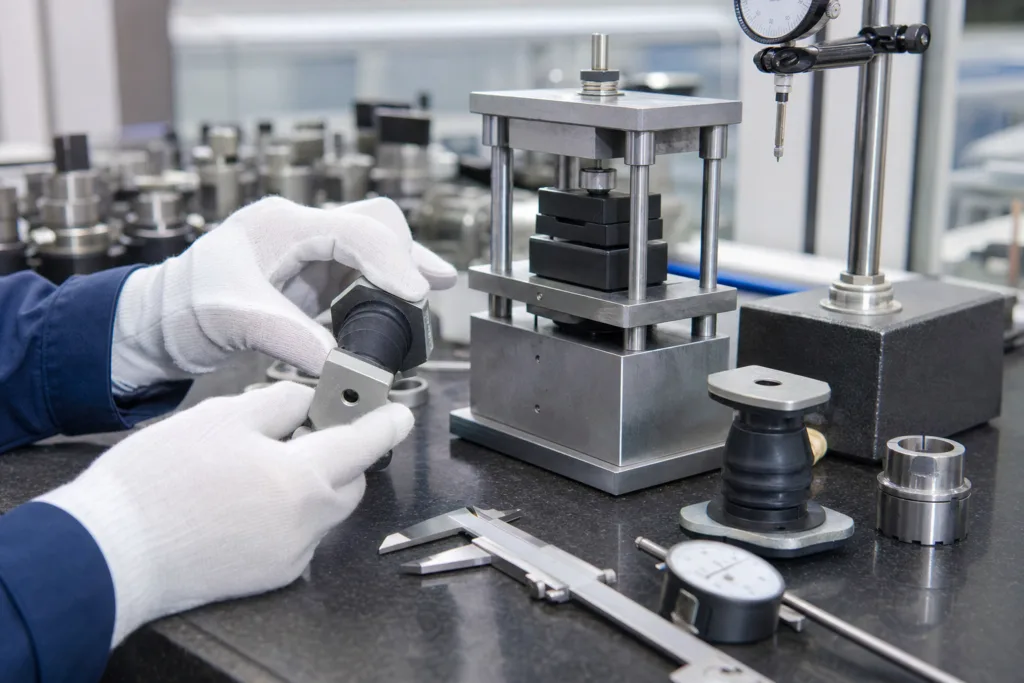
When procurement and engineering work from the same specification, sample approval is faster and production issues are less likely. We recommend documenting the key requirements before requesting quotes or samples so suppliers can recommend the right grade, packaging, and support model.
- primary substrates and surface condition
- joint size, bond-line thickness, and load direction
- required fixture time and handling time
- temperature, moisture, and chemical exposure
- desired viscosity and dispensing method
- appearance requirements such as bloom or color sensitivity
- testing method for sample approval
- packaging format, shelf life needs, and expected monthly usage
If the program needs custom viscosity, special packaging, or private label planning, the selection stage is the right time to ask. That is where our technical support team can help align the adhesive with the line process, not just the part geometry. For buyers who want a process partner rather than a commodity supply source, adhesive selection technical support for application-specific projects is often the most efficient way to move from specification to trial.
Conclusion
Choosing a cyanoacrylate adhesive for metal, rubber-to-metal, or plastic-to-metal assemblies is a practical engineering decision, not a simple product-picking exercise. The right grade depends on substrate compatibility, surface condition, bond-line thickness, fixture speed, and the real stresses the assembly will face in service. When those factors are matched well, cyanoacrylates can deliver fast, efficient, and repeatable bonding for many small mixed-material parts.
From our manufacturing perspective, the most successful programs are the ones that define the process early, test the actual substrates, and validate performance before scale-up. That approach reduces surprises in production and gives procurement, engineering, and operations a clearer path to a stable adhesive specification.
FAQs
Is cyanoacrylate adhesive for metal suitable for all metal types?
No. It can work very well on many clean, closely fitted metal parts, but surface condition matters a lot. Oils, oxide layers, coatings, and rough machining marks can change the result, so the actual production metal should always be tested rather than assuming universal compatibility.
Can cyanoacrylates work for rubber-to-metal assemblies?
Yes, in some cases. They are often used for small rubber-to-metal parts when the joint is thin and the service load is suitable. However, the rubber type, surface treatment, flexibility requirement, and peel stress must all be reviewed before approving the adhesive.
What makes plastic-to-metal bonding more difficult than metal bonding?
Plastic surfaces vary widely in surface energy and chemical structure, so one adhesive may bond one plastic well and another poorly. Mold release residues, low-surface-energy polymers, and flexible parts can all reduce reliability, which is why sample testing on the actual plastic is essential.
How do I know if the fixture time is right for my production line?
The fixture time should allow enough positioning time for operators or automation, but still support your target cycle time. A lab sample should be tested using the same handling sequence, assembly pressure, and timing used in production so the result reflects reality.
What should procurement ask a supplier before ordering samples?
Procurement should confirm substrate pair, bond-line size, viscosity needs, fixture time, packaging format, shelf life, and the test method used for approval. Those details help the supplier recommend the right grade and reduce the chance of trial-and-error purchasing.
When should I consider another adhesive chemistry instead of cyanoacrylate?
If the joint has large gaps, strong peel loads, significant vibration, long-term heat exposure, or a need for higher flexibility, another adhesive family may be more suitable. Cyanoacrylates are excellent for many small fast-bonding jobs, but they are not the best choice for every service condition.