
Choosing the right system for metal to metal adhesive bonding is rarely just a question of which product has the highest advertised strength. In real production environments, metal assemblies see vibration, thermal cycling, oil contamination, uneven joint gaps, line-speed constraints, and procurement pressure at the same time. That is why engineers and buyers comparing epoxy, acrylic, and polyurethane systems need to evaluate chemistry in the context of the actual assembly, process window, and service conditions rather than selecting on a single data point.
If your project involves dissimilar metals, shock loading, narrow or inconsistent bond lines, or pressure to reduce mechanical fastening steps, our metal bonding solutions for demanding industrial assemblies are designed around those practical constraints. At ZDS, we support industrial teams with chemistry selection, viscosity and dispensing matching, cure-path planning, sample validation, and bulk manufacturing consistency so the chosen adhesive fits both the metal substrates and the production rhythm.
Why metal-to-metal bonding requires chemistry-specific selection
Metal substrates can look similar but behave very differently in bonded assemblies. Mild steel, stainless steel, aluminum, galvanized steel, brass, and coated metals each present different surface energies, oxide layers, contamination risks, and thermal expansion behavior. A rigid, high-strength adhesive that performs well on grit-blasted steel brackets may be a poor choice for thin aluminum parts exposed to impact and thermal cycling. Likewise, a fast acrylic that speeds fixture time on a busy line may not offer the same heat resistance as an epoxy selected for under-hood or equipment housing service.
From our formulation perspective, metal bonding performance depends on the interaction between five variables: substrate condition, joint design, load type, cure method, and in-service environment. When one of these variables changes, the preferred chemistry often changes too. That is why a comparison among epoxy, acrylic, and polyurethane should be grounded in application logic rather than generic product categories.
What industrial buyers should evaluate before choosing an adhesive
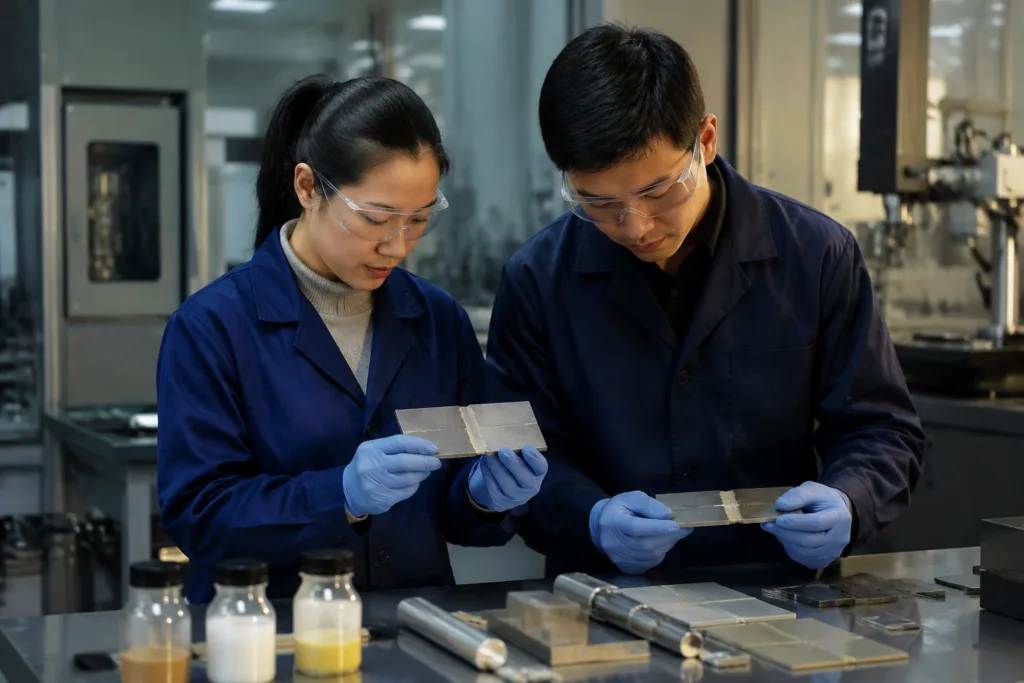
Before comparing chemistries, define the assembly requirements clearly. Many sourcing delays and qualification failures happen because teams request a “strong metal adhesive” without specifying how the joint will actually be used.
Core evaluation factors
- Metals being joined: steel to steel, aluminum to stainless, galvanized parts, coated panels, plated components, and mixed-metal assemblies can each shift chemistry choice.
- Load profile: static load, dynamic vibration, peel stress, impact, or fatigue.
- Joint geometry: overlap area, bond-line thickness, gap variability, and whether the design concentrates stress at edges.
- Required cure profile: room-temperature cure, heat cure, short fixture time, long open time, or two-part mixing constraints.
- Environmental exposure: heat, humidity, immersion, fuels, cleaning chemicals, UV, salt spray, and outdoor weathering.
- Production method: manual dispensing, meter-mix dispense, cartridge use, robotic bead application, or batch assembly.
- Downstream operations: powder coating, machining, movement before full cure, or electrical insulation needs.
At this stage, many teams also benefit from adhesive selection technical support for process-based matching, especially when the final decision must balance engineering performance with line speed, packaging format, MOQ, and approval timelines.
Epoxy adhesives for high strength and environmental resistance
Epoxy is often the first chemistry considered for structural metal joints because it can deliver high shear strength, strong adhesion to many prepared metals, good gap filling, and broad resistance to heat, moisture, and chemicals. In practice, epoxy is frequently selected where rigidity, dimensional stability, and durable load transfer matter more than extreme flexibility.
Typical metal applications include brackets, housings, equipment assemblies, magnets to metal, metal inserts, industrial fixtures, and structural subassemblies where the bond area is well-designed and the cure schedule is manageable.
When buyers ask us for epoxy adhesive options for high-strength metal joints, the discussion usually centers on four trade-offs: cure speed, toughness, viscosity, and temperature capability. A toughened epoxy may provide better impact resistance than a very rigid grade. A low-viscosity epoxy may wet narrow bond lines well but flow too much on vertical surfaces. A one-part heat-cure system may simplify ratio control but require oven capacity. A two-part room-temperature epoxy may be easier to integrate but still need hours before handling strength is reached.
Where epoxy usually fits well
- High lap shear requirements on properly prepared metal surfaces
- Applications needing chemical resistance or elevated service temperature
- Joint designs with moderate gap-filling needs
- Assemblies where rigidity improves performance
- Projects where longer cure can be accepted or accelerated with heat
Where epoxy can become risky
- Very high peel or impact loads without sufficient toughness
- Assemblies with significant movement or differential expansion
- Production lines that need very fast fixture times
- Surfaces that are poorly prepared or inconsistently contaminated
In other words, epoxy performs best when the process is controlled and the joint is engineered to put the adhesive mainly into shear or compression rather than peel.
Acrylic adhesives for faster assembly and better surface tolerance
Acrylic systems are attractive when assembly speed matters and when substrate preparation in real production conditions is not always perfect. Compared with many epoxies, acrylic adhesives often provide faster fixture times, good toughness, and stronger tolerance to lightly oily or less-than-ideal metal surfaces. That combination makes them practical for transportation components, appliance frames, sheet metal fabrications, and general industrial assembly.
For teams prioritizing takt time, we often discuss acrylic adhesive solutions for faster metal assembly because acrylic chemistry can reduce clamping time and support quicker movement of bonded parts to the next station. This is especially helpful where mechanical fastening reduction only creates value if adhesive cure does not slow the line.
Strengths of acrylic in metal bonding
- Faster fixture and handling strength in many systems
- Better tolerance to minimally prepared surfaces than many rigid structural chemistries
- Good toughness and impact resistance
- Useful gap filling in many two-part grades
Limitations to assess carefully
- Odor and handling considerations in production environments
- Lower maximum heat resistance than some epoxy systems
- Potentially shorter working time in fast-curing grades
- Need to match mix ratio and dispensing equipment correctly
Acrylic is often the pragmatic choice when the assembly line is moving quickly and the metals may not always arrive in laboratory-clean condition. However, the speed advantage only matters if the open time still fits part placement and alignment.
Polyurethane adhesives for flexible or vibration-prone joints
Polyurethane is commonly chosen when the bond must absorb movement rather than resist it rigidly. In metal assemblies exposed to vibration, thermal expansion mismatch, or repeated impact, a more flexible adhesive can reduce stress concentration and improve long-term durability. This is why polyurethane often appears in transportation, enclosure, panel, and equipment applications where flexibility is not a weakness but a design requirement.
When a joint is expected to flex in service, we review polyurethane adhesive options for flexible metal bonding with customers who need elongation, shock absorption, and better peel accommodation than a rigid epoxy would typically provide.
Where polyurethane is often the better choice
- Metal panels and assemblies exposed to vibration
- Dissimilar materials where expansion rates differ
- Joints that experience peel, movement, or impact
- Applications needing a balance of bonding and sealing
Typical constraints
- Lower structural rigidity than epoxy
- Heat resistance may be insufficient for high-temperature zones
- Moisture sensitivity during storage or processing for some systems
- Longer full-cure times depending on chemistry and section thickness
Polyurethane should not be treated as a universal substitute for structural epoxy. It is more accurate to see it as a problem-solving chemistry for movement, shock, and durability where flexibility is central to the assembly design.
Epoxy vs acrylic adhesive for metal: key performance differences
For many industrial teams, the most common comparison is epoxy versus acrylic. Both can be structural, both can bond metal effectively, and both are used widely in production. The difference is usually not whether they can bond metal, but how they behave during assembly and in service.
| Criteria | Epoxy | Acrylic | Polyurethane |
|---|---|---|---|
| Typical strength profile | High shear, rigid structural bonding | High strength with more toughness | Moderate to high, depending on grade, with flexibility |
| Fixture speed | Moderate to slow unless accelerated | Fast in many systems | Moderate |
| Surface tolerance | Usually benefits from better prep | Often more forgiving | Depends on grade, generally moderate |
| Gap filling | Good across many viscosities | Good in paste systems | Good, especially in flexible formulations |
| Vibration resistance | Good when toughened, but rigid | Good toughness | Very good for movement-prone joints |
| Heat resistance | Often strongest option | Moderate | Usually lower than epoxy |
| Chemical resistance | Often strong | Moderate to good | Application dependent |
| Best fit | Controlled structural assemblies | Faster, practical industrial assembly | Flexible, dynamic assemblies |
The most important takeaway is that cure speed and surface tolerance often push a project toward acrylic, while heat resistance and rigid structural performance often push it toward epoxy. Polyurethane enters the discussion when movement and energy absorption become dominant requirements.
How to match adhesive chemistry to load, gap size, and curing process
In our manufacturing work, this is where the right selection usually becomes clear. If the joint will see mainly shear load, has a controlled bond line, and operates at elevated temperature, epoxy is often the rational starting point. If the line needs fast handling strength and the metal surfaces are not always perfectly prepared, acrylic may create less production risk. If the assembly sees repeated vibration or dissimilar-metal movement, polyurethane often gives a safer durability margin.
Selection logic by application need
- High static load, moderate heat: start with epoxy.
- Fast assembly, broad fabrication tolerance: start with acrylic.
- Shock, peel, vibration, movement: start with polyurethane or a toughened acrylic.
- Large gaps or uneven fit-up: prioritize thixotropy and gap-filling profile, not just chemistry family.
- Short open time acceptable: faster acrylics may work well.
- Long positioning time needed: slower epoxy or tailored two-part systems may be more forgiving.
It is also worth noting that data sheet values are only meaningful when the cure conditions and test geometry match the intended use. Published shear figures can be useful for screening, but they are not a substitute for assembly-specific validation.
Substrate preparation, surface treatment, and contamination risks
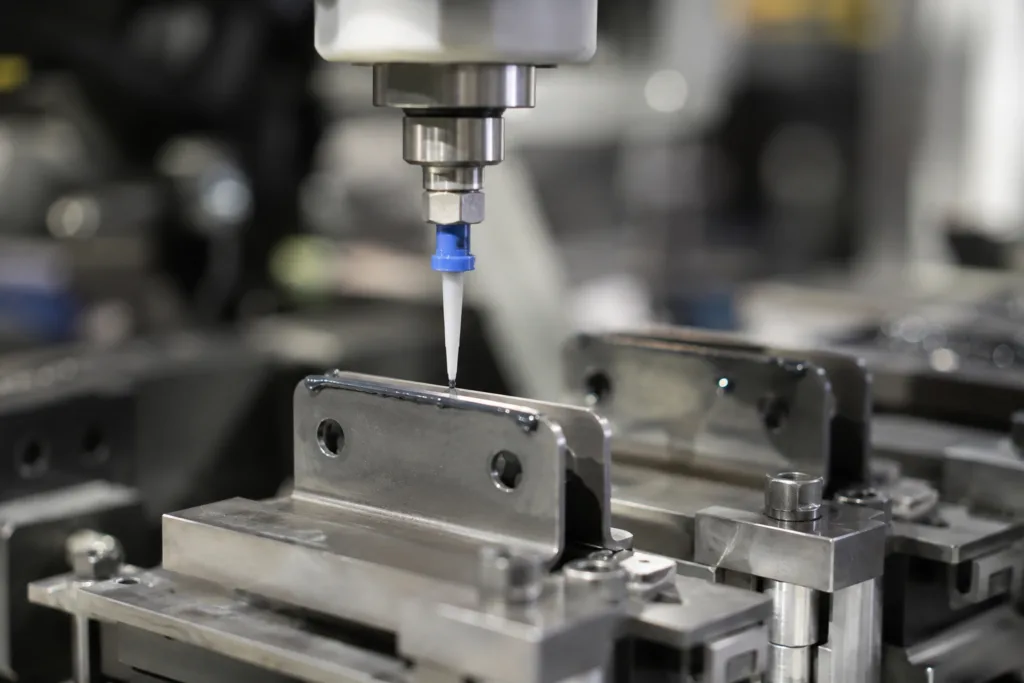
Even the right chemistry can fail if the metal surface is unstable. Oil, mold release, oxide, dust, conversion coating residue, and passive films can all reduce wetting or create a weak boundary layer. Stainless steel and aluminum are especially common sources of confusion because assemblies may look clean while still carrying an oxide or contamination profile that reduces bond reliability.
Good preparation does not always mean aggressive treatment, but it does mean consistency. Depending on the metal and process, preparation may include solvent wiping, alkaline cleaning, abrasion, grit blasting, plasma treatment, or priming. The goal is not simply to roughen the surface. The goal is to create a repeatable, clean, and bondable interface.
From a risk-control perspective, the biggest mistake is qualifying an adhesive on carefully cleaned lab coupons and then moving to a factory environment with different oils, handling methods, and storage conditions. The production surface state should be part of the test plan from the beginning.
Common selection mistakes that cause bond failure in metal assemblies
Most metal bond failures are not caused by the chemistry being “bad.” They are caused by mismatch between chemistry and application reality.
| Mistake | What happens | Better approach |
|---|---|---|
| Choosing only by peak strength value | Bond fails under peel, impact, or vibration | Match chemistry to real load type and joint design |
| Ignoring surface contamination | Intermittent adhesion loss and poor consistency | Define actual cleaning method and contamination tolerance |
| Selecting too rigid an adhesive for moving joints | Cracking under thermal cycling or shock | Use tougher epoxy, acrylic, or polyurethane as needed |
| Using fast cure without enough open time | Misalignment, poor wet-out, high scrap | Balance fixture speed with workable assembly time |
| Not validating gap conditions | Voids, incomplete cure, reduced strength | Test with real production tolerances |
| Overlooking packaging and dispense method | Mixing errors, waste, inconsistent beads | Match viscosity and package to line equipment |
We often remind buyers that the lowest-risk selection is not the chemistry with the highest headline number. It is the chemistry that performs consistently across the actual range of substrate condition, operator variation, and environmental exposure.
How to validate the right metal bonding adhesive in production
Validation should move in stages: screening, pilot, and production confirmation. Start with a short list of chemistries based on load, environment, and process constraints. Then test on the real metals, with realistic surface prep, bond-line thickness, cure conditions, and aging exposure.
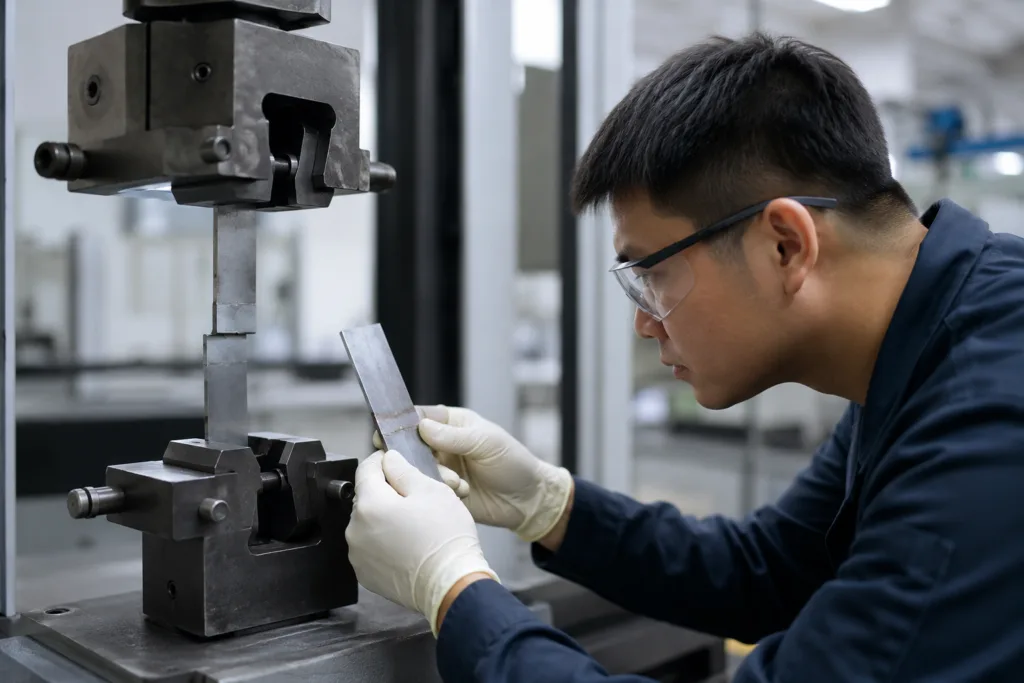
For metal assemblies, lap-shear testing is commonly used as one comparison tool, and the ASTM D1002 lap-shear test method is widely referenced for adhesively bonded metal single-lap-joint specimens. That standard is useful when comparing candidates, but internal qualification should also include the failure modes that matter in service, such as peel, impact, thermal cycling, and moisture exposure.
Practical validation checklist
- Test on real production metals, not idealized substitute coupons
- Include worst-case and nominal gap conditions
- Use actual cleaning and handling methods
- Measure fixture time and full cure in the real factory environment
- Evaluate aged performance after heat, humidity, and chemical exposure relevant to the application
- Inspect failure mode, not just force at failure
- Repeat across multiple batches when approval risk is high
This stage is also where ZDS can add value from a manufacturer standpoint, because formulation adjustments, viscosity tuning, working-time changes, and packaging recommendations often make the difference between a promising lab result and a stable production process.
When custom formulation is better than an off-the-shelf product
Off-the-shelf grades are efficient when the application is standard and the process window is broad. But custom formulation becomes more attractive when the project has one or more hard constraints that typical catalog products do not balance well.
Common triggers for customization
- Need for a very specific fixture time or pot life
- Unusual gap-filling requirements
- Vertical application with anti-sag control
- Better adhesion to coated, plated, or mixed-metal substrates
- Improved toughness without losing too much heat resistance
- Packaging tailored for cartridges, pails, drums, or meter-mix equipment
- Private label or OEM supply planning needs
From our experience, customization is often less about chasing maximum performance and more about reducing process risk. A slightly modified epoxy, acrylic, or polyurethane that fits the real line conditions can outperform a theoretically stronger standard product that is difficult to dispense, align, or cure consistently.
How ZDS supports metal bonding projects with adhesive development and manufacturing
At ZDS, we approach metal bonding as a combination of chemistry, process fit, and supply reliability. For industrial buyers, that means the conversation should include not only adhesion and durability, but also MOQ planning, lead time expectations, packaging format, batch consistency, and technical documentation. A technically suitable adhesive that cannot be supplied consistently is still a sourcing risk.
We typically help customers narrow selection by confirming the metals involved, contamination profile, joint design, required fixture time, operating temperature range, and environmental exposures. From there, sample testing can compare epoxy, acrylic, and polyurethane candidates under production-relevant conditions. If needed, we can adjust viscosity, open time, hardness, flexibility, or cure behavior to better match the process.
For procurement teams, the practical questions are equally important: Is the formulation stable from batch to batch? Is the packaging matched to line consumption? Is the lead time realistic for planning? Does the supplier understand the application well enough to recommend a validation path rather than only sending a generic TDS? These are often the questions that separate a workable project from a recurring quality problem.
Conclusion
The right choice for metal to metal adhesive bonding depends on what the assembly needs most. Epoxy is often preferred for rigid high-strength joints and stronger resistance to heat or chemicals. Acrylic is often favored when faster fixture time and better tolerance to less-than-perfect surfaces matter most. Polyurethane is often the safer route when the joint must absorb vibration, peel, impact, or thermal movement.
For engineers and sourcing teams, the most reliable path is to compare chemistry against real substrates, real surface conditions, real cure constraints, and real service environments. When those factors are clear, adhesive selection becomes less about guesswork and more about controlled decision-making.
FAQs
Which adhesive is usually strongest for metal-to-metal bonding?
Epoxy is often the first choice when the goal is high structural strength on well-prepared metal surfaces, especially where the joint mainly carries shear load. However, the strongest practical option depends on the actual assembly. A tough acrylic may outperform a rigid epoxy in impact-prone service, and a polyurethane may last longer when vibration and movement are dominant.
Is acrylic or epoxy better for fast production lines?
Acrylic is often better for faster production lines because many systems develop fixture strength more quickly and tolerate less-than-perfect surface preparation better than many epoxies. Epoxy can still work well in high-volume manufacturing, but the cure profile, working time, and handling schedule need to be matched carefully to the line speed and clamping method.
When should polyurethane be considered for metal bonding?
Polyurethane should be considered when the bonded metal assembly will flex, vibrate, or experience thermal expansion mismatch in service. It is especially useful where a rigid bond may crack over time, or where the adhesive also needs to contribute sealing and shock absorption rather than only structural stiffness.
How important is surface preparation in metal bonding?
Surface preparation is critical because oils, oxides, dust, and handling contamination can create weak boundary layers that reduce adhesion even when the adhesive chemistry is otherwise correct. The right cleaning method depends on the metal and process, but consistency matters as much as the method itself. Qualification should use the same surface condition expected in production.
What should buyers ask an adhesive manufacturer before qualification?
Buyers should ask about recommended metal substrates, surface preparation tolerance, viscosity, pot life or open time, fixture speed, full-cure conditions, gap-filling capability, environmental resistance, packaging options, shelf life, and batch consistency controls. It is also important to ask how the supplier recommends validating the product under realistic production and aging conditions.
When is custom formulation worth considering for metal assemblies?
Custom formulation is worth considering when standard products do not balance all the required properties at once, such as needing both higher toughness and controlled cure speed, or better adhesion on a specific coated metal. It is also valuable when dispensing behavior, packaging size, or production timing must be tailored to a specific line rather than adapted around a generic catalog product.
Related Reading
- Metal to Metal Glue: Choosing the Best Adhesive for Industrial Metal Assembly
- Adhesive Bonding vs Welding, Screws, and Rivets: When Manufacturers Can Replace Mechanical Joining
- Mastering Surface Preparation for Bonding: 7 Steps That Solve 90% of Adhesive Failures
- Adhesive Strength Simplified: Peel, Shear, & Tensile Performance Decoded
- One-Part vs Two-Part Epoxy Adhesives: How to Choose the Right Epoxy for Your Process