
Manufacturers often begin comparing joining methods when weight, appearance, corrosion risk, mixed-material design, or assembly efficiency starts to limit what welding, screws, and rivets can do. In that decision process, adhesive bonding vs welding is rarely a simple strength question. It is a broader engineering choice about how loads move through an assembly, how materials behave over time, how the production line runs, and how much risk the team is willing to carry during product conversion.
If your design team is assessing bonding adhesive options for replacing mechanical fasteners, the real evaluation should go beyond replacing one joint with another on paper. In many assemblies, the right adhesive strategy depends on substrate pairings, bond area, cure speed, vibration exposure, moisture protection, surface preparation, and whether the line can support clamping or fixture time. At ZDS, we help manufacturers compare these variables early so the selected adhesive chemistry and dispensing process fit both product performance and production reality.
Why manufacturers consider replacing mechanical fasteners
Screws, rivets, and welds remain essential in industrial manufacturing because they are familiar, visible, and often easy to inspect. But they also introduce constraints. Holes reduce effective material section and can create stress concentrations. Weld heat can distort thin parts, damage coatings, and limit substrate choices. Rivets and screws add weight, increase part count, and can complicate sealing. For many modern products, especially where metal must join to plastic, glass, composite, or coated surfaces, these limits become expensive.
Adhesive bonding is considered when manufacturers want to distribute stress over a wider area, preserve surface appearance, reduce assembly weight, join dissimilar materials, or combine bonding with sealing in one step. It is especially relevant in electronics housings, transportation interiors, appliance assemblies, battery modules, architectural panels, lighting products, and mixed-material enclosures.
The key point is not that adhesives replace every traditional joint. It is that they can remove unnecessary fasteners in the right design window and can improve total assembly performance when evaluated correctly.
What each joining method is best for

Adhesive bonding
Adhesive bonding performs best when the joint can provide enough bonded area, when stress can be managed mainly in shear or compression, and when the design benefits from sealing, vibration damping, thin bond lines, cleaner appearance, or mixed-material joining. It is also valuable when drilling holes or applying weld heat would weaken the assembly or damage nearby components.
Welding
Welding is often preferred for high-temperature service, all-metal structures, and assemblies needing a rigid metallurgical joint. It remains a strong option when the materials are weldable, thermal distortion is acceptable, and the production process already supports fixture control, safety measures, and weld inspection.
Screws
Screws are practical when disassembly is required for maintenance, repair, or field replacement. They are also useful when immediate handling strength is critical and the assembly cannot wait for cure. However, threaded joints can loosen under vibration if not designed with locking features, and they usually require bosses, inserts, or thicker sections in plastics and thin sheet materials.
Rivets
Rivets are commonly used for sheet assemblies and permanent mechanical retention where access and process simplicity matter. They can work well in metal joining, but they still create holes, can leave visible marks, and usually do not solve sealing or galvanic isolation issues on their own.
Adhesive bonding vs welding, screws, and rivets in practical manufacturing terms
| Factor | Adhesive bonding | Welding | Screws / rivets |
|---|---|---|---|
| Load distribution | Spread across bond area | Localized along weld path | Concentrated at hole locations |
| Substrate flexibility | Excellent for dissimilar materials | Mostly similar weldable metals | Broad, but often needs hole-making |
| Surface appearance | Clean, hidden joint possible | Visible welds and heat marks | Visible heads and holes |
| Weight impact | Low added weight | Low added hardware, but process-heavy | Higher due to hardware |
| Sealing function | Can bond and seal together | May need secondary sealant | Usually needs gasket or sealant |
| Immediate handling | Depends on fixture and cure profile | Immediate after process | Immediate after installation |
| Heat input | Low | High | Low |
| Rework / disassembly | Usually limited | Difficult | Better with screws |
| Automation fit | Good with controlled dispensing | Good but capital intensive | Good with fastening equipment |
From a selection standpoint, adhesive bonding is strongest where design freedom and whole-joint performance matter more than visible point retention. Welding remains valuable where very high heat resistance and metallic continuity dominate. Screws and rivets stay relevant when removal, immediate mechanical lock, or legacy assembly methods drive the decision.
Advantages of adhesive bonding in converted assemblies
Stress distribution
One of the biggest differences in adhesive bonding vs welding or fasteners is stress distribution. A screw or rivet carries load through a limited area. A bond line can spread that load across a broader surface, reducing peak stress. This is especially useful in thin sheet, brittle substrates, decorative panels, and lightweight structures where point loads create cracking, deformation, or fatigue.
Weight reduction
Removing multiple metal fasteners can reduce assembly weight and simplify inventory. In transport, portable equipment, and large panel bonding, the weight savings can be meaningful not only for the product but also for handling, packaging, and process ergonomics.
Better surface appearance
For consumer-facing housings, metal trims, glass assemblies, appliance fronts, and architectural components, hidden bonding removes exposed heads, weld marks, and local panel distortion. This can reduce secondary finishing work and improve cosmetic consistency.
Dissimilar material bonding
Adhesives make it practical to bond metal to plastic, glass to metal, composite to aluminum, or painted parts to structural inserts without the thermal incompatibility of welding. In these applications, chemistry choice matters. For example, polyurethane adhesives for durable mixed-material assembly are often considered where toughness, elongation, and substrate movement are part of the design requirement.
Key performance factors that decide whether adhesive bonding is viable
Load type and joint geometry
Adhesives generally perform more efficiently when the joint is designed to place the bond line in shear rather than peel or cleavage. A large overlap or flange can be better than a narrow edge bond. When engineers convert from rivets or screws to adhesive, they should redesign the joint, not simply remove hardware from the drawing and keep the same geometry.
Temperature exposure
Service temperature is one of the first screening questions. Some adhesive systems handle moderate continuous heat very well, but not every chemistry fits under-hood, near-motor, or high-process-heat conditions. Rigid systems can also become more brittle at low temperature, while softer systems may lose strength at elevated temperature. The right choice depends on the full operating range, not only room-temperature test results.
Vibration and dynamic movement
Assemblies exposed to repeated vibration, impact, or differential expansion often need toughness or flexibility rather than maximum hardness. In those cases, silicone adhesives for flexible sealing and vibration resistance may be more appropriate than a rigid structural system, especially when the joint must absorb movement while also sealing against dust or moisture.
Moisture and chemical exposure
Bond durability depends on the real service environment. Outdoor weathering, washdown, oils, fuels, cleaners, salt exposure, and humidity all influence adhesive selection. A bond that performs well in a dry indoor test may fail prematurely if edge exposure, water ingress, or chemical splash were not considered during formulation and test planning.
Service life expectations
Long-life assemblies need more than high initial bond strength. They need retained performance after aging. That is why sample validation should include environmental conditioning, not just one short-term pull test.
Substrate compatibility and surface preparation requirements
Reliable adhesive joining begins with substrate compatibility. Metals, plastics, glass, ceramics, composites, painted surfaces, and powder-coated parts all present different surface energy, contamination, and expansion behavior. Oils, mold release, oxide layers, dust, and moisture can prevent wetting and reduce long-term adhesion even when the initial bond looks acceptable.
From our formulation experience, successful conversion projects usually start with four questions: what are the exact substrates, what contamination reaches the bond area, what surface prep is realistic at line speed, and what failure mode is acceptable if the joint is overloaded? Those answers help define whether the project needs a forgiving acrylic, a rigid epoxy, a flexible polyurethane, or a silicone-based approach.
Surface preparation may include cleaning, abrasion, primer use, plasma or corona treatment, or controlled drying. The correct level depends on the substrate and risk tolerance. A high-performance adhesive cannot compensate indefinitely for poor or inconsistent surface conditions. For that reason, process capability matters just as much as chemistry.
When adhesive bonding can replace traditional joining
Adhesive bonding is a realistic replacement when the joint has enough bond area, the load path is well understood, the service environment is within the chemistry’s capability, and the production line can support dispensing and cure control. In practice, we often see strong replacement potential in these cases:
- Thin sheet metal assemblies where drilling or riveting causes deformation
- Decorative or visible assemblies where hidden joints improve appearance
- Plastic-to-metal or composite-to-metal assemblies where welding is impossible
- Enclosures requiring both joining and sealing
- Products where reducing hardware count lowers weight and assembly complexity
- Electronics or thermal assemblies where low heat input protects components
For many of these applications, acrylic adhesives for fast industrial bonding are evaluated because they can offer rapid strength build, good adhesion to a range of prepared substrates, and practical fit for production environments that cannot tolerate long cure delays.
When hybrid joining is safer
Full replacement is not always the smartest path. Hybrid joining, using adhesive together with screws, rivets, or spot welds, can reduce risk during conversion and may produce better overall performance than either method alone. A mechanical fastener can provide immediate handling strength while the adhesive cures. The adhesive can then distribute load, improve stiffness, seal the joint, and reduce vibration or fretting.
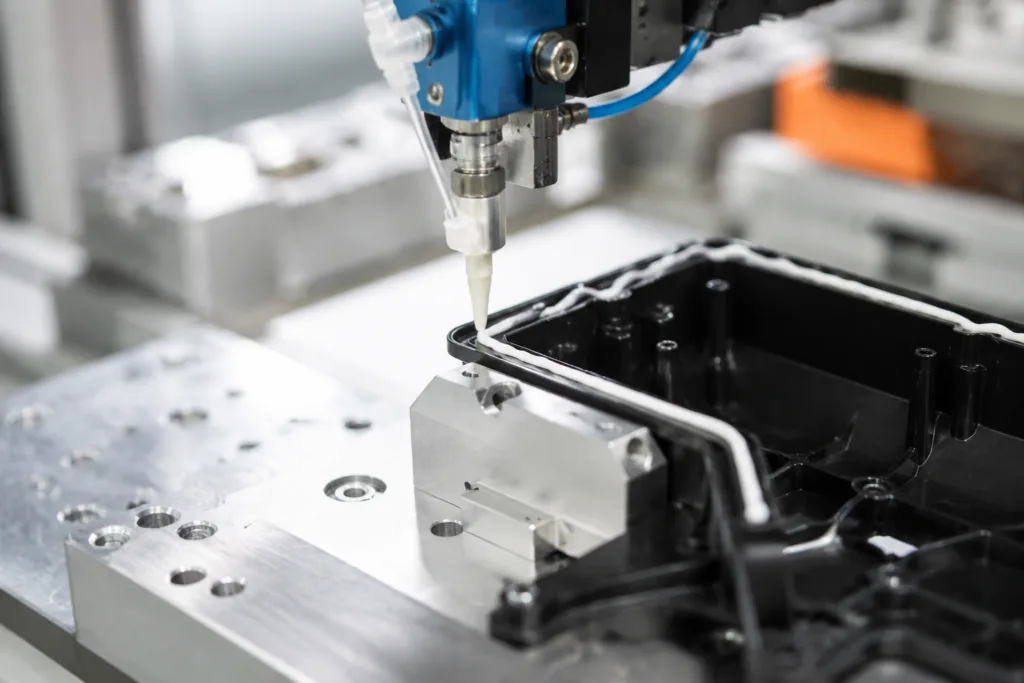
Hybrid designs are often useful for large panels, transportation assemblies, battery structures, service-access products, and applications with uncertain load peaks. They can also help when the line cannot hold parts in fixture long enough for an adhesive-only process. In these cases, the hardware is not eliminated completely, but the number of fasteners can often be reduced.
Design mistakes that cause failure in fastener-to-adhesive conversion
Keeping the old joint geometry
The most common mistake is assuming adhesive can simply replace a screw in the same small footprint. Adhesives need area. A redesigned overlap, flange, bead path, or bonding land is often necessary.
Ignoring peel and edge stress
Many failures start at the edge of the bond line where peel stress is highest. Bonding works better when the joint is designed to minimize prying forces and unsupported flexing.
Choosing chemistry by strength number alone
High data-sheet strength is not enough. Hardness, elongation, thermal resistance, open time, cure profile, and adhesion to the real substrate are equally important. For example, epoxy adhesives for structural joining may be ideal for rigid, high-strength bonds, but not for every assembly exposed to movement or differential expansion.
Underestimating surface preparation variation
A conversion can pass in the lab and fail on the line if parts arrive with changing oil level, oxide condition, or release-agent residue. Surface consistency must be treated as a controlled variable.
Skipping process validation
Bond thickness, mix ratio, dispensing accuracy, clamp pressure, and cure conditions all affect result quality. Without validation, the adhesive may be blamed for failures caused by process drift.
Process and production considerations
Joining decisions are often won or lost in production rather than in engineering review. Adhesive bonding introduces different line requirements than welding or fastening, so manufacturers should evaluate the full process window before conversion.
Cure time and fixture strategy
Some assemblies can accept hours of cure because parts move to downstream racks. Others need green strength within minutes. This drives chemistry selection, fixture design, and whether a one-part or two-part system is practical.
Dispensing method and viscosity
Bead shape, gap filling, sag resistance, and equipment compatibility matter. Low-viscosity materials may wet well but run out of vertical joints. High-viscosity systems may bridge larger gaps but require more dispensing force and tighter control.
Clamping and bond-line control
Unlike a screw, adhesive does not automatically define bond-line thickness unless the design includes spacers, glass beads, stop features, or controlled fixturing. Too little adhesive can starve the joint; too much can delay cure or create squeeze-out problems.
Cycle time and line integration
At ZDS, we usually advise manufacturers to compare not only nominal cure time but total line impact: loading, surface cleaning, dispense path, fixture occupancy, transport before full cure, and inspection checkpoints. An adhesive that looks slower in isolation may still lower total assembly cost if it removes drilling, deburring, fastening, leak-sealing, or cosmetic rework steps.
Testing and validation before full conversion
No manufacturer should replace welding, screws, or rivets with adhesive based only on a brochure or a single bench sample. Validation should include mechanical testing, environmental aging, process trials, and clear acceptance criteria.
Strength testing
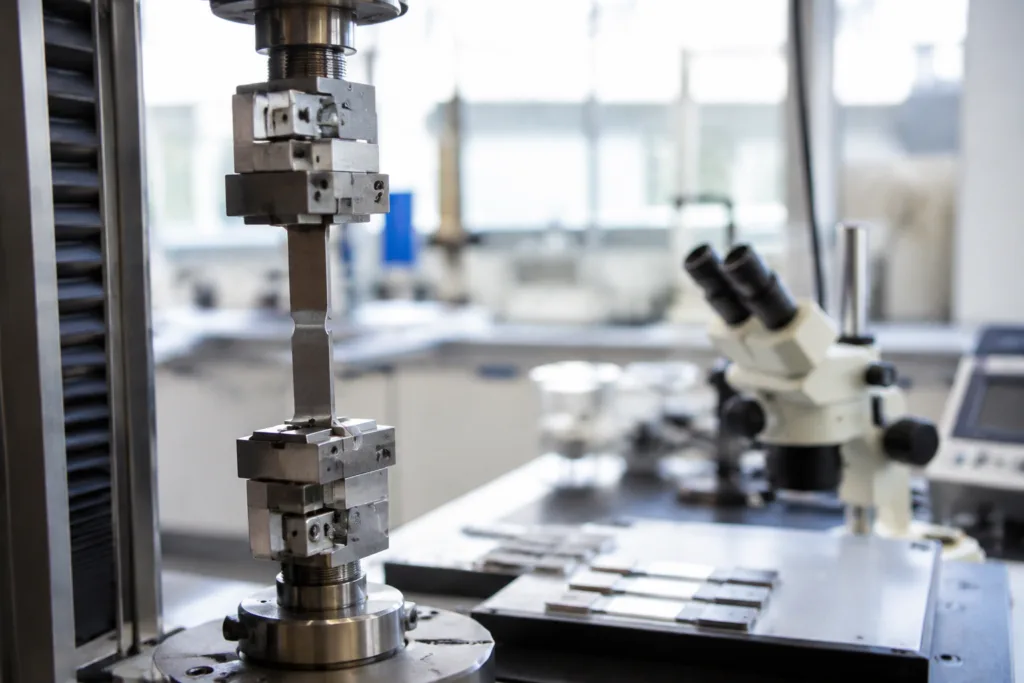
Lap shear, peel, tensile, compression, impact, and fatigue testing may all be relevant depending on the joint design. For bonded sheet materials, the ASTM D1002 lap-shear test method is a widely recognized way to evaluate apparent shear performance in single-lap joints. The important point is to use a test method that reflects the actual load condition rather than relying on a generic strength claim.
Environmental conditioning
Testing should include humidity, thermal cycling, water immersion where relevant, chemical splash or soak, and aging at expected service temperatures. This helps reveal whether the chosen chemistry retains adhesion and cohesive strength over time.
Process simulation
Sample trials should be run with the intended dispensing equipment, line speed, part cleanliness, and cure conditions. Lab-only hand mixing can produce unrealistic results compared with plant conditions.
Quality control checkpoints
Production validation should define incoming material checks, storage and shelf-life control, mix ratio verification for two-part systems, bead inspection, cure confirmation, and failure analysis procedures. Batch consistency matters, especially when the adhesive becomes a structural or sealing-critical component of the product.
How we help manufacturers evaluate adhesive conversion
When teams compare adhesive bonding with welding or fasteners, the most useful support usually comes from a manufacturer that can connect formulation, substrates, and production conditions rather than just offering a catalog number. We work with customers to screen candidate chemistries, review substrate combinations, discuss expected loads and environmental exposure, and narrow the process window before large-scale trials begin.
That can involve selecting toughness versus rigidity, adjusting viscosity for manual or automated dispensing, balancing open time with line speed, or deciding whether a custom primer or modified formulation is needed. It can also include practical sourcing topics such as sample quantity, packaging format, MOQ, storage, lead time, and batch-to-batch consistency planning for scale-up.
In many projects, the right answer is not “adhesive only” or “fastener only.” It is a structured decision based on performance needs, assembly design, and manufacturing economics. That is the approach we encourage because it reduces conversion risk and improves long-term reliability.
Conclusion
For manufacturers evaluating adhesive bonding vs welding, screws, and rivets, the right decision depends on more than peak strength. Adhesives can replace traditional joining when the assembly offers sufficient bond area, the substrates are compatible, the service environment is understood, and the production process can control surface prep, dispensing, and cure. They are especially valuable for mixed-material assemblies, improved appearance, lower weight, sealing, and vibration management. But conversion works best when the joint is redesigned for bonding and validated through realistic testing, not when adhesive is treated as a direct one-for-one substitute for a mechanical fastener.
FAQs
Can adhesive bonding be stronger than screws or rivets?
It can be, depending on joint design and load type. Adhesives often outperform point fasteners when the bond area is large enough and the load is carried mainly in shear, because stress is distributed across the joint rather than concentrated at holes. However, if the design creates peel forces, has limited bond area, or needs immediate high clamp load, screws or rivets may still be more suitable.
Is adhesive bonding a realistic replacement for welding?
Yes, in many mixed-material, thin-panel, cosmetic, or sealed assemblies, but not in every high-temperature or all-metal structural application. Adhesives are especially useful when weld heat would distort parts, damage coatings, or make dissimilar material joining impossible. The decision should be based on actual service temperature, load case, environmental exposure, and production constraints.
What adhesive chemistry is usually considered first for mechanical fastener replacement?
There is no single default choice. Epoxy is often reviewed for rigid structural strength, acrylic for faster production bonding, polyurethane for toughness and mixed-material movement, and silicone for flexibility and sealing under vibration or thermal cycling. The correct starting point depends on substrates, bond-line design, cure window, and durability requirements.
What tests should be completed before removing screws, rivets, or welds from an assembly?
Manufacturers should run application-relevant strength tests such as lap shear, peel, and fatigue where needed, along with environmental aging, thermal cycling, humidity exposure, and process trials using real production conditions. It is also important to define acceptance criteria, likely failure modes, and inspection controls before approving full conversion.
Can adhesives reduce total assembly cost even if cure time is longer?
Yes. A longer cure does not always mean a higher total cost. Adhesives can reduce drilling, hardware count, leak-sealing steps, cosmetic finishing, and rework caused by distortion or visible fasteners. The correct comparison is the full assembly process, including labor, equipment, floor space, fixture occupancy, scrap risk, and downstream quality issues.
What should buyers ask an adhesive manufacturer before starting a conversion project?
Buyers should ask about substrate compatibility, recommended surface preparation, expected cure profile, viscosity and dispensing fit, environmental resistance, packaging options, sample support, MOQ, lead time, storage conditions, and batch consistency control. It is also useful to discuss whether the manufacturer can review drawings or load cases and help define a realistic test plan for the intended assembly.