
Choosing a strong adhesive for plastic is rarely as simple as picking the strongest glue on the shelf. Plastics vary widely in surface energy, flexibility, chemical resistance, and sensitivity to stress, so an adhesive that works well on one resin may fail quickly on another. The most reliable selection process starts with the plastic type, then considers joint design, curing method, environment, and surface preparation.
For readers comparing materials or trying to narrow down options, explore adhesive options for plastic bonding as a useful starting point before matching a formulation to the specific plastic and service conditions involved.
Why plastic bonding is more difficult than many other materials
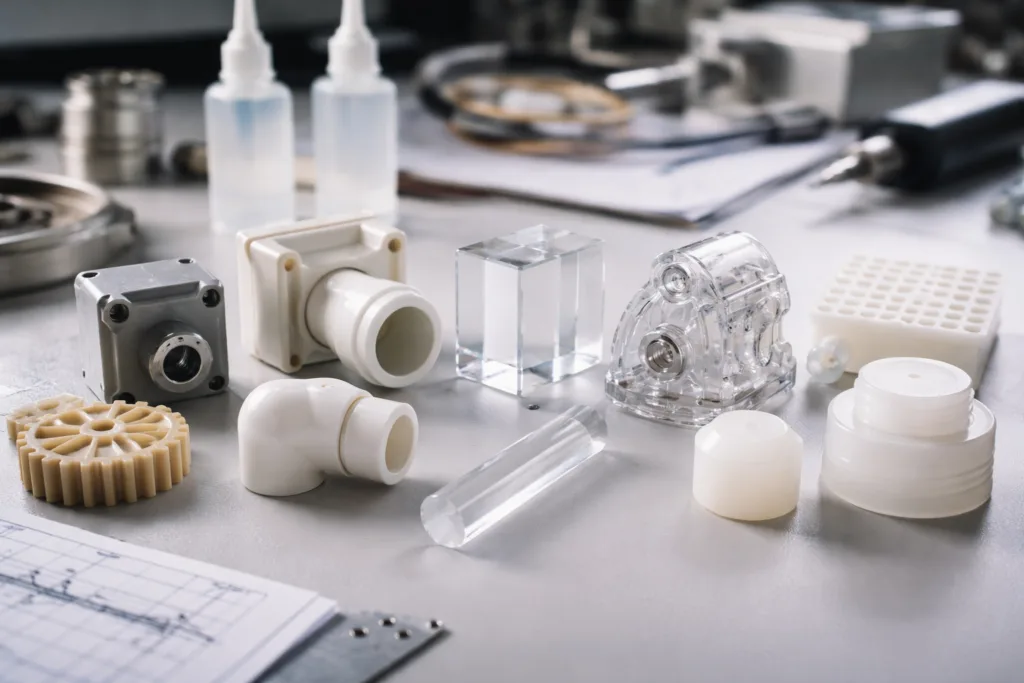
Many metals and glass surfaces are relatively easy to bond because they have high surface energy and stable surfaces. Plastics are different. Some are naturally hard to wet out, some contain release agents or plasticizers, and some flex enough to fatigue a rigid bond line over time. This is why plastic bonding often depends as much on surface condition and adhesive chemistry as on nominal strength.
Common obstacles include low surface energy plastics such as polyethylene and polypropylene, transparent plastics that can stress crack under the wrong chemistry, and engineering plastics that may require heat, primer, or controlled curing. In practical terms, the phrase strong adhesive for plastic only becomes meaningful when the plastic grade and use case are clearly defined.
What makes plastics difficult to glue
Low surface energy
Polyethylene and polypropylene are classic examples. Their surfaces resist wetting, so many adhesives bead up instead of spreading into intimate contact. Without enough wetting, even a high-strength adhesive can show poor real-world adhesion.
Flexibility and movement
Some plastics bend or expand noticeably under load or temperature change. A very hard adhesive may hold initially but crack under impact, vibration, or repeated flexing. In those cases, toughness and elongation may matter more than maximum rigid strength.
Additives and molded surface contamination
Plastic parts often carry mold release residue, oils, dust, antistatic agents, or plasticizers. These surface contaminants can interfere with cure and adhesion. Even parts that look clean may bond poorly without proper cleaning and handling.
Chemical resistance
Highly resistant plastics can be difficult to attack or soften, which is good for product durability but challenging for adhesion. Solvent-based systems may work on one thermoplastic and do almost nothing on another.
Why one adhesive works on one plastic but fails on another
Adhesives bond through different mechanisms: surface wetting, mechanical anchoring, chemical interaction, or slight substrate softening. Because plastics differ so much, the same adhesive can behave very differently across substrates. For example, a fast cyanoacrylate may bond ABS well, yet struggle on untreated polypropylene. A solvent cement may fuse PVC effectively, yet be unsuitable for nylon or polyolefins.
This is also why manufacturers and product developers often evaluate adhesives by substrate pair rather than by generic category. At ZDS, plastic bonding selection usually starts with the exact resin, the mating substrate, and the service environment, because those three factors often predict performance better than the adhesive family name alone.
Quick plastic identification guide before choosing an adhesive
If the plastic is unknown, selection becomes guesswork. Before choosing an adhesive, check the resin marking, part drawing, technical sheet, or supplier information. If those are unavailable, examine the application and physical behavior for clues.
- ABS: common in housings, appliance parts, and interior components; relatively easy to bond.
- PVC: often used in pipes, profiles, and electrical insulation; solvent cements are common for rigid PVC.
- Acrylic or PMMA: clear, rigid, good optical appearance; vulnerable to stress cracking with the wrong adhesive.
- Polycarbonate: tough and transparent; needs care to avoid crazing or cracking.
- PE: waxy feel, low surface energy, often flexible; difficult to bond without treatment or specialty systems.
- PP: similar challenge to PE; widely used in packaging, automotive, and consumer parts.
- Nylon or PA: engineering plastic with good strength; moisture content can affect bonding behavior.
- PET: common in packaging and some engineered parts; often more bondable than PE or PP, but surface condition still matters.
If the plastic type is uncertain, small-scale testing is far safer than relying on general glue claims.
Best adhesive options by plastic type
ABS
ABS is generally one of the easier plastics to bond. Cyanoacrylates, two-part acrylics, some epoxies, and certain polyurethane systems can all work depending on gap size and impact requirements. Fast fixture speed is useful for small assembled parts, while tougher acrylic or epoxy systems can be better for structural demands.
PVC
Rigid PVC often works well with solvent cement when the joint design supports that method. For non-pipe assemblies or mixed-material bonding, acrylics, epoxies, and selected polyurethane systems may be more suitable. The decision depends on whether the goal is fusion, gap filling, flexibility, or chemical resistance.
Acrylic and PMMA
Acrylic parts need adhesives that bond cleanly without causing haze, crazing, or stress cracking. UV-curing systems are often considered where transparency and controlled cure are important. In suitable designs, ZDS-22102101 UV adhesive for plastic bonding represents the type of option engineers may evaluate for clear plastic assemblies that need accurate placement before curing.
Polycarbonate
Polycarbonate is tough but can be sensitive to solvent attack and internal stress. Adhesive choice should prioritize compatibility and crack resistance, not just bond strength. Lower-stress formulations and validation on real molded parts are important, especially for transparent or load-bearing applications.
Polyethylene and polypropylene
These are among the most difficult plastics to bond. Standard super glues and general-purpose epoxies often fail unless the surface is specially treated or a dedicated low-surface-energy adhesive system is used. Primers, flame treatment, plasma treatment, or specialty acrylic technologies may be needed.
Nylon
Nylon can bond reasonably well with the right chemistry, but moisture absorption and surface condition matter. Drying, cleaning, and evaluating the final operating humidity can improve reliability. Toughened systems are often preferred where impact or vibration is expected.
PET
PET is usually more bondable than PE and PP, but adhesive selection still depends on whether the part is rigid, thin, transparent, or chemically exposed. For higher strength joining of selected plastic assemblies, readers may compare products such as ZDS-2207051 high-strength plastic bonding adhesive against other chemistries based on cure speed, toughness, and substrate compatibility.
When to use each adhesive family
Cyanoacrylate
Useful for fast bonding, small parts, and close-fitting joints. It works well on many plastics but not all. It is less forgiving on larger gaps and can become brittle in some impact-heavy applications.
Epoxy
Often chosen for gap filling, chemical resistance, and higher load capacity. Epoxies can perform well on many rigid plastics, but some are too stiff for flexible assemblies. Cure time and mix accuracy also need attention.
Acrylic adhesive
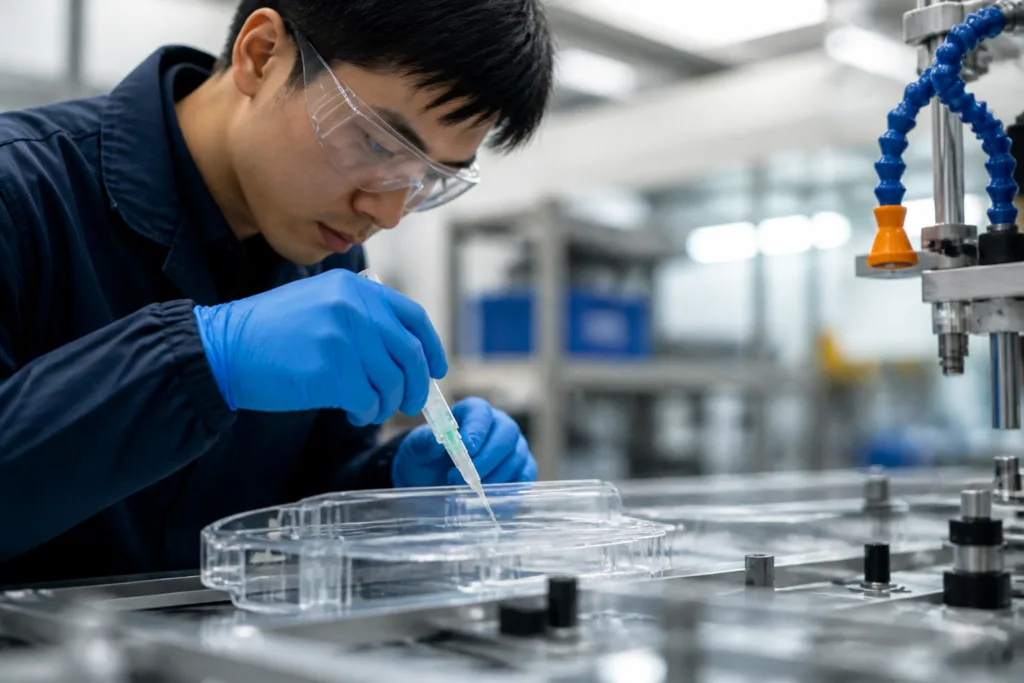
Acrylic systems are often good where toughness, faster fixture, and broader substrate range are needed. Some formulations are specifically designed to improve bonding on difficult plastics or mixed-plastic assemblies. For that reason, a product class such as ZDS-22091401A plastic acrylic bonding adhesive is the kind of option buyers may screen when they need better toughness than brittle instant adhesives can offer.
Polyurethane
Polyurethanes are useful where flexibility, impact resistance, or differential movement matters. They may not be the first choice for every rigid plastic assembly, but they can be valuable for stress absorption and durability.
Solvent cement
Best suited to specific compatible thermoplastics such as PVC or some acrylic applications. It is not a universal plastic adhesive. The joint design must support close contact and controlled application.
Specialty plastic adhesives
These are often necessary for PE, PP, or other difficult plastics. The system may include a primer, surface treatment, or a dedicated resin designed for low-surface-energy substrates.
Surface preparation basics that strongly affect bond strength
Even the right adhesive can fail on a poorly prepared surface. For plastic parts, preparation usually means removing contamination without damaging the substrate, then creating a repeatable bonding condition.
- Cleaning: remove oil, dust, mold release, and handling residue.
- Degreasing: use a plastic-safe cleaner that does not attack the surface.
- Roughening: light abrasion can improve mechanical grip on some rigid plastics, but it is not suitable for every material or optical part.
- Contamination control: bond soon after preparation and avoid touching the bond area.
For teams trying to standardize process quality, these surface preparation steps that improve plastic adhesion are often as important as the adhesive choice itself.
When primers or surface treatments are needed
Primers and activation methods are most useful when the substrate is naturally hard to wet or when consistency is critical. PE and PP are common examples. A primer can improve wetting and chemical interaction, while plasma or flame treatment can temporarily raise surface energy for better bonding.
Use these methods when untreated testing shows weak or inconsistent adhesion, when production quality must be more repeatable, or when a difficult plastic is non-negotiable. The trade-off is added process complexity. Surface treatment should therefore be evaluated as part of the total manufacturing flow, not as an isolated fix.
How to judge whether a bond will actually be strong enough
Strength is not a single number. A bond that performs well in shear may fail in peel. A fast-curing adhesive may look strong after a few minutes but still need more time to reach useful durability.
| Evaluation factor | Why it matters | Selection implication |
|---|---|---|
| Load type | Shear, peel, impact, and cleavage stress joints differently | Choose tougher systems for peel and impact |
| Gap size | Some adhesives need close fit while others fill gaps well | Use epoxy or toughened systems for wider gaps |
| Curing time | Handling strength and full cure are not the same | Match cure profile to production speed |
| Temperature | Heat can soften plastic or embrittle adhesive | Check both substrate and adhesive limits |
| Moisture | Humidity and water immersion can weaken some bonds | Validate for real service conditions |
| Chemical exposure | Cleaners, fuels, oils, and solvents may attack joint line | Select chemistry for environmental resistance |
A strong adhesive for plastic should be judged in the actual joint geometry and environment, not only by general product descriptions.
Common bonding failures and how to avoid them
Weak adhesion to the plastic surface
This usually points to wrong adhesive chemistry, low surface energy, or contamination. Confirm the plastic type, improve cleaning, and consider primer or surface activation.
Brittle joints
Fast rigid adhesives can crack when the plastic flexes or sees impact. A tougher acrylic or polyurethane may perform better than a harder but more brittle option.
Stress cracking or crazing
Transparent plastics such as acrylic and polycarbonate can fail from aggressive solvents or from adhesive-induced stress. Always test on molded parts, not just flat coupons.
Poor cure
Improper mix ratio, insufficient UV exposure, excessive bond line thickness, or low temperature can all reduce final performance. Follow process conditions closely and verify fixture versus full cure behavior.
Peel failure
Plastic joints that can be peeled apart often need a redesign as much as a new adhesive. Increasing overlap, reducing leverage, and selecting a tougher adhesive can help.
A practical selection checklist for choosing a strong adhesive for plastic
- Identify the exact plastic type and whether both sides are the same material.
- Check whether the joint is rigid, flexible, thin, transparent, or load-bearing.
- Define the main stress: shear, peel, vibration, or impact.
- Consider whether there is a gap or close-fitting bond line.
- Review environmental exposure: heat, moisture, cleaners, oils, or UV.
- Determine process needs such as cure speed, one-part versus two-part handling, and application method.
- Decide whether primer, abrasion, flame treatment, or plasma treatment is realistic in production.
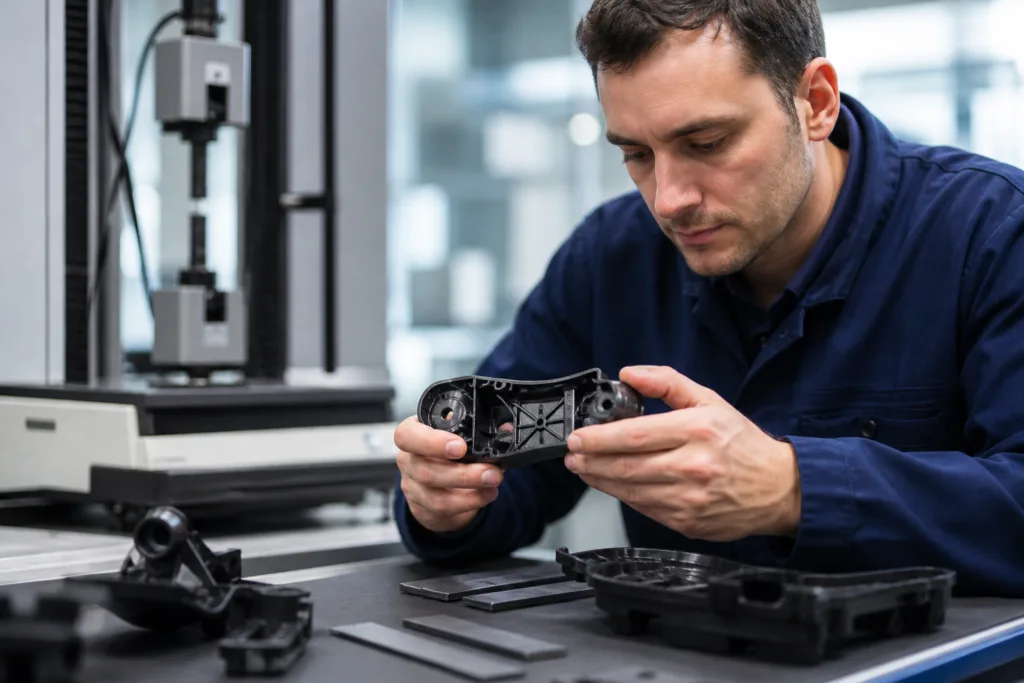
- Run bonding trials on real parts, including aged samples if possible.
Final recommendations
The right strong adhesive for plastic depends first on the plastic type, then on how the joint will be used. ABS and PVC are usually more forgiving than PE and PP. Transparent plastics need crack-resistant compatibility, not just strength. Nylon and PET require attention to moisture, cleanliness, and end-use conditions. In many cases, surface preparation and joint design determine success as much as adhesive chemistry.
For most buyers and engineers, the most reliable path is to match three things carefully: substrate, adhesive family, and process control. When those align, plastic bonding becomes much more predictable and durable.
FAQ
What is the strongest adhesive for plastic?
There is no single strongest adhesive for all plastics because performance depends on the resin, joint design, surface condition, and service environment. A tough acrylic, epoxy, cyanoacrylate, UV adhesive, or specialty low-surface-energy system may each be the right choice in different cases.
Will super glue work on all plastic types?
No, super glue does not work equally well on all plastics. It often performs well on ABS and some rigid plastics, but it usually struggles on untreated polyethylene and polypropylene and may be too brittle for flexible or impact-loaded joints.
Why do polyethylene and polypropylene bond so poorly?
They have very low surface energy, which makes it difficult for many adhesives to wet the surface and form a durable bond. These plastics often need a primer, flame or plasma treatment, or a specialty adhesive designed for low-surface-energy materials.
Do I need to sand plastic before applying adhesive?
Sometimes, but not always. Light abrasion can help certain rigid plastics by improving mechanical grip, but it may damage cosmetic or transparent parts and is less effective than proper cleaning and the right chemistry on some substrates.
Can the wrong adhesive crack clear plastics?
Yes, some adhesives or cleaners can cause stress cracking, crazing, or haze in acrylic and polycarbonate. That is why compatibility testing on actual molded parts is important before full-scale production.
How can I make a plastic bond more reliable?
Start by confirming the plastic type, then clean the surface well, choose an adhesive that matches the load and environment, and test the bond under real service conditions. If the plastic is difficult to bond, add primer or surface treatment and review the joint design as well.