
2 part structural epoxy is widely used when assemblies need high bond strength, gap-filling ability, and durable performance across metal, composites, plastics, and other engineering substrates. For industrial buyers and engineers, it sits in the space between simple general-purpose bonding and more demanding structural joining, where load, environment, cure behavior, and process control all matter. Understanding how it works helps teams choose the right grade for production, repair, maintenance, or product assembly without over-specifying or under-specifying the adhesive.
Two-part structural epoxy solutions are typically evaluated not just by strength claims, but by how well they match the real application: substrate pairings, expected service temperature, chemical exposure, assembly speed, gap size, and dispensing method all influence whether an epoxy system will perform reliably.
What Is Two-Part Structural Epoxy?
A two-part structural epoxy is a reactive adhesive made from two separate components, usually a resin and a hardener, that are combined at a defined mix ratio before application. Once mixed, the chemistry begins to react and crosslink, forming a rigid or semi-tough structural bond. Unlike simple sealants or pressure-sensitive products, structural epoxies are chosen for load-bearing strength, dimensional stability, and long-term resistance.
In practical terms, “structural” usually means the adhesive is expected to contribute meaningfully to the mechanical integrity of the assembly. It may replace fasteners in some designs, supplement welding or riveting, reduce stress concentrations, or bond dissimilar materials that are difficult to join by other methods.
Compared with one-part systems, a two-part product gives more flexibility in cure profile and often a broader balance of strength, gap filling, and environmental resistance. It is common in transportation, electronics, industrial equipment, metal fabrication, composite assembly, and maintenance repair environments.
How Two-Part Structural Epoxy Works
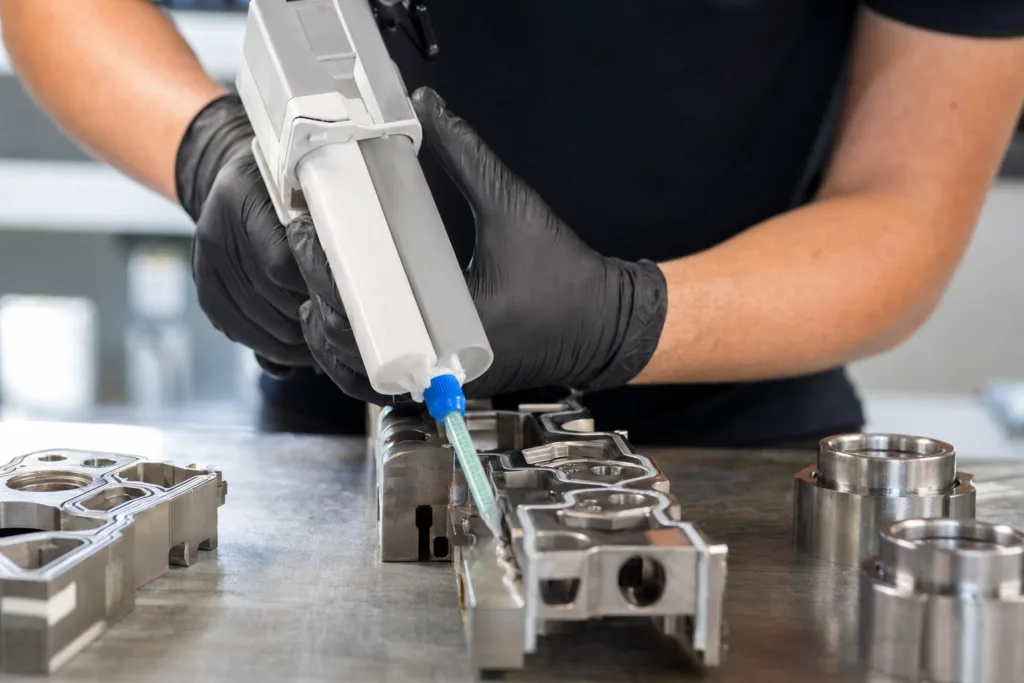
When the two parts are mixed correctly, the resin and hardener react to create a crosslinked polymer network. This network is what gives epoxy its strength, hardness, and resistance to heat, moisture, and chemicals. The bond develops through a combination of surface wetting, mechanical interlocking with the substrate profile, and chemical interaction at the interface.
Because the system cures by chemical reaction rather than simple solvent evaporation, bond formation can continue throughout the adhesive layer, including in thicker sections and enclosed bond lines. This is one reason epoxies are often preferred for structural joining and gap-filling applications where air exposure is limited.
Selection still matters. A buyer comparing options from an epoxy adhesives manufacturer should focus on the full property set rather than a single headline number. High lap shear strength can be valuable, but it does not automatically mean the product is the right choice for peel stress, impact, elevated temperature, or rapid assembly.
Key Benefits of Epoxy Structural Adhesive
High bond strength across many substrates
Structural epoxies are commonly selected because they bond metals, many composites, ceramics, wood, and selected plastics with strong cohesive performance. This makes them useful in mixed-material assemblies where mechanical fasteners create design or corrosion issues.
Good gap-filling performance
Unlike very thin, low-viscosity adhesives that depend on tight bond lines, many structural epoxies can tolerate uneven surfaces or moderate assembly gaps. This helps in fabricated parts, cast components, maintenance repairs, and manually assembled equipment where perfect fit-up is difficult.
Strong environmental durability
Properly selected epoxy systems can maintain performance under moisture, oils, cleaning chemicals, and cyclic temperatures better than many non-structural adhesive types. In industrial settings, long-term retention of bond strength often matters more than initial green strength alone.
Load distribution and design flexibility
Because the adhesive spreads stress across the bond area, it can reduce point loading compared with screws, rivets, or spot joins. That can improve fatigue behavior in some designs and support lighter or cleaner assemblies.
Process adaptability
Two-part epoxies are available in different viscosities, cure speeds, and toughness levels. For example, a product such as ZDS-282AB high strength epoxy adhesive for bonding fits the kind of evaluation where teams need to balance bond strength, dispensing practicality, and general industrial assembly demands rather than selecting on strength claims alone.
Limitations and Tradeoffs to Consider
Two-part structural epoxy is not the right answer for every joint. Many grades are relatively rigid after cure, which can be a limitation in assemblies exposed to high peel loads, severe vibration, or large thermal expansion differences between substrates. In those cases, a tougher or more flexible chemistry may be more forgiving.
Mix ratio control is another important factor. If the two components are not metered and mixed accurately, cure quality can drop sharply. This can show up as soft spots, incomplete strength development, poor chemical resistance, or inconsistent performance from batch to batch.
Processing speed is also a tradeoff. Some fast-curing grades support quicker throughput but offer shorter working windows. Slower systems can improve assembly flexibility and wetting but extend fixture and cure times. Industrial teams need to choose based on line speed, part size, and labor flow rather than preference alone.
Rework can be difficult as well. Once fully cured, structural epoxy is designed to resist separation. That is an advantage in service, but it can complicate repair, disassembly, and scrap handling.
Pot Life vs. Working Time vs. Full Cure
These terms are often confused, but they are not interchangeable.
Pot life
Pot life is the usable time after mixing during which the adhesive remains workable in the container or mixing nozzle. It is affected by mass and temperature. A larger mixed volume usually heats up faster and shortens pot life.
Working time
Working time refers to the practical window for dispensing, positioning, and assembling parts before the adhesive becomes too viscous or begins losing wetting ability. In production, this is often more important than the laboratory pot life value.
Full cure
Full cure is the point at which the adhesive has reached its designed final properties, such as maximum bond strength, hardness, and chemical resistance. A joint may feel hard earlier, but still not be ready for full load or chemical exposure.
For procurement and process planning, the key question is not just “How fast does it cure?” but “How much time do operators need to mix, apply, align, fixture, and move the assembly without quality loss?”
Curing Behavior, Bond Strength Development, and Temperature Effects
Most two-part epoxies build strength progressively. Early handling strength may develop in minutes or hours depending on formulation, but structural performance usually continues improving as the network cures more completely. This matters when parts are moved, machined, pressure tested, or packaged shortly after bonding.
Temperature strongly influences cure behavior. Higher ambient or substrate temperatures generally accelerate the reaction, reducing working time and speeding strength development. Lower temperatures do the opposite and can leave the adhesive under-cured for longer than expected. If a production area has seasonal swings, the same adhesive can behave very differently in winter and summer.
Heat resistance should also be considered separately from cure speed. A formulation designed for elevated service temperatures may be more appropriate for equipment housings, motors, or hot-process environments. In those scenarios, a material such as ZDS-369AB high temperature resistant epoxy adhesive reflects the kind of product category engineers review when standard room-temperature systems may lose margin.
ZDS typically sees buyers focus first on room-temperature strength, but service temperature range often becomes the deciding factor once the real operating environment is reviewed.
Chemical Resistance, Moisture Resistance, and Durability
Epoxy is often chosen because it can offer a strong balance of mechanical performance and environmental resistance. Still, “chemical resistant” is not a universal property. Performance depends on the specific formulation, cure level, exposure time, concentration, and temperature of the chemicals involved.
In general, well-cured structural epoxies can perform well against water, humidity, oils, fuels, and many shop chemicals, but long-term immersion, aggressive solvents, or repeated thermal and chemical cycling can still degrade the bond over time. Moisture resistance also depends on joint design. A well-bonded lap joint protected from edge attack usually lasts longer than a poorly prepared open-edge joint in the same environment.
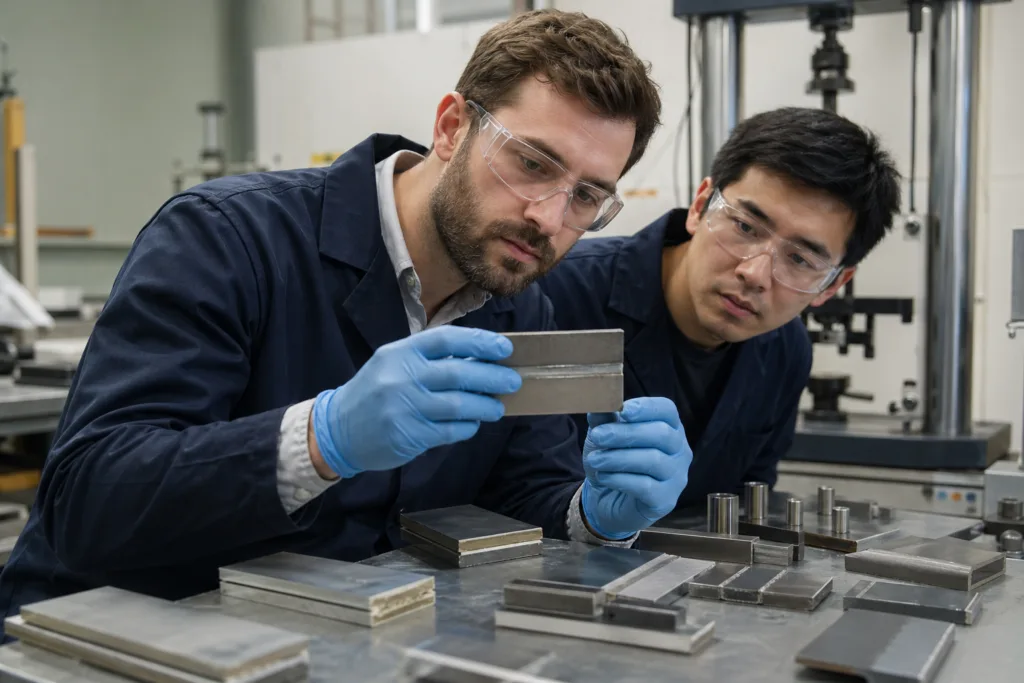
Durability should be reviewed as a system question: substrate, adhesive, bond line thickness, surface preparation, cure completeness, and service conditions all work together. A strong adhesive on a weakly prepared surface will still fail early.
Gap-Filling Ability and Surface Preparation Requirements
One of the practical strengths of two-part structural epoxy is its ability to bridge imperfect fits. Many grades can fill gaps better than very low-viscosity adhesives while still delivering useful structural properties. This makes them attractive for castings, fabricated metal parts, composite components, and repair work where the mating surfaces are not perfectly flat.
That said, good gap filling should not be treated as a substitute for preparation. Excessive bond line thickness can reduce strength, raise cure shrinkage stresses, or trap voids if the adhesive is not designed for thick-section use. For wider gaps or bonding-plus-encapsulation tasks, buyers may evaluate specialized systems such as ZDS-168AB high strength epoxy potting adhesive for electronics where flow, insulation needs, and void control matter alongside adhesion.
Surface preparation usually has an outsized effect on final results. Common steps include:
- Removing oil, mold release, dust, oxidation, or loose contamination
- Abrading smooth surfaces when appropriate to improve mechanical keying
- Ensuring parts are dry before bonding
- Bonding soon after preparation to limit recontamination
- Confirming primers are used only when the substrate and formulation call for them
For many industrial failures, the root cause is not the adhesive chemistry itself but inconsistent cleaning, poor mix quality, or movement before adequate cure.
Typical Uses Across Industrial and Commercial Applications
Two-part structural epoxy appears in a wide range of assembly and repair tasks because it combines strength with process flexibility. Typical uses include:
- Metal-to-metal bonding in brackets, housings, covers, and fabricated assemblies
- Composite bonding in panels, enclosures, and lightweight structures
- Bonding magnets, inserts, and stiffeners into equipment components
- Industrial maintenance repair where welding is impractical or heat is undesirable
- Electronics and electrical assemblies that need both adhesion and some level of encapsulation or protection
- Transportation and commercial equipment parts exposed to vibration, moisture, and thermal cycling
The best fit is usually where the assembly benefits from high cohesive strength, gap tolerance, and durable environmental performance, but does not demand the extreme flexibility of elastomeric systems.
How to Choose the Right High Strength Epoxy Adhesive
A practical selection process starts with the joint, not the brochure. Buyers should compare candidate products using the following filters:
Substrate combination
Metal-to-metal, metal-to-composite, and composite-to-plastic joints can behave very differently. Some plastics may need specialized surface treatment or a different adhesive family altogether.
Load type
Ask whether the joint mainly sees shear, peel, tensile, impact, vibration, or cycling loads. Epoxy often performs very well in shear, but peel-heavy designs may need geometry changes or a tougher formulation.
Service environment
Consider temperature range, water exposure, chemicals, UV, and outdoor aging. “Indoor industrial” can still mean oils, washdowns, or intermittent heat.
Assembly process
Check mix ratio, cartridge or bulk dispensing options, viscosity, sag resistance, fixture time, and cure schedule. The right adhesive on paper can become the wrong one if it does not fit the production line.
Bond line and gap size
If parts are uneven or tolerances vary, choose a viscosity and formulation that can maintain bond quality across that range.
Procurement Checklist: Questions to Ask Before Buying
Before approving a 2 part structural epoxy for use, procurement and engineering teams should align on a short list of critical questions:
- What substrates are being bonded, and how are they prepared?
- What loads will the joint see in real service?
- What is the maximum and minimum service temperature?
- How much working time is needed on the shop floor?
- How quickly must the assembly reach handling strength?
- Will the adhesive face water, oils, solvents, or cleaning chemicals?
- What gap range must the adhesive tolerate?
- Is manual mixing acceptable, or is meter-mix dispensing needed?
- Does the process require reworkability, or is permanent bonding acceptable?
- Will small-batch maintenance use and large-scale production use need different package formats?
A good technical review usually reduces field problems more effectively than choosing the highest-strength product by default.
Common Application Mistakes and How to Avoid Them
Using the wrong mix ratio
Always follow the specified ratio and mixing method. Off-ratio adhesive may harden unevenly or never reach intended performance.
Ignoring temperature effects
Cold conditions slow cure, while heat shortens working time. Validate the process under real plant conditions, not only at nominal room temperature.
Applying onto contaminated surfaces
Oil films, oxidation, dust, or release agents are frequent failure causes. Surface cleanliness is often the difference between a durable bond and an early return.
Moving assemblies too early
Handling strength is not full cure. If the joint is loaded too soon, internal damage may reduce long-term reliability even when failure is not immediately visible.
Choosing by strength value alone
The highest listed shear strength does not guarantee the best field result. Cure profile, toughness, viscosity, temperature capability, and chemical resistance may matter more.
Summary: When Two-Part Adhesives Are the Right Choice
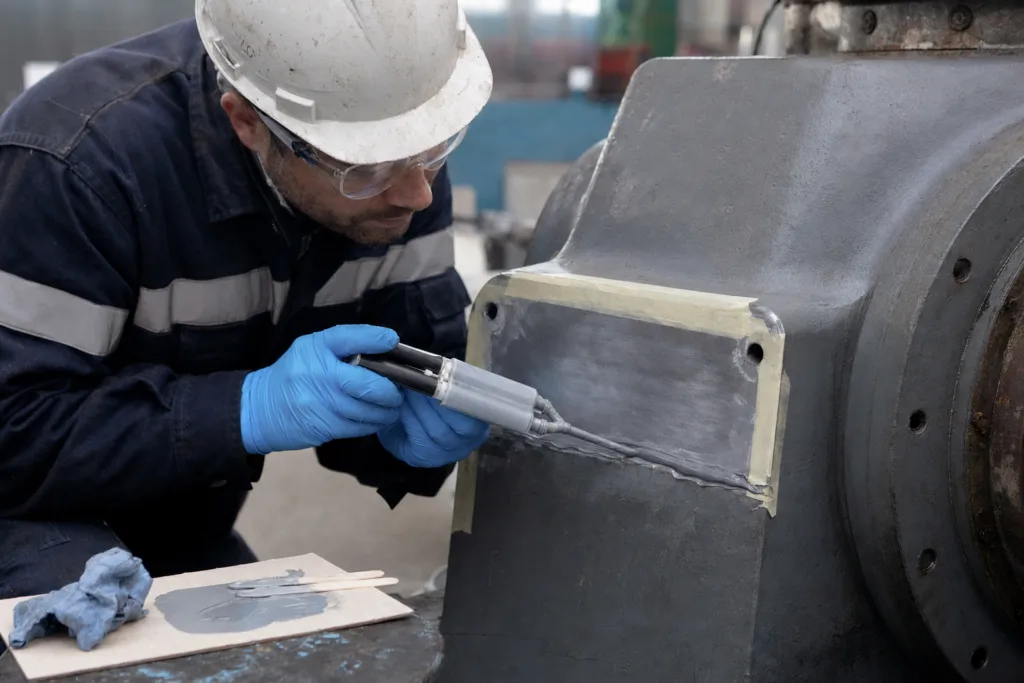
2 part structural epoxy is a strong option when the application needs durable bonding, useful gap filling, and dependable performance across demanding industrial conditions. It is especially effective where substrates are rigid, loads are significant, and the bond must hold up against moisture, chemicals, or temperature variation. It becomes less ideal when extreme flexibility, very rapid line speed, or easy disassembly is the priority.
For buyers, the most reliable approach is to match the formulation to the real joint design and process conditions: substrate pair, bond line, working time, cure schedule, environment, and service load. When those factors are aligned, two-part structural epoxy can be an efficient and robust solution for both production and maintenance use.
FAQs
What is the main advantage of 2 part structural epoxy?
The main advantage is its combination of high bond strength, gap-filling ability, and durable resistance to moisture, chemicals, and temperature compared with many general-purpose adhesives.
How is pot life different from cure time?
Pot life is the usable time after mixing before the adhesive becomes difficult to apply, while cure time refers to how long it takes the adhesive to develop handling strength or full final properties.
Can two-part structural epoxy bond uneven surfaces?
Yes, many grades are designed to fill moderate gaps and bond imperfectly matched surfaces, but excessive gap thickness can still reduce performance if the product is not intended for thick bond lines.
Does structural epoxy work on all plastics?
No, some plastics bond well while low-surface-energy materials may need special treatment or a different adhesive chemistry, so substrate testing is important before approval.
How important is surface preparation for epoxy bonding?
Surface preparation is critical because contamination, oxidation, or moisture can weaken adhesion significantly even when the adhesive itself has strong structural properties.
When should a buyer consider a high-temperature epoxy?
A high-temperature epoxy should be considered when the bonded assembly will face sustained or repeated elevated service temperatures that could reduce the strength or durability of a standard room-temperature grade.