
Choosing a marine structural adhesive is no longer a minor materials decision in boat production. For many builders, the adhesive affects joint durability, assembly speed, weight control, cosmetic finish, and the long-term reliability of hull, deck, and internal structural connections. Whether the boat structure is hand-laid fiberglass, infused composite, aluminum-composite hybrid, or a mixed-material interior assembly, the bonding system has to match both the design load and the production process.
Boat manufacturers comparing adhesive suppliers usually need more than a product label such as epoxy or polyurethane. They need a practical review of substrates, gap conditions, cure profile, service environment, and production constraints. Buyers looking for marine adhesive manufacturing support for boat assembly should treat adhesive selection as a joint engineering and sourcing decision rather than a simple price comparison.
Why Structural Adhesives Matter in Modern Boat Manufacturing
Mechanical fasteners still have a place in many marine assemblies, but structural adhesives help distribute stress across a wider bond area, reduce concentrated loads around holes, and support cleaner assembly of large composite parts. In boat building, that matters because hulls, liners, decks, stringers, and bulkheads often experience repeated vibration, impact loading, thermal movement, and moisture exposure over a long service life.
Adhesive bonding can also simplify joining of dissimilar materials. Builders may need to bond fiberglass reinforced plastic to coated metal, core materials to skins, or prefabricated interior modules into a composite shell. In those cases, the right structural adhesive may contribute to both structural integrity and manufacturing efficiency, provided the chemistry is matched to the application and validated on representative parts.
The commercial question is not simply which adhesive is strongest on paper. It is which system gives a reliable process window, consistent dispensing, acceptable open time, manageable cure behavior, and proven performance under realistic marine conditions.
What Makes a Marine Structural Adhesive Different from General Industrial Adhesives
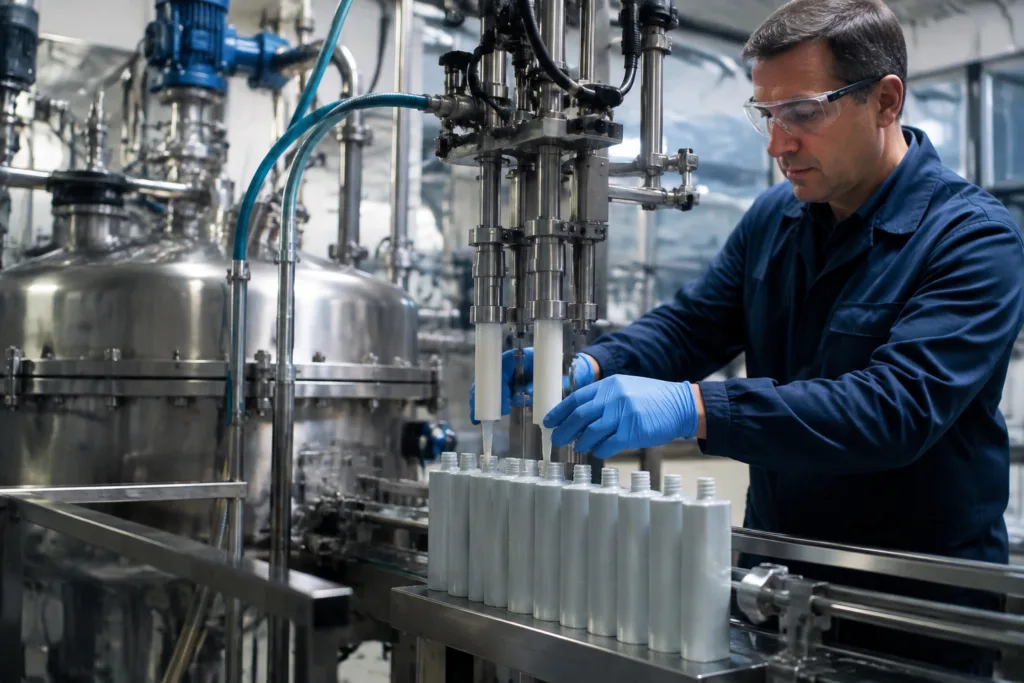
A marine structural adhesive is typically evaluated against a more demanding combination of conditions than a general-purpose assembly adhesive. Boat structures are exposed to cyclic stress, wet service, temperature changes, and sometimes large bonded sections with variable fit-up. That means adhesive selection often focuses on a balance of strength, toughness, gap tolerance, and durability rather than a single headline property.
In practical terms, a marine-grade selection process often asks:
- Can the adhesive maintain bond integrity under vibration and repeated flexing?
- Will it wet and bond the actual substrates used in the boat, including composite laminates, gelcoat-adjacent areas, metals, or core materials?
- Can it tolerate realistic bond-line variation across long joints?
- Does the cure profile fit the plant workflow, clamping method, and takt time?
- Has the system been checked for moisture-related durability and aging in the intended service environment?
Different chemistries answer those questions differently. Epoxy systems are often considered where high load-bearing performance, stiffness, and durable structural bonding are priorities. Toughened acrylic or methacrylate families may be considered where fast handling strength and less extensive surface preparation are desired on certain substrates. Polyurethane systems may be reviewed where flexibility and movement accommodation are important. None of those chemistries is automatically correct for every boat joint; actual suitability depends on the part design, substrate condition, and service requirements.
Key Bonding Areas in Boat Building
Boat structures do not rely on one joint type. A sourcing team comparing materials should separate the major bonding zones because each one can drive a different adhesive requirement.
Hull-to-deck bonding
These joints may combine structural load transfer, sealing, dimensional tolerance absorption, and long bond lengths. The adhesive often has to handle assembly variation while still providing dependable load sharing around the perimeter.
Liner-to-hull integration
Bonding liners into the hull can affect stiffness, vibration behavior, and manufacturing speed. Incomplete wetting, voids, or poor gap control in these assemblies can create noise, print-through, or durability problems later in service.
Stringers, bulkheads, and frames
These internal structural members help manage hull stiffness and load paths. The adhesive system may need substantial gap-fill capability and resistance to peel and fatigue, especially where molded surfaces are not perfectly uniform.
Secondary composite attachments
Seats, supports, panels, hatches, covers, and reinforcement elements may not carry the same load as primary structure, but failure can still affect safety, serviceability, or water ingress. In some cases, a builder may review a ZDS-703AB-1 structural epoxy adhesive for load-bearing joints when the assembly demands a more rigid structural bond, though final selection still needs part-specific validation.
Adhesive Requirements: Strength, Toughness, Gap Fill, Fatigue Resistance, and Vibration Performance
Marine structural joints are rarely loaded in pure tension. Real assemblies see combinations of shear, peel, cleavage, shock, vibration, and thermal movement. That is why a purchasing decision based only on one bond-strength value can be misleading.
For boat builders, the more useful review criteria include:
- Strength: needed for load transfer under expected service loads.
- Toughness: helps the bond resist crack initiation and crack growth under impact or cyclic loading.
- Gap filling: important where molded parts are uneven or difficult to fixture tightly.
- Fatigue resistance: relevant for long-term cyclic stress from waves, engine vibration, and trailering.
- Peel resistance: useful where joint geometry can create edge lift or localized stress concentration.
- Vibration tolerance: important for engines, hull slap, and repeated operational loading.
These properties must be considered together. A very rigid adhesive may support high static load but may not be the best fit for a joint that experiences movement or peel. A more flexible system may absorb movement better but may not provide the stiffness needed in another structural area. Buyers should request current technical data and confirm which values are measured on which substrates and under which test conditions.
Composite Hulls and Mixed-Material Boat Structures
Modern boat manufacturing increasingly involves mixed-material design. Hulls and decks may be fiberglass reinforced plastic, while inserts, hardware supports, brackets, panels, and reinforcement members may involve aluminum, coated metal, honeycomb, foam core, timber replacements, or engineered composites.
This creates a common sourcing challenge: the adhesive has to bond the intended materials without assuming that one chemistry will perform equally well on every surface. FRP laminates, cured epoxy composite, polyester-based laminates, gelcoat-bearing surfaces, and metals with oxide layers all behave differently in bonding.
That is where chemistry trade-offs become practical rather than theoretical. Epoxy-based systems are often reviewed for high-strength structural composite bonding. Some builders also compare polyurethane adhesive options for flexible marine bonding where differential movement, damping, or lower-modulus behavior may help the assembly. The right decision depends on joint design, expected movement, environmental exposure, and whether the bond line is expected to carry primary structural load or mixed structural-sealing functions.
Substrate Compatibility and Surface Preparation
In marine production, surface condition often determines whether a good adhesive ever has a chance to perform properly. Release agents, sanding dust, oil, moisture, oxidized metal surfaces, and poorly prepared cured laminates can all reduce bond reliability.
Surface preparation for marine structural adhesive bonding should be defined as a controlled production step, not left to operator habit. General good practice may include cleaning to remove grease and contaminants, abrasion where required, dust removal, and confirmation that the surface is dry and stable before bonding. For a technical overview of why pretreatment matters, the 3M bulletin on Surface Preparation and Pretreatment for Structural Adhesives is a useful external reference.
Typical process questions include:
- Is the substrate freshly molded, post-cured, painted, coated, anodized, or weathered?
- Does the composite surface contain mold-release residue?
- Is gelcoat part of the intended bond path, or is bonding to exposed laminate required?
- Has aluminum oxide been addressed quickly enough after abrasion?
- Is a primer recommended for the specific adhesive and substrate combination?
- Is ambient humidity introducing condensation or hidden moisture into the joint?
For many wet-service assemblies, buyers also compare the sealing role of the bond and review waterproof bonding solutions for wet-service assemblies when the design combines structural attachment with moisture exclusion. Final process settings, however, should be confirmed against the selected product documentation and actual shop-floor conditions.
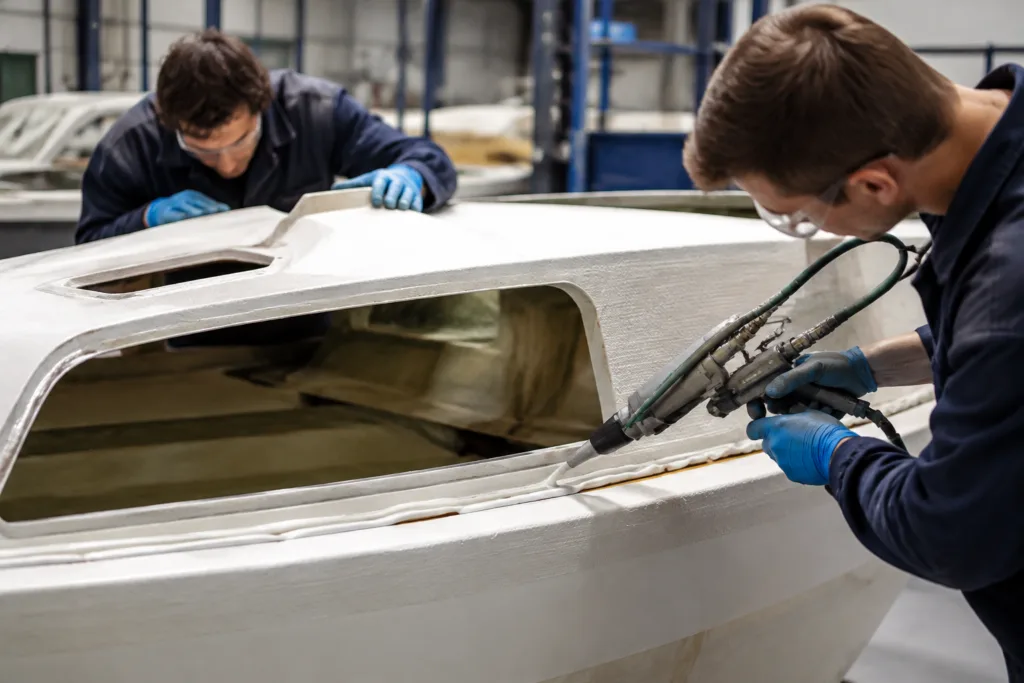
How Cure Speed, Pot Life, and Open Time Affect Marine Assembly Productivity
Production fit matters as much as chemistry. A boat builder handling long hull-to-deck runs or installing multiple structural members in one cycle needs an adhesive that gives enough working time for positioning and fixturing without creating an unacceptable delay before handling.
Pot life affects how long the mixed material remains usable. Open time influences how long the applied adhesive remains workable before the parts must be joined. Fixture or handling time affects when the assembly can move to the next process step. These values vary by formulation and are sensitive to temperature, mass size, dispensing method, and plant conditions.
Procurement teams should not treat cure speed as a simple faster-is-better issue. A very fast-curing product can create waste, rushed assembly, incomplete wetting, or inconsistent bond lines on large structures. A slower system may improve placement and wetting but reduce throughput or fixture availability. The practical goal is a cure profile aligned with joint length, labor steps, part count, and the plant’s quality discipline.
Common Risks in Boat Assembly
Several recurring process failures appear in marine bonding projects, especially during scale-up from prototype to production.
- Uneven gaps: large molded parts rarely fit perfectly, so low gap-fill capability can leave starved areas or voids.
- Incomplete wetting: high viscosity, rushed assembly, or contaminated surfaces can prevent full contact with the substrate.
- Premature handling: moving the assembly before sufficient strength develops can damage the bond invisibly.
- Weak secondary bonding: cured laminates or aged surfaces may need more preparation than green or freshly processed substrates.
- Moisture contamination: hidden surface moisture can interfere with adhesion or long-term durability.
- Poor mix control: for multi-component systems, dispensing accuracy and static mixing quality matter.
These risks are why supplier evaluation should include process support, not only product supply. A structurally capable adhesive can still fail commercially if it is difficult to dispense consistently or too sensitive for the actual production environment.
Environmental Performance Needs
Marine assemblies demand more than initial bond strength. Long-term performance may depend on resistance to water exposure, salt-containing environments, thermal cycling, and repeated mechanical stress. Boat structures may also see sunlight, engine heat, cold storage, trailering loads, and intermittent impact.
Buyers should review environmental durability questions in a structured way:
- Will the joint be continuously wet, intermittently wet, or exposed mainly to humidity?
- Will it be above or below the waterline?
- Will the bond line face cyclic heating and cooling that can stress dissimilar materials?
- Is there a need for a balance between rigidity and movement tolerance?
- What aging tests or wet-conditioning data are available for the specific candidate product?
Actual durability depends on adhesive formulation, bond-line design, substrate preparation, and the service environment. It should be confirmed using representative testing rather than assumed from chemistry family alone.
What to Validate Before Production Approval
Commercial investigation should end with a validation plan, not a brochure comparison. Before approving a marine structural adhesive for production, boat builders should ask for sample evaluation, process review, and test criteria that reflect real assembly conditions.
| Validation Area | Why It Matters | What Buyers Should Confirm |
|---|---|---|
| Bond strength | Checks structural load transfer | Test method, substrate, cure condition, and failure mode |
| Peel and shear behavior | Reflects realistic mixed loading | Representative joint geometry and service condition |
| Gap filling | Addresses molded-part variation | Performance at expected bond-line thickness |
| Aging resistance | Supports long-term durability review | Wet, thermal, or cyclic exposure test plan |
| Dispensing consistency | Affects production quality | Mixing method, viscosity stability, and operator control |
| Handling time | Controls throughput and fixturing | Usable working window in actual plant temperature |
At this stage, many teams benefit from a direct review of assembly details and supplier input. ZDS LTD can provide adhesive selection technical support for production approval when the customer shares substrates, part dimensions, joint geometry, process timing, environmental requirements, and documentation expectations.
Specification Checklist for Choosing a Boat Building Adhesive
When requesting a quotation, sample, or technical recommendation, it helps to provide a structured specification package. That reduces trial-and-error and makes supplier comparisons more meaningful.
- Substrates to be bonded, including coatings, gelcoat, core materials, or metals
- Whether the joint is primary structure, secondary structure, or structural plus sealing
- Expected gap range and target bond-line thickness
- Required dispensing method, cartridge size, pail supply, or meter-mix equipment compatibility
- Desired viscosity or sag resistance for vertical or overhead application
- Need for flexibility, stiffness, or vibration damping
- Required hardness range, if applicable to the joint function
- Target working time, open time, and handling time under plant conditions
- Operating environment, including moisture, salt exposure, and temperature variation
- Testing, documentation, and compliance records required for supplier approval
Buyers sourcing through a broader product review can revisit marine bonding solutions for structural boat manufacturing projects to compare the chemistry discussion against actual marine assembly needs before moving into sample trials or procurement negotiations.
Custom Formulation and OEM/ODM Options for Marine Structural Adhesives
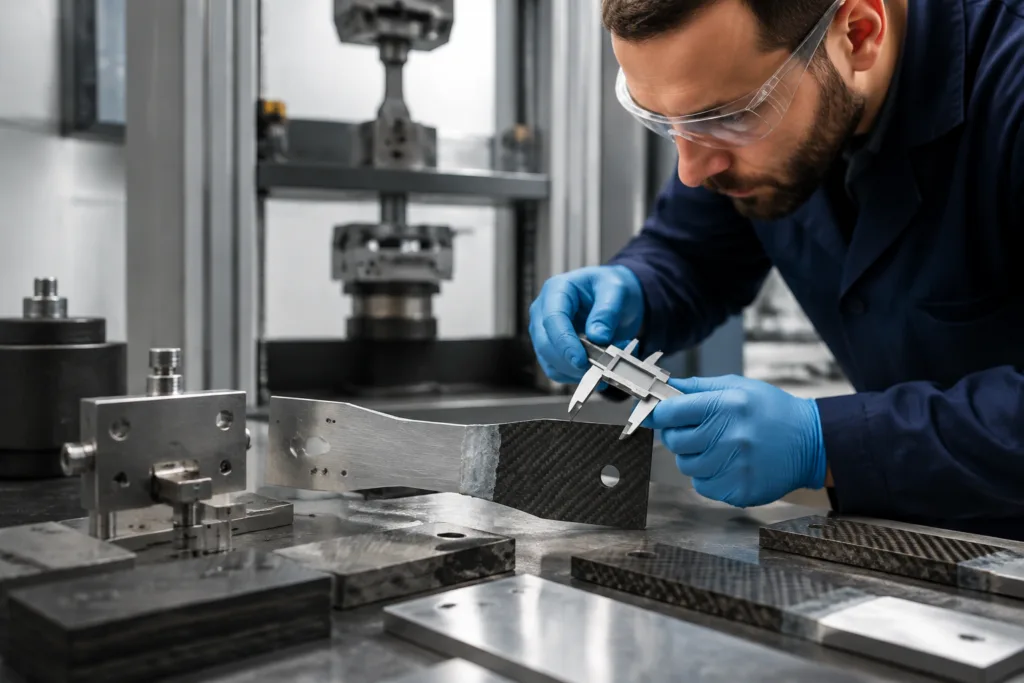
Some marine manufacturers do not need a fully custom adhesive. Others do, especially when they require a specific viscosity window, dispensing behavior, cure profile, package format, or balance between stiffness and movement tolerance. OEM, ODM, or private-label evaluation may also matter for distributors or manufacturers building a marine maintenance or production materials line.
Custom work should begin with the application, not branding. A supplier may need to review whether the main problem is open time, sag resistance, substrate adhesion, pumpability, cure speed, or environmental durability. In many cases, a standard or near-standard product can be evaluated first, then adjusted only if the production requirement justifies the added development and qualification effort.
For marine buyers, the commercially sensible approach is to confirm technical inputs early: substrate set, production volume expectations, packaging preference, validation method, and approval timeline. That keeps the project focused on process fit and supply consistency rather than vague requests for a stronger or more waterproof adhesive.
How ZDS Supports Marine Customers
ZDS LTD works as a manufacturing and formulation partner for industrial adhesive projects, including applications where boat builders and marine assembly teams need support with material selection, sampling, and supply evaluation. The useful starting point is a project review covering the real bond design and plant conditions rather than only the product category name.
Depending on the project, support may include:
- Review of substrates and joint function
- Comparison of candidate adhesive chemistries for the specific assembly
- Sample selection for internal testing
- Discussion of cartridge, bulk, or production-package formats
- Technical document review for quality and purchasing teams
- Batch consistency and scale-up communication during approval stages
- Coordination around export supply requirements where relevant
That support does not replace the customer’s own engineering approval. Final selection should still be based on representative-part testing, process validation, and the current technical and safety documentation for the chosen product.
Frequently Asked Questions
What is the best marine structural adhesive for boat building?
There is no universal best choice. The right material depends on the substrates, joint design, gap size, required flexibility or stiffness, curing method, production speed, and service environment. Final selection should be confirmed by testing representative parts under realistic conditions.
Can one adhesive bond hulls, decks, liners, and internal frames?
Sometimes one system can cover multiple joints, but that should not be assumed. Different areas of a boat may require different balance points between strength, gap fill, toughness, and movement tolerance. Many builders evaluate more than one candidate before standardizing.
How important is surface preparation for composite and aluminum boat bonding?
It is critical. Contamination, oxidation, mold-release residue, dust, or moisture can reduce bond reliability even when the adhesive chemistry is appropriate. Cleaning, abrasion, primer use where specified, and moisture control should be defined in the process and confirmed for each substrate.
What documents should buyers request from a marine adhesive supplier?
At minimum, buyers should request the current technical data sheet, safety data sheet, and any relevant quality or compliance documents available for the selected product. They should also confirm the test basis for key performance values, recommended processing conditions, and packaging options for production use.
When should a boat builder ask about custom formulation or private label supply?
That discussion is useful when a standard product does not fit the required viscosity, cure speed, package format, bond behavior, or branding plan. The supplier will usually need detailed information about the assembly, substrates, production process, and expected demand before evaluating custom or OEM/ODM options.