
Choosing the best adhesive chemistry for wet environments is rarely about finding one universal winner. In industrial work, wet-service conditions can mean brief washdown exposure, outdoor weathering, warm condensation cycles, high humidity, intermittent splashing, or full immersion. Each condition stresses an adhesive in a different way. Some chemistries hold load well but lose reliability when water reaches the bond line over time. Others stay flexible and waterproof but are better suited to sealing than structural assembly. For engineers and buyers, the right comparison is not simply epoxy versus silicone versus polyurethane. It is the combination of substrate, load, movement, cure method, and real exposure severity.
If your product must survive splashing, humidity, condensation, washdown, or outdoor weather, our waterproofing adhesive solutions for wet-service assemblies are typically evaluated by more than one criterion at the same time: bond strength, flexibility, cure profile, gap filling, and long-term resistance to moisture-driven failure. From our manufacturing perspective, projects often need formula adjustment, sample trials, packaging fit for production, and application-specific testing before a chemistry is chosen with confidence.
That is why no single adhesive family wins every wet-service application. In some designs, structural strength under load matters most. In others, thermal expansion, vibration, sealing performance, or assembly speed becomes the priority. We see many selection errors happen when a team asks for a “waterproof adhesive” before defining whether the joint must carry stress, absorb movement, resist immersion, or remain stable after years of humidity aging.
What wet-service really means in industrial adhesive selection
Wet-service is a broad term, and its practical meaning changes the chemistry choice immediately. A bond exposed to bathroom-like humidity is not facing the same challenge as an outdoor enclosure seam, a marine-adjacent component, or an electronics assembly exposed to condensation and cleaning cycles.
In buyer evaluations, we usually separate wet-service exposure into several categories:
- Splash or incidental contact: short, non-continuous exposure to water during use or cleaning.
- High humidity: moisture vapor in the environment without direct liquid contact.
- Condensation: repeated surface wetting from temperature cycling, often very damaging at interfaces.
- Weather exposure: rain, UV, thermal cycling, and movement acting together.
- Intermittent immersion: regular but not permanent submersion.
- Continuous immersion: long-term water contact, often with more severe durability demands.
These distinctions matter because water can weaken an adhesive in more than one way. It may slowly permeate the polymer, soften the network, reduce cohesive strength, attack the interface, or amplify stress from thermal expansion mismatch. In technical durability discussions about moisture attack on adhesive joints, the key lesson is that water exposure is not only a surface issue; it can affect long-term adhesion retention and reliability inside the joint.
Selection factors that matter before chemistry comparisons
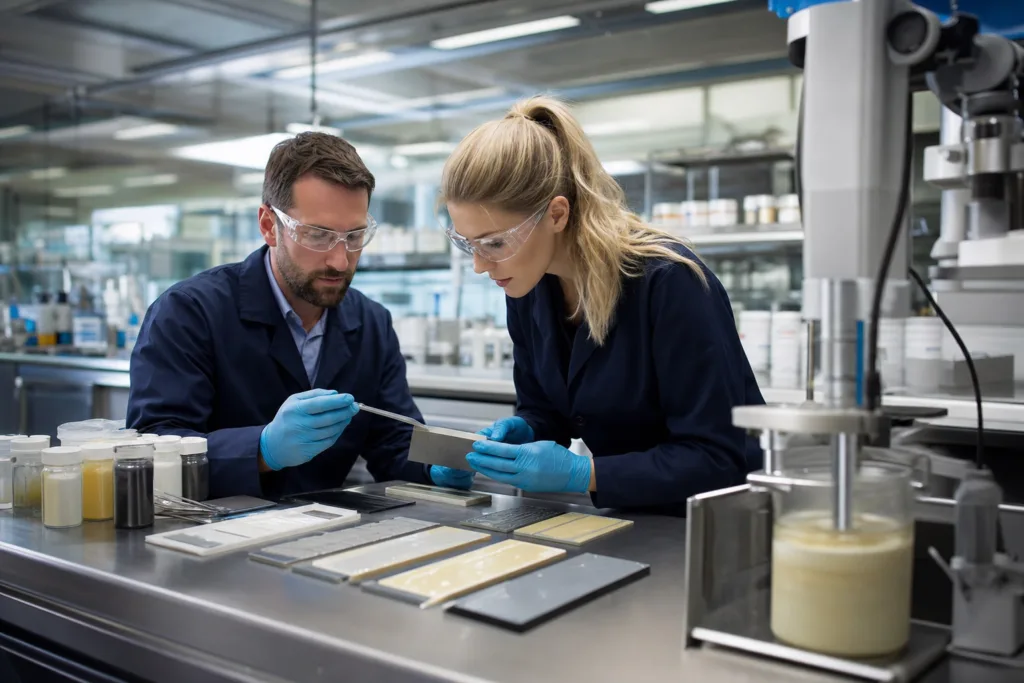
Before comparing epoxy, silicone, polyurethane, UV, or cyanoacrylate, define the operating requirement clearly. We recommend that technical teams and sourcing teams align on the following points early:
- Substrate type: metal, glass, ceramic, FR-4, plastics, painted surfaces, elastomers, or mixed-material joints.
- Joint load: structural, semi-structural, sealing-only, or light positioning.
- Movement: vibration, shock, thermal expansion, flexing, or static alignment.
- Bond line and gap: thin bond, bead seal, fillet, gap filling, or potting depth.
- Cure process: room-temperature, heat-assisted, UV-curing, or moisture-curing.
- Production speed: open time, pot life, fixture time, and throughput requirements.
- Exposure severity: humidity, splash, detergent cleaning, immersion, salt, heat, or outdoor weather.
- Electrical or thermal needs: insulation, conductivity, low stress on components, or flame-sensitive areas.
Teams that skip this step often compare data sheets without noticing that one product is optimized for rigid structural bonding while another is optimized for sealing and movement. That creates avoidable testing delays and poor supplier shortlisting.
Epoxy systems in water-resistant structural bonding
Epoxy remains one of the first chemistries considered when wet-service assemblies must also carry meaningful load. Its core advantage is the ability to deliver strong adhesion to many metals, composites, ceramics, and some engineered plastics while maintaining a relatively high-modulus structure after cure. For applications that need dimensional stability, chemical resistance, electrical insulation, or strong cohesive strength, buyers often start with epoxy adhesive solutions for structural bonding.
Where epoxy performs well
In our formulation and production work, epoxy is often a good fit when the joint must be rigid, gap-filling, and resistant to many industrial exposures at the same time. Typical use cases include electronics encapsulation, bonded housings, rigid metal assemblies, and structural subassemblies where movement is limited. Epoxy can also be engineered for electrical insulation, controlled viscosity, and different cure speeds.
For electronics and similar enclosed assemblies, a specialized system such as ZDS-168ab-z epoxy insulation and waterproof adhesive for electronics reflects the type of requirement combination buyers often face: moisture resistance, dielectric performance, processable viscosity, and reliable cure in a protected assembly design.
Where water exposure creates epoxy risk
Epoxy is not automatically the best adhesive chemistry for wet environments just because it feels hard and strong. Rigid networks can lose performance when water gradually penetrates the adhesive or reaches the interface, especially under heat, stress, or cycling. If the joint experiences frequent movement, differential expansion, or peel stress, moisture can accelerate failure because the adhesive has less ability to absorb strain than more elastic systems.
Common epoxy risk points in wet service include:
- Bonds joining materials with very different expansion rates
- Outdoor joints that cycle between hot sun, rain, and cold nights
- Long-term immersion where edge ingress is difficult to control
- Thin, highly stressed bonds on smooth low-energy plastics
- Poorly prepared surfaces contaminated with oil, mold release, or oxidation
In short, epoxy is often strong in water-resistant structural bonding, but it should be chosen with realistic durability testing rather than assumed to be universally waterproof.
Silicone systems in flexible waterproof barrier applications
Silicone is often the better answer when wet service involves movement, sealing, weather exposure, and temperature cycling more than structural load. From a formulation standpoint, silicone keeps flexibility across a wide temperature range and resists moisture well in many sealing and gasketing applications. That is why many buyers comparing waterproof performance, enclosure sealing, and vibration tolerance review silicone adhesive options for flexible sealing early in the process.
How silicone handles moisture and movement
Silicone’s practical strength is not maximum structural stiffness. Its value is stress relief. When bonded parts expand and contract, when housings vibrate, or when a joint line acts as both seal and adhesive, silicone can maintain adhesion because it moves with the assembly. For outdoor lighting, electronics sealing, glazing-related sealing zones, and protective gasketing, that flexibility can matter more than high tensile numbers on a data sheet.
Silicone is frequently favored for:
- Seals exposed to rain, condensation, and UV weathering
- Assemblies with thermal cycling and movement
- Electronics housings needing environmental sealing
- Flexible gap sealing and gasketing
- Applications where low stress on sensitive parts is important
When silicone is better for sealing than structural bonding
Silicone is often misunderstood as a universal adhesive because it is strongly associated with waterproofing. In reality, many silicone systems are excellent barriers but only moderate load-bearing adhesives. If a design requires rigid structural load transfer, precise alignment under force, or high cohesive strength on difficult surfaces, silicone may not be the best first choice. It is usually stronger as a sealant-adhesive, environmental barrier, or flexible assembly material than as a substitute for a structural epoxy.
This distinction is important in procurement. A product can be highly waterproof and still be the wrong choice for a heavily loaded joint.
Polyurethane systems for elastic bonding in moist and outdoor conditions
Polyurethane sits between rigid structural and highly flexible sealing chemistries in many real projects. It is commonly selected when engineers need an adhesive that can bond, absorb movement, and tolerate outdoor or moist conditions with more toughness than a brittle system. For vehicle-adjacent assemblies, construction components, panels, and mixed-material bonding, teams often evaluate polyurethane adhesive solutions for elastic outdoor bonding.
Balance of flexibility, toughness, and water resistance
Polyurethane can provide a practical middle ground: more elasticity than epoxy, often more load-bearing capability than sealant-style silicones, and good energy absorption under impact or vibration. This makes it attractive for assemblies that face movement and outdoor service but still need meaningful bond strength.
Polyurethane can be a strong candidate for:
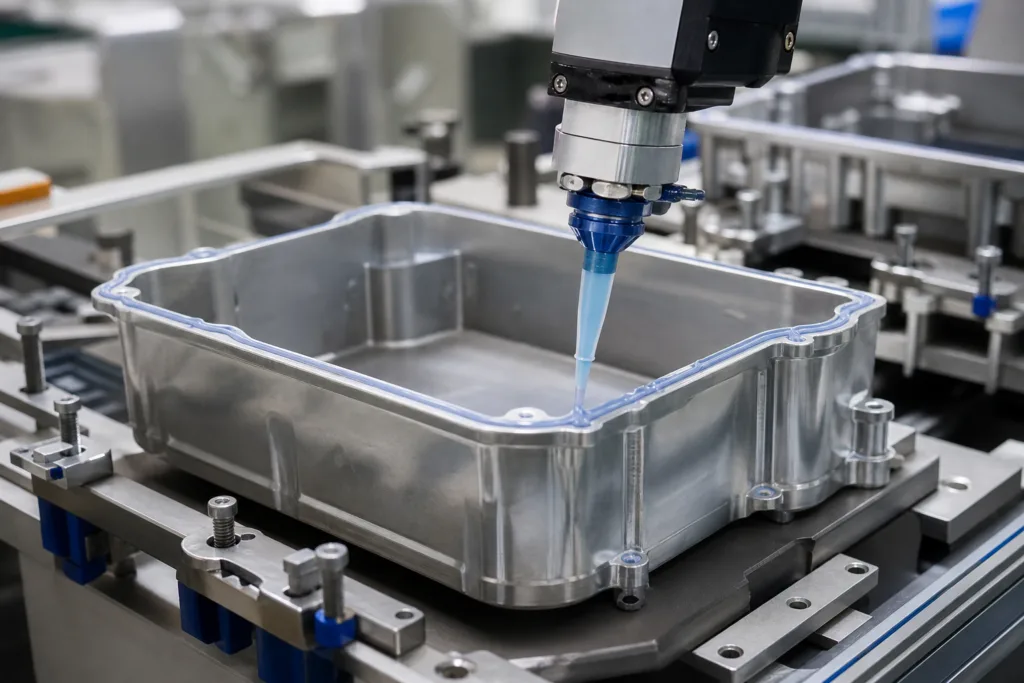
- Bonding panels and housings exposed to weather
- Mixed-material assemblies with expansion mismatch
- Vibration-prone equipment
- Outdoor products where flexibility helps durability
- Semi-structural joints needing some gap fill and toughness
Typical polyurethane trade-offs
Polyurethane is not free of wet-service limitations. Some systems are sensitive during cure, especially where ambient moisture and process control influence skinning, cure depth, or bubble formation. Over long service periods, hydrolysis risk and environmental aging must be evaluated carefully for the specific formulation. This is one reason we advise buyers not to treat all polyurethane products as equivalent. Cure chemistry, filler package, hardness, and final application design all matter.
In practical terms, polyurethane often performs very well in outdoor bonding and flexible assembly, but it still needs testing under the actual humidity, water, and thermal cycle profile of the end use.
UV and cyanoacrylate systems in specialized water-resistant use cases
UV-curing adhesives and cyanoacrylates can work in wet-service applications, but usually in narrower windows than epoxy, silicone, or polyurethane.
When UV cure supports controlled manufacturing
UV-curing systems are attractive where fast assembly speed, precise dispensing, and on-demand cure are critical. In transparent or light-accessible assemblies, UV technology can help manufacturers shorten fixture time and control bead placement well. However, wet-service suitability depends heavily on formulation, substrate transparency, shadowed areas, cure completeness, and long-term environmental resistance. UV is not a category that should be selected for moisture resistance alone. It should be chosen when process advantages and performance profile align.
When cyanoacrylate works and where it fails
Cyanoacrylate is useful for very fast bonding of small parts, quick fixturing, and some close-fitting assemblies. But in wet service, especially where impact, peel, thermal cycling, or long-term immersion are involved, it is often too brittle and environmentally limited for durable industrial use. It may remain acceptable for small components with limited moisture exposure and low movement, but it is rarely the preferred chemistry for severe wet-service durability.
Epoxy vs silicone vs polyurethane water resistance by application
The table below reflects how we typically frame selection discussions with engineering and sourcing teams. It is not a substitute for testing, but it helps narrow the chemistry quickly.
| Application Need | Epoxy | Silicone | Polyurethane | UV / Cyanoacrylate |
|---|---|---|---|---|
| Rigid structural bonding | Strong candidate | Usually limited | Moderate to strong depending on system | Usually limited for wet durability |
| Flexible waterproof sealing | Usually limited | Strong candidate | Strong candidate | Limited |
| Thermal cycling and movement | Risk if rigid joint is stressed | Excellent stress relief | Good balance of toughness and flexibility | Often limited |
| Electronics insulation and moisture protection | Strong candidate with suitable formula | Useful in soft sealing and low-stress protection | Application dependent | Specialized only |
| Outdoor panel bonding | Possible with correct design and test data | Better for sealing than load | Often very suitable | Usually not first choice |
| Fast high-throughput assembly | Depends on cure system | Moderate | Moderate | UV strong; cyanoacrylate very fast |
How to match chemistry to load, flexibility, and exposure type
For many industrial buyers, the fastest way to compare the major chemistries is to ask three questions.
Does the joint carry structural load?
If yes, epoxy or certain polyurethane systems often move to the top of the list. Silicone usually becomes secondary unless the load is modest and sealing is the main function.
Does the assembly move in service?
If yes, silicone or polyurethane often outperform rigid epoxies because they tolerate differential expansion, vibration, and cyclic stress more effectively.
Is water exposure occasional or severe?
If exposure is mild, several chemistries may work. If immersion, hot-wet cycling, or continuous condensation is involved, the short list should narrow quickly and testing must become more stringent.
From our manufacturer perspective at ZDS, the best adhesive chemistry for wet environments is usually the one that matches stress profile and service exposure together, not the one with the strongest isolated dry-bond result.
Decision matrix for buyers and engineers
| Selection Factor | Epoxy | Silicone | Polyurethane | Buyer Note |
|---|---|---|---|---|
| Open time / pot life | Widely adjustable | Often workable for sealing | Variable by system | Match to line speed and assembly complexity |
| Fixture speed | From moderate to fast with heat or special systems | Usually slower than instant systems | Moderate | Do not compare cure styles without process context |
| Gap filling | Generally good | Good for beads and seals | Good | Consider slump control and void prevention |
| Flexibility | Low to moderate | High | Moderate to high | Critical for thermal expansion mismatch |
| Waterproof sealing | Application dependent | Excellent | Very good | Sealing and structural bonding are not the same requirement |
| Electrical insulation | Often strong option | Often useful | Formulation dependent | Check dielectric and moisture-aging retention |
| Outdoor aging | Can be strong but design sensitive | Usually very good | Often good with proper formulation | Test UV, moisture, and thermal cycling together |
Common mistakes when choosing a waterproof industrial adhesive
- Equating waterproof with structural: a material can seal water effectively yet still be a poor load-bearing adhesive.
- Ignoring movement: rigid adhesives fail early when thermal expansion and vibration were underestimated.
- Testing only dry strength: initial bond strength does not predict long-term humid or immersed performance.
- Overlooking surface condition: contamination, oxidation, and low surface energy can dominate the result.
- Choosing by chemistry label alone: not all epoxies, silicones, or polyurethanes behave the same.
- Skipping process-fit review: viscosity, dispense method, pot life, and cure schedule affect production success as much as chemistry selection.
How testing should validate wet-service performance
The most useful validation plan combines lab testing with process realism. In our sample evaluation work, we encourage customers to test not only initial adhesion but adhesion retention after environmental stress.
Recommended validation checkpoints
- Immersion testing: measure bond retention after controlled water exposure.
- Humidity aging: assess long-term stability in high-moisture air.
- Thermal cycling: reveal expansion mismatch failures and interface fatigue.
- Condensation exposure: simulate real field conditions for enclosures and electronics.
- Adhesion on production substrates: use actual materials, coatings, and surface prep methods.
- Dispensing and cure trials: confirm pot life, viscosity behavior, fixture time, and complete cure.
QC should also track mix ratio control for two-part systems, bubble control in potting or gap fill, cure consistency through the full bond line, packaging suitability, and storage stability. These checkpoints often determine whether a promising lab formula becomes a stable production adhesive.
How we help customers choose by requirement rather than label
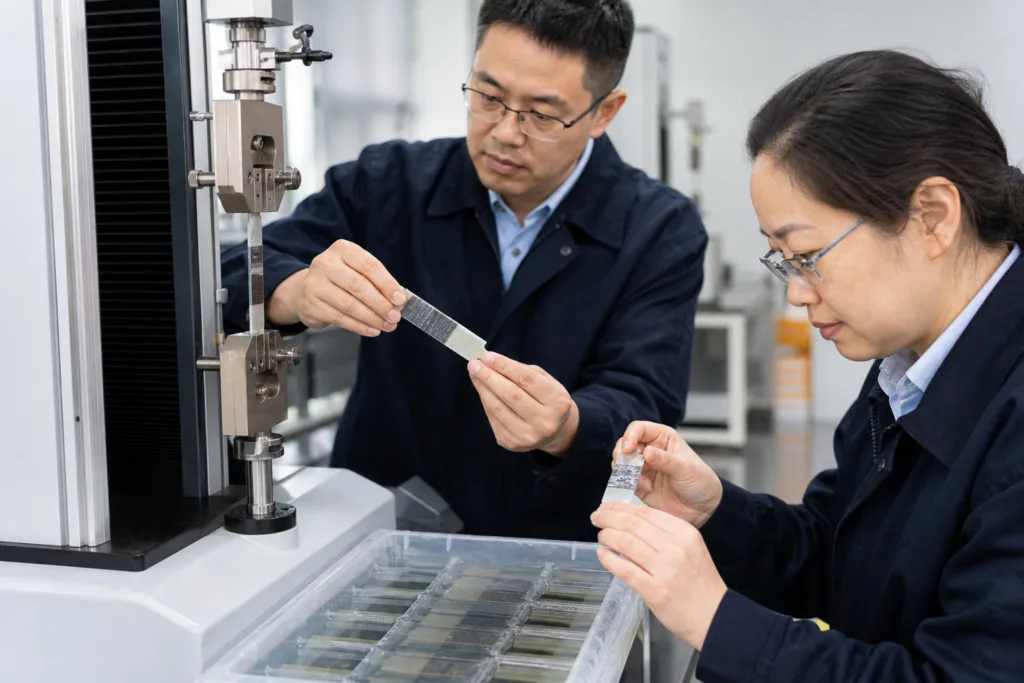
In many projects, the decision is not between five chemistries. It is between two or three realistic options after the joint design and environment are defined. Our role as a manufacturer is to narrow those options through requirement-based thinking: what must the joint do, what will attack it, how will it be dispensed, and what failure mode is unacceptable?
That often leads to practical next steps such as adjusting viscosity for dispensing, changing hardness to reduce stress, tuning cure speed for production, selecting packaging that fits line use, or preparing side-by-side samples for humidity and immersion comparison. For OEM and private label buyers, consistency, shelf life, MOQ planning, and repeatable bulk production are just as important as chemistry choice on paper.
When teams approach wet-service bonding this way, they usually avoid the most expensive mistake: approving a chemistry by label reputation instead of by application evidence.
Conclusion
There is no universal answer to epoxy, silicone, polyurethane, UV, or cyanoacrylate in wet service. Epoxy is often strong for rigid structural and insulating applications, silicone is often stronger for flexible waterproof sealing, polyurethane can offer a valuable middle ground for outdoor and elastic bonding, and UV or cyanoacrylate usually fit narrower process-driven use cases. The best adhesive chemistry for wet environments depends on what the joint must carry, how much it moves, how severe the moisture exposure is, and how well the adhesive fits your production process. The right path is a disciplined comparison backed by realistic testing, not a one-word chemistry preference.
FAQs
Which adhesive chemistry is usually strongest in wet structural bonding?
For many rigid structural joints, epoxy is often the first chemistry to evaluate because it can deliver high cohesive strength, good adhesion to many industrial substrates, and useful chemical and electrical performance. However, “strongest” in dry testing does not always mean most durable in wet service, especially if the assembly moves or cycles thermally, so long-term adhesion retention must be verified.
Is silicone a structural adhesive for wet environments?
Silicone can bond parts and provide excellent waterproof sealing, but it is often selected primarily for flexibility, movement tolerance, and environmental sealing rather than for high structural load transfer. If the joint must carry significant load, maintain rigid alignment, or resist peel under force, silicone should be compared carefully against epoxy or polyurethane rather than assumed to be the default answer.
When is polyurethane a better choice than epoxy in wet-service applications?
Polyurethane is often the better choice when the assembly needs both adhesion and flexibility, especially in outdoor or vibration-prone conditions. It can handle movement and expansion mismatch better than many rigid epoxies, making it useful for panels, housings, and mixed-material joints, but the exact formulation still needs evaluation for long-term moisture aging and cure behavior.
Can cyanoacrylate be used where water exposure is present?
Cyanoacrylate can work in limited moisture-exposure scenarios when parts are small, closely fitted, and not heavily stressed, but it is usually not the preferred option for severe wet service. Its brittleness and weaker long-term resistance to immersion, peel stress, and thermal cycling make it a more specialized choice than a general waterproof industrial adhesive.
What tests should buyers request before approving an adhesive for wet environments?
Buyers should request tests that reflect actual service conditions, such as immersion, high-humidity aging, thermal cycling, condensation exposure, and adhesion retention on real production substrates. It is also useful to confirm dispensing behavior, cure completeness, and any electrical or sealing requirements so that the selected adhesive is validated as a process fit as well as a materials fit.
How can a manufacturer help reduce risk when selecting a wet-service adhesive?
A qualified adhesive manufacturer can help by narrowing the chemistry options based on substrate, load, movement, and exposure profile, then supplying samples for side-by-side evaluation under realistic conditions. Support with viscosity selection, cure profile adjustment, packaging format, QC expectations, and bulk production consistency often reduces trial time and improves confidence before full-scale approval.
Related Reading
- how moisture changes adhesive bond strength over time
- epoxy vs acrylic vs polyurethane vs silicone for industrial bonding
- how to choose the right industrial adhesive for an application
- adhesive selection technical support for requirement-based decisions
- custom adhesive formulation when standard chemistries do not fit