
Bathrooms, kitchens, laundry rooms, spa areas, and other humid interiors put stone joints under a very different set of stresses than dry decorative spaces. Steam, splash water, cleaning chemicals, thermal cycling, and repeated movement at edges can all change how a bond performs over time. For buyers comparing suppliers, ZDS LTD can review the project as a manufacturer and formulation partner through its stone adhesive manufacturing support for moisture-prone installations, helping teams start from the real substrate and exposure conditions rather than from the stone name alone.
This guide explains how to evaluate a moisture resistant stone adhesive for wet and humid environments, what can cause failures, and what information to prepare before requesting a recommendation or sample. It is written for procurement teams, engineers, fabricators, and installers who need a practical way to compare adhesive chemistries, reduce sourcing risk, and validate a joint before full production or site rollout.
Why wet areas create more risk for stone adhesive joints
Stone is often viewed as a rigid, durable finish, but the joint system around it is more complex. In bathrooms and kitchens, the adhesive may be exposed to occasional wetting, constant humidity, condensation, soap residue, detergents, and in some cases warm water or steam. Even if the stone itself stays visually unchanged, the bond line can be weakened by moisture ingress at edges, contamination on the substrate, or movement in the backing structure.
That is why the question is not simply whether an adhesive is “waterproof.” Buyers need to know whether the selected formulation can tolerate the full service environment, including the substrate, joint geometry, temperature swings, and cleaning routine. For a useful overview of how water and humidity affect bond durability, see how moisture, humidity, and steam change bond durability over time.
In practice, failures in wet-area stone work often begin at weak points such as edges, corners, backs of cut panels, or places where the backing board, sealant, and stone adhesive do not work as a system. A strong initial grab is helpful, but it does not replace moisture resistance, compatible substrate wetting, and stable cure behavior under real site conditions.
Moisture ingress, cleaning chemicals, steam, and joint exposure
Wet-area stone projects fail for more than one reason. Moisture ingress can travel into the bond line through unsealed edges or microscopic surface irregularities. Cleaning chemicals can leave residues that interfere with adhesion or slowly attack the cured polymer. Steam and warm surfaces can accelerate aging, especially in areas close to showers, cooktops, sinks, or dishwashing zones. Repeated cycles of wetting and drying also stress the interface between stone, adhesive, and backing material.
Buyers should ask how the adhesive behaves when the joint is not just wet once, but repeatedly exposed over months or years. This is especially important for splash zones and vertical panels where gravity, drainage, and surface texture all affect the practical load on the bond line. If the assembly also needs sealing, one useful category comparison is the set of waterproofing adhesive options for wet-area stone joints, because the boundary between bonding and sealing is often part of the design decision.
General industry practice is to treat the adhesive as one part of a wider moisture-control strategy. That strategy may include correct backerboard selection, edge treatment, compatible primers where needed, and a finish that allows the installation to dry out after service exposure. For that reason, final selection should be based on the exact assembly, not only on whether the project is in a bathroom or kitchen.
Stone type sensitivity in bathrooms and kitchens
Different stone and engineered-stone products can demand different bonding behavior. Natural stone may have variable porosity and surface texture. Marble can be more sensitive to staining or edge marking during application. Granite usually offers a different surface profile and may need a different adhesive wetting approach than a polished marble panel. Quartz and some engineered stones can present low-porosity backs, resin-rich surfaces, or finishes that respond differently to surface preparation.
The surface finish matters just as much as the stone family. A polished back, a rough-sawn edge, a resin-backed slab, or a mechanically textured panel will not accept adhesive in the same way. Bond performance can also change if the backside has dust, release agents, cutting slurry, or a protective film residue. Buyers should therefore describe the actual backside condition, not just the front-facing decorative grade.
Backing systems also influence performance. A stone panel installed over cement board, tile backerboard, drywall, metal framing, or composite paneling is a different engineering problem. As a reference point for substrate and compatible backerboard systems, the USG technical guide on Durock® Brand Cement Board Systems is useful for understanding why the full assembly matters, not only the adhesive itself: substrate and compatible backerboard systems.
Typical wet-area stone applications and their different performance requirements
Not every stone installation in a humid interior needs the same adhesive profile. Countertops are exposed to spills, hot objects, and frequent cleaning. Vanity tops may see standing water around sinks and edge joints. Shower wall panels face repeated wetting, steam, and cleaning chemicals. Decorative wall cladding in spas or laundry rooms may need a balance of moisture resistance and movement tolerance. Each case changes the importance of flexibility, cure speed, open time, and reworkability.
- Countertops and islands: focus on clean appearance, bond stability, and resistance to routine household cleaning.
- Vanity tops and sink surrounds: focus on moisture ingress at cutouts, edges, and joins near plumbing.
- Shower panels and wet walls: focus on long-term water exposure, steam tolerance, and substrate compatibility.
- Decorative wall panels: focus on vertical slump control, handling time, and compatible movement with the backing structure.
When projects involve floors or other load-bearing stone assemblies, buyers may also review example product pages such as ZDS-8001AB PU adhesive for stone floor bonding in demanding environments. That kind of reference can help a sourcing team understand packaging format and intended use, but the final choice still depends on the exact substrate, movement, and service environment.
Adhesive properties that matter most
When comparing a moisture resistant stone adhesive, the most useful properties are not the ones that sound strongest in isolation. They are the properties that match the project. Water resistance matters, but so do flexibility, cure behavior, heat tolerance, chemical resistance, and the way the adhesive handles gaps or minor surface irregularities. In humid areas, a formulation that becomes too brittle may crack under movement, while one that is too soft may struggle with structural stability or edge retention.
Bond strength should also be considered with the substrate, not only with the stone. Some systems need better adhesion to cementitious backerboards; others need good wetting on metal, composite board, or primed surfaces. Cure speed matters because installers and fabricators may need enough open time for alignment, yet enough development speed for the project schedule. In all cases, values must be checked in the current product documentation rather than assumed from the chemistry name.
A practical buyer view is to rank properties by project priority: moisture exposure first, movement second, installation method third, and cleaning chemistry fourth. That order will not fit every case, but it helps teams avoid choosing an adhesive based only on a familiar brand or a single headline property.
| Adhesive chemistry | General strengths in humid stone work | Typical watchouts | Best used when |
|---|---|---|---|
| Epoxy | Often considered for structural bonding, gap filling, and chemical resistance in controlled systems | May be less forgiving on movement or installation speed depending on formulation | The project needs strong structural support and the substrate conditions are well controlled |
| Polyurethane | Often chosen when a balance of toughness and flexibility is useful | Performance can vary widely by formulation and cure conditions | The assembly needs some movement tolerance in humid interiors |
| Silicone | Useful where sealing, flexibility, and wet-area movement accommodation matter | May not be the same thing as a structural stone adhesive | The project is edge sealing, joint movement, or non-structural attachment |
| Hybrid | Can offer a balance of application properties for selected assemblies | Must still be confirmed for the actual stone, substrate, and exposure | The buyer wants a balance between handling, flexibility, and wet-area performance |
These are only general selection guides. The same chemistry family can behave very differently from one formulation to another, so buyers should avoid choosing solely by label. If a project appears to need sealing plus bonding, the chemistry discussion should include whether one product can do both, or whether a bonding adhesive and a separate sealant are the safer system choice.
Common misjudgments in wet-area stone bonding
One common mistake is assuming that high initial tack means long-term moisture resistance. Another is believing that an indoor kitchen or bathroom never creates a severe service condition. In real projects, steam, drainage gaps, and repeated cleaning can make a “light-duty” environment behave like a demanding one. A third mistake is overlooking the backside condition of the stone, especially after cutting, polishing, or transport handling.
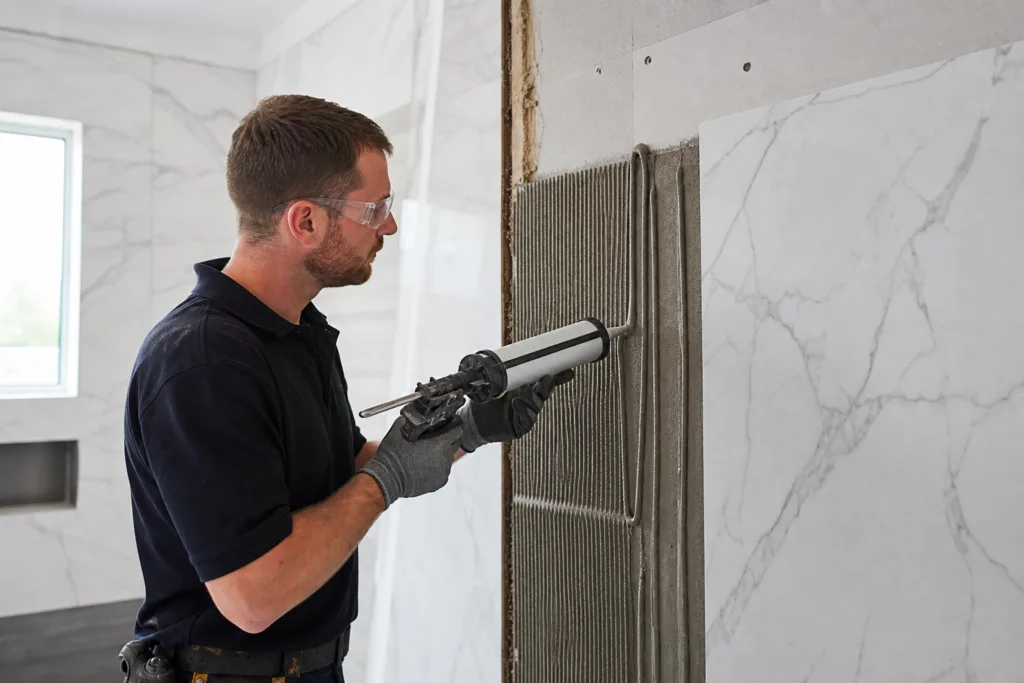
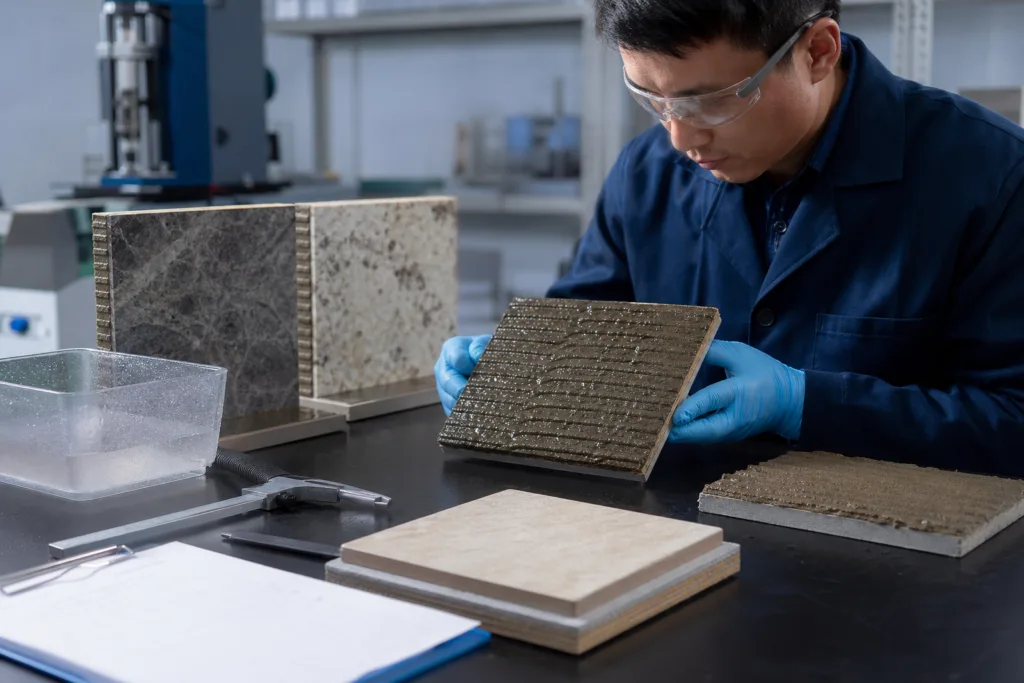
Installers and buyers also sometimes overlook movement. Humid interior assemblies still expand, contract, and flex. If the backing board, frame, or adjacent building element moves, the stone adhesive must tolerate that movement or work in combination with a sealant and suitable joint design. That is why a visible bond sample on a bench is not enough; the sample should represent the actual panel size, thickness, support method, and edge condition used in the project.
Another sourcing error is comparing only one line from a technical data sheet. A product may look suitable from one property but be less aligned with surface prep, cure method, or production speed. A better approach is to compare the full system: stone, substrate, adhesive, primer if needed, sealant if needed, and the environmental exposure during and after cure.
What to validate before approval
Before approving a stone adhesive for bathrooms, kitchens, or humid interiors, ask for representative-part testing under realistic conditions. The exact test plan depends on the project, but the buyer should usually look at water exposure, steam exposure, chemical exposure, movement tolerance, bond consistency, and the effect of surface preparation. If the assembly includes corners, seams, or cutouts, those features should be included in the test panel rather than ignored.
- Water exposure: check whether the bond remains stable after repeated wetting or splash contact.
- Steam and heat: evaluate the impact of warm, humid conditions near showers or cooking zones.
- Cleaning chemicals: verify compatibility with the actual cleaning agents used by the end customer.
- Movement tolerance: confirm that the joint design can handle normal building movement without early failure.
- Bond consistency: inspect whether the adhesive wets the stone and substrate evenly over the full panel.
- Edge and corner behavior: review the areas most likely to trap moisture or see stress concentration.
For project approval, buyers should also request the current technical data sheet, safety data sheet, and any applicable compliance documents for the selected product. If a supplier cannot connect the chemistry to the actual service conditions, the selection is still incomplete.
Surface preparation, primer use, and cure conditions
Even a suitable adhesive can fail if the surface is contaminated or the assembly is built under poor cure conditions. Surfaces should be free from dust, standing water, oil, release agents, and residues from cutting or polishing. Stone backs may need cleaning or abrasion depending on the project, but the right method depends on the stone type and the adhesive system. Buyers should avoid universal instructions that do not reflect the actual material pair.
Primer use is another case where general advice is not enough. Some substrates or stone surfaces may benefit from a primer, while others may not need one at all. The decision should come from the formulation guidance and project test results. Likewise, cure conditions should be checked against the actual installation environment. High humidity, low temperature, poor ventilation, or very large panels can all change how the adhesive develops.
For production or site work, it is wise to define a simple process check before full launch: confirm surface cleaning, confirm material temperature range, confirm whether a primer is needed, confirm clamp or support method, and confirm the minimum inspection point before release. That process is often more effective than relying on memory or installer preference.
How to review technical data sheets and request samples
A technical data sheet should help the buyer understand where the adhesive belongs, not just what chemistry it uses. Look for substrate compatibility, intended use, method of application, curing assumptions, and any limits that matter to the project. If the data sheet is vague about wet service, steam, or chemical exposure, ask for clarification before asking for price. That sequence saves time and reduces the risk of testing the wrong product.
When requesting samples, provide the actual project details. For example: stone type, backside finish, backing board, bond area, vertical or horizontal installation, expected water exposure, whether sealant is also used, and whether the project is a prototype, pilot run, or mass production launch. If the project needs a more tailored review, ZDS LTD can use adhesive selection technical support for stone and substrate compatibility to discuss the project from a manufacturing and formulation perspective.
This is also the right moment to decide whether the project needs a standard product, a private-label package, or an application-specific formulation. A useful stone adhesive supplier should be able to discuss packaging format, sample evaluation, technical-document review, and production coordination without promising a fit before the assembly is understood. If the buyer needs a more formal project review, it is better to share substrate photos, the bill of materials, and the expected service environment first, then ask for recommendation and quotation.
Before moving to trial, compare the current project against the supplier’s documentation and the actual field exposure. That is where the second pass on the core supplier page can be useful: the stone adhesive manufacturing support for moisture-prone installations page is a practical starting point for discussing whether the project needs a standard chemistry, a modified formulation, or a packaging change.
How ZDS LTD helps customers evaluate stone adhesives for moisture-prone environments
ZDS LTD supports industrial buyers as a manufacturer and project partner, not as a retailer. For wet-area stone work, that means reviewing the substrates, the stone type, the installation method, and the exposure profile before discussing a product match. The team can help buyers compare chemistry families, prepare sample trials, review technical documents, and discuss whether the project may need OEM, ODM, or private-label support.
That support is most useful when the buyer brings real project data. Useful inputs include panel size, stone family, cutout locations, substrate type, expected steam or splash exposure, cleaning method, desired packaging format, and order planning assumptions. With that information, ZDS LTD can help narrow the options and identify which questions still need confirmation before approval.
For buyers sourcing into bathrooms, kitchens, and other humid interiors, the most important takeaway is simple: a moisture resistant stone adhesive should be selected as part of a system. Stone, backing, joint design, preparation, and service conditions all matter. The safer buying process is to test representative parts, review current documents, and confirm the final choice against the real installation environment.
Frequently Asked Questions
Can one moisture resistant stone adhesive work for every bathroom or kitchen project?
No. Final selection depends on the stone type, substrate, joint design, movement, cleaning exposure, and cure conditions. A product that works in one humid interior may not be the right fit for another.
Which stone and substrate details should I share before requesting a recommendation?
Share the stone family, backside finish, panel size, substrate type, installation orientation, moisture exposure, cleaning method, and whether primer or sealant is part of the system. Photos and sample drawings are also helpful.
Should I choose epoxy, silicone, polyurethane, or a hybrid adhesive?
There is no universal winner. Epoxy, silicone, polyurethane, and hybrid chemistries each offer different trade-offs in bonding, flexibility, sealing, and cure behavior. The right choice depends on the project requirements and should be confirmed with sample testing.
What tests are most useful before approving a stone adhesive for wet areas?
Representative-part testing should cover water exposure, steam or heat, cleaning chemicals, movement tolerance, bond consistency, and edge or corner behavior. The test plan should match the actual installation and service environment.
Can ZDS LTD help with private label or application-specific formulation?
Yes, ZDS LTD can review project requirements and discuss OEM, ODM, private-label, or application-specific support where appropriate. The exact recommendation still depends on the substrates, exposure conditions, and technical documents for the project.