
Buying a laminating adhesive for food packaging is rarely a simple price-and-sample decision. For flexible packaging teams, the real question is whether the adhesive can support the full structure, process window, and regulatory pathway without creating migration, odor, delamination, or converting problems later. That is why buyers evaluating laminating adhesive manufacturing support for sensitive packaging structures usually need more than a product name. They need a qualification framework that connects adhesive chemistry to substrate choice, filling conditions, shelf-life goals, and market-specific compliance requirements.
Food, beverage, and other sensitive product packs often face stricter review than general industrial laminates because the adhesive is part of a multilayer system that may influence package safety, sensory performance, and long-term stability. Even when the adhesive is not intended for direct contact with contents, buyers still need to understand possible transfer pathways, cure development, residual components, and how the selected structure behaves under real production and service conditions.
Why sensitive packaging laminations need stricter qualification
General lamination projects may focus mainly on bond strength and line speed. Sensitive packaging requires a broader evaluation. The adhesive has to work as one part of a layered construction that may include printed films, metallized layers, foil, paper, sealant webs, and barrier coatings. A failure in any interface can affect product protection, package appearance, machinability, or compliance review.
For food and beverage formats, buyers also need to ask whether the adhesive system has been designed and evaluated for low-migration packaging use, and what evidence supports that position. For exports into regulated markets, the supplier discussion should include intended use, structure design, fill goods, expected storage conditions, and whether supporting documents align with the destination market. Regulatory context matters because the package must not transfer substances at unsafe levels or create unacceptable taste and odor changes. The EU food-contact safety and sensory-impact requirements are a useful reminder that food-contact materials are assessed for both health protection and sensory impact.
What laminating adhesives must do beyond bonding
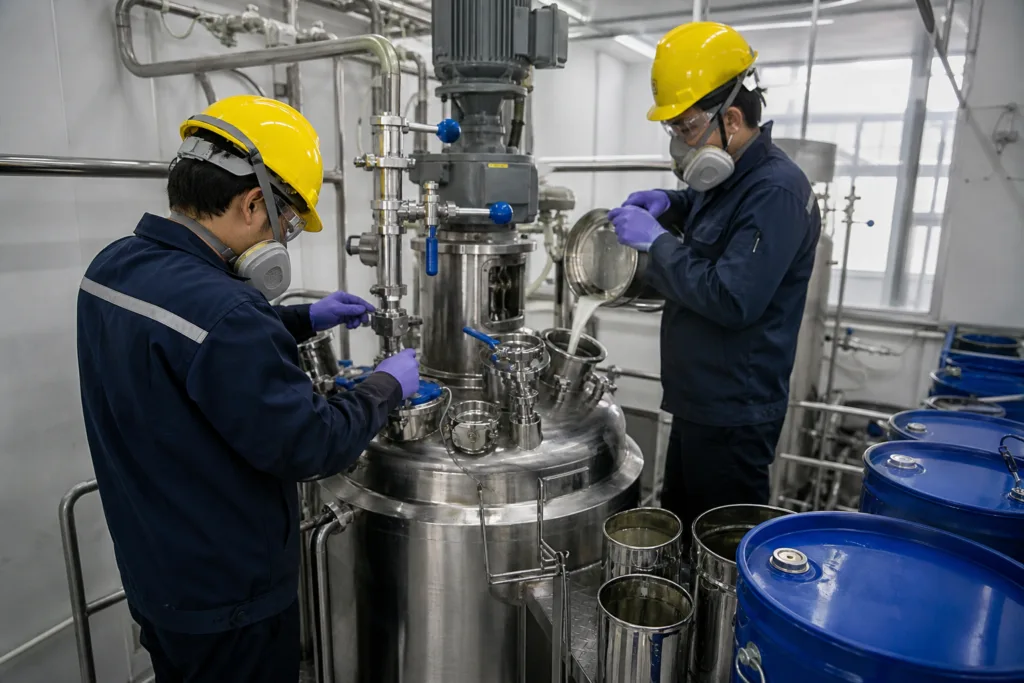
Procurement teams sometimes compare laminating adhesives only on initial adhesion or coating cost. That misses the wider role of the adhesive layer in flexible packaging performance. In sensitive structures, the adhesive must usually support several functions at once.
- Barrier preservation: The lamination process should help maintain the intended oxygen, moisture, aroma, or light barrier performance of the total structure.
- Heat resistance: The laminate may face sealing temperatures, hot fill, post-pack thermal exposure, or later converting heat.
- Odor and taint control: Residual odor or interaction with fragrances, flavors, coffee, dairy, nutraceutical, or personal care contents can trigger complaints even if the bond remains intact.
- Migration control: Buyers need confidence that the adhesive system, once fully cured and properly used, fits the target packaging application and market requirements.
- Process stability: Coating, wetting, cure development, slitting, printing compatibility, and roll handling all affect yield and consistency.
In practice, this means that an adhesive cannot be qualified from a single lab panel alone. It should be reviewed as part of the complete laminate, including inks, primers where used, web treatment level, coating weight range, cure profile, and downstream pack conversion steps.
Key compliance and safety questions buyers should ask
For commercial investigation, the most useful supplier conversation starts with precise questions. Instead of asking whether an adhesive is simply “food grade,” ask what documentation and application scope the supplier can provide for the intended structure and market.
- For which packaging applications is the adhesive intended, and is low-migration positioning stated in current product documentation?
- Which regions or regulatory frameworks has the supplier considered for the formulation, and what still needs project-specific confirmation?
- What declaration, composition review, or compliance support documents are available for the selected product?
- Has the adhesive been evaluated in representative multilayer constructions, or only as a standalone material?
- What migration study assumptions were used, including adhesive loading, cure state, time after lamination, and intended food types?
- Does the supplier identify any known restrictions related to retort, hot fill, fatty foods, alcoholic contents, or fragrance-sensitive products?
- What data must the buyer still generate on the finished structure before commercial approval?
For U.S.-facing projects, the FDA migration testing guidance for adhesives and multilayer packaging is relevant because it explains how food-contact submissions consider worst-case use levels, multilaminate samples, and chemistry data. Buyers do not need to run a regulatory program alone, but they do need to know whether the supplier is discussing the actual use case rather than offering a generic statement.
How packaging structure affects adhesive selection
The same adhesive chemistry is not automatically suitable for every laminate. Structure design changes the stress profile, barrier goals, cure behavior, and compatibility demands.
Film to film structures
These are common in snack, dry-food, beverage, and household packaging. Buyers should ask about wetting on treated films, slip-additive sensitivity, optical appearance, and whether cure development supports slitting and pouch conversion timing.
Film to foil structures
Foil laminates can be more demanding where barrier retention, flex crack resistance, and thermal process exposure matter. Ask whether the adhesive has been considered for foil interfaces and whether the supplier expects any special surface-preparation, coating-weight, or post-cure controls.
Film to paper structures
Paper adds porosity, dimensional variation, and possible odor considerations. Questions should cover penetration behavior, fiber tear versus adhesive bond goals, curl risk, and whether the structure must maintain stiffness or peelability.
Multilayer high-barrier structures
As layers increase, so does qualification complexity. Buyers should confirm whether the supplier can review the full stack-up, including barrier films, sealant layers, printing position, and any tie-layer or primer interactions. For wider packaging context, teams may also review packaging adhesive solutions for food and beverage formats when mapping product families to different pack types.
Questions to ask about end-use conditions
End use is often where adhesive selection succeeds or fails. A laminate for frozen food faces different risks than one for shelf-stable soup or a microwaveable meal pack.
| End-use condition | What buyers should clarify with the supplier | Why it matters |
|---|---|---|
| Frozen | Flexibility retention, crack resistance, and bond behavior after cold storage and handling | Low-temperature brittleness or interlayer stress can lead to delamination |
| Refrigerated | Moisture exposure, condensation effects, and cold-chain distribution handling | Condensation and repeated handling can stress weak interfaces |
| Ambient shelf stable | Long-term odor stability, barrier retention, and compatibility with filled-product chemistry | Long storage times can reveal migration or taint issues not seen in short tests |
| Microwaveable | Expected heating profile, steam generation, and package geometry | Localized heat and internal pressure can challenge laminate integrity |
| High-barrier packs | Compatibility with foil or barrier films and effect on final laminate performance | Any interface weakness can compromise package protection |
These questions should be supported by representative laminate trials, not only generic resin descriptions. Actual suitability depends on the selected formulation and finished pack design.
When retort, hot fill, pasteurization, or sterilization changes the decision
Thermal processing can narrow the adhesive window quickly. Retort, hot fill, pasteurization, and sterilization expose the laminate to heat, moisture, pressure, or combinations of all three. Buyers should ask the supplier to distinguish between general-purpose laminating systems and formulations intended to be evaluated for these harsher conditions.
- What thermal process is expected: hot fill, pasteurization, retort, or another defined cycle?
- At what stage after lamination will the package be processed, and how much cure development is needed beforehand?
- What substrates are involved, and are there known interfaces that need extra review?
- Does the supplier recommend specific validation testing on finished structures before approval?
- Are there any known limits related to sealant interaction, distortion, haze, or bond loss after thermal exposure?
Buyers looking at process timing should also review how lamination bond strength and cure timing affect production, because early slitting, pouch making, or filling can change the apparent performance of an otherwise suitable system.
How contents chemistry affects adhesive compatibility
The packaged product can influence laminate risk as much as the converting process. Acidic foods, fatty contents, alcoholic beverages, aggressive flavor systems, essential oils, and fragrance-sensitive products can all change what buyers need to verify.
Instead of relying on broad claims, ask the supplier how the intended contents category affects migration assumptions, sensory testing needs, and finished-pack validation. Fatty products may require closer attention because they can represent a more demanding extraction environment. Alcohol-containing products or strong flavor systems may raise additional concern around taint, aroma transfer, or unexpected interactions. For non-food sensitive contents such as nutraceutical powders or fragrance-related consumer products, odor neutrality may be as important as structural bonding.
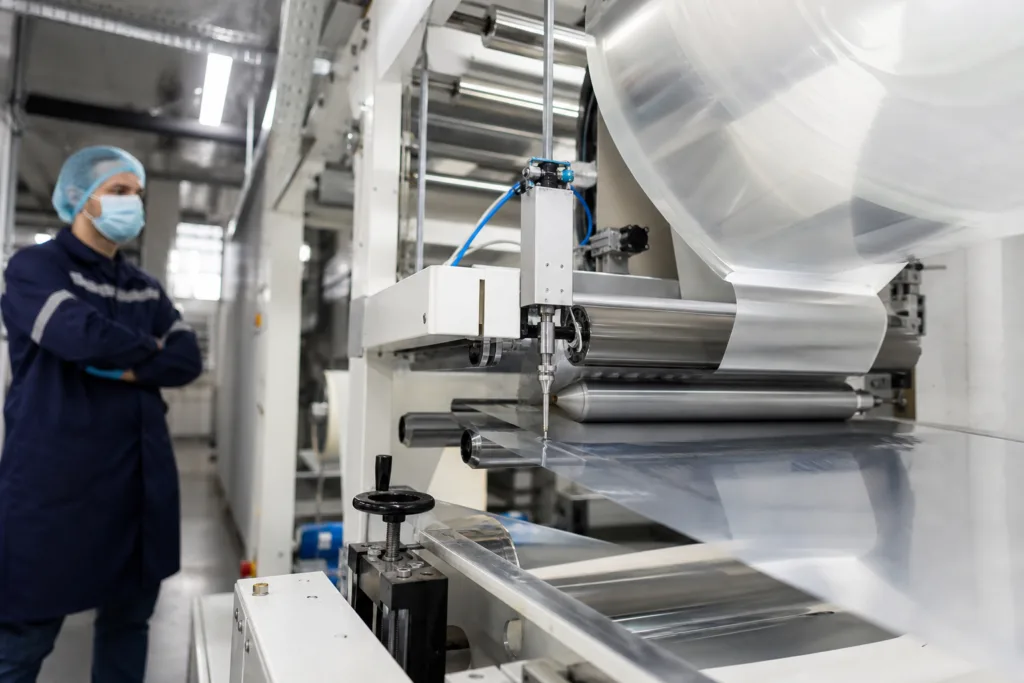
This is where a technical review is more useful than a catalog comparison. ZDS LTD can discuss substrate combinations, target contents, and process conditions through adhesive selection support for migration and process-fit questions, helping buyers define what should be checked during sample qualification.
Questions about seal integrity, peel performance, and converting stability
Laminating adhesives do not replace the sealant layer, but they strongly affect how the finished structure behaves during pouch making, lidding, form-fill-seal, and distribution. Buyers should therefore ask not only about laminate bond, but also about downstream converting stability.
- Will the adhesive influence heat-seal initiation, seal-through contamination tolerance, or seal appearance in the finished structure?
- Is the pack intended for permanent bonding, controlled peel, or easy-open behavior?
- How does the supplier suggest validating laminate integrity after slitting, creasing, folding, or pouch conversion?
- Are there any concerns around tunneling, curl, blocking, residual solvent, or roll telescoping under expected production conditions?
- What finished-laminate tests does the buyer normally need to run to confirm process fit?
For final package integrity, buyers may also use recognized methods such as ASTM seal strength testing for flexible barrier materials as part of their own validation plan. That standard does not approve an adhesive by itself, but it helps frame how finished structures are evaluated for seal strength consistency.
What procurement teams should verify in technical documents
A supplier data package should help the buyer reduce ambiguity, not add it. Procurement teams working with engineering and quality can use the following checklist when comparing options for a laminating adhesive for food packaging.
- TDS review: Intended application scope, adhesive type, processing method, and any stated limitations for substrates or end-use conditions.
- SDS review: Safe handling, storage, exposure controls, and transport information for the production site.
- Compliance support: Available declarations, composition statements, or region-specific support documents relevant to the intended market.
- Migration information: Whether the supplier provides migration-related guidance, study summaries, or conditions under which data was generated.
- Test reports: Bond, aging, or structure-level evaluation reports, with clear notes on substrates, cure state, and test method used.
- Change control: How formulation, raw-material, or document revisions are communicated.
- Batch consistency: What incoming and outgoing quality checks are routinely applied and how lots are identified.
If the pack design requires controlled coating or dispensing in a special process, the discussion may also include viscosity handling and application format. In some project categories, buyers may ask about options such as ZDS-100-12 low-viscosity adhesive option for controlled application, but final suitability always depends on the exact packaging structure and must be confirmed against current product documentation and trials.
Common buying mistakes that increase risk
Most avoidable failures start with an incomplete specification. Common mistakes include:
- Approving an adhesive based on one substrate pair while the commercial structure includes inks, different film grades, or extra layers.
- Requesting “food-grade adhesive” without defining destination market, food type, process conditions, and package design.
- Ignoring odor and taint evaluation until after pilot production.
- Comparing quotations without reviewing technical support depth, document quality, and change-control discipline.
- Assuming retort or hot-fill suitability because a similar chemistry worked in another project.
- Running migration or bond tests before the laminate has reached the intended cure state.
- Letting procurement, converting, and quality teams review the supplier separately instead of using one shared qualification checklist.
These are not minor issues. They can lead to field complaints, rejected export shipments, slow line performance, or long approval delays.
How to compare suppliers more effectively
At commercial-investigation stage, buyers should compare supplier capability in a structured way. Price matters, but so do communication quality and project-fit discipline. A practical comparison includes:
- How clearly the supplier asks about substrates, coating method, cure conditions, filling process, and final contents.
- Whether sample recommendations are linked to a defined qualification plan rather than a generic trial.
- What technical documents are available before pilot approval.
- How batch traceability and revision control are managed.
- Whether the supplier can discuss packaging format, coating process, and export documentation requirements in the same project review.
- How realistic the supplier is about validation needs and project limits.
For broader supplier-selection context and a second review point, buyers can consult project discussions on laminating adhesive supplier evaluation when preparing quotation and trial packages.
A practical buyer checklist for technical and procurement teams
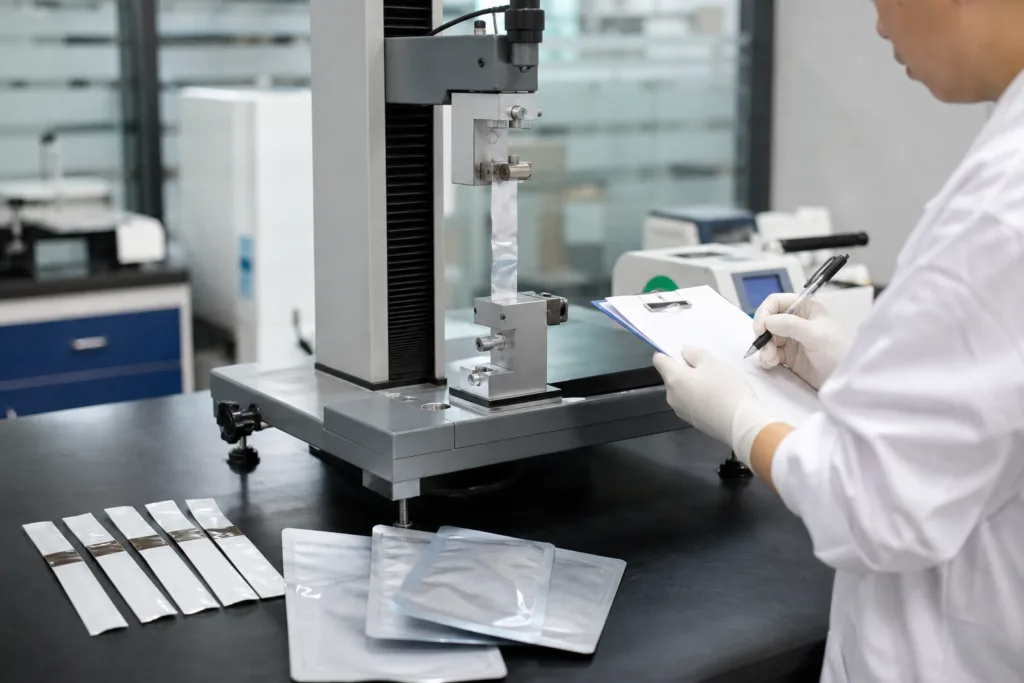
Before requesting samples or a quotation, prepare the following information:
- Full laminate structure, including each layer and approximate function of each layer
- Printed or unprinted construction and ink position
- Target contents: dry, fatty, acidic, alcoholic, fragrance-sensitive, or other
- End-use environment: frozen, refrigerated, ambient, microwaveable, or thermally processed
- Required converting method: pouch, sachet, lidding, rollstock, or other format
- Need for high barrier, transparency, controlled peel, or aggressive sterilization resistance
- Planned line speed, coating method, and curing sequence
- Market destination and required compliance support documents
- Sample validation plan, including bond, seal, migration, odor, and aging checks where relevant
- Expected order profile and packaging format needs for production supply
When this information is shared early, ZDS LTD can review whether a standard product match or a custom evaluation path is more appropriate, and align sample discussions with the actual packaging risk points rather than a generic adhesive category.
How ZDS supports packaging teams evaluating sensitive structures
For sensitive packaging laminations, ZDS LTD works as a manufacturer and technical supply partner. Support may include reviewing the laminate build, discussing likely chemistry options, matching sample candidates to converting conditions, and identifying what technical documents should be checked before scale-up. Where projects involve unusual barrier stacks, odor-sensitive contents, or export-market document requirements, the discussion can also extend to formulation fit, packaging format, and trial planning.
That review does not replace the buyer’s own finished-pack approval process. Final selection still depends on the specific substrates, coating equipment, cure conditions, bond geometry, food type, production speed, thermal exposure, and applicable regulatory requirements. Buyers should confirm the current technical data sheet, safety data sheet, and any relevant compliance documentation for the selected product before commercial use.
If you are comparing options for a laminating adhesive for food packaging, send the laminate structure, contents category, processing conditions, target market, and validation requirements so the project can be reviewed on a realistic basis.
Frequently Asked Questions
What is the most important first question to ask about a laminating adhesive for food packaging?
Ask whether the adhesive is intended for the exact laminate structure, packaged contents, processing conditions, and destination market in your project. A generic food-packaging claim is not enough without application-specific review and supporting documents.
Do low-migration adhesives remove the need for finished-pack testing?
No. Low-migration positioning can guide selection, but buyers still need representative validation on the finished laminate. Migration, odor, bond performance, and converting behavior should be checked under realistic curing and end-use conditions.
Why do retort and hot-fill applications need separate adhesive evaluation?
Because thermal processing can change bond durability, interface stability, and migration assumptions. Adhesives that work well in ambient packs may not remain suitable after high heat and moisture exposure, so the full process must be reviewed.
What documents should procurement request before approving a supplier?
At minimum, request the current TDS, SDS, relevant compliance support documents, and any available migration or structure-level test information tied to the intended application. Also ask how document revisions and batch traceability are controlled.
What project details should be shared when requesting samples or a quotation?
Provide the full laminate structure, substrate details, print position, packaged contents, end-use environment, converting process, thermal exposure, target market, and validation plan. That information helps the supplier match the adhesive candidate to real technical and regulatory needs.
Related Reading
- a practical guide to choosing the right industrial adhesive
- questions procurement teams can use to compare adhesive suppliers
- custom adhesive formulation support for specialized requirements
- sealing adhesive options for moisture-sensitive assemblies
- ZDS industry solutions across packaging, electronics, and manufacturing