
Choosing a fabric to fabric adhesive for industrial textile bonding is rarely about maximum initial strength alone. In apparel, soft goods, protective textiles, and laminated technical fabrics, the real challenge is keeping the assembly soft enough to wear, flexible enough to move, and durable enough to survive washing, folding, and repeated strain. From our adhesive manufacturing perspective, successful textile bonding depends on balancing chemistry, coating weight, curing conditions, and fabric structure so the bond performs without making the product feel harsh or uncomfortable.
Projects that involve washable laminates, flexible seam alternatives, or soft substrate assembly often need more than an off-the-shelf glue recommendation. For teams comparing process options, fabric adhesive manufacturing support for soft, flexible bonding can help translate real textile requirements into practical adhesive decisions, including viscosity matching, flexibility targets, wash resistance priorities, sample iteration, and packaging plans for pilot or bulk production.
Why Fabric-to-Fabric Bonding Needs More Than Initial Peel Strength
Many textile bonding projects begin with a simple bench test: bond two fabrics, pull them apart by hand, and check whether the bond feels strong. That can be useful as a first screening step, but it is not enough for production approval. A bonded textile may pass an initial peel check and still fail after laundering, body movement, compression in packaging, or thermal cycling during storage and transport.
Soft materials create a different stress pattern than rigid substrates. When fabrics bend, wrinkle, stretch, and recover, the adhesive layer must absorb movement without cracking, whitening, debonding, or creating a stiff line. This is why we usually encourage customers to define performance in terms of use condition, not only bond strength. A textile bond that feels slightly lower in hand-peel force may outperform a harder system after 20 wash cycles because it distributes stress better.
For laminated structures, seam replacements, reinforcement patches, badges, labels, or multilayer functional textiles, long-term comfort and durability often matter more than aggressive first grab. This is where laminating adhesive solutions for textile and soft-good assemblies become relevant: the bond line must work with the fabric, not against it.
What Makes a Textile Bond Different from Rigid Material Bonding
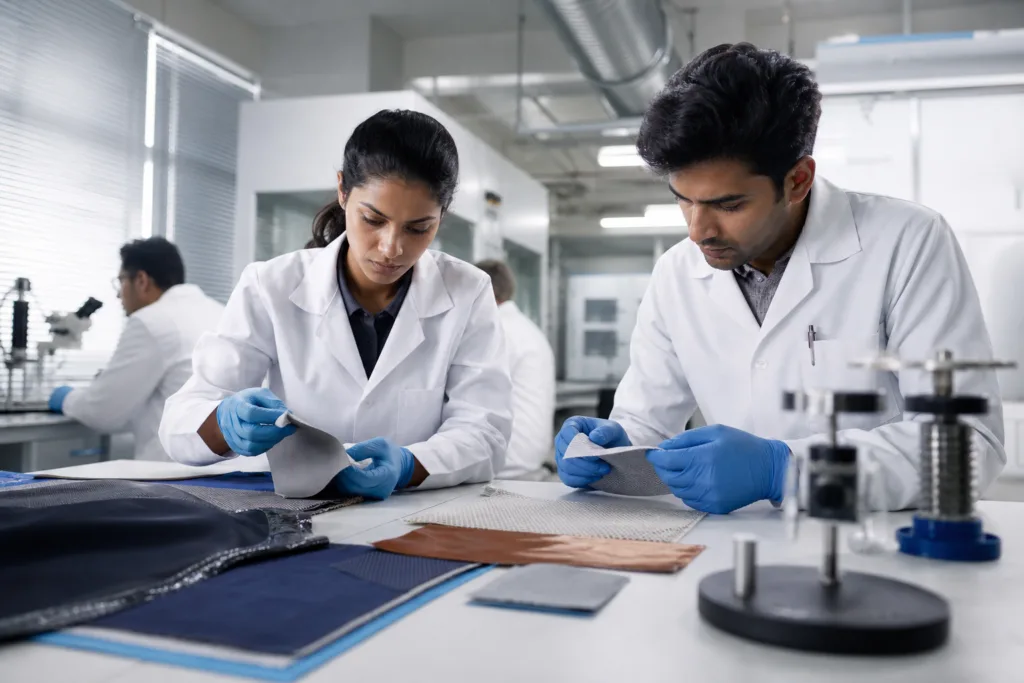
Textiles are porous, compressible, anisotropic, and highly variable. Even within the same material family, knit, woven, brushed, coated, elastic, and nonwoven constructions behave differently under adhesive loading. A rigid bonding mindset often overlooks four textile-specific realities.
Fiber structure changes adhesive penetration
Open constructions can absorb adhesive deeply, reducing surface availability for true interfacial bonding while increasing stiffness. Dense or coated fabrics may show the opposite problem: poor wetting and insufficient anchorage. The same adhesive can therefore feel too dry on one substrate and too penetrating on another.
Fabric movement creates cyclic stress
Textile bonds are repeatedly bent, folded, twisted, and peeled in use. In garments and wearable assemblies, the bond line may experience thousands of low-level deformation cycles before any visible failure appears.
Comfort matters
Unlike many structural assemblies, textiles are often judged by hand feel, drape, skin contact comfort, and noise during movement. A bond that passes mechanical tests but creates a boardy or rubbery zone may still be rejected by product teams.
Washing introduces multiple failure modes
Water, detergent, heat, agitation, and drying all interact with the adhesive and the fabric. Shrinkage mismatch alone can stress the bond line even when the adhesive itself has good water resistance.
Soft Hand Feel, Drape, and Flexibility Requirements
When buyers ask for a soft textile adhesive, they usually mean several different things at once. They may want low stiffness, no hard edge, minimal strike-through, low add-on weight, quiet movement, and the ability to preserve drape. These requirements should be translated into measurable development criteria early.
| Requirement | What It Means in Practice | Adhesive Implication |
|---|---|---|
| Soft hand feel | No obvious hard patch or crunchy bond zone | Lower modulus, controlled penetration, balanced coating weight |
| Drape retention | Fabric still hangs and moves naturally | Thin, flexible bond line with limited overbuild |
| Stretch compatibility | Bond follows elastic or mechanical movement | High elongation and fatigue resistance |
| Comfort | No edge irritation or rigid seam replacement area | Smooth bond transition and soft cured film |
| Appearance | No stain, bleed-through, or surface telegraphing | Viscosity and application method matched to fabric construction |
In our formulation work, softness is not simply a matter of choosing the “softest” polymer. Extremely soft systems can migrate, pick up lint, creep under heat, or lose wash resistance. The better approach is to target sufficient flexibility within the actual use window: expected temperature, strain level, washing method, and required service life.
How Adhesive Chemistry Affects Fabric Hand Feel and Movement
Adhesive chemistry has a major effect on softness, resilience, and durability. There is no single universal chemistry for all textiles, but several patterns are common in evaluation work.
Polyurethane systems
Flexible polyurethane adhesives are often considered when drape, elasticity, and soft cured feel are important. They can be suitable for coated fabrics, labels, decorative assemblies, and some washable soft-good applications. Depending on formulation, PU systems can offer a useful balance of softness and mechanical resilience. For buyers working on highly mobile textiles, our article on adhesives for stretch fabrics explains why elongation and recovery can matter more than a single static strength number.
Acrylic systems
Acrylic adhesives can be useful where processing speed, tack profile, and broad substrate compatibility are priorities. Some acrylic systems work well in laminating constructions, but they must be evaluated carefully for hand feel, laundering conditions, and plasticizer or detergent exposure where relevant.
Silicone systems
Silicone-based adhesives can offer excellent flexibility and soft feel in demanding environments, especially where temperature stability is important. However, they may not always be the first choice for every textile assembly because surface energy, cost structure, and downstream processing can complicate selection.
Reactive systems versus physically drying systems
Reactive adhesives generally build a more durable network after cure, which can help with wash resistance and flex life. Physically drying systems may process well in certain lines but can be more sensitive to water, heat, or long-term creep depending on chemistry.
At ZDS, we usually discuss chemistry in relation to the full assembly: fiber type, construction, finishing treatment, bond area, application method, cure schedule, and expected washing profile. Chemistry alone does not determine success.
Wash Resistance and Repeated Flexing
Washable textile assemblies fail in ways that rigid assemblies usually do not. The most common issues include edge lift after laundering, whitening or stress marking in the bond line, gradual peel loss, and local delamination where the fabric flexes most during wear. Repeated movement can be as damaging as water exposure because the adhesive is being stressed while the fabric itself expands, contracts, and wrinkles.
For qualification, a fabric-specific bond method is more meaningful than only using a generic adhesive pull test. Standards such as ASTM D2724 bond strength test for bonded and laminated apparel fabrics are useful reference points when discussing textile laminate integrity and comparing constructions under relevant conditions.
Durability should also consider peel fatigue, not just initial bond force. In flexible assemblies, cyclic peel stress is often the real failure mechanism, which is why concepts reflected in ASTM D2918 durability assessment of peel-stressed adhesive joints are helpful when planning long-term validation for soft bonded parts.
Key Performance Factors for a Washable Fabric Adhesive Industrial Application
Textile manufacturers and sourcing teams usually need a practical checklist rather than a long chemistry lecture. The following factors determine whether a flexible adhesive is likely to scale successfully.
Adhesive modulus and elongation
A bond line that is too hard can create edge stress and discomfort. A bond line that is too soft can flow, creep, or lose shape. The target is controlled flexibility.
Viscosity and application behavior
Low viscosity can improve wetting but may also cause soak-in, strike-through, and increased stiffness. High viscosity may reduce penetration but can leave poor interfacial contact on textured or low-energy fabric surfaces.
Coating weight
Too much adhesive is one of the most common reasons for a stiff hand. Too little adhesive can leave dry spots, weak edges, and low wash durability. Coating weight should be optimized by fabric construction, not by rule of thumb.
Cure profile
Incomplete cure often appears acceptable during pilot sampling, then fails later in washing or warm storage. Cure temperature, humidity exposure, mixing ratio, line speed, and dwell time all need control.
Fabric finish compatibility
Water repellents, softeners, release treatments, and dyehouse residues can dramatically change adhesion. A good adhesive may still fail on a contaminated or heavily finished textile.
Applications in Apparel, Protective Textiles, Soft Goods, and Technical Fabrics
Fabric-to-fabric bonding is used across many categories, but the performance priorities vary.
| Application | Common Priority | Typical Adhesive Concern |
|---|---|---|
| Apparel laminates | Soft feel and wash durability | Stiffness, puckering, detergent resistance |
| Protective textiles | Layer stability and flex life | Environmental resistance, edge lift |
| Soft luggage and gear | Repeated folding and abrasion | Cracking, delamination at stress points |
| Badges and decorative parts | Appearance and flexibility | Bleed-through, haloing, hard edges |
| Medical or hygiene soft goods | Comfort and process consistency | Skin-side feel, controlled application |
| Industrial technical fabrics | Functional bonding and durability | Chemical exposure, heat, variable substrate finishes |
For niche soft-substrate assemblies such as flexible decorative parts, labels, or accessory components, a product like ZDS-8300ab transparent flexible PU glue for soft substrate bonding can serve as a useful reference point when evaluating clarity, flexibility, and handling behavior in smaller bonded areas.
Choosing the Right Flexible Adhesive for Fabric Lamination by Fabric Type and End Use
A practical textile adhesive selection process should start with the fabric pair and the actual end use. Cotton-to-cotton, polyester-to-spandex, nonwoven-to-knit, and coated nylon-to-liner assemblies each create different bonding conditions.
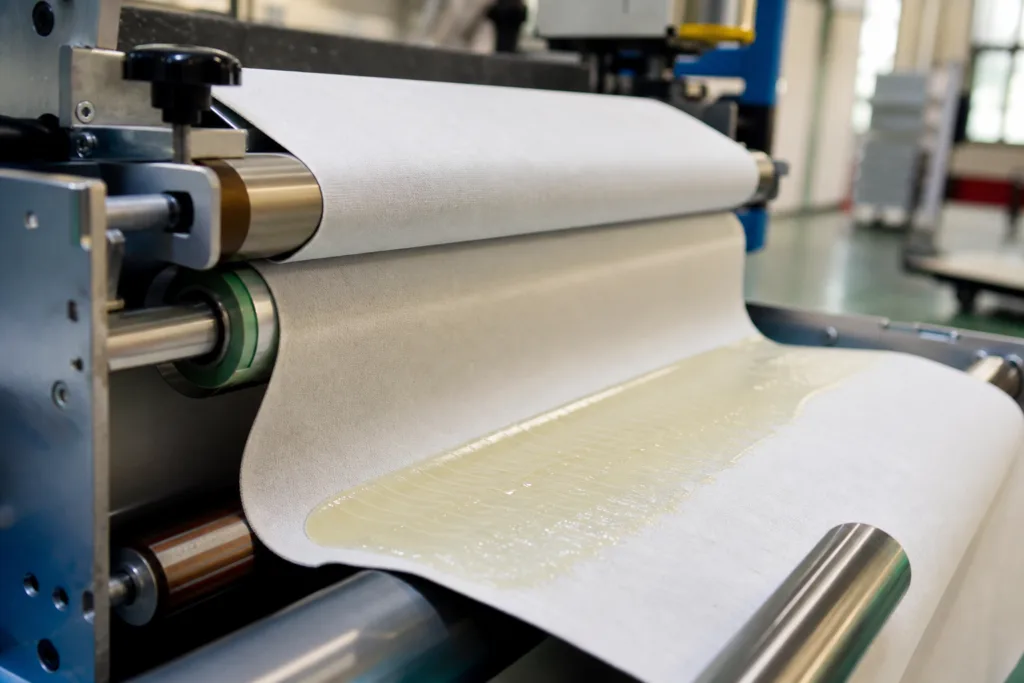
Natural fiber fabrics
Natural fibers may absorb adhesive readily, which can improve mechanical anchoring but also increase stiffness if penetration is excessive. Surface cleanliness and moisture content can influence repeatability.
Synthetic woven and knit fabrics
Polyester and nylon often require careful wetting control. Stretch constructions need adhesives that can recover with the fabric instead of forming a rigid bridge across moving yarns.
Coated and finished textiles
PU-coated, water-repellent, or specialty-finished textiles should always be tested as supplied, not assumed to behave like uncoated versions of the same base fabric.
Multi-layer laminates
Where breathability, barrier performance, or tactile comfort matters, the adhesive layer should be treated as part of the total laminate design, not as an invisible connector.
When projects involve unusual combinations, line constraints, or washable performance targets, we often recommend custom adhesive formulation support for washable fabric bonding so the viscosity, cure behavior, and flexibility profile can be adjusted around the real manufacturing process instead of forcing the process to fit a generic formula.
Common Problems: Stiffness, Edge Lift, Delamination, and Loss of Comfort
Most textile bond failures can be traced back to a limited set of root causes.
Stiffness after bonding
This is often caused by excessive coating weight, deep penetration into open fabric structures, or a cured polymer modulus that is too high for the target feel. Sometimes the adhesive is acceptable, but the application method deposits too much material.
Edge lift after washing
Edge exposure, fabric shrinkage mismatch, incomplete cure, or poor wetting at the bond perimeter can all cause lifting. Rounded bond geometry and controlled edge coverage can help.
Delamination under flexing
If the adhesive lacks fatigue resistance or cannot follow the fabric strain pattern, the bond may slowly open under repeated use even without visible chemical degradation.
Loss of comfort
Noise, roughness, local thickness, and a rubbery or board-like patch can make the product unacceptable even if the bond remains intact. Textile comfort is a functional requirement, not a cosmetic extra.
Surface Preparation, Coating Weight, and Curing Conditions for Better Bond Stability
Good textile bonding is usually process-sensitive. Surface preparation does not always mean aggressive treatment; often it means keeping the substrate controlled and repeatable. Dust, finishing residues, oils, and storage contamination can reduce consistency from roll to roll.
- Verify the actual fabric finish and lot-to-lot variation before approving an adhesive.
- Control coating weight with realistic process tolerances, not only laboratory drawdown targets.
- Check whether pressure, nip condition, or fixture setup is compressing adhesive too deeply into the fabric.
- Confirm cure completion under real line speed, temperature, and humidity conditions.
- Retest after full cure, not only immediately after bonding.
In production troubleshooting, we often find that bond complaints blamed on chemistry are actually caused by undercure, over-application, or inconsistent fabric pretreatment.
What to Validate Before Production Approval
Before approving a fabric to fabric adhesive for regular manufacturing, buyers should ask for a validation plan that reflects product use. A short trial on one fabric lot is not enough if the product will be sold as washable, flexible, or comfort-sensitive.
| Validation Area | Why It Matters | Typical Checkpoint |
|---|---|---|
| Bond integrity | Confirms initial adhesion and edge quality | Peel or separation check after full cure |
| Flexibility retention | Shows whether bond line stiffens or cracks | Manual flexing and repeated bend evaluation |
| Wash durability | Reveals hydrolytic and mechanical weakness | Multi-cycle laundering and re-test |
| Appearance | Prevents telegraphing and bleed-through | Front-face visual inspection |
| Comfort | Critical for wearable products | Hand feel and edge irritation review |
| Dimensional effect | Detects puckering or shrink mismatch | Pre/post wash panel comparison |
Recommended Tests for Bond Strength, Flexibility, Wash Durability, and Aging
Testing should be broad enough to capture both bond performance and textile behavior. We recommend combining adhesive-oriented tests with fabric-oriented evaluations.
Bond strength testing
Use a repeatable peel or separation method appropriate to the assembly geometry. For apparel and laminated constructions, textile-relevant methods are preferable to generic rigid-substrate approaches.
Flex and fatigue testing
Repeated manual folding is useful for screening, but controlled cycling gives much better development insight. Watch for whitening, edge opening, or loss of recovery.
Laundering and drying evaluation
Wash testing should reflect the product claim. Home-laundered consumer goods, industrial wash items, and hand-wash-only products should not share the same qualification method. Drying temperature can be as important as washing.
Aging checks
Heat aging, humidity exposure, and storage compression can uncover creep or stiffness changes that do not appear in fresh samples.
How to Evaluate Supplier Samples and Technical Data Sheets
Technical buyers should treat textile adhesive sampling as a structured comparison process. A supplier sample that bonds one fabric pair well under hand-applied conditions may still be unsuitable for production.
Ask for clarity on these points:
- Recommended substrates and known limitations
- Viscosity range and application window
- Pot life, open time, fixture time, and full cure conditions where relevant
- Softness or flexibility expectations after cure
- Wash, heat, or chemical exposure guidance
- Packaging size options for laboratory, pilot, and bulk use
- Shelf life and storage sensitivity
- Lot consistency and quality control approach
A good data sheet should help you understand how the adhesive behaves in a process, not just provide headline strength numbers. If key textile issues such as cure completion, coating weight sensitivity, or soft-substrate compatibility are unclear, ask for clarification before scaling.
How We Help Customers Balance Bonding and Textile Feel
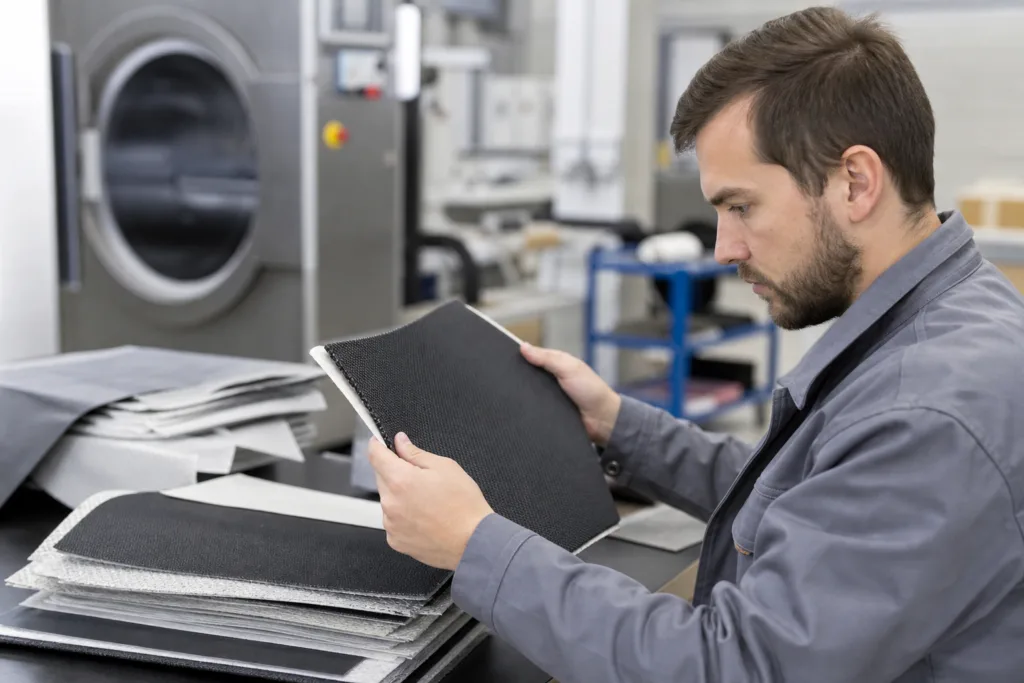
In textile adhesive projects, the right answer is usually not the hardest-bonding formulation. From our manufacturing perspective, the more valuable outcome is a stable process window that delivers acceptable hand feel, sufficient flexibility, and repeatable wash performance. That may involve adjusting solids, viscosity, cure speed, softness, or packaging format to fit the customer’s coating, laminating, or assembly line.
We generally suggest developing around the full decision set: fabric pair, target softness, washing method, production speed, acceptable add-on weight, and failure threshold. That approach reduces the risk of approving an adhesive that looks good in a lab panel but becomes problematic in bulk production.
Conclusion
Fabric-to-fabric bonding succeeds when the adhesive supports the textile rather than overpowering it. For a fabric to fabric adhesive, the real measure of quality is not only whether the bond holds on day one, but whether the assembly stays soft, flexible, comfortable, and intact after movement, washing, and aging. Textile manufacturers, engineers, and sourcing teams should therefore evaluate chemistry, application method, coating weight, curing conditions, and test protocol together. With that discipline, flexible bonding can become a reliable alternative for lamination, reinforcement, and soft assembled products without sacrificing textile performance.
FAQs
What is the most important property in a fabric to fabric adhesive?
The most important property is usually balanced flexibility rather than peak initial strength. A textile bond must move with the fabric, resist peel stress, and maintain acceptable hand feel after washing and repeated flexing, so the right adhesive is one that fits the full use condition rather than winning only a simple pull test.
Why do some fabric bonds feel stiff even when the adhesive is described as flexible?
Stiffness often comes from the total bond construction, not just the chemistry name. Excess coating weight, deep penetration into porous fabric, high local add-on, incomplete cure control, or an unsuitable application method can all make a flexible adhesive feel much harder than expected in the finished textile.
How should washable textile adhesive samples be tested before approval?
Samples should be tested after full cure using the actual fabric pair, intended coating weight, and realistic laundering conditions. Buyers should compare initial bond integrity, post-wash peel retention, edge lift, hand feel, drape, and visible surface changes rather than relying on a single dry-state strength result.
Can one adhesive work for cotton, polyester, and stretch fabrics?
Sometimes, but it should never be assumed. Different fabrics absorb, wet, stretch, and shrink in different ways, so a formula that performs well on one substrate combination may feel too stiff, penetrate too much, or lose durability on another. Cross-substrate trials are essential before standardizing one product.
What should buyers ask an adhesive supplier for textile projects?
Buyers should ask about substrate compatibility, viscosity, open time or pot life, cure conditions, wash resistance expectations, packaging options, shelf life, and quality consistency. It is also useful to ask whether the supplier can adjust the formulation for softness, penetration control, or production-line requirements if the first sample is close but not ideal.
Is custom formulation worth considering for fabric lamination?
Yes, especially when softness, wash durability, stretch compatibility, or process fit are critical. Customization can help align adhesive rheology, cured feel, cure speed, and bond durability with the actual textile structure and manufacturing method, which is often more effective than trying to force a standard product into a demanding application.