
Selecting an aluminum automotive adhesive for body parts is not a simple material swap from steel programs. Aluminum helps reduce vehicle mass, but it also introduces different oxide behavior, different galvanic risks, and different stiffness relationships across the assembly. For OEMs, Tier 1 suppliers, and EV structure teams, that means adhesive selection has to be tied to joint design, pretreatment, crash expectations, and corrosion control from the start. Buyers comparing suppliers often begin with automotive adhesive support for aluminum body structures, but the more useful step is defining what the bonded part must survive in production and in service.
In practice, aluminum bonding decisions vary widely between outer panels, closure assemblies, battery enclosure components, reinforcements, and mixed-material body structures. A cosmetic flange bond may prioritize appearance, hem flexibility, and read-through control, while a structural joint in a lightweight platform may require durability under shear, peel, impact, vibration, and moisture exposure. The correct approach is to screen adhesive chemistry and process fit together rather than treating datasheet strength values as the full answer.
Why Aluminum Bonding Needs Automotive-Specific Review
Aluminum behaves differently from steel in bonded vehicle structures because the surface chemistry changes quickly and the naturally formed oxide layer strongly affects wetting and adhesion. The metal is also commonly used in thin gauges, complex stampings, and mixed-material assemblies, which increases the importance of peel resistance, deformation tolerance, and corrosion isolation. An adhesive that performs acceptably on one aluminum alloy or one pretreatment route cannot be assumed suitable across all body-part programs.
Bonding requirements also change by function:
- Cosmetic parts may need controlled flexibility, good appearance after paint or thermal cycling, and resistance to print-through.
- Semi-structural parts often need higher joint stability, better fatigue behavior, and process compatibility with fixtures or fasteners.
- Structural parts typically require validated performance under combined loading, environmental aging, crash-related deformation, and manufacturing variation.
For that reason, the initial selection criteria should include not only substrate type and assembly geometry, but also bondline thickness control, edge exposure, e-coat or paint oven conditions, assembly takt time, and whether the joint shares load with welds, rivets, screws, or clinch features.
Key Performance Targets for Automotive Aluminum Adhesive Selection
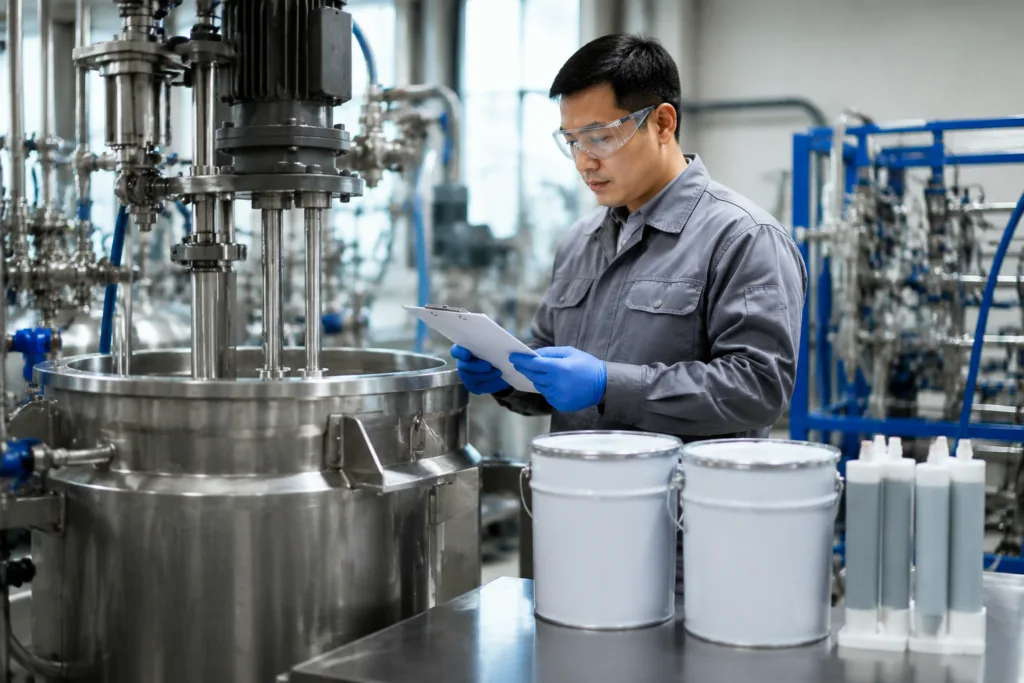
When engineers evaluate an aluminum automotive adhesive, structural strength is only one part of the specification. For vehicle body applications, the more relevant question is how the cured bond behaves across the full service envelope, including deformation, impact, vibration, and environmental aging. General chemistry families such as epoxy, polyurethane, and acrylic can all be relevant, but the correct choice depends on the joint and process.
Typical performance targets to define early include:
- Required load path: cosmetic, semi-structural, or structural
- Dominant stress mode: shear, peel, cleavage, impact, or mixed loading
- Expected stiffness and allowable movement between bonded parts
- Gap-filling needs and tolerance to flange variation
- Open time, fixture time, and full cure route in the production line
- Compatibility with paint shop, e-coat, or other downstream heat exposure
- Resistance to moisture, road salts, humidity, and thermal cycling
- Need to isolate dissimilar metals and limit galvanic contact
- Appearance requirements for exterior parts and visible seams
- Repair, rework, or service considerations
As a general guide, toughened structural epoxies are often considered where high load transfer, environmental durability, and thermal resistance are important, while certain polyurethane systems may be considered where greater flexibility or process behavior for exterior assemblies is needed. Acrylic technologies can also be relevant in some metal bonding programs where fast cure and surface tolerance matter. However, final selection should be based on representative substrates, pretreatment state, cure conditions, and joint geometry, not chemistry name alone.
Surface Oxide, Cleaning, and Pretreatment Considerations
Aluminum oxide forms rapidly and can interfere with wetting if the surface is oily, weakly attached, or inconsistently treated. That is one reason high bond strength in short-term lab tests does not automatically translate into durable performance on vehicle parts. Long-term reliability depends on whether the adhesive is bonding to a stable, well-prepared surface rather than contamination, hydrated oxide, or residues left by stamping and handling.
For buyers building a process specification, useful starting points include the surface preparation steps that improve metal bond reliability and the practical guidance in surface preparation steps before structural adhesive bonding. While exact methods depend on alloy, part cleanliness, and line capability, the preparation logic is consistent.
How aluminum oxide affects wetting, adhesion, and long-term bond reliability
The oxide layer on aluminum is not automatically a problem, but it becomes a problem when the adhesive sees a weak or variable interface. Surface oils, coolants, release agents, fingerprints, or poorly controlled abrasion can prevent uniform wetting. If the interface absorbs moisture or contains unstable contamination, bond durability may fall sharply after humidity, salt exposure, or thermal cycling.
That is why an aluminum bonding process should be validated against the actual incoming substrate condition, including coil coatings, conversion coatings, anodized surfaces, and any storage time between pretreatment and bonding.
Cleaning methods, degreasing, abrasion, and contamination control
Typical preparation workflows may include degreasing, controlled abrasion where allowed, dust removal, and contamination control before dispensing. The exact sequence should be confirmed for the selected adhesive and line process, but buyers should check whether the supplier can support:
- Compatibility with the plant cleaning chemistry and wiping method
- Defined handling controls after cleaning
- Validation on both fresh and aged prepared surfaces
- Acceptance criteria for water-break or other cleanliness checks where applicable
- Controls for silicone contamination, lubricants, metal fines, and packaging residues
Cleaning alone may be sufficient for some semi-structural or exterior applications, but more demanding joints often require a more stable pretreatment route.
Pretreatment options such as conversion coating, primer, plasma, and anodized surfaces
Conversion coatings, primers, plasma treatment, and anodized surfaces can all influence bond consistency and corrosion resistance. There is no universal best option. A stable conversion-coated aluminum surface may support a more durable bond in one program, while anodized or plasma-treated surfaces may be relevant in another, depending on design, throughput, and downstream exposure.
Custom pretreatment review is usually needed when:
- The joint is structural or crash relevant
- The assembly combines aluminum with steel, composites, or coated fasteners
- The edge of the bondline is exposed to moisture and salts
- Parts arrive from multiple substrate sources
- The line includes long waiting periods between preparation and bonding
- The assembly must survive demanding outdoor or battery-platform conditions
Crash Durability, Peel Resistance, and Fatigue Performance
In automotive aluminum structures, static lap shear data by itself does not define crash-safe bonding. Real vehicle joints experience peel, impact, vibration, and cyclic movement. A bond can show high initial strength and still fail in service if the adhesive is too brittle, the bondline is poorly controlled, or the joint geometry concentrates peel forces at the edge.
For this reason, teams should review epoxy joint performance under peel, impact, and fatigue as part of selection, especially when comparing structural adhesive options for flanges, reinforcements, or mixed-material joints.
Why structural strength alone is not enough
Automotive closures and lightweight structures rarely see pure shear in service. Door slams, hood vibration, body torsion, road input, thermal expansion, and crash deformation all create mixed stresses. If the adhesive is too rigid for the joint movement, cracking may begin at the edge. If it is too soft for the load path, the joint may creep, lose dimensional stability, or transfer load poorly.
Important variables include cure speed, modulus, elongation, and toughness. These properties affect how the joint carries load during normal use and how it behaves when the structure deforms rapidly. Actual values depend on the selected formulation and current technical data sheet, so they should be reviewed for the target process rather than assumed from chemistry type.
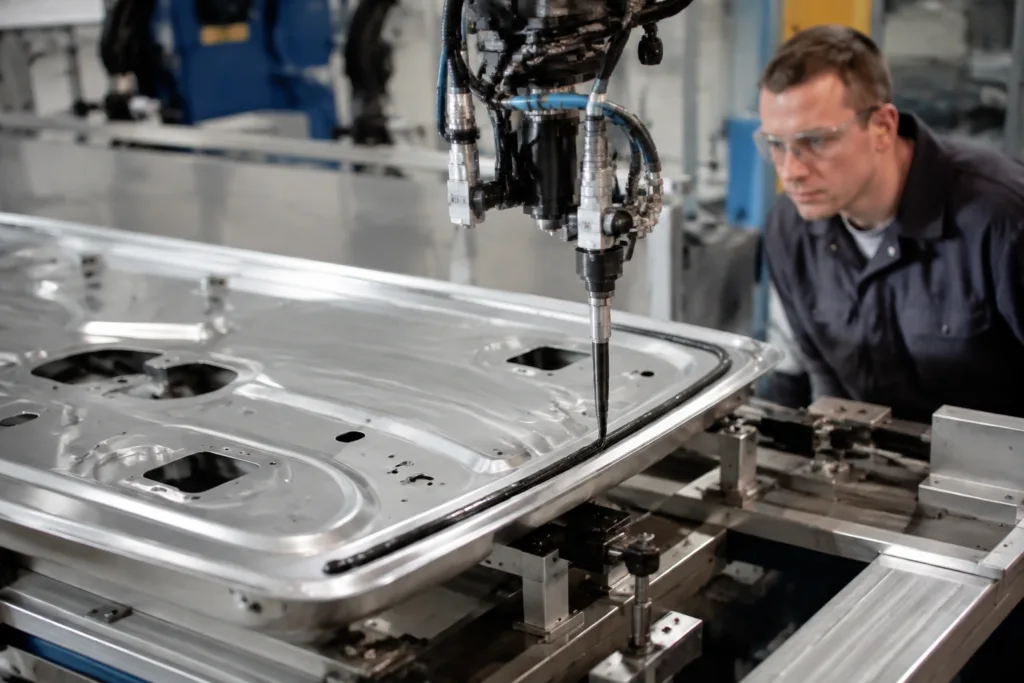
Test methods and validation logic for bonded aluminum parts
Production-ready validation should move from coupon testing to representative parts. A practical sequence usually includes screening on relevant aluminum grades and pretreatments, then joint-level trials that reflect bondline thickness, overlap, edge sealing, and actual cure conditions. For durability, the logic should include durability testing under environmental exposure so the team can understand how moisture, temperature, and sustained stress affect bond retention.
Validation programs commonly review:
- Initial joint strength under relevant loading modes
- Peel or cleavage sensitivity at bondline edges
- Impact response and energy absorption behavior
- Cyclic fatigue under vibration or repeated loading
- Thermal cycling and humidity aging
- Salt exposure and edge corrosion development
- Performance after paint oven or downstream heat exposure
- Process variation tolerance across mix, dispense, and cure conditions
Where a project needs durable metal load transfer, ZDS LTD may review whether a product such as ZDS-703AB-1 structural epoxy adhesive for durable metal joints fits the application scope, but suitability still depends on the validated joint design, substrate state, cure route, and environmental targets.
Corrosion and Galvanic Isolation in Mixed-Metal Vehicles
Corrosion control is central to aluminum body bonding, especially when aluminum meets steel, coated steel, composites with conductive elements, or metal fasteners. Direct contact between dissimilar metals can increase galvanic risk if moisture and electrolytes reach the interface. Adhesives can help by separating metals and reducing direct electrical contact, but the bondline must remain continuous and durable in the actual assembly environment.
Buyers should not assume that any adhesive automatically solves galvanic corrosion. The questions are more specific: does the adhesive wet and seal the interface consistently, is the edge of the joint protected, can moisture track through gaps or defects, and how does the system behave after thermal cycling, humidity, and salt exposure?
How adhesive layers can help isolate dissimilar metals
A well-designed adhesive layer can contribute to galvanic isolation by creating a continuous barrier between metals. This is especially useful in mixed-material body structures where mechanical fastening alone may leave local contact points or crevices. In practice, isolation performance depends on bond coverage, adhesive continuity, cured integrity, and whether additional sealants or edge protection are required.
Moisture ingress, edge sealing, and harsh-environment durability
Most corrosion-related bond failures begin at exposed edges, damaged coatings, or contaminated interfaces. Even if the central bonded area remains strong, edge blistering or underfilm corrosion can reduce long-term reliability and appearance. For closures, roof structures, battery-adjacent components, or underbody exposures, the validation plan should examine:
- How the bondline edge is sealed or protected
- Whether the adhesive is compatible with local coatings and primers
- Whether trapped moisture can remain in hem flanges or overlap joints
- How dissimilar fasteners or reinforcements are isolated
- Whether the part sees road salts, condensation, wash chemicals, or outdoor weathering
Applications in Hoods, Doors, Tailgates, Roof Panels, and EV Lightweight Structures
Aluminum body parts do not all ask the same thing from an adhesive. Exterior closures often combine appearance requirements with moderate structural demands, while EV lightweight structures may involve more demanding stiffness, fatigue, and mixed-material integration.
Typical bonding requirements for exterior panels and closure systems
For hoods, doors, tailgates, and roof panels, engineers may prioritize hem flange bonding, panel stiffness, noise reduction, distortion control, and corrosion resistance. These applications often need an adhesive that tolerates production variation and supports a good cosmetic result after cure and paint exposure. In some exterior assembly programs, a system such as ZDS-PU928 high-strength PU adhesive for automotive exterior parts may be relevant for evaluation where flexibility and exterior-part process fit are important, subject to application testing and documentation review.
Structural and semi-structural needs in EV body-in-white and lightweight platforms
In EV body-in-white, battery enclosure surrounds, and lightweight reinforcement zones, the joint may contribute more directly to stiffness and crash load management. Here, adhesive selection often shifts toward tougher structural systems, closer process control, and broader durability testing. Thermal exposure from adjacent components, vibration from electric powertrain behavior, and mixed-material joining all deserve early review.
The same chemistry should not be assumed suitable across exterior panels, reinforcements, and energy-storage-adjacent structures. Load path, service temperature, movement, and corrosion environment can differ sharply even within one vehicle platform.
Common Failures in Aluminum Automotive Bonding
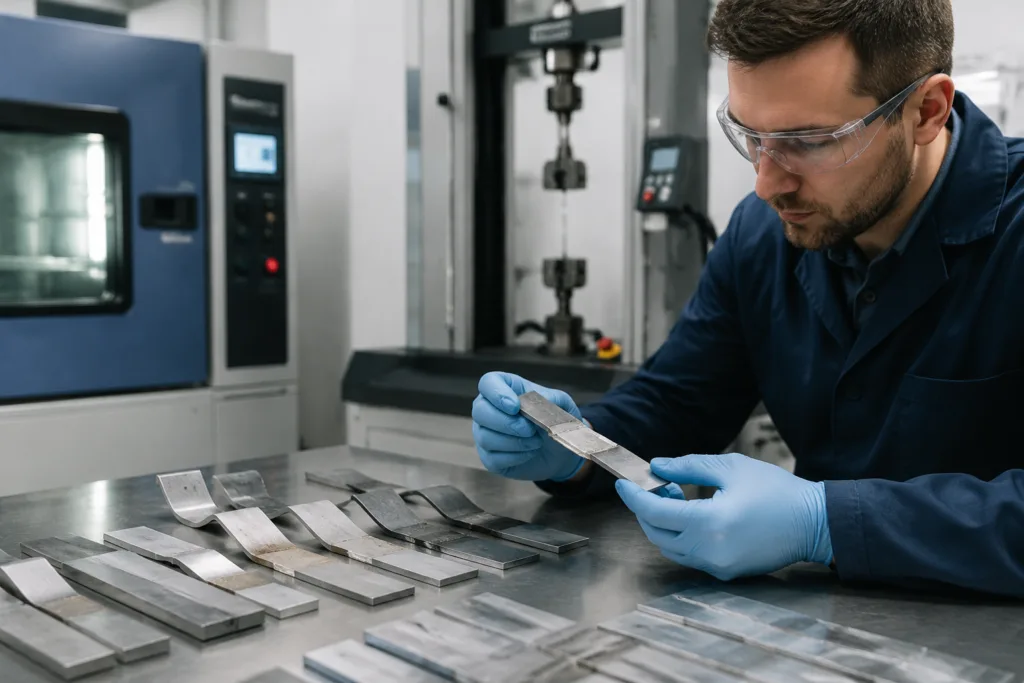
Most failures are not caused by one issue alone. They come from an interaction between substrate condition, adhesive behavior, joint design, and process variation.
- Poor surface preparation or contamination: oil, oxide instability, fingerprints, and line residues reduce wetting and long-term adhesion.
- Cracking or peel failure: adhesive stiffness may not match joint movement, especially at thin edges or impact-loaded flanges.
- Corrosion and blistering: mixed-metal interfaces, coating damage, and moisture ingress can undermine bond durability.
- Process failures: short open time, poor dispense control, incorrect mix ratio for two-part systems, incomplete cure, or batch inconsistency can create weak or variable joints.
These are the issues that should shape supplier evaluation. A useful supplier is not just one that offers a product, but one that can review the assembly, pretreatment, cure route, and validation logic with the customer team.
How ZDS LTD Supports Evaluation for Automotive Aluminum Components
For aluminum body parts, ZDS LTD works as a manufacturer and project partner in the areas that matter before scale-up: substrate review, chemistry screening, sample evaluation, and process-fit discussion. That may include comparing structural epoxy, polyurethane, or other relevant systems against the required load path, surface condition, environmental exposure, and production method. Buyers who need a broader project discussion can also review automotive adhesive solutions for vehicle assembly sourcing before moving into sample and specification planning.
Where the project requires more than standard product matching, the discussion can extend to formulation direction for heat resistance, flexibility, corrosion-related durability, or cure profile, provided the actual part design and processing conditions are known. ZDS LTD can also coordinate around packaging format, trial quantity planning, documentation review, quality-control expectations, and bulk supply considerations for export programs. Final recommendations should always be confirmed against the current technical data sheet, safety data sheet, and any required compliance documents for the selected product.
When requesting a recommendation or quotation, the most useful information to provide includes:
- Aluminum alloy and surface state for each bonded part
- Any steel, composite, coating, or fastener in the same joint
- Part function and whether the bond is cosmetic, semi-structural, or structural
- Joint geometry, gap, bondline target, and edge exposure
- Production process, cure route, and required takt time
- Operating environment, including moisture, salt, thermal cycling, and vibration
- Validation targets and any existing internal test standards
- Expected order volume, packaging preference, and trial schedule
Frequently Asked Questions
Which adhesive chemistry is usually considered first for structural aluminum body joints?
Toughened structural epoxies are often considered first because they can support high load transfer and good durability in many automotive metal-bonding applications. However, the final choice depends on substrate condition, joint design, cure method, crash requirements, and environmental exposure, so the chemistry should be confirmed through testing rather than selected by category alone.
Is cleaning aluminum enough, or is pretreatment normally required?
It depends on the application risk and durability target. Simple cleaning may be adequate for some lower-risk assemblies, but structural or corrosion-sensitive vehicle joints often benefit from a more controlled pretreatment such as conversion coating, primer, plasma treatment, or a validated prepared surface. The correct route should be confirmed on the actual substrate and process line.
Can an adhesive help prevent galvanic corrosion between aluminum and steel?
An adhesive layer can help by separating dissimilar metals and reducing direct contact, but it is not a universal corrosion fix. Performance depends on bond continuity, edge sealing, surface condition, coating compatibility, and exposure to moisture and salts. Mixed-metal joints should be validated under realistic environmental conditions.
What tests should buyers request before approving an aluminum automotive adhesive?
Useful testing usually includes initial strength, peel or impact performance, environmental aging, thermal cycling, humidity or salt exposure, and representative-part trials under actual cure conditions. The exact plan should reflect the load path, joint geometry, and service environment rather than relying only on generic coupon data.
What information should be shared with ZDS LTD for sample evaluation or quotation?
Provide the bonded substrates, surface preparation method, part function, joint drawing or dimensions, cure process, operating environment, validation targets, and expected package format or order range. That information helps determine whether a standard product may fit or whether a more specific formulation and process review is needed.