
Choosing between a water based adhesive glue system and a solvent-based adhesive system affects far more than bond formation. It influences drying conditions, line speed, worker exposure, odor control, substrate compatibility, storage, and the level of environmental resistance the final assembly can achieve. For buyers and engineers, the right choice usually comes down to matching adhesive chemistry to the substrate, process, and end-use environment rather than assuming one system is universally better.
For teams that need to compare adhesive solutions and options across different chemistries, this overview from ZDS is a practical starting point for understanding how formulation type changes real production performance.
What water-based and solvent-based adhesives actually are
Water-based adhesives use water as the main carrier or dispersion medium. The adhesive polymer is typically dispersed or dissolved in water, then forms a bond as water evaporates or is absorbed into the substrate. Common examples include acrylic, vinyl acetate, EVA, latex, and some polyurethane dispersion systems. In many converting and assembly operations, water based adhesive glue is selected for lower odor, easier cleanup, and reduced VOC burden.
Solvent-based adhesives use organic solvents as the carrier. After application, the solvent evaporates, leaving behind the resin or rubber phase that creates the bond. These systems are often chosen when fast tack build, difficult-to-wet substrates, or stronger resistance to water and heat are needed. They are common in laminating, footwear, automotive trim, and some specialty industrial bonding tasks.
The key point is that both categories cover many formulations. Buyers should avoid treating them as single products. Performance depends on the specific resin system, solids level, viscosity, additives, and curing profile.
Core differences in composition and curing mechanism
How water-based systems form a bond
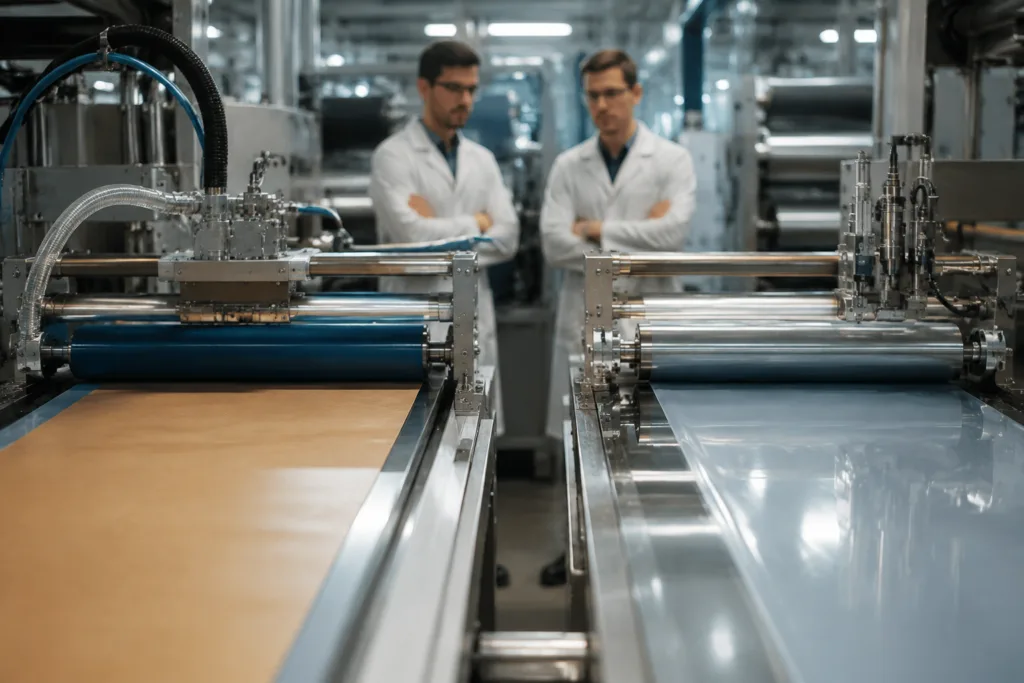
In a water-based system, water must leave the adhesive layer before full bond strength develops. This can happen by evaporation, absorption into porous substrates, or a combination of both. Because of that, porous materials such as paper, board, fabric, and wood are often a strong fit. On non-porous films or metals, drying can be slower unless heat, airflow, or thin coating weights are used.
Some water-based formulations also require particle coalescence or secondary crosslinking. That means “dry to touch” is not always the same as “fully developed performance.” This distinction matters when parts are stacked, rolled, or stressed soon after application.
How solvent-based systems form a bond
Solvent-based adhesives rely on solvent evaporation to deposit the active bonding resin. Many develop aggressive initial tack and good wetting on low-energy or less absorbent surfaces. Because organic solvents can evaporate quickly, these systems may support faster green strength in some processes, especially where substrates do not absorb water well.
In demanding assemblies where the bond must handle structural load, thermal cycling, or gap filling, buyers sometimes evaluate other chemistries beyond these two categories, including epoxy adhesive options for demanding bonds, especially when evaporation-based systems are not enough on their own.
VOC emissions, odor, safety, and environmental compliance
One of the clearest practical differences is emissions profile. Water-based adhesives generally offer lower VOC content and milder odor than solvent-based systems, which can simplify plant ventilation demands and improve operator comfort. That does not mean every water-based product is automatically low hazard, but in many routine applications it is easier to manage from an exposure and housekeeping standpoint.
Solvent-based adhesives typically involve more stringent handling because flammability, solvent vapor exposure, and regulatory restrictions become larger parts of the selection process. Storage conditions, explosion-proof equipment requirements, ventilation design, and waste handling may all need closer review.
For procurement teams, compliance cost can be as important as unit price. A cheaper adhesive can become more expensive once ventilation upgrades, solvent recovery, hazardous storage, and documentation burdens are considered. This is why environmental and safety review should be built into adhesive selection early rather than treated as a late-stage approval step.
Performance comparison in real applications
Bond strength
Solvent-based adhesives are often perceived as stronger, but that is only partly true. They can offer excellent adhesion on non-porous materials and strong initial grab, yet many modern water-based systems also provide high final bond strength when the substrates and drying conditions are suitable. Strength should be evaluated as peel, shear, or tack depending on the application, not as a vague single metric.
Initial tack and fast handling
Solvent-based systems often build tack quickly, which can support rapid lamination or assembly. Water-based products may need more time before handling strength develops, particularly on closed, smooth, or moisture-resistant surfaces. If immediate positioning or pressure-sensitive behavior matters, the balance can shift further depending on resin type and coating weight.
Flexibility and movement tolerance
Many water-based adhesives perform well in flexible packaging, labels, paper converting, and textile bonding because they can be formulated for softness and flexibility. In applications where movement, impact, or thermal expansion is significant, some manufacturers also review polyurethane adhesive choices for flexible assemblies when greater elongation or tougher flexible bonding is required.
Heat and moisture resistance
This is one of the most important dividing lines. Solvent-based systems often have an advantage where heat, plasticizer exposure, or moisture resistance must remain stable under harsher service conditions. Water-based products can perform well, but they are more sensitive to formulation details and may require crosslinking or specialty polymer design to reach comparable durability.
Drying speed
Drying speed depends on line conditions as much as chemistry. Water evaporates more slowly than many organic solvents, so water based adhesive glue may need more oven capacity, stronger airflow, or lighter coat weights to keep pace on non-porous substrates. On porous materials, however, water-based systems can run very efficiently because the substrate helps remove the carrier.
Process and application differences on the production line
The process window often decides the winner. A technically good adhesive can still fail commercially if it does not match the equipment and production rhythm.
Coating and application behavior
Water-based adhesives are common in roll coating, spray, gravure, slot die, and brush applications. They are often easier to clean from equipment, but foaming, slower drying, and sensitivity to freezing or microbial control may require attention. Solvent-based adhesives may offer smoother wetting on difficult surfaces, though solvent management and vapor control become larger operational concerns.
Open time and assembly timing
If the process needs a longer workable period for part positioning, some water-based systems can be useful. If a process needs very fast grab, short flash-off, or rapid assembly, solvent-based products may fit better. For very fast fixture requirements in small-part assembly, teams may even compare cyanoacrylate adhesives for fast-setting production when evaporation-based systems do not align with takt time.
Equipment and production efficiency
Production efficiency is not just about curing speed. It includes coating consistency, waste rate, rework frequency, cleaning downtime, and how often operators need to intervene. A water-based system may reduce odor and cleanup burden but need longer drying tunnels. A solvent-based system may cut flash-off time but increase EHS controls and permitting complexity. The most efficient option is the one that fits the entire production environment, not just one performance metric.
Typical industrial use cases for water based adhesive glue
Water based adhesive glue is frequently chosen where porous substrates, lower odor, and broad regulatory acceptance are priorities. Typical use cases include:
- paper and paperboard lamination
- carton sealing and labeling
- bookbinding and converting
- woodworking and furniture assembly
- textile lamination and fabric bonding
- some flexible packaging structures
- general product assembly where non-porous exposure is limited
These systems are often especially effective when the substrate can absorb moisture or when drying equipment is already designed around water removal. They also make sense where worker comfort, odor reduction, and easier line cleanup influence the total operating picture.
Typical industrial use cases for solvent-based adhesives
Solvent-based adhesives are often selected when wetting difficult surfaces or maintaining performance under tougher service conditions matters more than simplified handling. Common use cases include:
- film-to-film lamination
- footwear assembly
- automotive interior trim
- synthetic leather and coated fabric bonding
- rubber bonding applications
- specialty laminates exposed to moisture or heat
These systems can be a strong choice where non-porous substrates dominate and fast tack development is valuable. In applications that also require long-term sealing against heat and humidity, teams may compare silicone adhesive solutions for heat and moisture resistance if a different chemistry would better fit the service environment.
Advantages and limitations of each system
| Factor | Water-based adhesives | Solvent-based adhesives |
|---|---|---|
| VOC and odor | Usually lower | Usually higher |
| Flammability | Generally lower concern | Often a major consideration |
| Porous substrates | Often very suitable | Can work well |
| Non-porous substrates | May dry slower | Often favorable |
| Heat and moisture resistance | Formulation dependent, sometimes limited | Often stronger baseline performance |
| Cleanup | Often easier | Usually more demanding |
| Regulatory burden | Often simpler | Often heavier |
| Line speed potential | Good on porous systems, variable on films | Often strong on non-porous systems |
The table is useful as a shortcut, but final selection still depends on coating weight, drying temperature, substrate energy, pressure, and required service life. At ZDS, this is usually where custom formulation discussions become more important than broad category labels alone.
How to choose the right one for your application
Start with the substrate
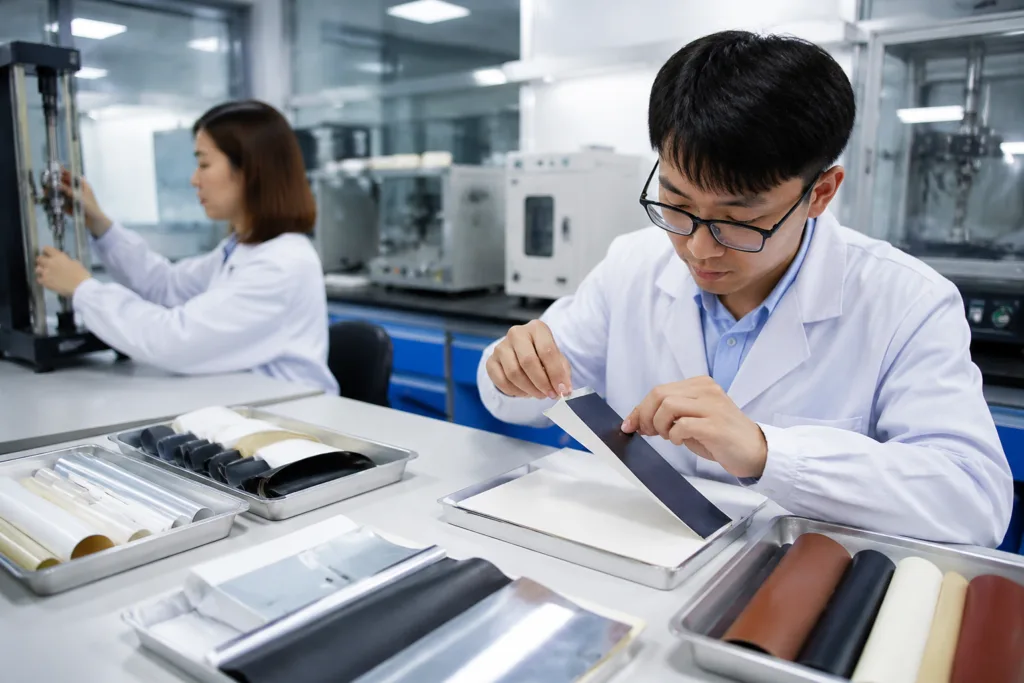
Porous materials such as paper, wood, felt, and some textiles often favor water-based systems. Smooth films, coated surfaces, plastics, rubber, and non-porous laminates often push evaluation toward solvent-based systems or other chemistries. Surface energy and contamination matter as much as substrate name, so testing after realistic surface preparation is essential.
Match the adhesive to the line conditions
Ask how the product will actually run: What is the coat weight? Is there forced-air drying? How much open time is available? Are parts assembled immediately or after a flash-off stage? Can the line tolerate longer water removal, or is rapid tack mandatory? If production constraints are strict, the adhesive must fit the line rather than forcing the line to compensate for the adhesive.
Define the real performance requirement
Do not specify “strong bond” without defining the load and environment. The important question may be peel strength on film, shear hold on a vertical surface, resistance to hot filling, flexibility after cold storage, or durability under intermittent moisture. The correct adhesive is the one that survives the specific failure mode your assembly is likely to see.
Account for regulatory and workplace factors
If the site faces VOC restrictions, odor sensitivity, or limited ventilation capacity, water-based systems often become more attractive. If the process absolutely depends on fast bonding to non-porous materials and the site already manages solvent controls well, solvent-based systems may still be the better fit.
When water-based is usually the better choice and when solvent-based is usually the better choice
Water-based is often the better choice when
- substrates are porous or semi-porous
- lower odor and reduced VOC load are priorities
- cleanup simplicity matters
- regulatory pressure is significant
- drying equipment can support water removal
- the end-use environment is moderate rather than extreme
Solvent-based is often the better choice when
- substrates are non-porous or difficult to wet
- fast tack development is important
- heat or moisture exposure is demanding
- the bond line must resist harsher service conditions
- the plant already has suitable solvent-handling infrastructure
These are decision patterns, not absolute rules. Well-designed water-based formulations can outperform expected limits in some applications, and solvent-based systems are not automatically stronger in every bond test.
Common selection mistakes to avoid
- Assuming lower VOC means lower performance. Many water-based systems are fully capable when matched to the right substrate and drying profile.
- Assuming solvent-based always means stronger adhesion. Strength depends on chemistry, surface condition, and test method.
- Ignoring drying conditions. A good water-based adhesive can underperform if airflow, temperature, or coat weight are wrong.
- Overlooking total cost. Solvent handling, ventilation, waste, and compliance can change the economics significantly.
- Testing on clean lab panels only. Real surfaces with dust, release residues, oils, or coating variation often behave differently.
- Confusing dry time with final cure. Handling strength and ultimate durability may develop on different timelines.
Conclusion
The choice between water based adhesive glue and solvent-based adhesive is not about selecting the safer option or the stronger option in the abstract. It is about matching chemistry to substrate, line design, environmental exposure, and compliance needs. Water-based systems often make sense for porous materials, lower odor operations, and simpler regulatory management. Solvent-based systems often remain valuable for non-porous substrates, rapid tack, and more demanding heat or moisture conditions. A disciplined evaluation using real substrates, actual line conditions, and clear pass-fail criteria will usually produce a much better decision than comparing categories by reputation alone.
FAQ
Is water-based adhesive always safer?
No. Water-based adhesives often have lower odor and lower VOC burden, but safety still depends on the full formulation, handling conditions, and workplace controls.
Is solvent-based adhesive always stronger?
No. Solvent-based systems can perform very well on non-porous and demanding applications, but final strength depends on chemistry, surface preparation, and the way the bond is tested.
Which system is better for high-speed manufacturing?
It depends on the substrate and drying setup. Solvent-based adhesives may support faster tack on non-porous materials, while water-based systems can run efficiently on porous substrates with suitable drying capacity.
Are water-based adhesives good for plastic bonding?
Some are, but results vary widely because many plastics are non-porous and low surface energy. Testing is important to confirm wetting, drying speed, and long-term adhesion.
Do solvent-based adhesives always have higher regulatory burden?
Often yes, because VOC emissions, flammability, storage, and ventilation requirements are usually more demanding, though the exact burden depends on local rules and formulation details.
What is the most practical way to choose between the two?
Start with the substrate, production line conditions, service environment, and compliance needs, then validate shortlisted options with realistic trials using the actual materials and process settings.