
Custom Adhesive Formulation: When Standard Products Are Not Enough
Adhesives are foundational in countless industrial applications, but standard, off-the-shelf products—though convenient—often fall short in delivering the performance, compatibility, or flexibility needed for advanced or unusual projects. Custom adhesive formulation is the solution when typical adhesives cannot match the unique demands of your process, product, or environment. This article guides you through how and why custom solutions add real value to manufacturers, engineers, and sourcing teams seeking more than conventional options.
For readers evaluating custom adhesive options, a useful next step is to explore custom adhesive formulation by a specialist manufacturer. This resource provides practical guidance on selecting tailored adhesive systems, understanding material compatibility, and reviewing ZDS’s expertise in manufacturing custom solutions. It’s ideal for those considering engineering, sourcing, or application-specific requirements beyond generic supplier offerings.
Why Standard Adhesive Products Are Sometimes Insufficient
Prevalence of Standard Adhesive Limitations
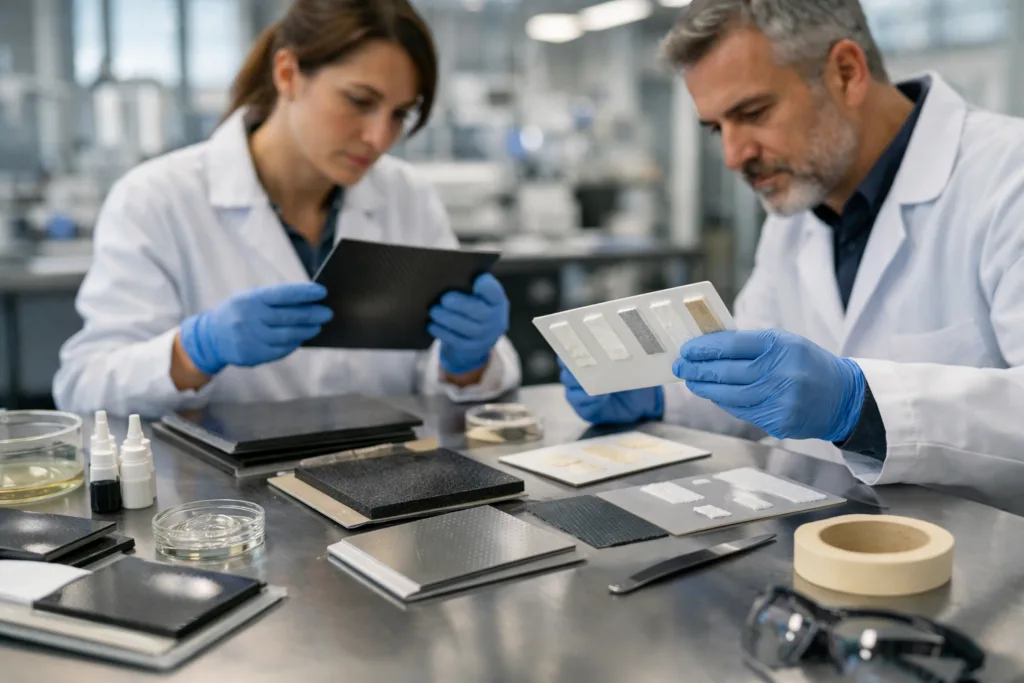
Most commercial adhesive products are engineered for broad usability, but they are fundamentally restricted by generic formulation targets. This makes them convenient for mainstream applications, but often inadequate for nonstandard substrates, challenging process requirements, or performance-critical environments. Typical limitations include cure speed, chemical resistance, required bond strength, VOC content, and compatibility with unique materials.
Where Standard Adhesives Commonly Fail
- Bonding dissimilar or exotic materials
- Extreme temperature and humidity resistance
- Regulatory compliance for specialized industries
- Unusual geometries or application methods
- Process speed and automation compatibility
- Long-term durability in harsh conditions
Case Example: Industrial Panel Assembly
Large panel assemblies in transportation or marine sectors often need an adhesive with specific flexibility, UV resistance, or rapid cure times not found in ordinary products. Standard adhesives may lead to premature bond failure or inefficient production cycles.
Signals That Your Project Requires Custom Adhesive Formulation
Performance Gaps as Key Indicators
Several signs suggest that a custom adhesive solution would provide significant benefits. These typically surface when standard products consistently underperform, fail, or create process bottlenecks.
Critical Signs to Watch
- Repeated bond failures or delamination
- Material incompatibility—adhesive not wetting or reacting properly with substrates
- Unusual environmental requirements (chemical, moisture, UV exposure)
- Regulatory pressures demanding special formulations (e.g., low VOC, food grade)
- Requirement for faster cure speed or unique application process
- Problems with equipment integration or dosing methods
Stakeholder Feedback That Signals Custom Needs
- Production managers flag process inefficiencies
- Quality teams note gaps in test results
- Design engineers request deeper material compatibility
- Maintenance teams report recurring adhesive failures
Common Custom Adhesive Development Goals
Enhancing Cure Speed
Often, manufacturing lines require adhesive that cures far more quickly than standard options allow. Custom formulation can target rapid cure without compromising bond strength or flexibility. For example, modifying a polyurethane system accelerates throughput while meeting specific mechanical requirements.
Lowering VOC Emissions
Standard adhesives may not meet strict VOC or environmental regulatory thresholds. Custom solutions allow reduction or elimination of hazardous components, supporting compliance and safety in sensitive industries such as electronics, medical device manufacturing, or automotive interiors.
Boosting Bond Strength for Challenging Substrates
Bespoke adhesive suppliers can tailor formulations for difficult-to-bond materials—composites, plastics, metals, or treated surfaces—where generic products routinely fail. Enhancing adhesion promoters, resin selection, and filler compatibility is central in these cases.
Process Integration and Equipment Compatibility
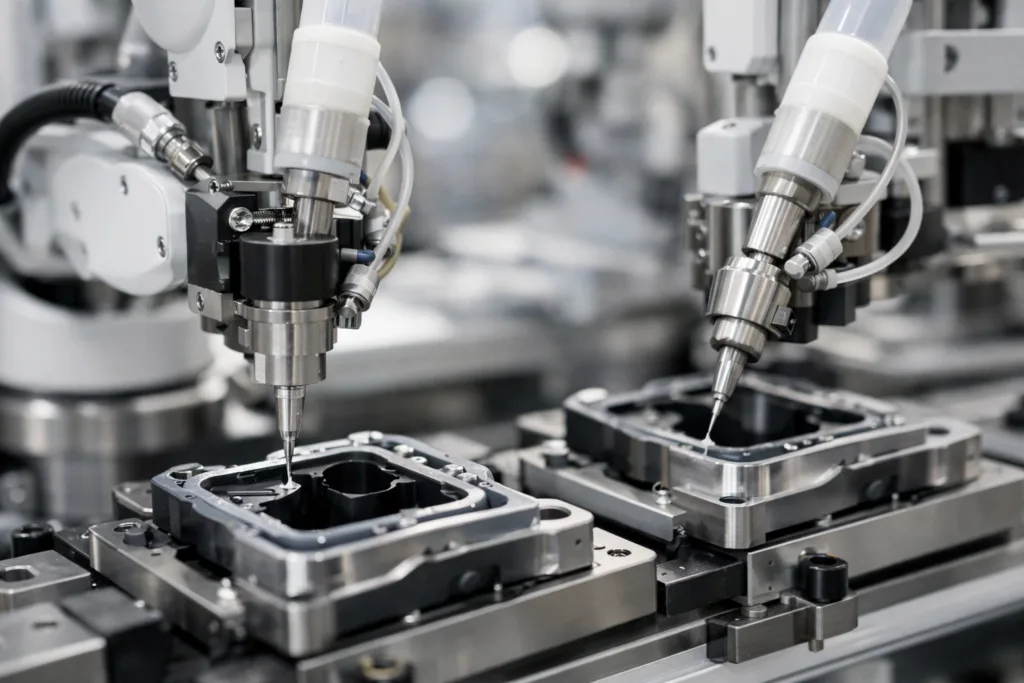
Custom adhesives are often engineered to match specific dispensing equipment, robotic application methods, or automated production lines. Adjusting viscosity, pot life, and cure mechanism helps optimize performance without extra process modifications.
Specialized Properties for Niche Applications
- Electrical conductivity or insulation (electronics)
- Thermal management (LED, semiconductors)
- UV, heat, or chemical resistance (packaging, healthcare, automotive)
- Adjustable open time for manual assembly
- Low odor or cosmetic finish (consumer goods)
- Color-matched or transparent formulations
Durability and Longevity Improvements
For applications subject to vibration, impact, or long-term environmental stress, custom adhesives can be formulated to outperform standard options in longevity, flexibility, and maintaining bond strength over years of use.
How Custom Adhesive Formulation Works: Typical Development Process
Initial Application and Problem Definition
Custom adhesive development begins with a deep dive into the application requirements, substrate properties, performance targets, and process constraints provided by the client. This information guides formulation direction.
Feasibility Analysis and Formulation Direction
The manufacturer then assesses technical feasibility—matching adhesive chemistry to substrate, environment, and process needs. This stage often includes early technical exchanges, site visits, and review of current pain points.
Iterative Formulation and Lab Testing
Adhesive chemists develop trial batches targeting the required performance. These are tested internally and, when viable, at customer facilities. Adjustments might address cure speed, viscosity, color, mechanical properties, or VOC content.
Performance Evaluation and Field Validation
After initial lab success, prototypes are tested in real-world conditions—bond strength, durability, aging, environmental exposure. Only adhesives that maintain target performance through this phase are considered for final selection.
Regulatory, Safety, and Environmental Review
If required, custom formulations undergo compliance checks for local, industry, or customer-specific regulations (such as RoHS, REACH, FDA, low VOC standards).
Scale-Up and Process Integration
Once validated, the adhesive is scaled up for production. Manufacturers work closely with clients to integrate the new product with their specific application equipment, production routines, and quality assurance protocols.
Ongoing Support and Optimization
Support continues after rollout—adjusting formulation in response to line feedback, solving application issues, and refining the adhesive for further optimization if necessary.
Who Should Consider Custom Adhesive Solutions?
Industries with Specialized Requirements
- Automotive: Material diversity and extreme conditions
- Electronics: Precise dispensing, thermal and electrical needs
- Construction: Harsh environmental factors
- Medical: Biocompatibility and regulatory pressure
- Packaging: Fast cure, unique materials
- Transportation: Vibration and structural integrity
Company Profiles Where Custom Adhesives Fit Best
Firms dealing with high-value components, strict regulatory environments, bespoke assemblies, or process-driven performance gaps gain the most from custom adhesive development.
Key Selection Criteria When Requesting Custom Adhesive Solutions
Defining Your Requirements in Detail
Clear articulation of bond strength, environmental conditions, cure speed, substrate types, process requirements, and regulatory needs is critical. Manufacturers use this input to drive meaningful formulation improvements.
Understanding Trade-offs and Feasibility
Not every target is achievable in a single system. Sometimes, increasing cure speed can decrease bond strength or flexibility; reducing VOCs might affect durability. Practical compromise helps optimize outcome.
Setting Realistic Cost-Performance Expectations
Custom adhesives typically carry slightly higher initial costs but deliver savings in process efficiency, defect reduction, and product integrity. Evaluating true cost-benefit is central to smart decision-making.
What Makes a Reliable Custom Adhesive Manufacturer?
Technical Experience Across Materials and Chemistries
Look for manufacturers with proven expertise in formulating across various chemistries such as epoxies, polyurethanes, polyaspartics, acrylics, and silicone systems. Depth in both formulation and application is essential.
Responsive Support and Iterative Development
Manufacturers who actively test, adjust, and provide ongoing optimization help ensure solutions keep pace with evolving project requirements.
Integrated Process Support
Strong partners are not just formulators—they help troubleshoot on the production line and ensure the adhesive fits seamlessly with dispensing and curing processes.
How Custom Adhesive Solutions Differ From Standard Products
| Criteria | Standard Adhesives | Custom Adhesives |
|---|---|---|
| Performance | General-purpose, moderate | Tailored to exact specs |
| Substrate Compatibility | Limited/material-dependent | Engineered for unique materials |
| Regulatory Fit | Broad, not always compliant | Specifically formulated for compliance |
| Process Integration | Often generic | Matched to existing equipment/processes |
| Cost/Benefit | Lower cost, higher inefficiency risk | Higher value, process optimizations |
| Support | Minimal technical guidance | Continuous, application-specific support |
Common Misconceptions About Custom Adhesive Formulation
- “Custom adhesives are always prohibitively expensive.” (Usually offset by process gains or reduced defects.)
- “Lead time for development is always excessive.” (Initial evaluation can be fast; full rollout may require phased testing.)
- “Only massive projects justify custom adhesives.” (Smaller-scale or high-value projects often benefit even more.)
- “Custom is just rebadged standard adhesive.” (Top manufacturers formulate new systems based on thorough needs analysis.)
Steps to Start Custom Adhesive Development
- Identify clear project needs and gaps
- Gather substrate details, performance targets, and process information
- Contact a manufacturer experienced in custom formulation
- Engage in technical discussion and feasibility review
- Test trial adhesives and evaluate process fit
- Iterate and refine based on real-world feedback
Utilizing Manufacturer Services
A structured approach ensures practical solutions. For deeper guidance on tailored systems, manufacturers like ZDS offer custom adhesive solution services calibrated to industry requirements. This includes formulation, lab-scale testing, application integration, and regulatory review.
Factors Influencing Custom Adhesive Success
- Quality of initial technical input
- Depth of manufacturer chemistry expertise
- Readiness to trial and refine adhesive in production
- Ongoing collaboration across engineering and quality teams
- Selection of a manufacturer with strong process integration capabilities
Custom Adhesive Formulation: Practical Application Examples
Electronics: Low-VOC, Fast-Cure Solutions
Electronics assembly often needs adhesives that cure rapidly, with ultra-low VOCs to comply with health regulations. Custom formulation balances speed, safety, and precise dispensing performance.
Automotive Panel Bonding: Extreme Durability
Panel adhesives must perform under cycles of vibration, heat, and cold. Custom chemistry delivers bond strength and flexibility not available in standard solutions.
Medical Devices: Biocompatible, Regulatory-Compliant Adhesives
Medical manufacturers rely on custom systems to meet demanding biocompatibility and sterilization requirements.
Potential Challenges in Custom Adhesive Projects and How to Navigate Them
Balancing Technical Ambitions With Process Reality
Every custom project faces trade-offs. Experienced manufacturers help clients prioritize the most critical targets and design adhesives with practical integration in mind.
Communicating Across Teams
Success depends on clear, continuous communication between design, process, purchasing, and application teams—guided by manufacturer technical support.
Timeframe and Testing Requirements
Custom adhesives require realistic planning—phased testing, feedback, and adjustments. While initial feasibility may be quick, thorough validation prevents costly missteps.
What Sets Custom Adhesive Solutions Apart: Manufacturing Perspective
From the manufacturer’s perspective, custom adhesives are never one-size-fits-all. Success relies on deep chemistry expertise, real production feedback, and readiness for ongoing optimization. Manufacturers like ZDS bring nuanced understanding of industrial process requirements and work closely with teams to deliver adhesives that improve efficiency and product integrity.
Integrating Custom Adhesive Solutions Into Your Process
Production Line Fit and Application Methods
Matching adhesives to automated or manual processes often determines real-world success. Manufacturers may adjust viscosity, curing mechanism, and open time to suit exact routines.
Training and Technical Support
Practical rollout includes operator training and process troubleshooting, minimizing risk and maximizing results.
ZDS’s Approach to Custom Adhesive Formulation
ZDS’s development process emphasizes collaborative engagement with engineering and procurement teams, detailed needs assessment, iterative formulation, real-world validation, and ongoing support. This experience-based approach helps clients make practical decisions and avoid common mistakes in custom adhesive selection.
Custom Adhesive Formulation: When Standard Products Are Not Enough

In summary, custom adhesive solutions offer process-driven performance, material compatibility, regulatory fit, and operational efficiency not attainable with standard products. Recognizing when your project faces typical adhesive limits—and engaging a capable manufacturing partner—empowers your team with stronger, more reliable results.
Frequently Asked Questions
What are the main indicators that a project needs custom adhesive formulation?
Typical indicators include recurring bond failures, substrate incompatibility, unique process requirements, strict regulatory needs, and limitations of standard adhesive performance.
Is custom adhesive development only suitable for large-scale projects?
No, custom adhesive solutions are valuable for small-scale, high-value, or technically demanding projects where standard products do not meet key requirements.
How long does it take to develop a custom adhesive?
Initial feasibility may be completed within weeks, but full development—including testing and process integration—can require several months, depending on complexity.
Can custom adhesives help lower VOC emissions in manufacturing?
Yes, custom formulations often target reduced VOC content, supporting environmental requirements and regulatory compliance in sensitive industries.
What is the cost difference between standard and custom adhesive solutions?
Custom adhesives may have higher upfront costs but deliver savings and performance gains through improved process efficiency, reduced defects, and longer product life.
How should companies start the custom adhesive development process?
Begin by clearly defining technical targets, materials, environment, and process needs, then partner with a manufacturer experienced in custom formulation for collaborative development.