
Buyers approving a waterproofing adhesive for production need more than a simple claim that the material is water resistant. In real assemblies, moisture can arrive as splash, condensation, immersion, washdown, vapor, or long-term humidity, and each exposure mode can damage a bond in different ways. That is why waterproof adhesive test data should be reviewed as a service-condition qualification package rather than a single pass or fail statement. From our manufacturing perspective, the right approval decision depends on how the adhesive performs before exposure, after exposure, and after repeated environmental stress that reflects the actual product design.
If your team needs to review waterproofing adhesive qualification options for moisture-exposed assemblies, it helps to connect the lab report to the real bonding job early. We often support buyers who need to compare substrates, dispensing methods, cure profiles, bond-line thickness, and moisture durability targets before they lock a formula into production. That can include adjusting viscosity for application method, screening different chemistries for adhesion retention, preparing samples for customer trials, and planning packaging and batch consistency around the final approval path.
Why “Passes Water Resistance” Is Too Vague
One of the most common qualification problems is relying on a broad statement such as “good water resistance” or “passes waterproof test.” Those phrases do not tell a buyer what was actually tested, how long the exposure lasted, what substrates were used, whether the samples were bonded or potted, how the parts were cured, or what happened to bond strength after conditioning. A room-temperature lap shear result on dry coupons is not the same as a post-immersion adhesion retention result on a coated metal-plastic assembly.
In practice, moisture-related failure can appear as adhesive softening, interface failure, swelling, hydrolytic damage, corrosion-assisted debonding, cohesive cracking, or stress buildup after temperature swings. That is why we encourage teams to review how water, humidity, and steam affect bond durability over time instead of accepting generic wet-service wording. A useful report should show what changed after exposure, not just what the adhesive achieved in an untreated state.
For buyers, vague language creates approval risk in two ways. First, it can hide a mismatch between the supplier’s test and your service environment. Second, it can make cross-supplier comparison impossible, because each manufacturer may be using a different internal method, substrate set, cure schedule, and pass threshold.
What Buyers Should Define First: Substrate, Exposure Type, and Failure Mode
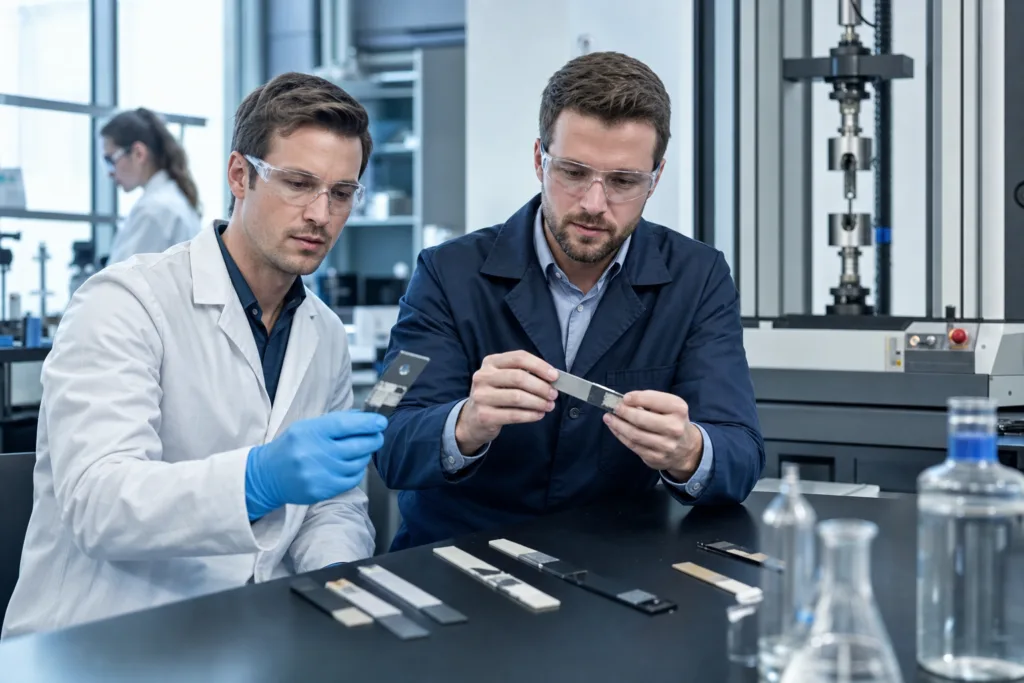
Before reviewing a test report, define the service question clearly. The most useful approval package starts with three basics: what is being bonded or sealed, what water-related exposure the assembly will face, and how failure would appear in the field.
Substrate definition
Waterproofing performance depends heavily on the actual surfaces involved. Aluminum, stainless steel, ABS, PC, glass, coated steel, FR-4, ceramics, and elastomers all interact differently with moisture and adhesion promoters. Surface contamination, oxidation, mold release residue, and roughness can change test outcomes significantly. Buyers should request that the report identifies the exact substrate type, surface finish, and cleaning or pretreatment method. When this information is missing, wet-durability data can be misleading. In many cases, recognized guidance on surface preparation for adhesive bonding helps teams ask better questions about whether the test coupons really matched production surfaces.
Exposure type
“Water exposure” can mean many different environments. A handheld electronic device may face intermittent splash and humidity. An outdoor junction box may face rain, standing water, UV, and thermal cycling. A transportation component may face washdown, salt contamination, and vibration. A bonded filter housing may see continuous internal moisture plus occasional pressure pulses. These are not interchangeable conditions, so the supplier’s data should be mapped to the actual use case.
Failure mode
Different applications tolerate different kinds of degradation. In some assemblies, a small drop in lap shear strength is acceptable if sealing remains intact. In others, any edge lifting, crack propagation, or insulation loss is unacceptable. Engineers should define whether they are trying to prevent leakage, structural bond loss, electrical failure, corrosion ingress, delamination, or cosmetic defects. This makes it easier to judge which tests matter most.
Waterproof Adhesive Test Data Buyers Should Prioritize
Once the service conditions are defined, the next step is to review a layered data set rather than one headline result. Good waterproof adhesive test data usually combines baseline mechanical performance, post-conditioning retention, environmental cycling, and process information that explains how the sample was made.
| Data Area | What Buyers Should Check | Why It Matters |
|---|---|---|
| Baseline bond performance | Initial shear, peel, or tensile result on relevant substrates | Shows starting strength before environmental conditioning |
| Conditioned retention | Strength after immersion, humidity aging, or thermal exposure | Reveals whether the bond survives real service stress |
| Failure mode | Adhesive, cohesive, or substrate-related failure notes | Helps identify interface weakness and stress behavior |
| Specimen details | Substrate, thickness, surface prep, cure schedule, dwell time | Shows whether the test is comparable to production |
| Cycling data | Thermal and humidity cycling or repeated wet-dry exposure | Important for outdoor and variable-temperature products |
| Application process | Viscosity, mix ratio, pot life, dispensing method, cure profile | Confirms the material can be applied consistently in production |
Immersion, Humidity Aging, Steam Exposure, Adhesion Retention, and Thermal Cycling
The most informative qualification packages show how the adhesive behaves under more than one moisture-related condition. Continuous immersion can reveal water uptake, swelling, interface weakness, and hydrolytic change. High-humidity aging can show slower moisture diffusion effects and long-term retention issues. Steam or hot, wet conditions can accelerate damage mechanisms that would take much longer at room temperature. Thermal cycling after moisture conditioning can expose stress mismatches between substrates and the adhesive layer.
From our formulation and production work, we find that post-conditioning retention is often more valuable than a single initial strength number. A supplier should ideally show the starting bond performance, the conditioning environment, the exposure duration, and the remaining performance after exposure. This logic aligns with recognized work on the moisture and temperature on adhesive bonds, where retained performance after conditioning is central to understanding whether an adhesive is actually suitable for wet service.
For outdoor or intermittently wet assemblies, cyclic testing can be especially helpful because real products rarely stay in one constant laboratory condition. They heat up, cool down, absorb moisture, dry out, and repeat that cycle many times. If a report includes repeated humidity and temperature swings, it is usually more decision-useful than a single mild conditioning step.
How to Read Waterproof Adhesive Test Data Without Overlooking Gaps in the Spec
A data sheet or approval report can look technical while still leaving major unanswered questions. Buyers should review both the number and the context behind the number. Ask whether the test method was internal or standardized, whether the pass threshold was defined before testing, and whether the specimen geometry matched the actual joint design. For example, a thin overlap bond and a deep bead seal do not absorb moisture or distribute stress in the same way.
Also check whether the report identifies the age of the sample when tested. Some adhesives continue developing final properties for hours or days after fixture. Others perform differently depending on whether they were room-temperature cured, heat accelerated, or post-cured. Without that context, results may not transfer reliably to production use.
We also advise reviewing whether the baseline and post-exposure numbers are both shown. A retention percentage without the original value can be misleading, and a strong dry result without conditioned data can create false confidence. For buyer teams, the goal is not to collect more data than necessary but to collect data that answers the field-risk question clearly.
When IP-Style Thinking May Help Product Teams Frame the Requirement
Not every adhesive approval needs a formal ingress-protection test, but IP-style thinking can still help define the requirement. Many product teams find it useful to describe whether the assembly must survive dripping water, splashing, powerful jets, temporary immersion, or more severe enclosure exposure. The framework behind the IEC 60529 IP Code can help teams separate “waterproof” marketing language from the actual exposure pattern the enclosure or bonded area must handle.
This matters because an adhesive may perform well as a bond line inside a protected enclosure yet fail when used as an exposed seal at the edge of a housing. Buyers should therefore ask whether the test setup reflects the adhesive’s real role: structural bond, edge seal, gap filler, encapsulant, potting compound, or multi-function material.
How to Match Test Type to Real Service Conditions
Good approval decisions are based on matching the test environment to the service environment as closely as practical. That does not mean every buyer needs a custom reliability program, but it does mean the chosen tests should reflect the dominant failure risks.
| Service Condition | Useful Test Focus | Buyer Question |
|---|---|---|
| Outdoor bonded enclosure | Humidity aging, wet-dry cycling, thermal cycling, adhesion retention | Does the bond survive rain, condensation, and temperature swings? |
| Electronics potting or sealing | Water ingress control, insulation retention, immersion or humidity exposure | Does moisture exposure change electrical or adhesion performance? |
| Washdown equipment | Hot-water exposure, steam, chemical cleaning compatibility | Will the bond soften or lift after repeated cleaning cycles? |
| Plastic-metal assembly | Differential expansion cycling, peel retention, edge failure review | Can the adhesive absorb movement without losing seal integrity? |
| Deep-gap sealing | Cure-through verification, bubble control, shrinkage, retained flexibility | Was the tested bead geometry similar to production thickness? |
When teams are unsure how to define that match, we often recommend using adhesive selection technical support for service-condition matching so that the qualification plan covers the actual risk drivers rather than generic water-resistance claims.
What Data Matters for Electronics, Outdoor Parts, and Water-Exposed Assemblies
Electronics
Electronics buyers usually need to assess both bonding performance and protection performance. For potted or sealed electronics, moisture exposure can affect insulation reliability, component stress, adhesion to housings, and long-term stability at interfaces. Reports should therefore identify not only bond retention but also cure completeness, void control, and whether moisture conditioning changes the intended electrical protection function. In some projects, buyers may compare materials such as ZDS-168AB-Z epoxy insulation and waterproof adhesive for electronics with other chemistries based on insulation needs, rigidity, and wet-exposure durability.
Outdoor parts
Outdoor assemblies often require cycling data more than static immersion data. Sun-heated surfaces, cool nights, seasonal humidity change, and rain ingress create expansion and contraction that can stress the adhesive repeatedly. For those applications, buyers should prioritize retention after cycling, edge integrity, crack resistance, and adhesion on production-finished surfaces rather than polished laboratory coupons.
Water-exposed industrial assemblies
For assemblies exposed to water in service, including pumps, utility components, lighting, rail equipment, and equipment housings, the key question is often whether the adhesive remains sealed and bonded after long exposure while still tolerating vibration or movement. The required balance between hardness and flexibility becomes important here. A very rigid adhesive may show strong dry shear values yet perform poorly if stress concentrates at the bond edge after swelling or thermal movement.
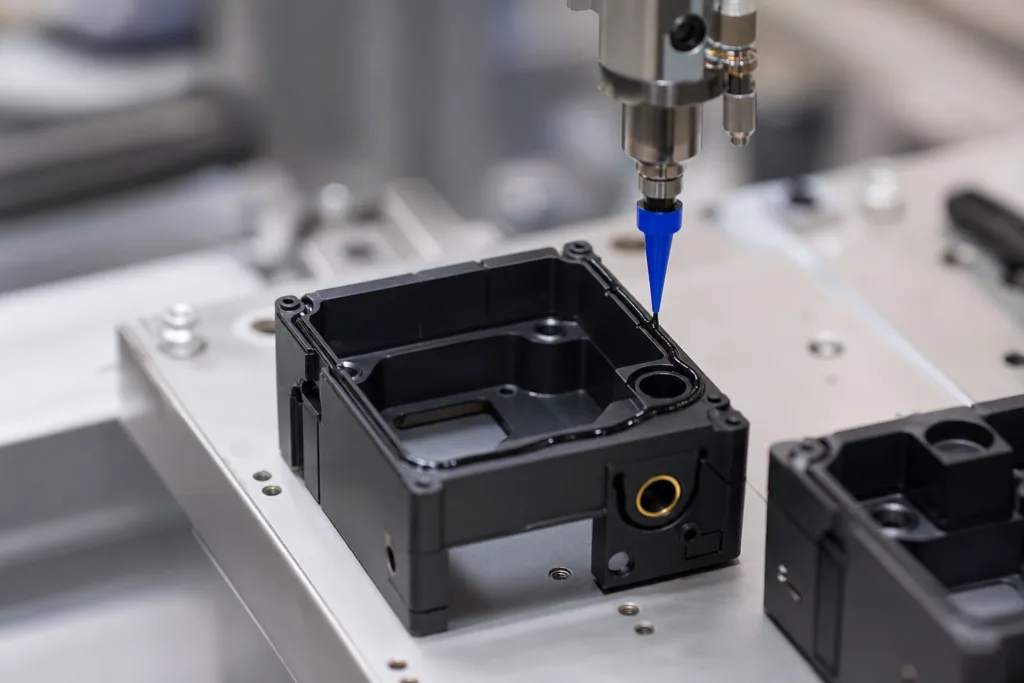
Key Performance Metrics to Review: Bond Strength, Peel, Shear, Flexibility, and Post-Exposure Retention
Not all metrics carry the same value for every design, but most buyers should review these five areas carefully.
Bond strength
Initial strength provides the starting point. The relevant metric may be lap shear, tensile, peel, cleavage, or another joint-specific value. What matters is not choosing the highest number, but choosing the number that reflects the real loading mode.
Peel and edge resistance
Water often attacks joints from edges and interfaces. Peel-related performance can therefore be more revealing than bulk shear strength for flexible assemblies, films, membranes, and bonded housings.
Flexibility versus rigidity
Flexibility can help manage thermal expansion differences and impact stress, while excessive softness may reduce dimensional stability or long-term load bearing. Buyers should review hardness, elongation logic, and post-aging behavior, not just dry-state feel.
Post-exposure retention
This is one of the most important metrics in waterproof qualification. The question is not only “how strong is the bond?” but “how much of that performance remains after relevant exposure?” Retention should be evaluated after the specific condition that resembles field use.
Failure analysis
Ask for failure descriptions, not just values. If wet-aged samples fail adhesively at one substrate while dry samples fail cohesively, that tells the buyer where the weakness actually is and whether surface prep, primer use, or chemistry selection needs to change.
What Sample and Production Data Buyers Should Request Before Approval
Approval should not stop at the lab result. Buyers also need confidence that the tested material can be manufactured, supplied, and applied consistently. At ZDS, we usually recommend that qualification packages include sample batch identification, manufacturing date, storage condition, shelf-life status, and the exact cure path used during testing. A report without those details may be hard to reproduce later.
Procurement and engineering teams should also ask for the following:
- sample-to-sample consistency across more than one batch when the project is important or large-volume
- mix ratio and mixing tolerance for two-part systems
- viscosity range and any thixotropy notes relevant to dispensing or bead control
- pot life, open time, fixture time, and full cure window
- recommended substrate cleaning and pretreatment steps
- packaging options aligned with pilot and mass-production needs
- storage temperature, moisture sensitivity during storage, and shelf-life handling
- change-control expectations if the material is customized or private labeled
These points are closely tied to approval risk because a waterproof adhesive that performs well in a controlled supplier test can still fail in production if mixing, dispensing, curing, or storage conditions are not stable. That is why we encourage teams to review industrial quality control checks for moisture-resistant bonding as part of supplier evaluation, not as an afterthought.
Red Flags in Qualification Reports: Short Test Duration, Missing Controls, and Non-Representative Substrates
Some approval reports look complete until you ask what is missing. The most common red flags include very short conditioning times, no comparison between baseline and exposed samples, no failure mode description, and no clear record of surface preparation. Another frequent issue is the use of convenient laboratory substrates rather than the actual coated, textured, plated, or molded surfaces used in production.
We also watch for test conditions that are too mild to be meaningful. A brief water dip may say little about a component that sees months of humidity or repeated cleaning cycles. A supplier may not need to run every possible test, but the chosen tests should be logically connected to the real service condition. If the adhesive is going into an outdoor or intermittently wet product, ask whether the report includes cycling or whether the protocol remained static and gentle throughout.
Finally, watch for approval packages that ignore process realism. If the tested sample used a thin, carefully controlled lab bond line but your production part will have variable gaps or deeper sections, the report may overstate performance. For sealing, potting, and encapsulation jobs, bead geometry, cure depth, and bubble control matter as much as raw chemistry selection.
A Practical Waterproofing Adhesive Approval Checklist
For many buyers, a short decision checklist is the easiest way to avoid overlooking critical qualification details.
- Does the report identify the exact substrates and surface preparation?
- Does the moisture exposure type match the real product environment?
- Are both baseline and post-exposure results shown clearly?
- Is retention expressed against a meaningful starting value?
- Are failure modes described after conditioning?
- Does the test include enough duration or cycling to be decision-useful?
- Did the cure schedule and bond-line geometry match likely production conditions?
- Are process properties such as viscosity, pot life, and fixture time suitable for manufacturing?
- Are sample batch details, storage condition, and shelf-life status documented?
- Is there a plan for pilot validation on real parts before final approval?
When buyers work through these questions early, qualification becomes faster and more defensible. It also reduces the chance that a product passes an internal review but later fails in field exposure because the wrong data set was treated as sufficient.
How ZDS Helps Customers Review Test Expectations More Clearly
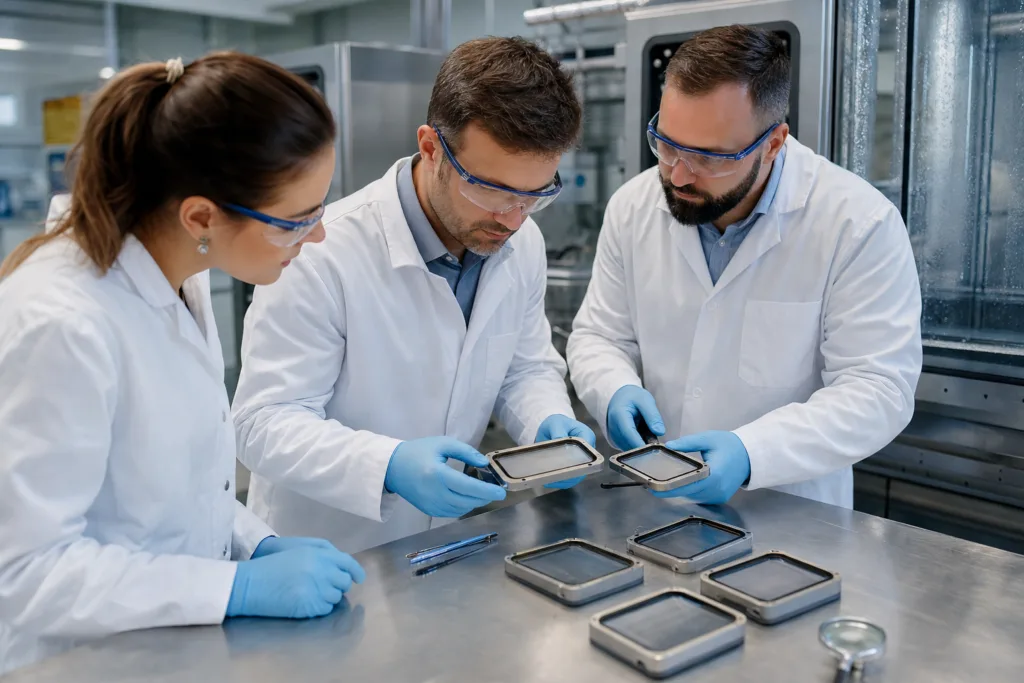
From our adhesive manufacturing perspective, the most effective waterproof qualification process is collaborative rather than document-driven only. We help customers compare chemistries against actual substrates, moisture exposure patterns, curing limits, and production constraints so the test package answers the real approval question. In some cases that means adjusting viscosity or flexibility; in others it means selecting a different cure mechanism, changing the test coupon design, or adding a post-exposure retention check before pilot release.
For OEM, private label, and industrial sourcing teams, this kind of structured review is especially valuable when several candidate materials appear similar on a basic data sheet. The real difference often appears in adhesion retention, process stability, sample reproducibility, and how clearly the supplier can explain the relationship between lab testing and production use.
Conclusion
Approving a waterproofing adhesive should never rely on a generic claim alone. The most useful waterproof adhesive test data shows how the material behaves on the right substrates, under the right moisture exposure, with the right cure conditions, and with clear post-exposure retention results. When buyers review baseline strength, conditioned performance, failure mode, process realism, and production consistency together, they make better approval decisions and reduce downstream risk. In practical terms, the goal is not to find the adhesive with the most impressive isolated number, but the one with the most believable fit for your real service environment.
FAQs
What is the most important waterproof adhesive test data for buyer approval?
The most important data is usually post-exposure retention on the actual or closely matched substrates, because it shows whether the bond still performs after moisture conditioning rather than only in a dry lab state. Initial strength matters, but buyers should also request the exposure method, test duration, cure condition, and failure mode so the result can be tied to real service use.
Should buyers prioritize immersion testing or humidity aging?
That depends on the real exposure pattern. Immersion testing is more relevant for assemblies that may sit in water or face prolonged liquid contact, while humidity aging is often more useful for products exposed to condensation, damp air, or long-term environmental moisture. Many industrial approvals benefit from reviewing both if the assembly will encounter mixed conditions over its service life.
Why can a waterproof adhesive pass one test and still fail in production?
The usual reason is that the test did not reflect the actual joint design, substrate condition, cure process, or service environment. An adhesive may perform well on clean lab coupons with a controlled thin bond line, then struggle on textured, coated, contaminated, or moving production assemblies exposed to repeated moisture and temperature change.
What sample information should buyers request before final approval?
Buyers should ask for batch identification, manufacturing date, storage condition, shelf-life status, cure schedule, mix ratio if applicable, viscosity range, and any substrate preparation instructions used during testing. These details help determine whether the result can be reproduced in pilot and full-scale production instead of remaining a one-time lab outcome.
How much test duration is enough for a waterproofing adhesive review?
There is no single correct duration because the answer depends on the product’s service condition and risk level. A short test may be acceptable for preliminary screening, but final approval should use a duration or cycling profile that is meaningful for the actual application, especially for outdoor parts, electronics, washdown equipment, or assemblies expected to operate for long periods in damp environments.
When should buyers ask for customized testing or formulation adjustment?
Buyers should ask for customized testing or formulation review when the standard supplier data does not match the real substrates, bond-line thickness, exposure mode, dispensing process, cure limits, or performance target of the project. This is especially important when the assembly combines unusual materials, requires flexible sealing and bonding in one material, or needs a specific packaging format for pilot and mass production.