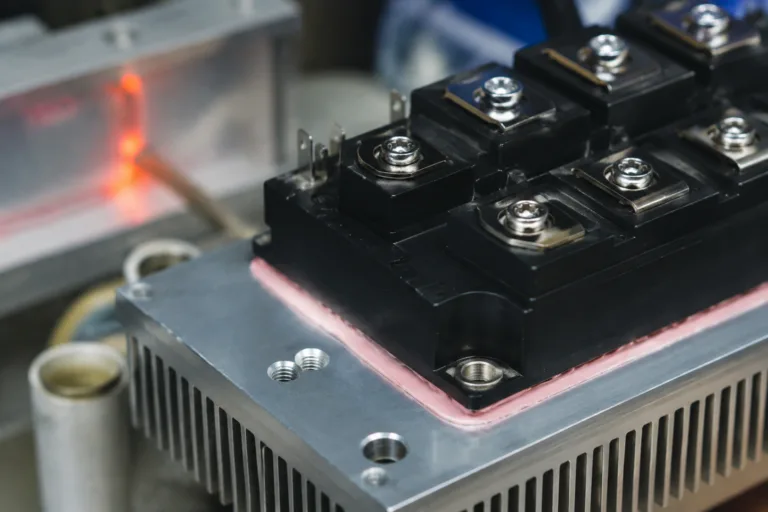
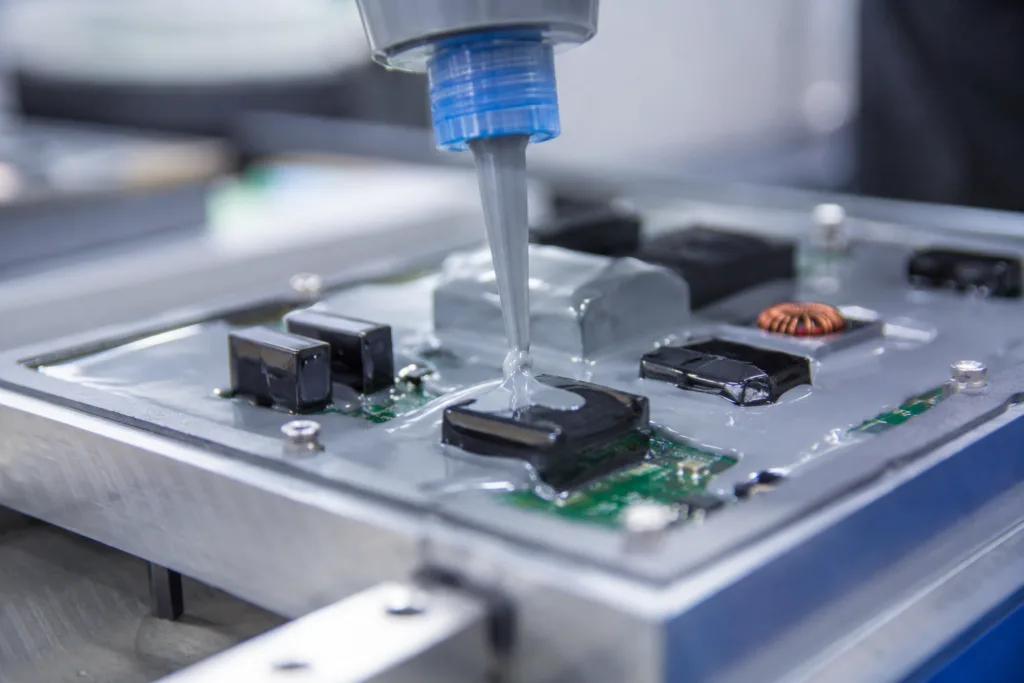
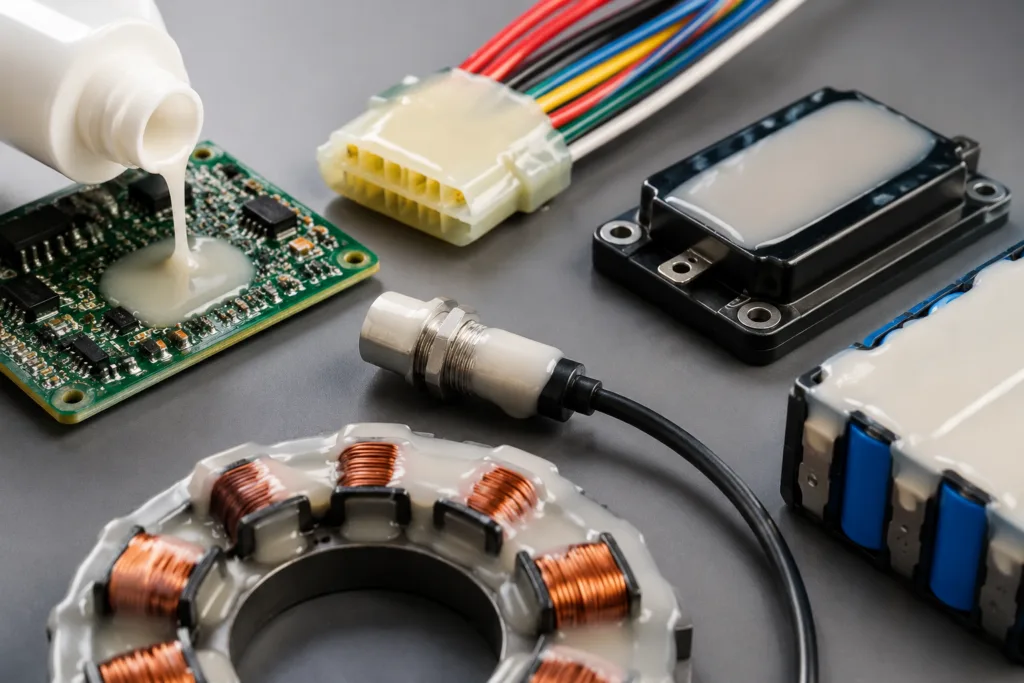
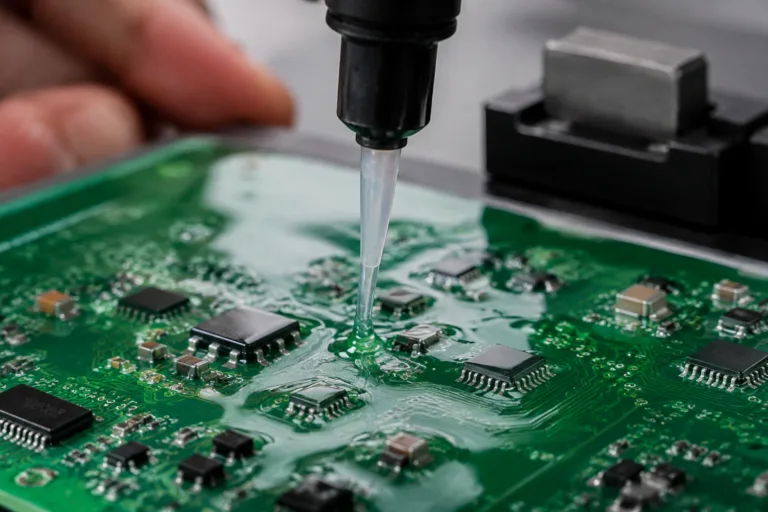
A realistic close-up scene showing industrial insulation adhesive application on electronic components for electrical protection in a modern electronics manufacturing environment.

Insulation Adhesive Manufacturer

Custom insulation adhesive solutions for PCB protection, electronic components, power modules, batteries, sensors, control units, and electrical assemblies.
Insulation adhesives are used to protect electronic and electrical parts from short circuits, moisture, dust, vibration, and environmental stress.
As an adhesive manufacturer, ZDS develops and supplies custom insulating adhesive solutions for PCB assemblies, sensors, LED modules, batteries, power supplies, automotive electronics, industrial control systems, and outdoor electrical products.

Insulation Adhesive Solutions for Electrical Protection

Electrical insulation is important in many electronic and industrial products. A suitable insulation adhesive can help protect components, improve product safety, and reduce the risk of electrical failure.
Insulation adhesives may be used for bonding, coating, sealing, potting, fixing, or protective encapsulation. The right formula should match the component design, voltage level, material surface, curing process, and working environment.
ZDS helps customers choose or customize insulation adhesives based on electrical performance, production process, and long-term reliability requirements.

What Are Insulation Adhesives Used For?

Insulation adhesives are used when electronic or electrical parts need stable protection and safer operation.

Common Uses Include:

  • PCB insulation protection
  • Electronic component fixing
  • Wire and connector protection
  • Power module insulation
  • Sensor protection
  • Battery pack insulation
  • LED module protection
  • Control unit sealing
  • Electrical housing protection
  • Coil and motor insulation support
  • Potting and encapsulation
  • Moisture and dust protection
  • High-voltage or low-voltage component protection
A realistic close-up product photography scene illustrating multiple insulation adhesive applications across electronic and electrical components, with clean industrial styling and detailed protection examples.

Insulation Adhesives by Application

A realistic close-up of protective insulating adhesive on a PCB in a clean electronics manufacturing environment, highlighting component protection and precision application.

PCB Insulation Adhesives

Help protect circuit boards from electrical failure, moisture, dust, and environmental stress.
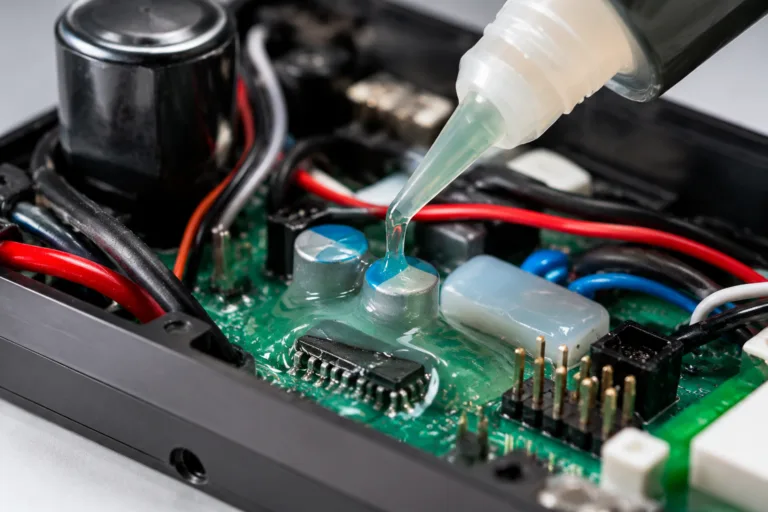
Professional close-up product photo of insulation adhesive applied to small electronic components, with a visible protective layer and a clean, precise assembly environment.

Electronic Component Insulation Adhesives

Used to fix and protect sensitive components while reducing electrical risk.
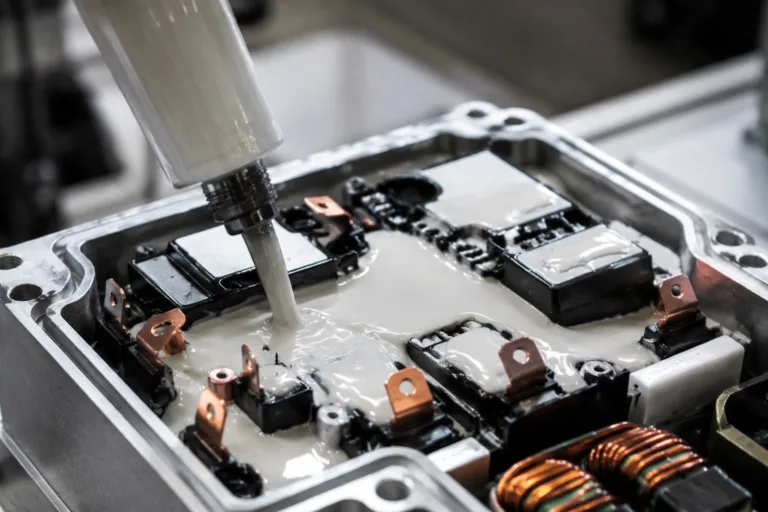
A realistic close-up industrial scene of insulating adhesive being applied inside a power module, highlighting electrical protection, durability, and precision manufacturing.

Power Module Insulation Adhesives

Provide insulation and protection for power-related devices that may face heat, voltage, vibration, or moisture.
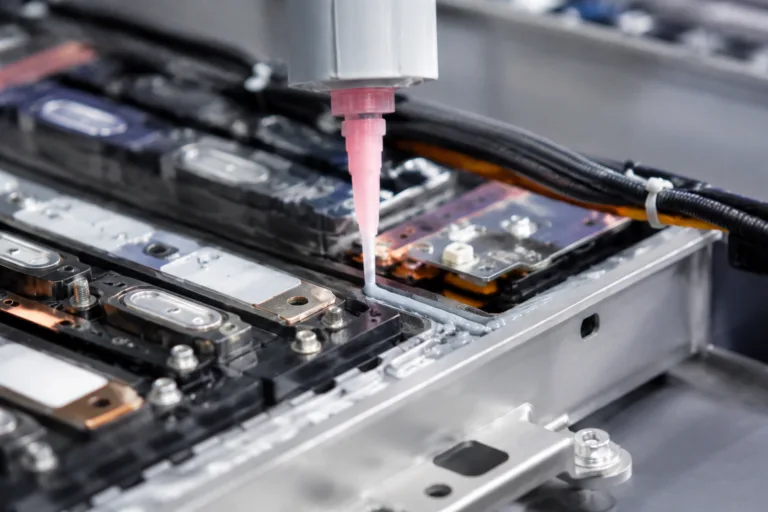
Professional close-up product photo of battery insulation adhesive applied inside an energy storage module, emphasizing electrical protection, sealing, fixing, and vibration resistance.

Battery Insulation Adhesives

Support electrical protection, bonding, fixing, sealing, and vibration resistance in battery-related structures.
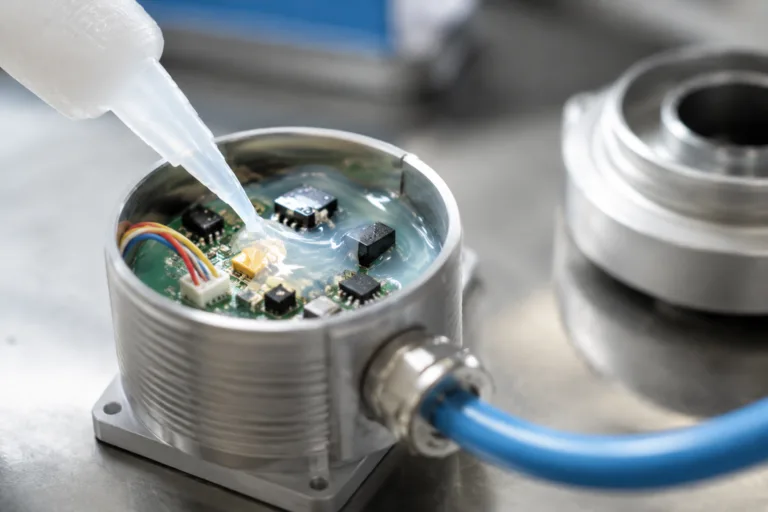
A realistic close-up industrial scene of insulating adhesive applied around compact sensor components inside a small housing, illustrating protection against moisture, dust, vibration, and electrical interference in a clean technical composition.

Sensor Insulation Adhesives

Protect sensor components from electrical risk, moisture, dust, vibration, and temperature changes.
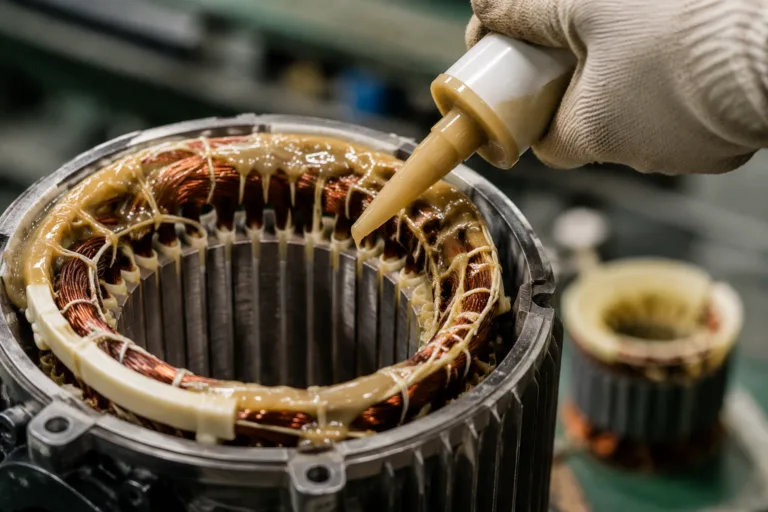
A realistic close-up industrial scene showing insulating adhesive applied to motor coils and stator components for electrical insulation, fixation, and protection.

Motor and Coil Insulation Adhesives

Support insulation, fixing, and protection in motor-related components.
ZDS Insulation Adhesive

ModelAppearanceViscosityCuringMore
ZDS-5013ABMore
ZDS-2186ABAmber liquid18000-30000 cps5-8 min @25ยฐCMore
ZDS-PA1600AB8 min @25ยฐCMore
ZDS-703ABMore
ZDS-5017ABMore
ZDS-1346AB5 min @25ยฐCMore
ZDS-4018AB1200-1800 cps10-30 s @365-405nmMore
ZDS-5014AB24 h @25ยฐCMore
ZDS-1101AB50000-80000 cps30 min @25ยฐCMore
ZDS-2109011Colorless to light yellow transparent liquid12000-35000 cps150-200mj (50W LED light 395nm)More
ZDS-2201061Transparent or yellowish liquid7 cps200 mJ @ 365/395nm LED lightMore
ZDS-2011031Translucent liquid (thixotropic)10000-25000 cps880mj exposure (2KW medium pressure mercury lamp)More

Custom Insulation Adhesive Options

As a custom adhesive manufacturer, ZDS can adjust insulating adhesive properties based on your component structure, electrical requirements, and production process.

Customizable Properties Include:

  • Viscosity
  • Flowability
  • Curing speed
  • Working time
  • Hardness
  • Flexibility
  • Dielectric strength
  • Volume resistivity
  • Electrical insulation performance
  • Thermal resistance
  • Thermal conductivity options
  • Waterproof and moisture resistance
  • Flame-retardant performance
  • Chemical resistance
  • Low shrinkage
  • Bubble control
  • Color and transparency
  • Packaging for manual or automated dispensing
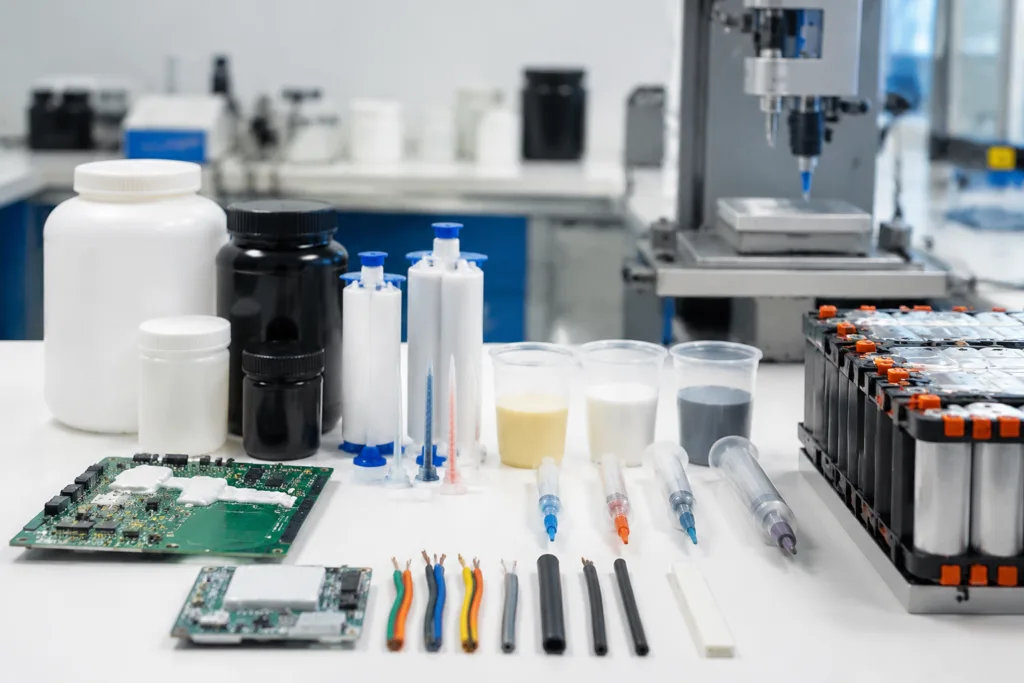
A realistic industrial laboratory scene focused on custom insulation adhesive formulation development for electrical protection applications, with neatly arranged samples and testing equipment on a clean workbench.

Choosing the Right Insulation Adhesive

An insulation adhesive should be selected based on the electrical risk, component structure, materials, voltage level, and working environment.
A realistic close-up industrial electronics image showing an insulated electronic module or power device with heat management considerations, highlighting thermal resistance, thermal cycling, and insulation adhesive selection concepts.

Electrical Requirement

Does the application need insulation, dielectric strength, anti-short-circuit protection, or high volume resistivity?
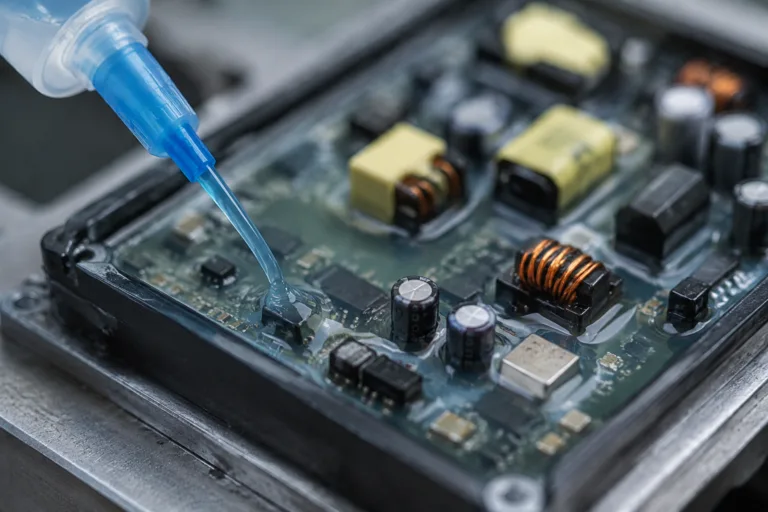
A realistic close-up of electronic components on a circuit board coated with insulating adhesive, highlighting dielectric protection and anti-short-circuit performance in a clean technical industrial setting.

Component Structure

Is the adhesive used for coating, fixing, sealing, bonding, potting, or full encapsulation?
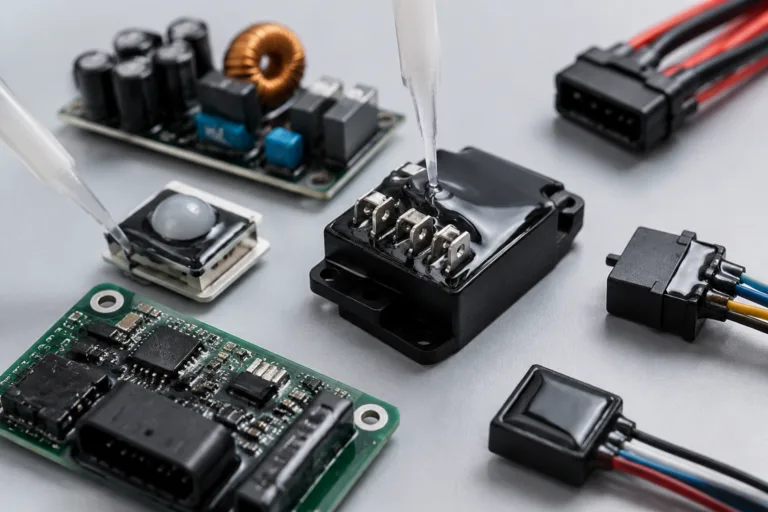
A realistic technical product photo showing assorted electronic component layouts prepared for insulation adhesive application, including PCB, connectors, power modules, sensors, and wire joints on a clean background.

Voltage Level

Is the product used in low-voltage electronics, power modules, battery systems, or higher-voltage electrical assemblies?
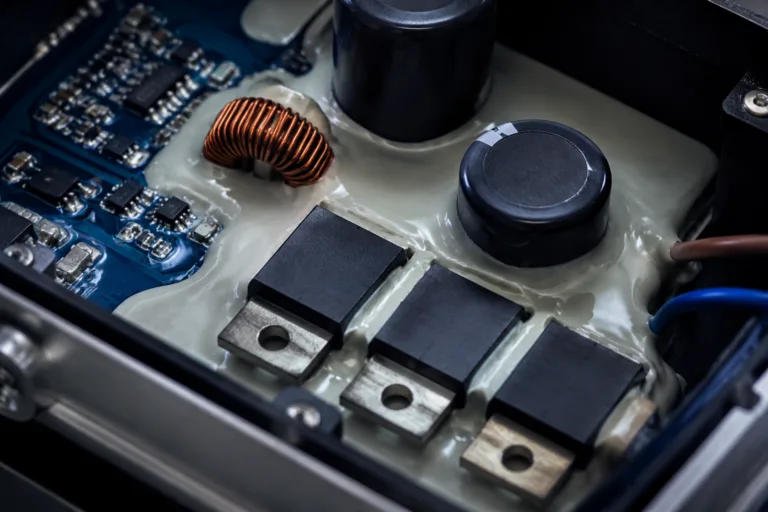
A realistic close-up of low-voltage electronic and power module components protected with insulating adhesive, emphasizing electrical safety and insulation design.

Material Compatibility

What materials are involved? PCB, copper, aluminum, plastic, ceramic, rubber, wire, connector, or metal housing?
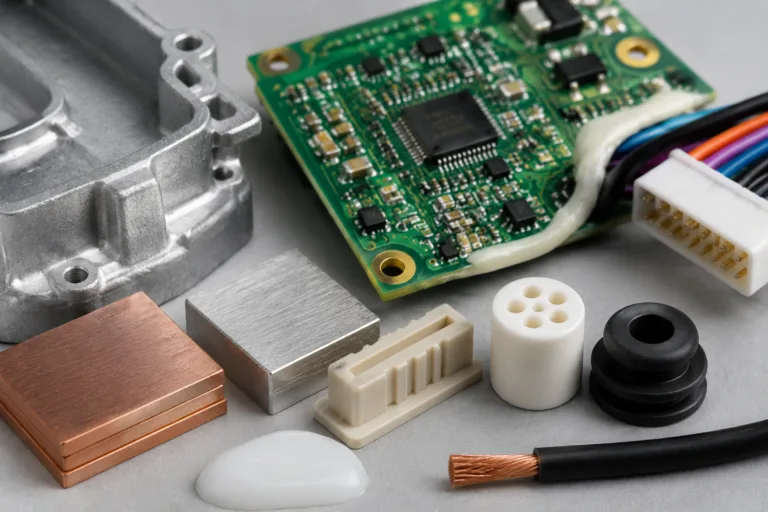
A professional industrial close-up illustrating material compatibility for insulation adhesive selection, with PCB and multiple common materials arranged in a clean technical setup.

Curing Method

Do you need room-temperature curing, heat curing, UV curing, fast curing, or long working time?
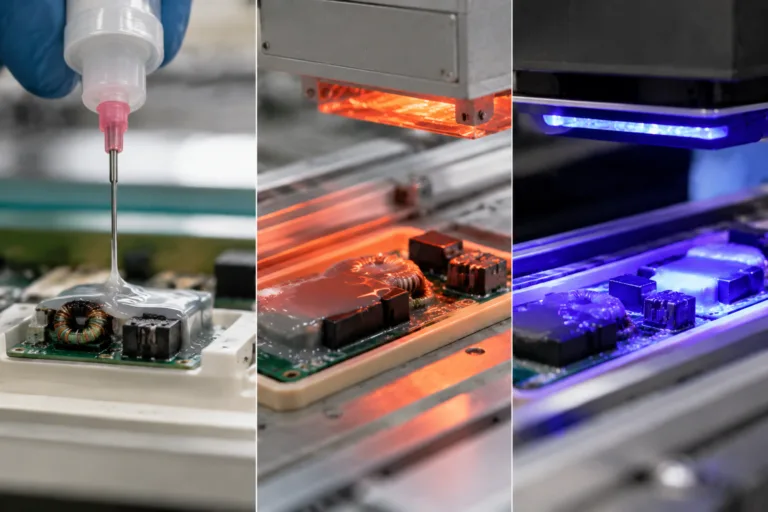
A realistic close-up view of insulation adhesive curing on electronic components in a professional manufacturing setting, showing room-temperature curing, heat-assisted curing, or UV curing methods.

Thermal Requirement

Will the adhesive need to resist heat, thermal cycling, or also support heat transfer?

A realistic close-up industrial electronics image showing an insulated electronic module or power device with heat management considerations, highlighting thermal resistance, thermal cycling, and insulation adhesive selection concepts.

Working Environment

Will the finished product face moisture, dust, vibration, chemicals, oil, heat, cold, or outdoor exposure?
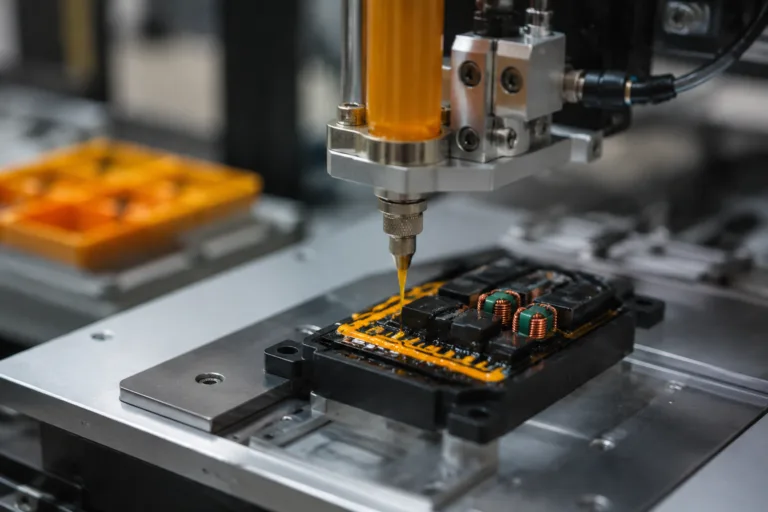
A realistic industrial scene showing precision dispensing equipment applying insulating adhesive onto a PCB or electrical module, highlighting controlled application, production efficiency, and clean factory manufacturing conditions.

Production Method

Will the adhesive be applied by hand, syringe, cartridge, dispensing machine, robot, or coating equipment?
Insulation Adhesive Types ZDS Can Support

Silicone Insulation Adhesives

Good for flexible protection, temperature resistance, vibration resistance, and thermal cycling stability.

Epoxy Insulation Adhesives

Good for high insulation strength, strong protection, chemical resistance, heat resistance, and long-term stability.

Polyurethane Insulation Adhesives

Good for flexible encapsulation, impact resistance, moisture protection, and lower stress on sensitive components.

UV Insulation Adhesives

Good for fast curing, clean application, electronic fixing, and areas where UV light can reach the adhesive.

Insulating Potting Adhesives

Good for electronic modules that need full protection, moisture resistance, and electrical insulation.

Flame-Retardant Insulation Adhesives

Good for power devices, batteries, control modules, and electrical products that require improved fire safety.

The final choice depends on your electrical performance target, component design, curing process, and working environment.

Common Insulation Adhesive Problems ZDS Helps Solve

Insulation failure can lead to short circuits, leakage current, corrosion, component damage, product returns, and safety risks.

Poor Electrical Insulation

The adhesive may not provide enough dielectric strength or resistivity for the application.

Moisture-Related Failure

Humidity, condensation, or water exposure may reduce insulation performance over time.

Cracking or Shrinkage

The adhesive may become too hard, shrink after curing, or stress sensitive components.

Poor Adhesion

The adhesive may not bond well to PCB, plastic, metal, ceramic, wire, or coated surfaces.

Heat Aging

The adhesive may lose performance after long-term heat exposure or repeated thermal cycling.

Bubbles and Voids

Trapped air can reduce insulation quality and weaken protection.

ZDS helps customers reduce these risks through adhesive selection, electrical performance matching, viscosity adjustment, curing control, and custom formulation support.

Industries That Use Insulation Adhesives

ZDS insulation adhesive solutions support many electronics and electrical manufacturing industries.

Common Industries Include:

  • Electronics manufacturing
  • PCB assembly
  • Automotive electronics
  • Battery and energy storage
  • Power supplies
  • Chargers and adapters
  • LED lighting
  • Sensors and control modules
  • Electric motors
  • Industrial control equipment
  • Solar energy products
  • Outdoor electronics
  • Communication devices
  • Smart appliances
  • New energy equipment
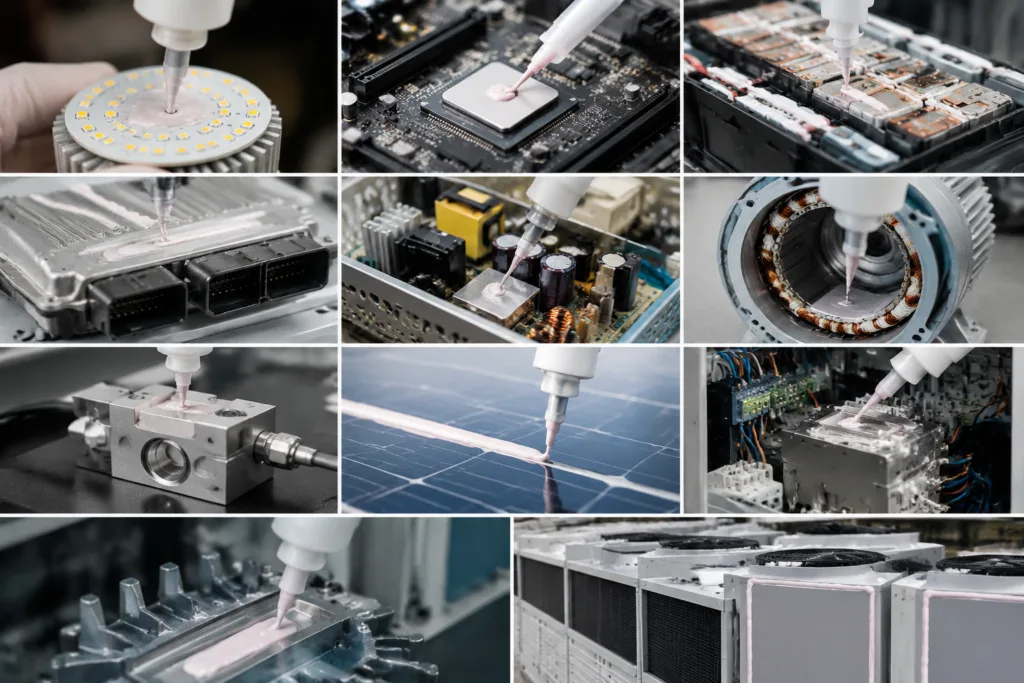
A realistic collage illustrating thermally conductive adhesive use across LED lighting, electronics, batteries, automotive electronics, power supplies, motors, sensors, solar products, and industrial controls in a clean professional layout.

Quality and Testing Considerations

For insulation adhesives, long-term electrical stability is important. The adhesive should work in real production and remain reliable during product use.

Dielectric Strength Test

Checks whether the adhesive can resist electrical breakdown.

Adhesion Test

Confirms whether the adhesive bonds well to required materials.

Curing Test

Confirms curing speed, hardness, surface condition, and production compatibility.

Volume Resistivity Test

Evaluates electrical insulation stability.

Moisture Resistance Test

Checks performance under humidity, condensation, or water exposure.

Thermal Aging Test

Reviews performance after heat exposure or thermal cycling.

Reliability Test

Checks long-term stability under vibration, moisture, heat, and environmental stress.

Need an Insulation Adhesive for Your Product?

Tell ZDS what component you need to protect, what electrical performance is required, and what environment the product will face. Our team can help recommend a suitable insulation adhesive or discuss a custom formula.

FAQ

What is an insulation adhesive?
An insulation adhesive is used to protect electronic or electrical parts from short circuits, leakage current, moisture, dust, vibration, and environmental stress.
It is used for PCB protection, electronic component fixing, wire and connector protection, power module insulation, battery pack protection, sensor protection, motor insulation, and electrical assembly protection.
Regular adhesive mainly focuses on bonding. Insulation adhesive also needs electrical protection, dielectric strength, resistivity, and long-term stability under electrical or environmental stress.
Yes. Insulation adhesives can be used for PCB coating, component fixing, potting, encapsulation, sealing, and protection against moisture or electrical failure.
Yes. ZDS can customize viscosity, curing speed, hardness, flexibility, dielectric strength, moisture resistance, heat resistance, flame-retardant performance, color, and packaging.
Yes. Some formulas can provide both electrical insulation and thermal conductivity. This is useful for LED modules, batteries, power electronics, and heat-sensitive devices.
ZDS LTD ยท Adhesive Manufacturer

Get the Right Adhesive Recommendation

Not sure which adhesive fits your material, process, or performance needs?
Share a few project details, and our team will suggest a suitable ZDS product or custom formulation.